'%3E%3Cpath d='M16.3574 35.6519H12.9537L15.0491 18.8873L16.3574 35.6519ZM30.4229 54.0093L22.309 0.994385H7.91795L0 54.0093H10.6634L11.5802 46.3855H17.4014L17.9914 54.0093H30.4229Z' fill='%23971B20'/%3E%3Cpath d='M48.2073 41.8813C48.2073 43.4049 47.4892 44.0011 46.1144 44.0011H43.7595V11.0687H46.1144C47.4892 11.0687 48.2073 11.6636 48.2073 13.1885V41.8813ZM59.5273 43.6695V11.3326C59.5273 3.71323 53.5729 0.994385 47.8157 0.994385H31.7213V54.0093H47.8157C53.5729 54.0093 59.5273 51.29 59.5273 43.6695Z' fill='%23971B20'/%3E%3Cpath d='M90.183 0.994385H78.6039L75.0711 30.6157L71.9955 0.994385H59.4346L69.2474 54.0093H80.373L90.183 0.994385Z' fill='%23971B20'/%3E%3Cpath d='M107.063 42.3448C107.063 43.7359 105.951 44.5974 104.643 44.5974C103.269 44.5974 102.157 43.7359 102.157 42.3448V12.658C102.157 11.2676 103.269 10.4058 104.643 10.4058C105.951 10.4058 107.063 11.2676 107.063 12.658V42.3448ZM119.233 43.2723V11.7312C119.233 6.36384 112.952 -3.8147e-06 104.643 -3.8147e-06C96.2667 -3.8147e-06 89.9867 6.36384 89.9867 11.7312V43.2723C89.9867 48.6393 96.2667 55 104.643 55C112.952 55 119.233 48.6393 119.233 43.2723Z' fill='%23971B20'/%3E%3Cpath d='M150.976 43.9349V33.7309H139.069V42.3448C139.069 43.7359 137.957 44.5974 136.582 44.5974C135.076 44.5974 133.964 43.7359 133.964 42.3448V12.658C133.964 11.2676 135.076 10.4058 136.582 10.4058C137.957 10.4058 139.069 11.2676 139.069 12.658V21.2723H150.976V11.0687C150.976 5.70107 145.283 -3.8147e-06 136.582 -3.8147e-06C127.75 -3.8147e-06 121.796 5.70107 121.796 11.0687V43.9349C121.796 49.3022 127.75 55 136.582 55C145.283 55 150.976 49.3022 150.976 43.9349Z' fill='%23971B20'/%3E%3Cpath d='M167.478 35.6519H164.076L166.17 18.8873L167.478 35.6519ZM181.544 54.0093L173.432 0.994385H159.037L151.123 54.0093H161.785L162.704 46.3855H168.523L169.114 54.0093H181.544Z' fill='%23971B20'/%3E%3Cpath d='M205.412 10.4058V0.994385H177.081V10.4058H185.392V54.0093H197.428V10.4058H205.412Z' fill='%23971B20'/%3E%3Cpath d='M230.002 54.0093V43.9349H218.914V31.8746H226.635V21.8028H218.914V10.4058H230.002V0.994385H206.875V54.0093H230.002Z' fill='%23971B20'/%3E%3C/g%3E%3Cdefs%3E%3CclipPath id='clip0_260_7080'%3E%3Crect width='230' height='55' fill='white'/%3E%3C/clipPath%3E%3C/defs%3E%3C/svg%3E)
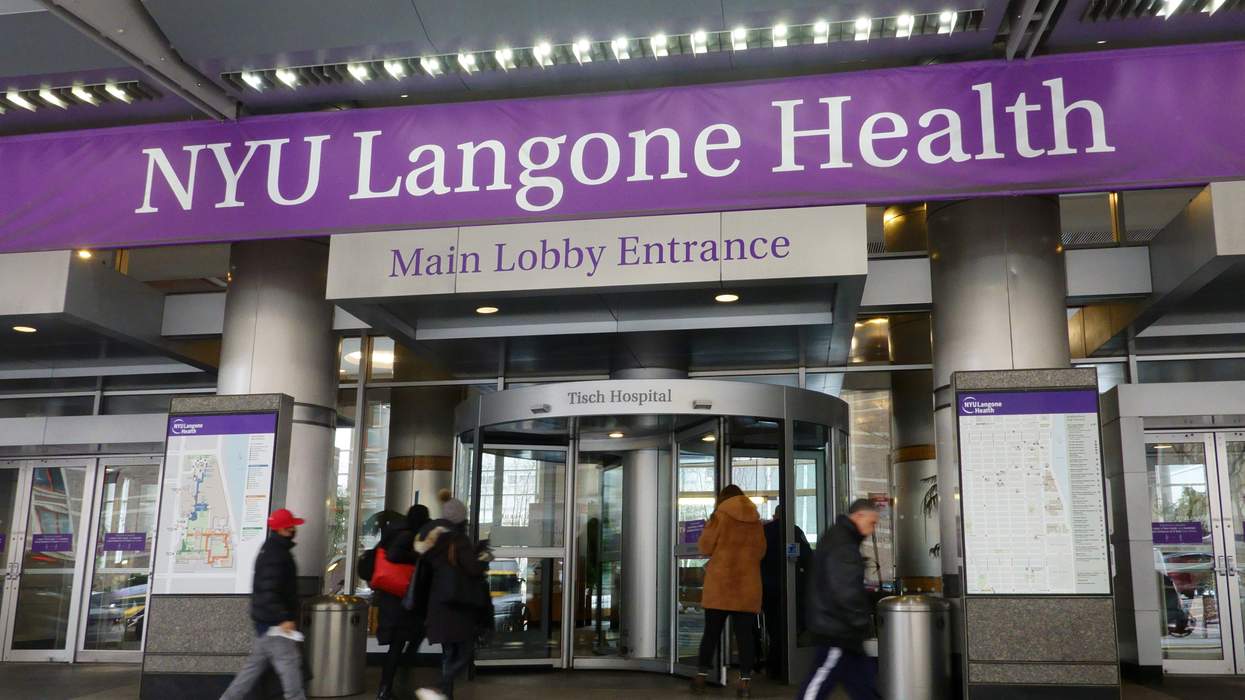

National LGBTQ+ civil rights leaders are sounding the alarm after Trump’s Department of Justice criminally subpoenaed NYU Langone and several other hospitals for the names of transgender patients who were minors when they received gender-affirming care.
Transgender rights advocates across the country are urging medical institutions to not comply with the DOJ by refusing to release sensitive medical information about trans minors to federal courts. In a press conference on May 19 hosted by the Human Rights Campaign, representatives from Planned Parenthood and AIDS United as well as parents of trans children negatively impacted by such breaches of medical privacy spoke on the consequences of sharing confidential patient information.
“For half a century, abortion opponents have been executing a strategy to replace our reproductive rights with their beliefs,” Alexis McGill Johnson, president and CEO of Planned Parenthood Action Plan, said. “The weaponization of private health care information is one of their most tried and true tactics. The specifics vary of course, but the goal is always the same: Interfering with private decisions they don't like. For this administration and their allies, surveillance, subpoenas, and criminal prosecutions are all just instruments of control.”
The calls for intervention come after months of mounting pressure from the Trump administration on medical institutions to bow to its anti-trans agenda. NYU patients were alerted on May 11 to a subpoena issued by the U.S. Attorney’s Office in the North District of Texas, which requested the names of medical providers in addition to identifying information for trans youth patients seen from 2020 to 2026.
The subpoena sought extensive patient information related to gender-affirming care, intensifying fears among advocates that the federal government is attempting to build a nationwide apparatus for investigating trans health care providers and families. Just four days later, Texas Attorney General Ken Paxton announced that following a DOJ investigation, the state secured a $10 million settlement from Texas Children’s Hospital to create a “detransition clinic” as well as requiring the hospital to fire “five woke doctors” for previously providing gender-affirming care to trans minors.
Institutions, advocates, and some judges have fought back against the administration’s mandate against trans healthcare access for minors, as in the case of Rhode Island U.S. District Judge Mary McElroy, a Trump appointee who accused the DOJ of "appalling" behavior for targeting trans youth’s high sensitive medical records on May 13. McElroy’s remarks came during litigation involving a federal demand for records connected to Rhode Island Hospital, where state officials and advocates argued the DOJ’s actions threatened patient privacy protections and could deter families from seeking medically necessary care.
Even with state representatives passing sanctuary laws to protect trans youth and federal judges ruling to temporarily halt these directives, the impact of the DOJ's assault on the medical privacy of trans minors has had real consequences on the lives of these children and their families.
An anonymous parent of a trans child from HRC’s Parents for Transgender Equality National Council shared how their family “suffered directly because of lax medical information controls and government misconduct.” After the breach of their daughter’s medical information, their family was forced to relocate from their home in the South to a northern state, a decision more than 400,000 trans people have had to make in the last several years, according to Erin in The Morning.
“We had to move states, and I'm not using my real name here today because we still feel reprisals from the people currently in power just because our family has tried its best to take care of our daughter,” they said. “For our family, this began as a medical privacy violation. It became a life-altering lesson in what happens when institutions fail to protect vulnerable people and when private medical information becomes weaponized for political purposes.”
Advocates say that allowing the Trump administration to access such sensitive medical information on trans minors through subpoenas and court orders is a slippery slope that only leads to everyone having less access to privacy and care.
“It is going to be an uphill battle to protect our medical privacy under these circumstances, which is why it is so important for everyone, patients, doctors, state attorney generals, electives to understand what is happening here, be angry and place pressure against DOJ to step back and conform to his traditional institutional limits and role as an even-handed enforcer of federal law,” Cynthia Cheng-Wun Weaver, senior director of litigation for the Human Rights Campaign, said.