'%3E%3Cpath d='M16.3574 35.6519H12.9537L15.0491 18.8873L16.3574 35.6519ZM30.4229 54.0093L22.309 0.994385H7.91795L0 54.0093H10.6634L11.5802 46.3855H17.4014L17.9914 54.0093H30.4229Z' fill='%23971B20'/%3E%3Cpath d='M48.2073 41.8813C48.2073 43.4049 47.4892 44.0011 46.1144 44.0011H43.7595V11.0687H46.1144C47.4892 11.0687 48.2073 11.6636 48.2073 13.1885V41.8813ZM59.5273 43.6695V11.3326C59.5273 3.71323 53.5729 0.994385 47.8157 0.994385H31.7213V54.0093H47.8157C53.5729 54.0093 59.5273 51.29 59.5273 43.6695Z' fill='%23971B20'/%3E%3Cpath d='M90.183 0.994385H78.6039L75.0711 30.6157L71.9955 0.994385H59.4346L69.2474 54.0093H80.373L90.183 0.994385Z' fill='%23971B20'/%3E%3Cpath d='M107.063 42.3448C107.063 43.7359 105.951 44.5974 104.643 44.5974C103.269 44.5974 102.157 43.7359 102.157 42.3448V12.658C102.157 11.2676 103.269 10.4058 104.643 10.4058C105.951 10.4058 107.063 11.2676 107.063 12.658V42.3448ZM119.233 43.2723V11.7312C119.233 6.36384 112.952 -3.8147e-06 104.643 -3.8147e-06C96.2667 -3.8147e-06 89.9867 6.36384 89.9867 11.7312V43.2723C89.9867 48.6393 96.2667 55 104.643 55C112.952 55 119.233 48.6393 119.233 43.2723Z' fill='%23971B20'/%3E%3Cpath d='M150.976 43.9349V33.7309H139.069V42.3448C139.069 43.7359 137.957 44.5974 136.582 44.5974C135.076 44.5974 133.964 43.7359 133.964 42.3448V12.658C133.964 11.2676 135.076 10.4058 136.582 10.4058C137.957 10.4058 139.069 11.2676 139.069 12.658V21.2723H150.976V11.0687C150.976 5.70107 145.283 -3.8147e-06 136.582 -3.8147e-06C127.75 -3.8147e-06 121.796 5.70107 121.796 11.0687V43.9349C121.796 49.3022 127.75 55 136.582 55C145.283 55 150.976 49.3022 150.976 43.9349Z' fill='%23971B20'/%3E%3Cpath d='M167.478 35.6519H164.076L166.17 18.8873L167.478 35.6519ZM181.544 54.0093L173.432 0.994385H159.037L151.123 54.0093H161.785L162.704 46.3855H168.523L169.114 54.0093H181.544Z' fill='%23971B20'/%3E%3Cpath d='M205.412 10.4058V0.994385H177.081V10.4058H185.392V54.0093H197.428V10.4058H205.412Z' fill='%23971B20'/%3E%3Cpath d='M230.002 54.0093V43.9349H218.914V31.8746H226.635V21.8028H218.914V10.4058H230.002V0.994385H206.875V54.0093H230.002Z' fill='%23971B20'/%3E%3C/g%3E%3Cdefs%3E%3CclipPath id='clip0_260_7080'%3E%3Crect width='230' height='55' fill='white'/%3E%3C/clipPath%3E%3C/defs%3E%3C/svg%3E)

The winter meeting of the National Governors Association is usually a refuge from the louder dramas of Washington, D.C.: a few days of policy panels, side conversations about housing and health care, and the quiet choreography of federalism. This year, it opened instead with a reminder of how difficult it has become to keep even the rituals of governance free from the pull of spectacle in the second Trump administration.
Keep up with the latest in LGBTQ+ news and politics. Sign up for The Advocate's email newsletter.
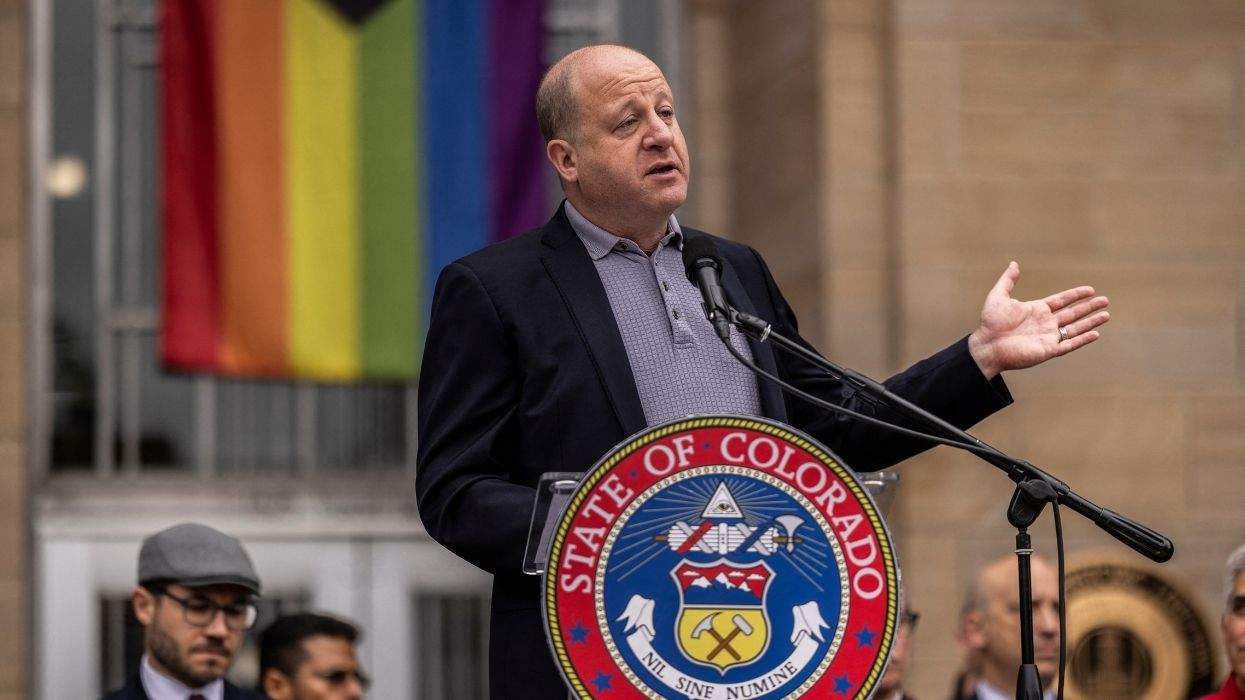
On Thursday, the first day of the gathering, Colorado Gov. Jared Polis, who is gay and the immediate past chair of the NGA, addressed a controversy that has turned a normally ceremonial White House meeting and dinner into a political fault line. President Donald Trump moved to exclude Polis and Maryland Gov. Wes Moore, the NGA’s vice chair and chair-elect, from the traditional events tied to the group’s session, breaking with decades of bipartisan custom and prompting a wave of protests from Democratic governors.
Moore is the only Black person currently serving as a U.S. governor.
Appearing on MS NOW’s Morning Joe, Polis described his exclusion as a “badge of honor” and called the White House’s handling of the invitations as “utter chaos,” likening the episode to “one of those fifth-grade birthday parties” where everyone is left guessing who is in and who is out.
“This is really a blow against the governors as a whole when they try to exclude certain governors,” Polis said, arguing that the move reduced a collective institution to a stage for political signaling.
The National Governors Association represents 55 governors: the leaders of the 50 U.S. states and five U.S. territories. Among the states, the partisan balance is nearly even, with 26 Republicans and 24 Democrats, a narrow divide that has long made the organization one of the few national political bodies where neither party can dominate and where cooperation is often a practical necessity.
The dispute escalated after the White House signaled it would limit invitations to the association’s annual business meeting to Republicans. In a letter obtained by Time earlier this week, NGA chair Kevin Stitt, the Republican governor of Oklahoma, said that because the White House intended to exclude some governors, the association would no longer facilitate the meeting “because NGA’s mission is to represent all 55 governors.”
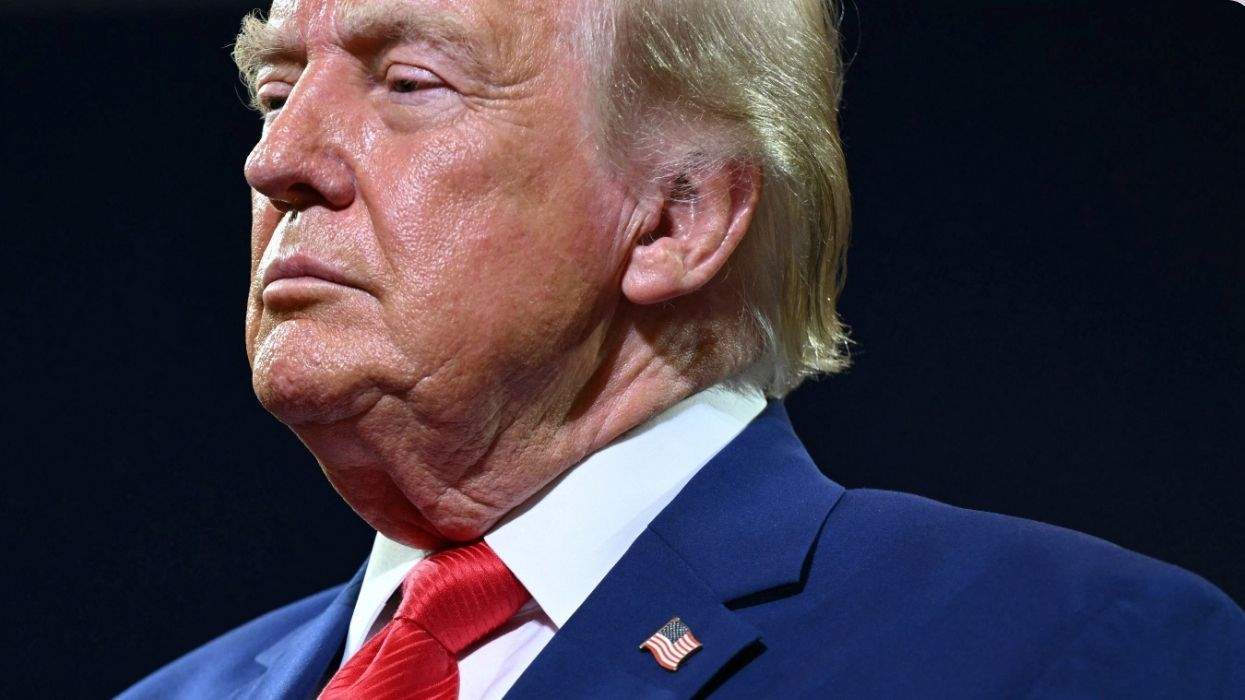
Trump pushed back, accusing Stitt of spreading “false” information and insisting that invitations had gone to all governors except Polis and Moore, whom he said were “not worthy of being there.” He derided Stitt as a “RINO,” or Republican in name only, and later accused him of seeking “cheap publicity.”
The White House’s dispute with Polis, however, is pointedly personal. Trump has publicly attacked him over the case of Tina Peters, the former Mesa County, Colorado, clerk and MAGA faithful, convicted on multiple felony counts for allowing unauthorized access to election equipment after the 2020 election and sentenced to a lengthy prison term. Peters, now in her 70s, has become a symbol on the right of what Trump and his allies portray as political persecution.
In recent social media posts, Trump called Polis a “scumbag” and urged him to intervene, even though the conviction was obtained under state law and any relief would have to come through Colorado’s clemency process. Colorado Public Radio reports that Polis has recently said the nine-year sentence was “harsh” and that he would consider any clemency request through the normal channels, but he has not acted to shorten it.
Moore, for his part, has also been a frequent target of Trump’s criticism over high-profile infrastructure and environmental challenges in Maryland. He has responded by trying to drain the moment of its personal sting, saying publicly that his worth is measured by the people of his state, not by a presidential guest list.
At least 18 Democratic governors said they would boycott the White House dinner in solidarity, and the NGA itself said it would not facilitate a meeting that excludes some of its own members. In Trump’s second term, governors of both parties have found themselves navigating disputes over federal funding, executive authority, and the boundaries of presidential power.
“There’s no Republican or Democratic way to pave roads, to improve school performance, to improve health care,” Polis said. “What the real story is is governors from across the country, Republican and Democrat, are talking about the issues that matter in our states.”
Polis added, “I’m excited [that] 41 of us from across the country are here, and I'm very much excited to roll up my sleeves and learn a lot from our other states.”