'%3E%3Cpath d='M16.3574 35.6519H12.9537L15.0491 18.8873L16.3574 35.6519ZM30.4229 54.0093L22.309 0.994385H7.91795L0 54.0093H10.6634L11.5802 46.3855H17.4014L17.9914 54.0093H30.4229Z' fill='%23971B20'/%3E%3Cpath d='M48.2073 41.8813C48.2073 43.4049 47.4892 44.0011 46.1144 44.0011H43.7595V11.0687H46.1144C47.4892 11.0687 48.2073 11.6636 48.2073 13.1885V41.8813ZM59.5273 43.6695V11.3326C59.5273 3.71323 53.5729 0.994385 47.8157 0.994385H31.7213V54.0093H47.8157C53.5729 54.0093 59.5273 51.29 59.5273 43.6695Z' fill='%23971B20'/%3E%3Cpath d='M90.183 0.994385H78.6039L75.0711 30.6157L71.9955 0.994385H59.4346L69.2474 54.0093H80.373L90.183 0.994385Z' fill='%23971B20'/%3E%3Cpath d='M107.063 42.3448C107.063 43.7359 105.951 44.5974 104.643 44.5974C103.269 44.5974 102.157 43.7359 102.157 42.3448V12.658C102.157 11.2676 103.269 10.4058 104.643 10.4058C105.951 10.4058 107.063 11.2676 107.063 12.658V42.3448ZM119.233 43.2723V11.7312C119.233 6.36384 112.952 -3.8147e-06 104.643 -3.8147e-06C96.2667 -3.8147e-06 89.9867 6.36384 89.9867 11.7312V43.2723C89.9867 48.6393 96.2667 55 104.643 55C112.952 55 119.233 48.6393 119.233 43.2723Z' fill='%23971B20'/%3E%3Cpath d='M150.976 43.9349V33.7309H139.069V42.3448C139.069 43.7359 137.957 44.5974 136.582 44.5974C135.076 44.5974 133.964 43.7359 133.964 42.3448V12.658C133.964 11.2676 135.076 10.4058 136.582 10.4058C137.957 10.4058 139.069 11.2676 139.069 12.658V21.2723H150.976V11.0687C150.976 5.70107 145.283 -3.8147e-06 136.582 -3.8147e-06C127.75 -3.8147e-06 121.796 5.70107 121.796 11.0687V43.9349C121.796 49.3022 127.75 55 136.582 55C145.283 55 150.976 49.3022 150.976 43.9349Z' fill='%23971B20'/%3E%3Cpath d='M167.478 35.6519H164.076L166.17 18.8873L167.478 35.6519ZM181.544 54.0093L173.432 0.994385H159.037L151.123 54.0093H161.785L162.704 46.3855H168.523L169.114 54.0093H181.544Z' fill='%23971B20'/%3E%3Cpath d='M205.412 10.4058V0.994385H177.081V10.4058H185.392V54.0093H197.428V10.4058H205.412Z' fill='%23971B20'/%3E%3Cpath d='M230.002 54.0093V43.9349H218.914V31.8746H226.635V21.8028H218.914V10.4058H230.002V0.994385H206.875V54.0093H230.002Z' fill='%23971B20'/%3E%3C/g%3E%3Cdefs%3E%3CclipPath id='clip0_260_7080'%3E%3Crect width='230' height='55' fill='white'/%3E%3C/clipPath%3E%3C/defs%3E%3C/svg%3E)

With transgender athletes facing escalating political attacks and sports bans spreading across the country, one competitor on NBC’s American Ninja Warrior is proving that visibility itself can be an act of defiance.
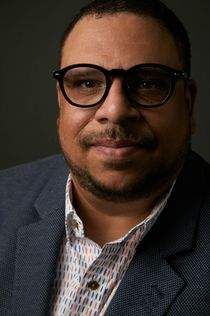
Clayton Jay Reeves, a 25-year-old from Iowa, confirmed he has received a callback for next year’s 18th season, less than a year after filming what he describes as a historic moment, becoming one of the first out transgender men to advance to the semifinals of the 17th season on the long-running NBC competition series.
Keep up with the latest in LGBTQ+ news and politics. Sign up for The Advocate's email newsletter.
“I’m thrilled to have another opportunity to compete and continue using this platform to represent and inspire others,” Reeves told The Advocate.
Reeves’ path to national television was far from straightforward. Born in Romania and adopted into a large Midwestern family, he remembers growing up with instability at home. His mother battled alcoholism, while his father, a police officer, communicated primarily through anger.
Related: Democrats defeat Republican transgender sports ban bill in U.S. Senate
“I already felt out of the picture,” he recalled. “I wasn’t part of the family, and maybe it was because of the way they treated their biological kids compared to me.”
Coming out as transgender in high school brought more strain. At first, his father appeared supportive. “You’re my kid and I love you,” Reeves remembered him saying, but soon the rejection returned. “He told me, ‘You’re embarrassing me, you’re not trans, shut up.’”
By 18, he left home with little more than the car he had purchased from his father. “I lived in and out of that car, couch to couch,” he said. “I dropped out of high school with nothing but the shirt on my back.”
Finding family online
What gave him stability, Reeves explained, was a camera. In 2018, he began filming his transition for YouTube, using the platform to process his experiences and connect with others.
“I didn’t have many friends, mostly queer friends, so I talked like I was talking to one person,” he said. “Then I started getting comments, I started getting fans and viewers. They helped me when I needed them, and now it’s my turn to help them.”
That audience has grown to more than 50,000 across YouTube and TikTok. “I didn’t have a role model when I was younger,” Reeves said. “Now I want to be that person. I want kids to know they’re not alone.”
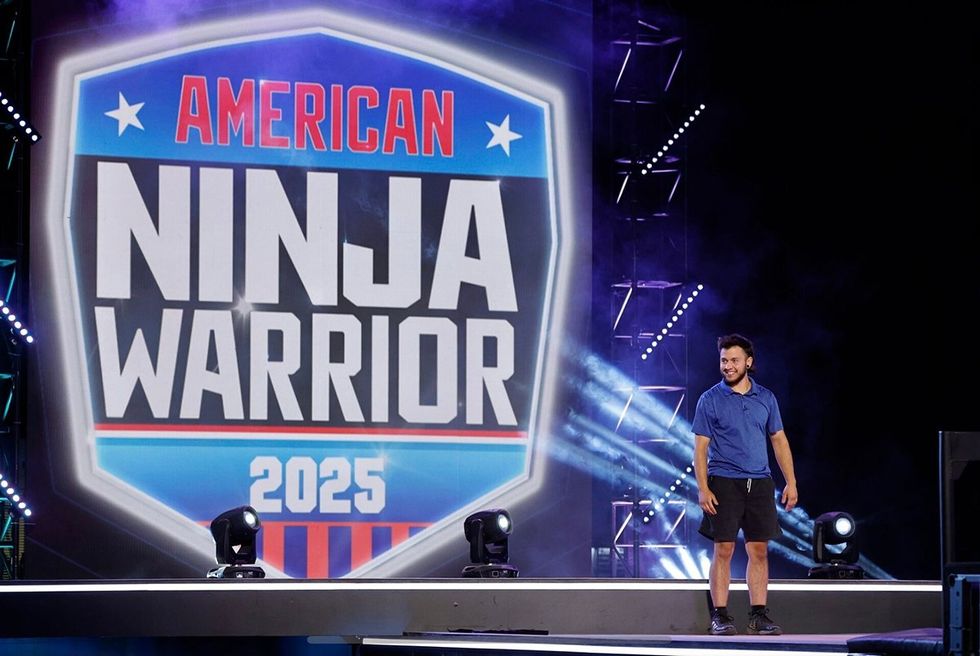 Clayton Reeves on American Ninja Warrior, 2025Courtesy NBC
Discovering Ninja
After a breakup, Reeves sought out gymnastics but instead found a gym in Grimes, Iowa, offering adult ninja training. Within a year, his coach pushed him to audition for American Ninja Warrior.
“I didn’t even want to sign up,” Reeves admitted. “My coach told me, ‘You’ve got a great story, a great personality. You can advocate for your community.’ I said, Okay, bet. Let’s do it.”
He ran the course for the first time on September 27, 2024. His episode aired June 30, and he advanced to the semifinals.
“Just because I only made it to the semifinals doesn’t mean I lost,” he reflected. “That means I won because I showed up. I showed up for my community.”
For Reeves, the Ninja community has been both a proving ground and a mirror. Out publicly on social media before he ever competed, he knew other athletes would inevitably learn about his transition long before he felt comfortable sharing it. “Everyone Googles each other,” he explained. “You start at a new job or a new gym, you look people up. That’s how people found out about me.”
Related: Donald Trump bans transgender athletes from playing sports
The reception wasn’t always smooth. Training in conservative Iowa, Reeves said he encountered outright hostility from a fellow athlete who had also competed on Ninja Warrior. After Reeves advanced to the semifinals and his teammate did not, the teammate reportedly told others that Reeves only made it on the show because he was trans, Reeves said. He added that the same person even suggested their shared coach wanted nothing to do with him because of his identity.
“It got ugly,” Reeves recalled. For a time, he considered walking away from the sport altogether, convinced he had achieved his goal of competing on national television and advocating for his community, but unwilling to keep training where he felt unwelcome.
What happened next, though, surprised him. Friends at the gym intervened, confronting the coach directly. When Reeves and the coach finally sat down together, it turned out none of the disparaging comments had ever come from him. The rift was manufactured by jealousy, not rejection, he said.
That moment, Reeves said, reminded him that for every hater, there are allies ready to step in.
“There has been hatred,” he acknowledged. “But sometimes that hatred has turned into friendship. Other times, it pushed me closer to people who did want me there.”
Now training for Season 18, Reeves sees his return as more than another chance at competition. He describes his gym as a playground.
“It feels like we’re kids on the monkey bars again,” he said. “They treat me like everyone else. That’s what I love.”
The politics of participation
Reeves is clear that his visibility comes at a time when transgender athletes are under heightened scrutiny. With President Donald Trump back in office and trans sports participation increasingly targeted, he worried his segment might never air.
“Ninja Warrior is a very Christian, conservative sport,” he explained. “I thought, what if they cut me out because I’m trans? But instead, they put me front and center. That meant everything.”
The backlash was swift.
“Most of the time they think I’m a trans woman and they’re like, ‘You’re cheating,’” Reeves said. “Ninja Warrior is a genderless sport. I beat cisgender men to make it to semifinals. It’s about discipline, not gender.”
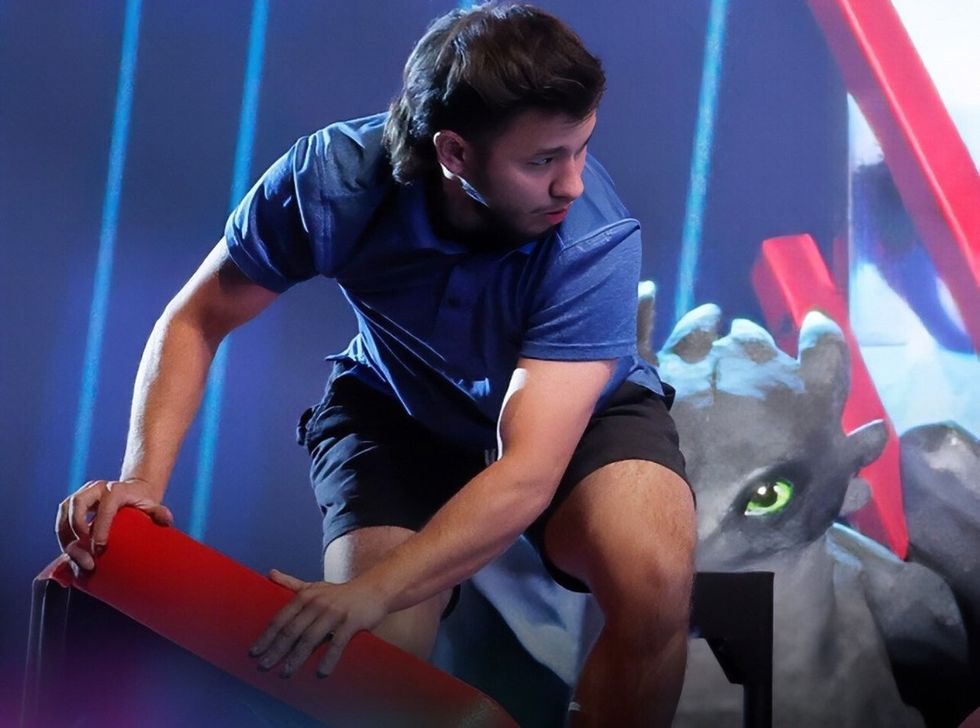 Clayton Reeves on American Ninja Warrior, 2025Courtesy NBC
He also pushed back on the broader debate over trans participation in athletics.
“If I were banned from competing, or if they put me in the women’s category, it wouldn’t change a thing,” he argued. “My best friend in Ninja is a woman, and she can beat me with her eyes closed. It’s not about gender, it’s about who trains harder, who dedicates the time, and who puts their A-game on.”
Related: Supreme Court to decide whether states can ban transgender women & girls from sports
That debate is playing out nationwide. According to the Movement Advancement Project, 27 states currently have laws banning transgender students from playing on sports teams consistent with their gender identity, with two more states enforcing bans through agency policy. While some of those bans are being challenged in court, they remain on the books in most places.
The Trump administration has dictated that transgender women cannot participate in college sports or the U.S. Olympic Games in 2028. The U.S. Supreme Court will decide next term whether states can ban transgender people from participating in sports.
Reeves sees hypocrisy in how critics selectively target athletes.
“People say they never see trans men winning, but they don’t look for us. And when they come for trans women, it’s usually those just starting their journey. They don’t come for the women who’ve fully transitioned because they can’t even spot them. They go for the ones it’s easiest to attack.”
That double standard isn’t lost on him.
“When I wasn’t out, people said, ‘You look like a guy.’ Then I transitioned, and they say, ‘You’re a girl.’ You can’t make anyone happy. There are always going to be haters.”
Why trans men are treated as an afterthought
Reeves also points to misogyny as the reason trans women bear the brunt of political attacks while trans men are often overlooked.
“What I think it is is men controlling women,” he said. “This whole world is just full of misogyny and men being up here, women being down there. That’s why trans men don’t get attacked compared to trans women or trans men who might not fully fit the binary.”
Related: What does the science say about transgender women in sports?
He believes laws like so-called bathroom bills expose that control.
“I won’t get stopped going into the men’s room. But a woman who looks masculine might. There was literally an article about a lesbian woman being stopped outside a restroom because she didn’t look feminine enough. Now they’re trying to tell women how to look.”
In February, The Advocate reported on a Black lesbian who describes herself as a “stud” who documented a confrontation with police officers after somebody thought she was a man.
Related: Cis woman confronted by police officers in Arizona Walmart restroom for looking too masculine speaks out (exclusive)
For Reeves, that logic is both dangerous and absurd.
“They’ll say trans women need to use the men’s room, and trans men, well, maybe a porta-potty or the family restroom. It’s like our lives are just a debate,” he said. “But if you even look at stats of who’s more violent, it’s cis men. People are afraid of cis men who want to prey on women, not trans women who want to use the bathroom.”