'%3E%3Cpath d='M16.3574 35.6519H12.9537L15.0491 18.8873L16.3574 35.6519ZM30.4229 54.0093L22.309 0.994385H7.91795L0 54.0093H10.6634L11.5802 46.3855H17.4014L17.9914 54.0093H30.4229Z' fill='%23971B20'/%3E%3Cpath d='M48.2073 41.8813C48.2073 43.4049 47.4892 44.0011 46.1144 44.0011H43.7595V11.0687H46.1144C47.4892 11.0687 48.2073 11.6636 48.2073 13.1885V41.8813ZM59.5273 43.6695V11.3326C59.5273 3.71323 53.5729 0.994385 47.8157 0.994385H31.7213V54.0093H47.8157C53.5729 54.0093 59.5273 51.29 59.5273 43.6695Z' fill='%23971B20'/%3E%3Cpath d='M90.183 0.994385H78.6039L75.0711 30.6157L71.9955 0.994385H59.4346L69.2474 54.0093H80.373L90.183 0.994385Z' fill='%23971B20'/%3E%3Cpath d='M107.063 42.3448C107.063 43.7359 105.951 44.5974 104.643 44.5974C103.269 44.5974 102.157 43.7359 102.157 42.3448V12.658C102.157 11.2676 103.269 10.4058 104.643 10.4058C105.951 10.4058 107.063 11.2676 107.063 12.658V42.3448ZM119.233 43.2723V11.7312C119.233 6.36384 112.952 -3.8147e-06 104.643 -3.8147e-06C96.2667 -3.8147e-06 89.9867 6.36384 89.9867 11.7312V43.2723C89.9867 48.6393 96.2667 55 104.643 55C112.952 55 119.233 48.6393 119.233 43.2723Z' fill='%23971B20'/%3E%3Cpath d='M150.976 43.9349V33.7309H139.069V42.3448C139.069 43.7359 137.957 44.5974 136.582 44.5974C135.076 44.5974 133.964 43.7359 133.964 42.3448V12.658C133.964 11.2676 135.076 10.4058 136.582 10.4058C137.957 10.4058 139.069 11.2676 139.069 12.658V21.2723H150.976V11.0687C150.976 5.70107 145.283 -3.8147e-06 136.582 -3.8147e-06C127.75 -3.8147e-06 121.796 5.70107 121.796 11.0687V43.9349C121.796 49.3022 127.75 55 136.582 55C145.283 55 150.976 49.3022 150.976 43.9349Z' fill='%23971B20'/%3E%3Cpath d='M167.478 35.6519H164.076L166.17 18.8873L167.478 35.6519ZM181.544 54.0093L173.432 0.994385H159.037L151.123 54.0093H161.785L162.704 46.3855H168.523L169.114 54.0093H181.544Z' fill='%23971B20'/%3E%3Cpath d='M205.412 10.4058V0.994385H177.081V10.4058H185.392V54.0093H197.428V10.4058H205.412Z' fill='%23971B20'/%3E%3Cpath d='M230.002 54.0093V43.9349H218.914V31.8746H226.635V21.8028H218.914V10.4058H230.002V0.994385H206.875V54.0093H230.002Z' fill='%23971B20'/%3E%3C/g%3E%3Cdefs%3E%3CclipPath id='clip0_260_7080'%3E%3Crect width='230' height='55' fill='white'/%3E%3C/clipPath%3E%3C/defs%3E%3C/svg%3E)

For generations, many Americans have been taught that biology is simple: male and female, dominant and submissive, heterosexual and reproductive. Nature, in this telling, follows rules. Men compete. Women nurture. Anything outside that framework is unnatural.
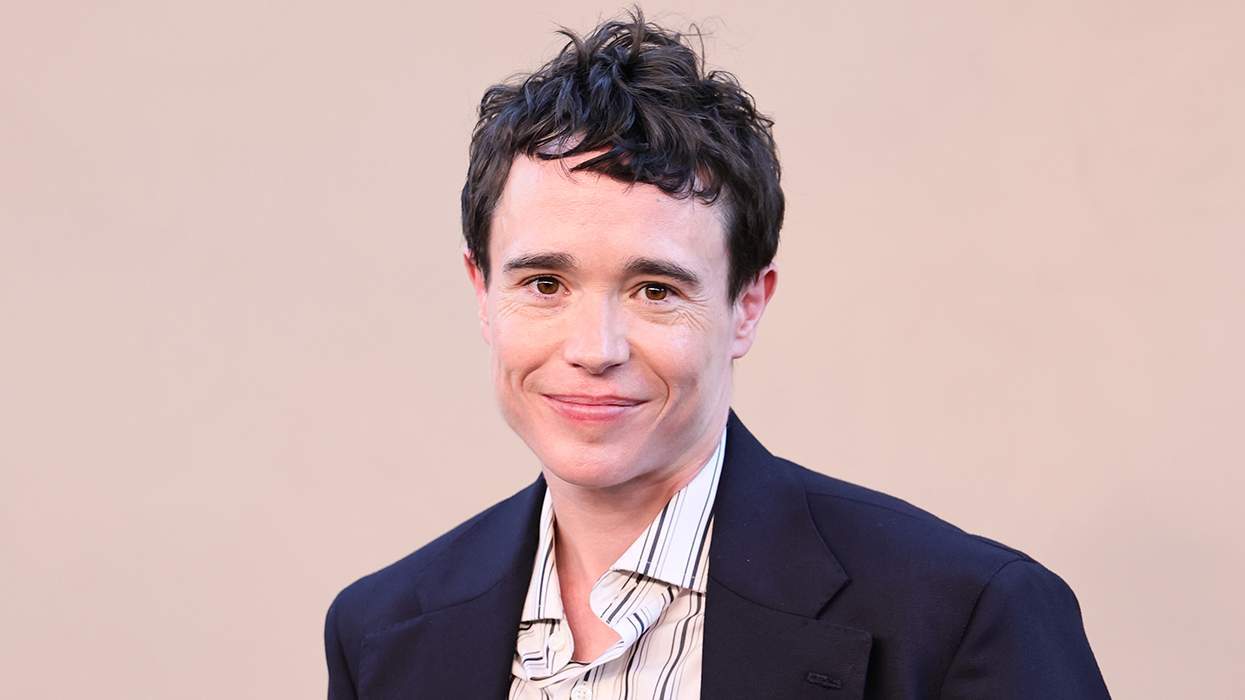
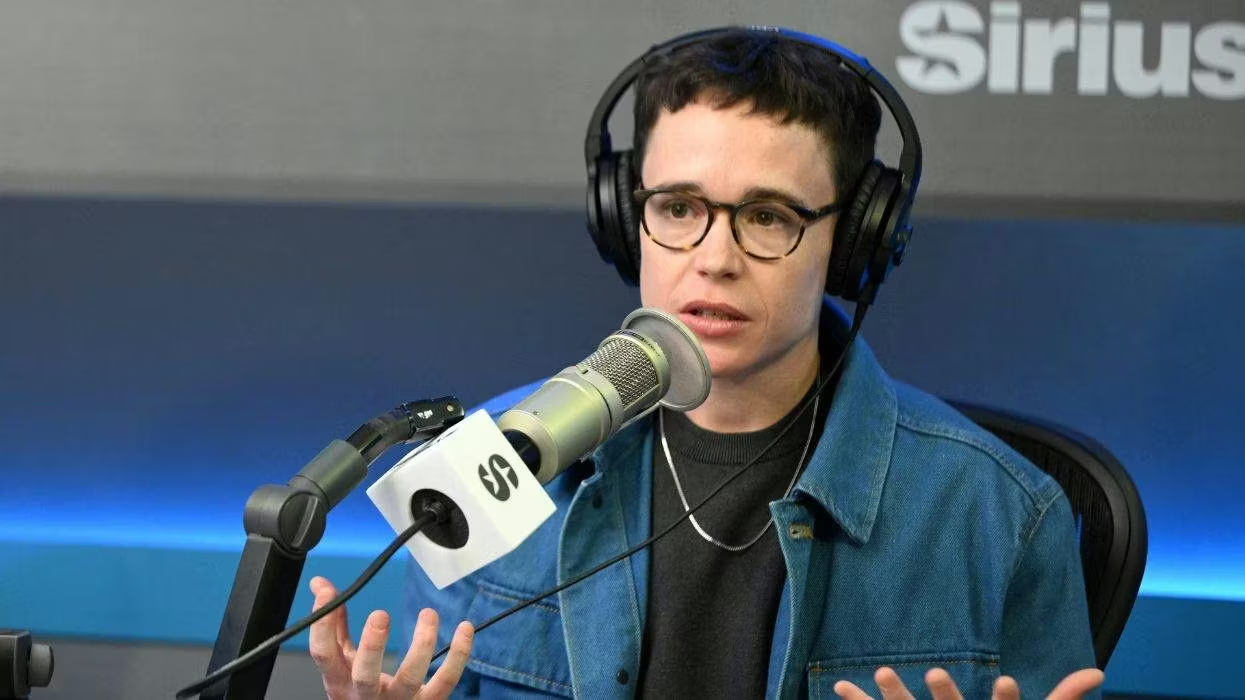
Elliot Page wants viewers to reconsider it all.
In Second Nature, a visually lush and unexpectedly funny new documentary narrated and executive-produced by the transgender actor, queerness is not presented as an anomaly or an ideological invention, but as a recurring feature of life on Earth itself. Penguins form same-sex parenting pairs. Clownfish change sex. Bonobos use sex to resolve conflict. Seahorse fathers carry pregnancies. In some primate societies, females dominate social hierarchies. Across species, the film argues, the rigid binaries humans insist upon begin to dissolve.
The film premieres in Los Angeles on June 20 and in New York City on June 26..
The documentary arrives at a moment when “biology” has become one of the most weaponized words in American politics.
Republican lawmakers across the country have spent the last several years invoking biological essentialism to justify restrictions on transgender health care, school participation, bathroom access, military service, and public visibility. Conservative activists routinely describe trans identity as a rejection of science itself.
In the U.S., a broad political effort is underway to narrow public understandings of gender and sexuality, from book bans and curriculum restrictions to state laws limiting how LGBTQ+ people can be discussed in schools.
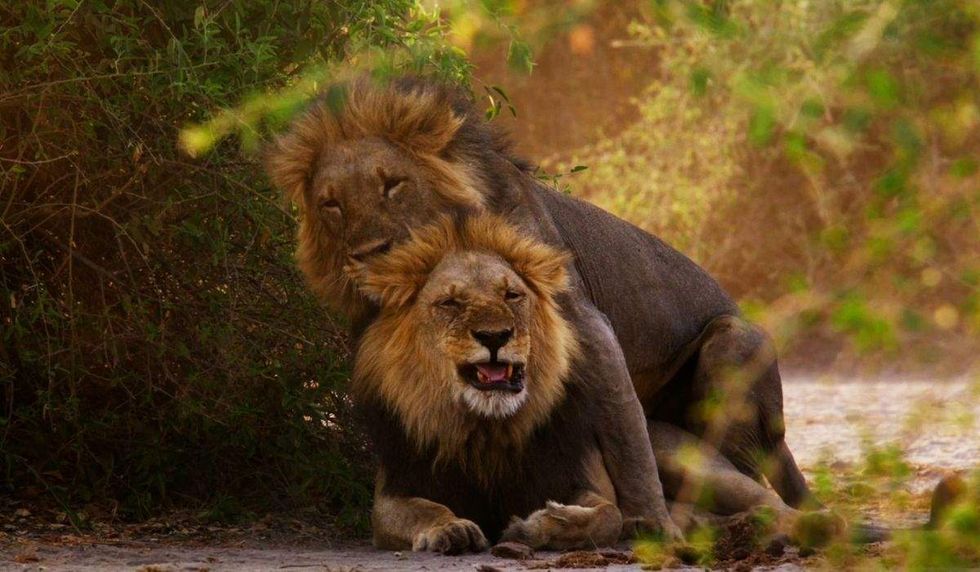 Male lions matingRobert Hofmeyr
Second Nature argues that the science itself tells a far more complicated story.
“There are approximately 8.7 million living animal species on earth,” Page says in the film’s opening narration. Humans, he explains, have long been taught that sexuality and gender exist according to rigid natural laws: males are aggressive and dominant; females are passive and coy; sex is exclusively reproductive and heterosexual. “But what if this narrative fails to capture the full spectrum of life’s diversity?”
The film, directed by filmmaker Drew Denny, builds its argument through evolutionary biology, wildlife footage, and deeply personal storytelling. At its center is Dr. Joan Roughgarden, the trans Stanford University evolutionary biologist whose landmark book, Evolution’s Rainbow, challenged long-standing assumptions about sex roles, sexual selection, and the supposed naturalness of heterosexuality.
Denny stitches together archival footage, contemporary wildlife cinematography, animation, and interviews with researchers into something closer to a queer science road movie than a conventional classroom documentary.
“In biology, nature abhors a category,” Roughgarden says in the documentary. “I wish to show that belief in the male-female gender binary is no more than a quaint myth of historical interest.”
In an interview with The Advocate, Page says the project affected him emotionally before he ever stepped into the recording booth.
“I learned so much that I felt silly for not actually thinking [it] to be the obvious truth before,” Page says. “It also left me feeling so affirmed.”
That sense of affirmation pulses throughout the film. But Second Nature is not merely a soothing nature documentary for queer audiences. It is also an explicit critique of how science itself has historically been filtered through patriarchy, religion, and cultural bias.
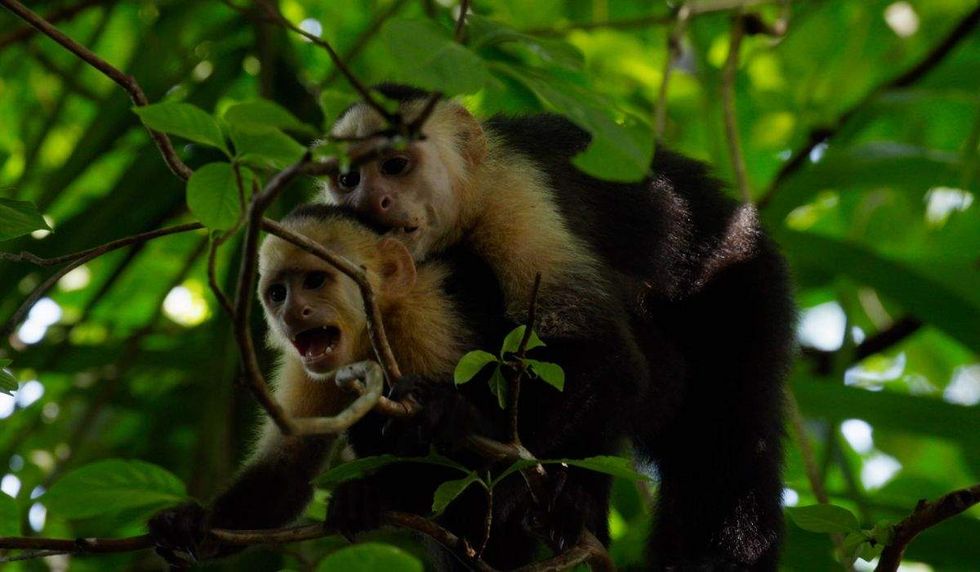 Male capuchins matingNicole Bramley
The documentary repeatedly returns to the idea that generations of scientists often observed sexual diversity in nature while simultaneously dismissing, minimizing, or failing to publish these findings because they contradicted prevailing assumptions about gender and reproduction.
One scientist in the film describes homosexuality in animals as “one of the best-kept secrets” in biology.
Another recounts witnessing two male primates having sex in the field for the first time and realizing that the behavior was treated not as important scientific data, but as something embarrassing or aberrational. “Sometimes this happens,” a field assistant casually explains.
Sometimes this happens. The phrase quietly becomes one of the film’s central revelations.
Denny, who began developing the project in 2015, says in an interview with The Advocate that the film grew directly out of her own upbringing in conservative Texas, where she said she was taught in school that queerness was unnatural and girls were inherently inferior.
“In my high school biology class, our teacher invited students to walk out of class if they were offended by the theory of evolution,” Denny says. “But no teacher or administrator ever checked in on us queer kids to see if we were offended by being relentlessly bullied every day.”
Reading Roughgarden’s work changed her understanding not only of science, but of herself.
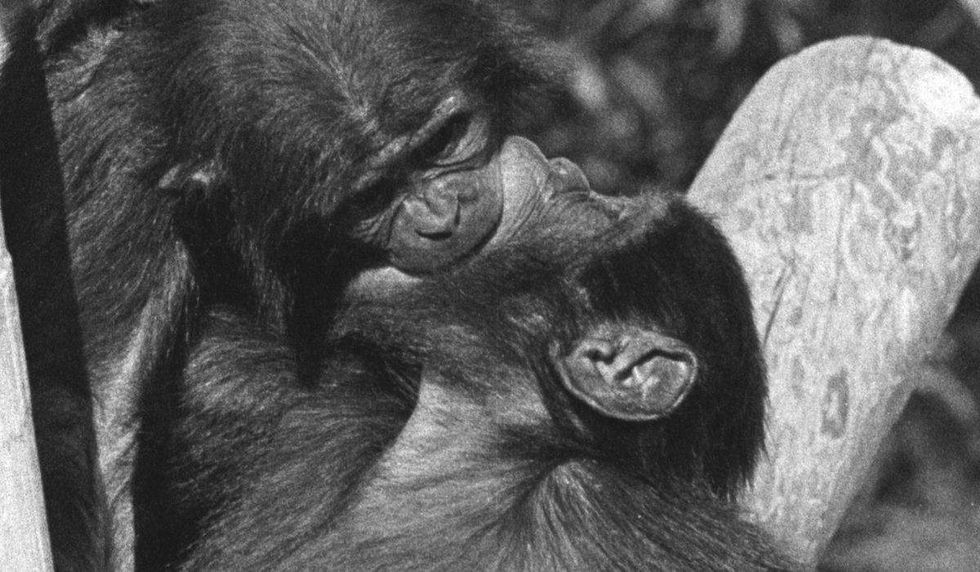 Male bonobos kissing.Dr. Frans de Waal
“I finally got that feeling that intellectually I knew this was true, but it’s different to feel it in your body,” Denny says. “Like, ‘Oh, I belong here on Earth, just like anybody else, and nobody can tell me I don’t belong.’”
Second Nature refuses the sterile tone often associated with educational documentaries. It is playful, horny, weird, emotional, and, occasionally, delightfully unhinged.
Scientists enthusiastically discuss duck genitalia evolution, “penis fencing” bonobos, giant snake clitorises, and labyrinthine bird vaginas designed to thwart forced mating. One researcher proudly inflates anatomical molds in a lab while explaining that science has historically devoted far more attention to penises than vaginas.
“It’s inherently fun and funny when you’re talking about penis-fencing bonobos,” Denny says. “There’s no need to make that dry.”
Again and again, the film destabilizes ideas Americans are often taught to regard as immutable truths. In bonobo societies, females form cooperative alliances and dominate males. In many bird species, pair bonding exists alongside widespread nonmonogamy. Male seahorses become pregnant. Fish routinely change sex. Some primates form same-sex bonds to support social cohesion and resolve conflicts.
The viewer begins to understand that nature is not organized around the moral certainties humans project onto it.
Page sees the film as directly connected to the escalating backlash against transgender people.
“I’d love for people to sit with just sort of the level of indoctrination that’s gotten you so stuck to these views that actually just simply aren’t factually true,” he says.
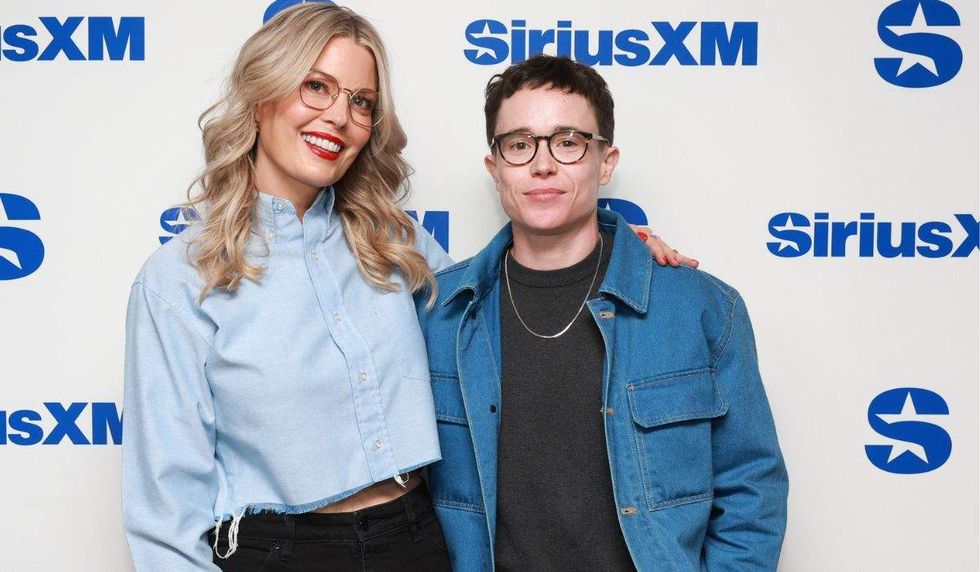 Drew Denny (left) and Elliot Page.Sarah Goodell
He added that the suppression of this scientific information has consequences extending far beyond politics. “What the documentary also really shows is the impacts of what happens when this information is suppressed,” Page says.
Denny notes that research cited in the film has been associated with reductions in self-harm and suicide among queer youth.
“It’s those very people who are barring young people from accessing information that’s literally been proven to save their lives,” Denny says.
At one point, Page reflects on how many people hold on to binary systems because uncertainty is frightening. “I think people really want to cling to that reality because it’s scary to be alive,” Page says. “It’s scary to not know.”
Second Nature suggests that nature itself has never shared that fear.
Watch the trailer for Second Nature below.