'%3E%3Cpath d='M16.3574 35.6519H12.9537L15.0491 18.8873L16.3574 35.6519ZM30.4229 54.0093L22.309 0.994385H7.91795L0 54.0093H10.6634L11.5802 46.3855H17.4014L17.9914 54.0093H30.4229Z' fill='%23971B20'/%3E%3Cpath d='M48.2073 41.8813C48.2073 43.4049 47.4892 44.0011 46.1144 44.0011H43.7595V11.0687H46.1144C47.4892 11.0687 48.2073 11.6636 48.2073 13.1885V41.8813ZM59.5273 43.6695V11.3326C59.5273 3.71323 53.5729 0.994385 47.8157 0.994385H31.7213V54.0093H47.8157C53.5729 54.0093 59.5273 51.29 59.5273 43.6695Z' fill='%23971B20'/%3E%3Cpath d='M90.183 0.994385H78.6039L75.0711 30.6157L71.9955 0.994385H59.4346L69.2474 54.0093H80.373L90.183 0.994385Z' fill='%23971B20'/%3E%3Cpath d='M107.063 42.3448C107.063 43.7359 105.951 44.5974 104.643 44.5974C103.269 44.5974 102.157 43.7359 102.157 42.3448V12.658C102.157 11.2676 103.269 10.4058 104.643 10.4058C105.951 10.4058 107.063 11.2676 107.063 12.658V42.3448ZM119.233 43.2723V11.7312C119.233 6.36384 112.952 -3.8147e-06 104.643 -3.8147e-06C96.2667 -3.8147e-06 89.9867 6.36384 89.9867 11.7312V43.2723C89.9867 48.6393 96.2667 55 104.643 55C112.952 55 119.233 48.6393 119.233 43.2723Z' fill='%23971B20'/%3E%3Cpath d='M150.976 43.9349V33.7309H139.069V42.3448C139.069 43.7359 137.957 44.5974 136.582 44.5974C135.076 44.5974 133.964 43.7359 133.964 42.3448V12.658C133.964 11.2676 135.076 10.4058 136.582 10.4058C137.957 10.4058 139.069 11.2676 139.069 12.658V21.2723H150.976V11.0687C150.976 5.70107 145.283 -3.8147e-06 136.582 -3.8147e-06C127.75 -3.8147e-06 121.796 5.70107 121.796 11.0687V43.9349C121.796 49.3022 127.75 55 136.582 55C145.283 55 150.976 49.3022 150.976 43.9349Z' fill='%23971B20'/%3E%3Cpath d='M167.478 35.6519H164.076L166.17 18.8873L167.478 35.6519ZM181.544 54.0093L173.432 0.994385H159.037L151.123 54.0093H161.785L162.704 46.3855H168.523L169.114 54.0093H181.544Z' fill='%23971B20'/%3E%3Cpath d='M205.412 10.4058V0.994385H177.081V10.4058H185.392V54.0093H197.428V10.4058H205.412Z' fill='%23971B20'/%3E%3Cpath d='M230.002 54.0093V43.9349H218.914V31.8746H226.635V21.8028H218.914V10.4058H230.002V0.994385H206.875V54.0093H230.002Z' fill='%23971B20'/%3E%3C/g%3E%3Cdefs%3E%3CclipPath id='clip0_260_7080'%3E%3Crect width='230' height='55' fill='white'/%3E%3C/clipPath%3E%3C/defs%3E%3C/svg%3E)
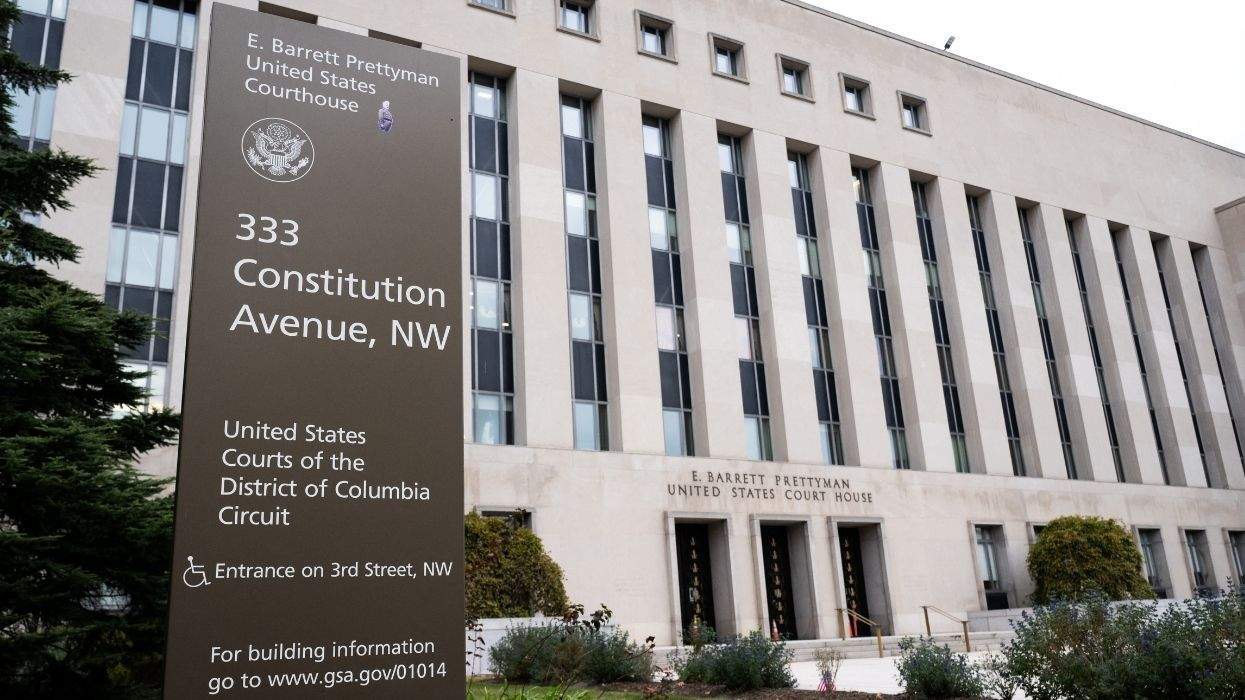

Lawyers representing transgender service members challenging the Trump administration’s renewed ban on trans military service accused the government on Wednesday of misleading the U.S. Court of Appeals for the D.C. Circuit about both the factual record and how the policy is being enforced, arguing that Justice Department attorneys made false and improper representations last week.
Keep up with the latest in LGBTQ+ news and politics. Sign up for The Advocate's email newsletter.
In a post-argument letter to the court in Talbott v. United States, plaintiffs’ attorneys said the government incorrectly told judges during oral argument last Thursday that no transgender service members had been separated under the ban. The letter states that this claim was contradicted by evidence obtained after the hearing.
“Following the hearing, Plaintiffs-Appellees were contacted by multiple former service members who were involuntarily separated pursuant to the [new policy],” the attorneys wrote.
Related: Meet the transgender Army lieutenant who is challenging Donald Trump's military ban
Related: Outrage after Pete Hegseth’s Pentagon tries to quietly move to kick out transgender troops
One of those service members, the letter states, is Thackery Keuma, who served for 12 years in the New Mexico Army National Guard. According to the filing, Keuma went before an administrative separation board in October. The board reached a determination to involuntarily separate Keuma under the policy because he is transgender, even as it recommended that the separation be stayed. The letter further states that Keuma’s reenlistment was barred while litigation challenging the policy was pending and that he was ultimately discharged.
The letter also cites Angela Troska, who served for more than 20 years as an enlisted member of the U.S. Coast Guard. According to the filing, Troska was informed on September 22 that she would be separated under the transgender military ban, with an effective date of October 29. She did not receive an administrative separation board, and her separation was finalized on December 17, with paperwork stating she was involuntarily separated pursuant to the policy, according to the filing.
“Plaintiffs-Apellees raise these examples to ensure that the Court is aware of the ongoing harms faced by transgender service members who face past or imminent discharge due to the transgender military ban,” GLAD Law attorney Michael Haley, who is part of the Talbott legal team, wrote.
During the January 22 hearing, Deputy Associate Attorney General Abhishek Kambli told a three-judge panel that no service members had yet been discharged under the policy. He said separations would occur only after service members were identified through annual physical health assessments, notified that they were subject to discharge, and given an opportunity to appear before an administrative separation board. Kambli also told the court that no waiver decisions had yet been made.
Under questioning, however, Kambli acknowledged that the plaintiffs before the court would not qualify for waivers under the policy’s criteria and conceded that once the process began, their discharge would ultimately be unavoidable.
“So it’s a meaningless process,” Judge Judith Ann Wilson Rogers said. “It’s just moving paper around. There’s no chance that one of the plaintiffs could continue to serve.”
Attorney Shannon Minter, legal director of the National Center for LGBTQ Rights, who represents the plaintiffs, said the government’s account at argument mischaracterized both the record and the real-world impact of the policy.
Kambli did not immediately respond to The Advocate’s request for comment.
“It is telling that the government seems to recognize that it can’t defend this irrational policy without misrepresenting the facts,” Minter told The Advocate. “I was deeply concerned about the government’s misrepresentations at the argument, including the false claim that no transgender service members have been separated pursuant to the ban. That is blatantly false.”
Minter added, “We hope the court recognizes that they were hearing a number of misrepresentations and that they will carefully read the record in this case and defer to the district court’s thorough, detailed, and accurate findings of fact."
He emphasized that the case was fully litigated in the lower court and that the appellate court is not tasked with relitigating factual disputes.
“The role of an appellate court is not to rehear or reweigh evidence,” Minter said. “There was a three-day hearing below in which plaintiffs presented voluminous evidence that transgender service members are fit and meet all standards and have benefited our country and the military, including testimony from the senior officials who were responsible for implementing the policy permitting transgender service.”
Related: New Pentagon memo dictates how transgender troops must look to defend their service
By contrast, Minter said, “The government chose to put on no witnesses and no evidence and conceded that they have no evidence to back up their negative claims about transgender people.”
He also said the government conceded that gender dysphoria is the only medical condition that triggers automatic separation rather than individualized evaluation.
“The government also conceded that there is no medical condition other than gender dysphoria that results in automatic discharge from the military,” Minter said, adding that it was “very disturbing to hear counsel for the government try to deny that established fact at the oral argument.”
Minter said the manner in which the policy was adopted and implemented further underscores the plaintiffs’ concerns.
“Everything about the adoption and implementation of this policy has been irregular and a stark departure from ordinary military process,” he said. “We very much hope the courts will follow legal process here and not allow the government to create a new false record on appeal.”
Related: Supreme Court allows Trump administration to enforce transgender military ban
Related: Federal judge blocks Trump's transgender military ban
“These service members deserve the same legal protections and the same legal process given to every other person in this country,” Minter added. “There’s a very clear factual record in this case, and it was improper for the government to try to introduce new facts at an appellate argument and even more improper to introduce facts that are blatantly false.”
The government has relied heavily on a recent U.S. Supreme Court stay in another case, which temporarily permitted the ban to take effect while litigation continues. During oral argument, Kambli acknowledged that the Supreme Court provided no explanation for its decision, a point Rogers highlighted in questioning whether the district court abused its discretion by issuing an injunction.
At issue now is whether judges believe that the Trump administration acted with animus toward transgender people. The D.C. Circuit has not yet ruled on whether to reinstate that injunction. Until it does, plaintiffs argue, transgender service members remain vulnerable to immediate discharge under a policy the district court previously found unsupported by evidence.
As Rogers observed during the hearing, “There’s absolutely nothing to prevent the government from discharging all of the plaintiffs tomorrow.”