'%3E%3Cpath d='M16.3574 35.6519H12.9537L15.0491 18.8873L16.3574 35.6519ZM30.4229 54.0093L22.309 0.994385H7.91795L0 54.0093H10.6634L11.5802 46.3855H17.4014L17.9914 54.0093H30.4229Z' fill='%23971B20'/%3E%3Cpath d='M48.2073 41.8813C48.2073 43.4049 47.4892 44.0011 46.1144 44.0011H43.7595V11.0687H46.1144C47.4892 11.0687 48.2073 11.6636 48.2073 13.1885V41.8813ZM59.5273 43.6695V11.3326C59.5273 3.71323 53.5729 0.994385 47.8157 0.994385H31.7213V54.0093H47.8157C53.5729 54.0093 59.5273 51.29 59.5273 43.6695Z' fill='%23971B20'/%3E%3Cpath d='M90.183 0.994385H78.6039L75.0711 30.6157L71.9955 0.994385H59.4346L69.2474 54.0093H80.373L90.183 0.994385Z' fill='%23971B20'/%3E%3Cpath d='M107.063 42.3448C107.063 43.7359 105.951 44.5974 104.643 44.5974C103.269 44.5974 102.157 43.7359 102.157 42.3448V12.658C102.157 11.2676 103.269 10.4058 104.643 10.4058C105.951 10.4058 107.063 11.2676 107.063 12.658V42.3448ZM119.233 43.2723V11.7312C119.233 6.36384 112.952 -3.8147e-06 104.643 -3.8147e-06C96.2667 -3.8147e-06 89.9867 6.36384 89.9867 11.7312V43.2723C89.9867 48.6393 96.2667 55 104.643 55C112.952 55 119.233 48.6393 119.233 43.2723Z' fill='%23971B20'/%3E%3Cpath d='M150.976 43.9349V33.7309H139.069V42.3448C139.069 43.7359 137.957 44.5974 136.582 44.5974C135.076 44.5974 133.964 43.7359 133.964 42.3448V12.658C133.964 11.2676 135.076 10.4058 136.582 10.4058C137.957 10.4058 139.069 11.2676 139.069 12.658V21.2723H150.976V11.0687C150.976 5.70107 145.283 -3.8147e-06 136.582 -3.8147e-06C127.75 -3.8147e-06 121.796 5.70107 121.796 11.0687V43.9349C121.796 49.3022 127.75 55 136.582 55C145.283 55 150.976 49.3022 150.976 43.9349Z' fill='%23971B20'/%3E%3Cpath d='M167.478 35.6519H164.076L166.17 18.8873L167.478 35.6519ZM181.544 54.0093L173.432 0.994385H159.037L151.123 54.0093H161.785L162.704 46.3855H168.523L169.114 54.0093H181.544Z' fill='%23971B20'/%3E%3Cpath d='M205.412 10.4058V0.994385H177.081V10.4058H185.392V54.0093H197.428V10.4058H205.412Z' fill='%23971B20'/%3E%3Cpath d='M230.002 54.0093V43.9349H218.914V31.8746H226.635V21.8028H218.914V10.4058H230.002V0.994385H206.875V54.0093H230.002Z' fill='%23971B20'/%3E%3C/g%3E%3Cdefs%3E%3CclipPath id='clip0_260_7080'%3E%3Crect width='230' height='55' fill='white'/%3E%3C/clipPath%3E%3C/defs%3E%3C/svg%3E)
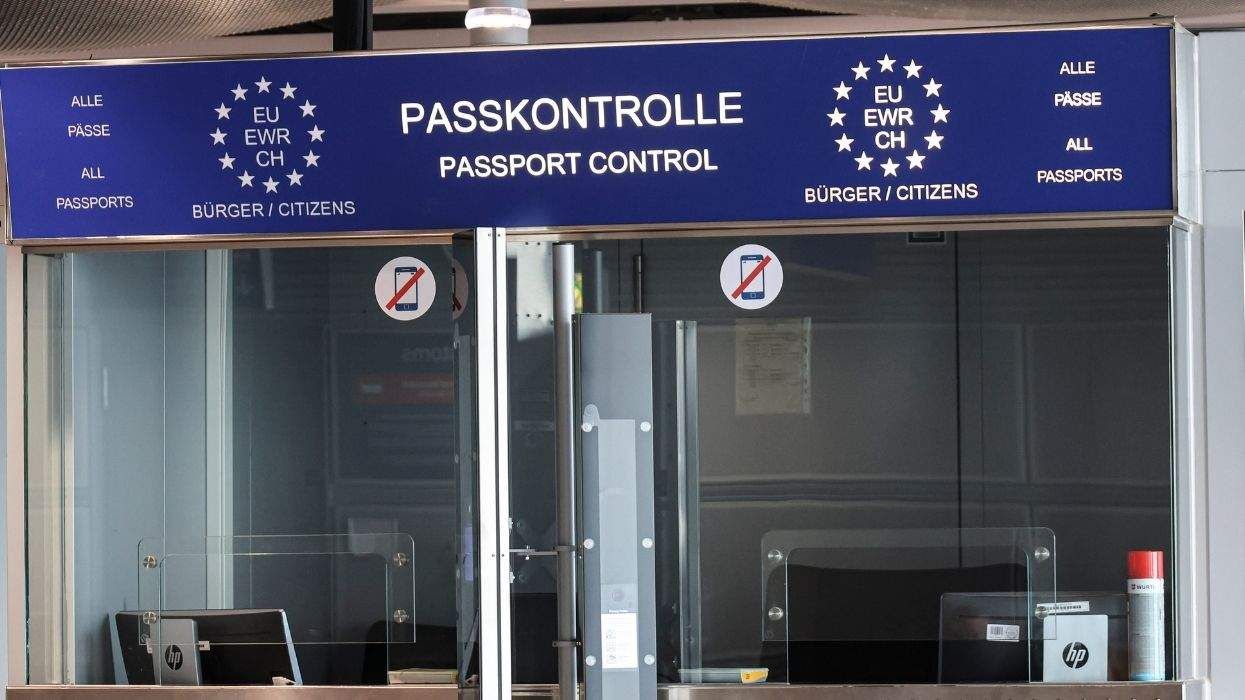
Across the country, LGBTQ+ Americans, people of color, women, religious minorities, and others who feel newly vulnerable under the second Trump administration are quietly constructing “Plan B” escape strategies: securing second residencies, lining up alternate passports, moving assets offshore, scouting communities abroad, or mapping literal escape routes to sanctuary states or neighboring countries.
Keep up with the latest in LGBTQ+ news and politics. Sign up for The Advocate's email newsletter.
Some are wealthy enough to buy investment visas in Europe. Others are applying for digital nomad permits that require little more than proof of remote income. Still others are assembling go-bags, stockpiling medication, or rehearsing how they would reach the Canadian border if federal restrictions tightened.
But the phenomenon, a blend of dread, pragmatism, and resignation, is unmistakably rising. None of the people interviewed for this story wants to leave their country. All emphasized that they hope their Plan B remains unused.
Related: Trump will ban trans women from women's prisons by removing trans inmates from rape protections
They are preparing anyway, because, they say, preparation now feels like survival.
A business built on American anxiety
Eric Major, CEO of the London-based global migration firm Latitude, says his American business has undergone a transformation.
“What used to be a 90 percent, ‘I’m not moving, but I want an insurance policy,’ is now turning into, ‘No, I am moving,’” Major said. “People are saying, ‘I don’t like what I’m hearing or what I’m living or what I’m experiencing.’”
Major, whose company operates across Europe and the Americas, says the shift began in late 2023 and accelerated after Trump’s second inauguration in January, when the administration moved quickly to reinstate the transgender military ban, strip LGBTQ+ recognition from federal websites, and target health care and civil rights protections.
Related: Trump uses child abuse proclamation to attack transgender people
For LGBTQ+ clients, timelines are now one of the first concerns.
The timeline: from 30 days to two years
Major stressed that processing times vary dramatically depending on the country, the type of visa, and how overwhelmed that nation is by American demand.
He says some countries operate at almost lightning speed: Costa Rica, Panama, and other smaller jurisdictions can process residency in as little as 30 to 60 days, depending on background checks and documentation. Malta, too, can process a residency application in approximately three months, making it one of the faster European programs, Major said.
Meanwhile, he noted, countries like Portugal offer popular pathways but now struggle under the sheer volume of applicants. Major said that Portugal’s processing time ranges from six months on the low end to nearly two years on the high end, describing it as a country “victim of its own success.”
Related: Donald Trump bizarrely blames transgender rights for looming government shutdown
Canada, from where Major is originally from, he added, has become similarly stretched; in his experience, no one should expect to receive anything there in under 18 months.
He also emphasized the importance of timing and planning in the application process. Suppose clients know they cannot move until a certain date. In that case, he says the firm essentially reverse-engineers the application, starting preparations early but holding submission to align with a client’s planned departure. Some countries require newly approved residents to arrive almost immediately after approval, he said, which means planning a move is as important as qualifying for one.
‘America is not a safe place in my mind right now’
For “Mark,” not his real name, a gay New Yorker who works as both a physician and a consultant, the ability to pursue multiple residencies is directly tied to his financial circumstances, something he is quick to acknowledge.
He describes himself as “speaking from a very affluent gay perspective,” noting that he has the freedom to work remotely, the savings to invest abroad, and the professional flexibility to relocate. “I have the ability to do such things,” he said. “For me, it was a very no-brainer decision.”
He said the speed at which he could leave mattered as much as the destination.
“When Trump was in office first, I saw the writing on the wall,” Mark told The Advocate in an interview. “I decided one needed an escape mechanism from the United States.”
Related: This is why it's okay to be angry at anyone who voted for Trump
Mark obtained residency in Portugal, formed a company to gain residency in Panama, and secured status in a Caribbean country. These routes required financial resources, but he stressed that even many of his patients, including those with modest means, are pursuing lower-cost options such as digital nomad visas or temporary residency permits.
Mark said that a significant portion of his own patient population is preparing similar contingency plans. “At least 40 percent of my patients, and 100 percent of my gay patients, all have other residencies now.”
He pointed to Spain’s digital nomad visa, noting that one only needs to show roughly $3,000 in monthly income to qualify. In that program, he said, people can obtain residency and health care after a few years, then become eligible for citizenship after that.
The process brought him a profound sense of security.
“America is not a safe place in my mind right now,” he said. “I’m not going to allow my rights to be taken away from me by some insane lunatic.”
For trans Americans, the calculus is existential
For transgender Americans, the stakes feel even sharper.
Robert, a transgender man in his 60s living in a blue coastal state, began planning immediately after Trump’s inauguration, when the administration reimposed the transgender military ban and targeted trans people’s access to accurate passports and federal recognition.
“I thought we were headed down an authoritarian path — maybe even fascist,” Robert said. “The probability wasn’t zero.”
He initially researched so-called golden passports in the Caribbean, but quickly realized two issues: several of the countries selling them were not LGBTQ+ friendly, and the programs often required investments of $200,000 to $300,000 without guaranteeing a safe environment.
He instead turned to residency programs in Europe and selected Malta, which he identified as one of the most LGBTQ-protective countries in the world. Robert is now deep into the process: he has submitted all documentation, paid the first government fee, and is awaiting final approval before traveling for a required biometric appointment.
But immigration paperwork is only part of his Plan B. Robert has also stockpiled testosterone, a controlled substance, in case access becomes restricted. He has consulted attorneys to secure his real estate holdings, mapped out strategies for exiting the country if his passport is invalidated, and established protocols with his financial institution so that, with a single trigger phrase, his liquid assets can be moved or protected. He said the financial professionals he spoke to did not consider him paranoid; instead, they viewed these preparations as reasonable under the circumstances.
He also acknowledged that his preparation is not something every trans person can do. “My situation is privileged and unique,” he said. “The only thing I tell other trans folks is to at least make a Plan B, even if it’s just knowing how to get to a sanctuary state or across the border.”
For Robert, the red line that would prompt immediate departure is if the government starts signaling that transgender people’s passports could be restricted or invalidated. He said that any move toward requiring trans people to carry identifying markers or any early signs of authoritarian control would also trigger his exit. “Anything akin to the initial steps taken by a fascist regime,” he said.
A new American story
Beyond the logistics and financial planning, the emotional weight of this new reality is heavy.
“People don’t think of what their choices do to people like me,” Robert said. “There’s this level of apathy.”
Mark expressed a similar warning. “Don’t be too late,” he said. “When they start taking passports away and closing borders, it’s too late.”
Major sees this shift reflected in nearly every conversation he has with American clients today. While the process begins with lifestyle questions, financial disclosures, and paperwork, he says the deeper shift is psychological. “Americans are asking: If it gets really bad, where do I go?”
Everyone interviewed emphasized the same hope: that they will never need to use their Plan B.
But preparation itself has become a form of survival.
“I feel it’s a good feeling to be prepared,” Robert said. “I hope I never have to use it. But I’m not willing to gamble my future.”
Mark echoed him, reflecting on how drastically the national mood has shifted. “People usually moved to the United States for better lives. Now people are leaving the United States for better lives.”