'%3E%3Cpath d='M16.3574 35.6519H12.9537L15.0491 18.8873L16.3574 35.6519ZM30.4229 54.0093L22.309 0.994385H7.91795L0 54.0093H10.6634L11.5802 46.3855H17.4014L17.9914 54.0093H30.4229Z' fill='%23971B20'/%3E%3Cpath d='M48.2073 41.8813C48.2073 43.4049 47.4892 44.0011 46.1144 44.0011H43.7595V11.0687H46.1144C47.4892 11.0687 48.2073 11.6636 48.2073 13.1885V41.8813ZM59.5273 43.6695V11.3326C59.5273 3.71323 53.5729 0.994385 47.8157 0.994385H31.7213V54.0093H47.8157C53.5729 54.0093 59.5273 51.29 59.5273 43.6695Z' fill='%23971B20'/%3E%3Cpath d='M90.183 0.994385H78.6039L75.0711 30.6157L71.9955 0.994385H59.4346L69.2474 54.0093H80.373L90.183 0.994385Z' fill='%23971B20'/%3E%3Cpath d='M107.063 42.3448C107.063 43.7359 105.951 44.5974 104.643 44.5974C103.269 44.5974 102.157 43.7359 102.157 42.3448V12.658C102.157 11.2676 103.269 10.4058 104.643 10.4058C105.951 10.4058 107.063 11.2676 107.063 12.658V42.3448ZM119.233 43.2723V11.7312C119.233 6.36384 112.952 -3.8147e-06 104.643 -3.8147e-06C96.2667 -3.8147e-06 89.9867 6.36384 89.9867 11.7312V43.2723C89.9867 48.6393 96.2667 55 104.643 55C112.952 55 119.233 48.6393 119.233 43.2723Z' fill='%23971B20'/%3E%3Cpath d='M150.976 43.9349V33.7309H139.069V42.3448C139.069 43.7359 137.957 44.5974 136.582 44.5974C135.076 44.5974 133.964 43.7359 133.964 42.3448V12.658C133.964 11.2676 135.076 10.4058 136.582 10.4058C137.957 10.4058 139.069 11.2676 139.069 12.658V21.2723H150.976V11.0687C150.976 5.70107 145.283 -3.8147e-06 136.582 -3.8147e-06C127.75 -3.8147e-06 121.796 5.70107 121.796 11.0687V43.9349C121.796 49.3022 127.75 55 136.582 55C145.283 55 150.976 49.3022 150.976 43.9349Z' fill='%23971B20'/%3E%3Cpath d='M167.478 35.6519H164.076L166.17 18.8873L167.478 35.6519ZM181.544 54.0093L173.432 0.994385H159.037L151.123 54.0093H161.785L162.704 46.3855H168.523L169.114 54.0093H181.544Z' fill='%23971B20'/%3E%3Cpath d='M205.412 10.4058V0.994385H177.081V10.4058H185.392V54.0093H197.428V10.4058H205.412Z' fill='%23971B20'/%3E%3Cpath d='M230.002 54.0093V43.9349H218.914V31.8746H226.635V21.8028H218.914V10.4058H230.002V0.994385H206.875V54.0093H230.002Z' fill='%23971B20'/%3E%3C/g%3E%3Cdefs%3E%3CclipPath id='clip0_260_7080'%3E%3Crect width='230' height='55' fill='white'/%3E%3C/clipPath%3E%3C/defs%3E%3C/svg%3E)
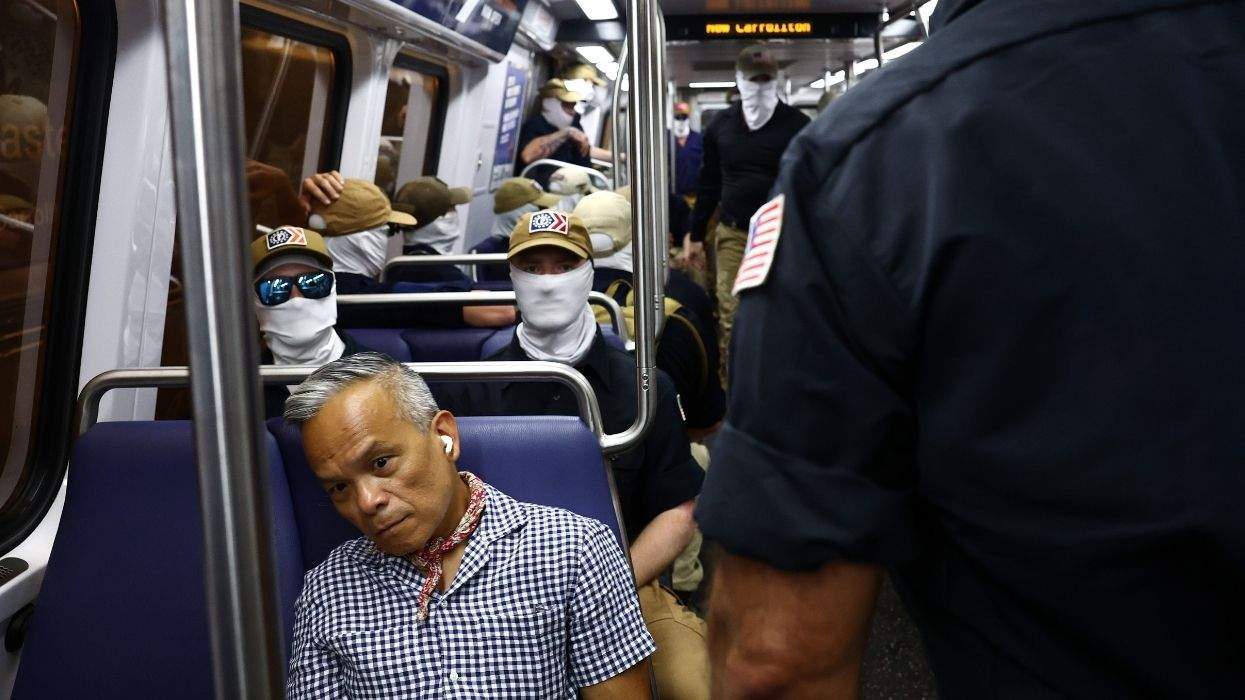
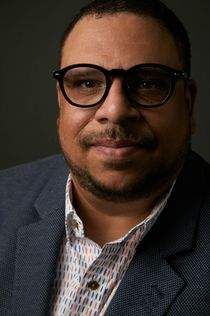
On Saturday, Roswell Encina was on his way from Washington, D.C., to meet friends for a Fourth of July party in Maryland when the train car changed.
A few stops earlier, the Metro had felt like the nation’s capital on Independence Day, with families in red, white, and blue, tourists heading toward the National Mall, parents pointing out landmarks to children, the ordinary choreography of a holiday built around a national story Americans are still arguing over.
For Encina, the president and CEO of the U.S. Capitol Historical Society, it was the kind of scene that usually affirms the work. Then, at either Eastern Market or Potomac Avenue, he saw them: men in masks, hats, and sunglasses, waiting to board.
“I think I froze a little bit,” Encina told The Advocate in an interview. “At first, I’m like thinking, oh my, who are these folks?”
They were members of Patriot Front, the white nationalist group that marched through Washington, D.C., on Saturday as the capital marked the 250th anniversary of American independence. Hundreds of masked members moved through the city near the U.S. Capitol and Union Station before boarding Metro trains and exiting at New Carrollton, a D.C. suburb in Maryland.
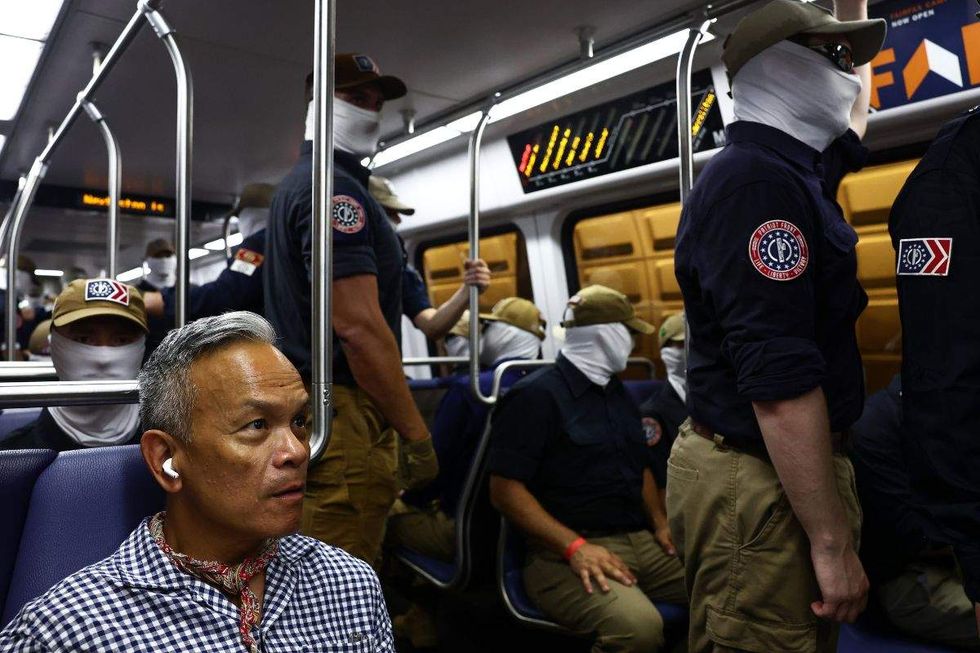 Roswell Encina says he was terrified when a group of white nationalists from Patriot Front surrounded him on a D.C. Metro train.Finn Gomez/Getty Images
Related: Hundreds of masked racist extremists march in D.C. as Trump’s Freedom 250 celebration unfolds
Encina was one of the riders caught inside that tableau. In a Getty Images photograph by Finn Gomez that spread widely online, Encina sits on the train as masked members of the white supremacist group crowd around him.
Encina said he did not know at first who the men were. He noticed patches and logos and began piecing it together. He texted friends during the ride so someone would know where he was.
“I would be lying if I said no,” he said when asked whether he was scared. “I was terrified, honestly, just because I wasn’t sure what the motives were.”
Related: JD Vance rages about ‘radical gender ideology’ while white supremacists march along National Mall
The men stayed on the train with him for about 25 minutes, he said. At first, he thought only his car and perhaps the next one were filled. “When I saw that there were really hundreds of them getting off at New Carrollton, it really did kind of take my breath away,” he said.
On Instagram on Sunday, Encina wrote that he had found himself on a “train with hundreds of masked white supremacists.” He called the moment unsettling, especially on the Fourth of July.
“I came to this country as an infant and became a U.S. citizen,” he wrote. “So sitting there, on the Fourth of July, I couldn’t help but think about the promise of America and the work still required to protect it.”
Encina is Filipino American. He is an out gay man. He leads an institution devoted to the history of the U.S. Capitol, a building whose meaning has always depended on whether the country is willing to make “the people” mean more people.
His father served in the U.S. Navy. His parents, both Filipino, taught him the value of civic engagement, he said, from homeowners association meetings to city council meetings. When Encina turned 18 while living in the Philippines, his father took him to the U.S. Embassy in Manila so he could vote.
“I still celebrate that every time I go to cast and drop my ballot in the ballot box, the value of voting,” he said. “It’s, I think, the minimum each American could do in engagement.”
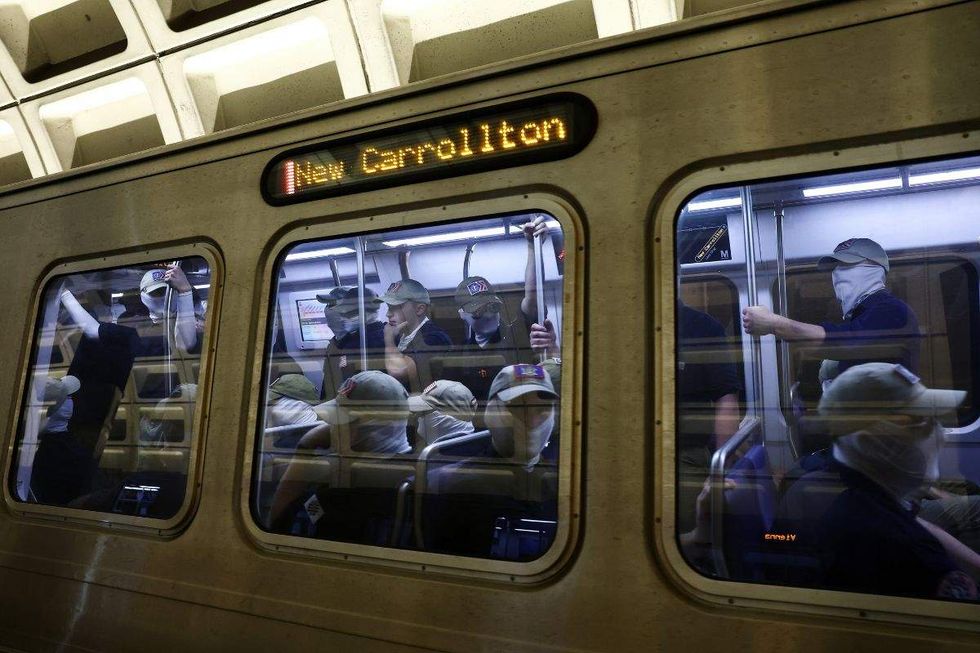 Hundreds of masked Patriot Front white nationalists took over several Metro trains in D.C. on July 4, 2026.Finn Gomez/Getty Images
Patriot Front emerged from Vanguard America after the deadly 2017 Unite the Right rally in Charlottesville, Virginia. As they usually do, on Saturday, members wore khaki pants, blue shirts, white face coverings and sunglasses, and carried Confederate flags, Patriot Front flags, and altered American flags while chanting “Reclaim America.” D.C. police told Reuters there were no arrests, complaints, or calls for assistance connected to the march.
The Washington Metropolitan Area Transit Authority, the regional agency that operates Metrorail and Metrobus in the D.C. area, said that officials were aware of Patriot Front’s presence.
"The Metro system is open to all fare-paying members of the public. Metro Transit Police were aware of the group's presence once they entered the system and monitored them in the same way Metro monitors large crowds within the system daily," a WMATA spokesperson told The Advocate. "Metro did not receive any reports of crimes related to this group."
For Encina, the moment on Metro was frightening because it was both sudden and familiar. America has been here before, he said, even if the uniforms change.
“It made me realize that we do have to work harder, maybe even extra harder now,” he said. “History doesn’t get erased; it gets documented, it gets preserved, but most importantly, it’s shared and taught.”
He said he thought about the country’s long fights over civil rights, women’s rights, and LGBTQ+ rights. He thought about the people who had endured far worse public intimidation, like Ruby Bridges or Black Americans sitting at hostile lunch counters. He was careful not to compare himself to them. But he said the history was impossible to miss.
“You don’t know what to do in the moment,” he said.
The Metro, he said, is supposed to be one of the great civic equalizers.
“Everybody could use it, whether you like them or not, or agree with them,” Encina said. “There are places in our society that allow us to hopefully be civil and live together, whether it’s on the Metro, whether it’s at a rec center, whether it’s at your public library.”
Encina said he was initially reluctant to post about the image or speak publicly. He thought about another widely shared Reuters photo from the same day, of a young Black woman on the Metro, surrounded by members of the group. Her name is not known publicly, and Encina said he is glad people are not hounding her. Likewise, he mentioned another image of a Black man surrounded by Patriot Front members on the train.
Encina said he decided to speak out because he could.
“I realized I do have this platform,” he said, adding that he hoped it could help people understand what people of color and other marginalized communities experience in moments of public intimidation.
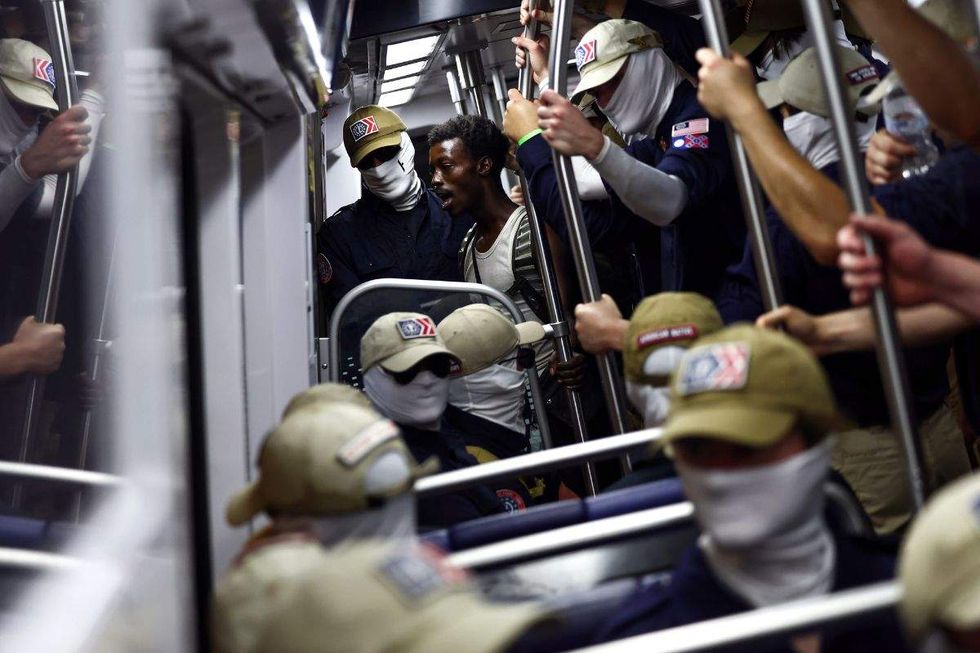 Members of Patriot Front, a white nationalist group, surround a Black man who is riding the D.C. Metro on July 4, 2026.Finn Gomez/Getty Images
It was not the first time Encina had felt targeted on Metro. Several years ago, during a rise in anti-Asian violence during the height of the COVID-19 pandemic, he said, teenagers threw drinks at him and an older Asian American woman on a train. He filed a police report then, he said, because the incident needed to be documented.
Saturday felt like another moment that needed a witness.
The U.S. Capitol Historical Society, founded in 1962 and chartered by Congress in 1978, is a nonpartisan educational nonprofit devoted to preserving and sharing the history of the Capitol, Congress, and the people who work there. Encina said he wants people to see themselves reflected in the Capitol. The building is on a hill, he noted, because it symbolizes Congress, which represents the people.
“It’s up there to remind the American public that it represents all of us,” he said.
Asked what he would say to the men who surrounded him, Encina instead talked about shared history, responsibility, and the work of self-government.
“We all have a shared history and a shared story, the good and the bad,” he said. “We also have to understand that, despite our division, we’re still all Americans. We have to hold on to that.”
Then he added the harder part: “To move this country for another 250 years, we have to figure things out. And the way to figure things out is to understand it and to participate in it.”
In his Instagram post, Encina thanked Gomez, the Getty photographer, whose presence on the train he said was “quietly reassuring.” In the interview, he said seeing a photographer there gave him some comfort because someone was documenting what was happening.
“As Lincoln said, we have to summon our better angels,” he said. “And I’m hoping by speaking out, this is my way of doing that.”
Editor's note: This story was updated with a response from WMATA.