'%3E%3Cpath d='M16.3574 35.6519H12.9537L15.0491 18.8873L16.3574 35.6519ZM30.4229 54.0093L22.309 0.994385H7.91795L0 54.0093H10.6634L11.5802 46.3855H17.4014L17.9914 54.0093H30.4229Z' fill='%23971B20'/%3E%3Cpath d='M48.2073 41.8813C48.2073 43.4049 47.4892 44.0011 46.1144 44.0011H43.7595V11.0687H46.1144C47.4892 11.0687 48.2073 11.6636 48.2073 13.1885V41.8813ZM59.5273 43.6695V11.3326C59.5273 3.71323 53.5729 0.994385 47.8157 0.994385H31.7213V54.0093H47.8157C53.5729 54.0093 59.5273 51.29 59.5273 43.6695Z' fill='%23971B20'/%3E%3Cpath d='M90.183 0.994385H78.6039L75.0711 30.6157L71.9955 0.994385H59.4346L69.2474 54.0093H80.373L90.183 0.994385Z' fill='%23971B20'/%3E%3Cpath d='M107.063 42.3448C107.063 43.7359 105.951 44.5974 104.643 44.5974C103.269 44.5974 102.157 43.7359 102.157 42.3448V12.658C102.157 11.2676 103.269 10.4058 104.643 10.4058C105.951 10.4058 107.063 11.2676 107.063 12.658V42.3448ZM119.233 43.2723V11.7312C119.233 6.36384 112.952 -3.8147e-06 104.643 -3.8147e-06C96.2667 -3.8147e-06 89.9867 6.36384 89.9867 11.7312V43.2723C89.9867 48.6393 96.2667 55 104.643 55C112.952 55 119.233 48.6393 119.233 43.2723Z' fill='%23971B20'/%3E%3Cpath d='M150.976 43.9349V33.7309H139.069V42.3448C139.069 43.7359 137.957 44.5974 136.582 44.5974C135.076 44.5974 133.964 43.7359 133.964 42.3448V12.658C133.964 11.2676 135.076 10.4058 136.582 10.4058C137.957 10.4058 139.069 11.2676 139.069 12.658V21.2723H150.976V11.0687C150.976 5.70107 145.283 -3.8147e-06 136.582 -3.8147e-06C127.75 -3.8147e-06 121.796 5.70107 121.796 11.0687V43.9349C121.796 49.3022 127.75 55 136.582 55C145.283 55 150.976 49.3022 150.976 43.9349Z' fill='%23971B20'/%3E%3Cpath d='M167.478 35.6519H164.076L166.17 18.8873L167.478 35.6519ZM181.544 54.0093L173.432 0.994385H159.037L151.123 54.0093H161.785L162.704 46.3855H168.523L169.114 54.0093H181.544Z' fill='%23971B20'/%3E%3Cpath d='M205.412 10.4058V0.994385H177.081V10.4058H185.392V54.0093H197.428V10.4058H205.412Z' fill='%23971B20'/%3E%3Cpath d='M230.002 54.0093V43.9349H218.914V31.8746H226.635V21.8028H218.914V10.4058H230.002V0.994385H206.875V54.0093H230.002Z' fill='%23971B20'/%3E%3C/g%3E%3Cdefs%3E%3CclipPath id='clip0_260_7080'%3E%3Crect width='230' height='55' fill='white'/%3E%3C/clipPath%3E%3C/defs%3E%3C/svg%3E)

On a comfortably mild and breezy Monday night in early fall, within steps of Capital One Arena in Washington, D.C., Penguin Random House transformed a rooftop overlooking the nation’s capital into a rally for the freedom to read.
Keep up with the latest in LGBTQ+ news and politics. Sign up for The Advocate's email newsletter.
The Save Our Stories Supper, held at the Martin Luther King Jr. Memorial Library to mark Banned Books Week, brought together authors, educators, and advocates as the publisher launched its third annual Banned Wagon Tour, a campaign through Washington and Philadelphia that distributes banned books and mobilizes readers to defend access to them.
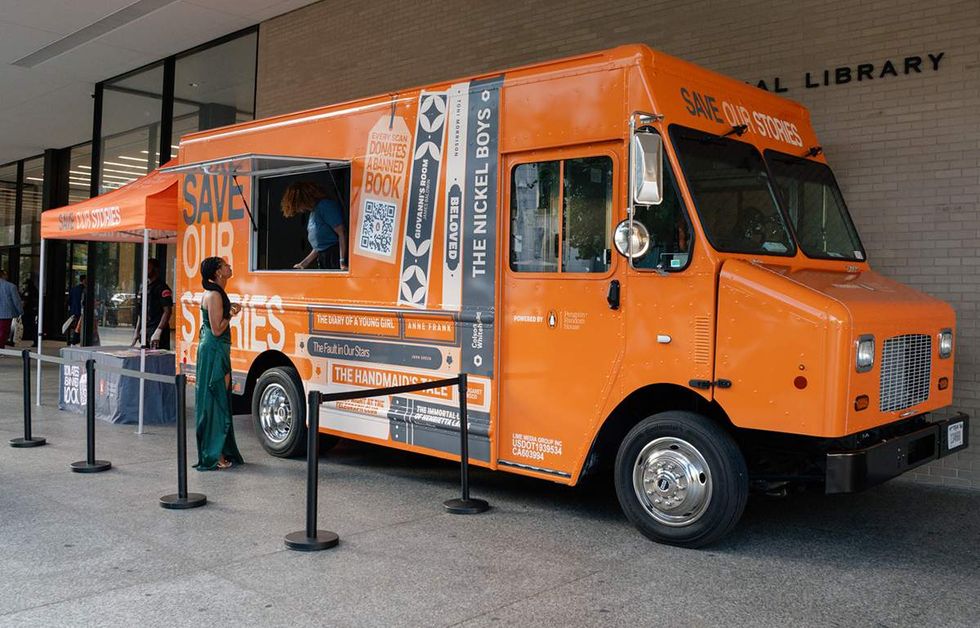 Attendees received free books from the Save Our Stories book ban van.Courtesy Penguin Random House
Guests began with an outdoor rooftop reception featuring an open bar and passed hors d’oeuvres before sitting down to a dinner of steak, salmon, plantains, rice and beans, and a fiesta salad starter, followed by dessert pastries. The convivial setting contrasted with the urgency of the evening’s message: that censorship is spreading and that the right to read is under attack.
“This is a critical moment for our industry,” Penguin Random House CEO Nihar Malaviya said in a press release, “when defending the First Amendment and the freedom to read has never been more urgent.”
That urgency is grounded in numbers. PEN America documented nearly 7,000 book bans in the 2024–2025 school year, with titles featuring LGBTQ+ characters and authors of color among the most frequently targeted. The publisher, recently named to Time’s list of the world’s most influential companies, has helped draft Freedom to Read legislation in more than two dozen states and won a major federal case overturning Florida’s recent book-ban law.
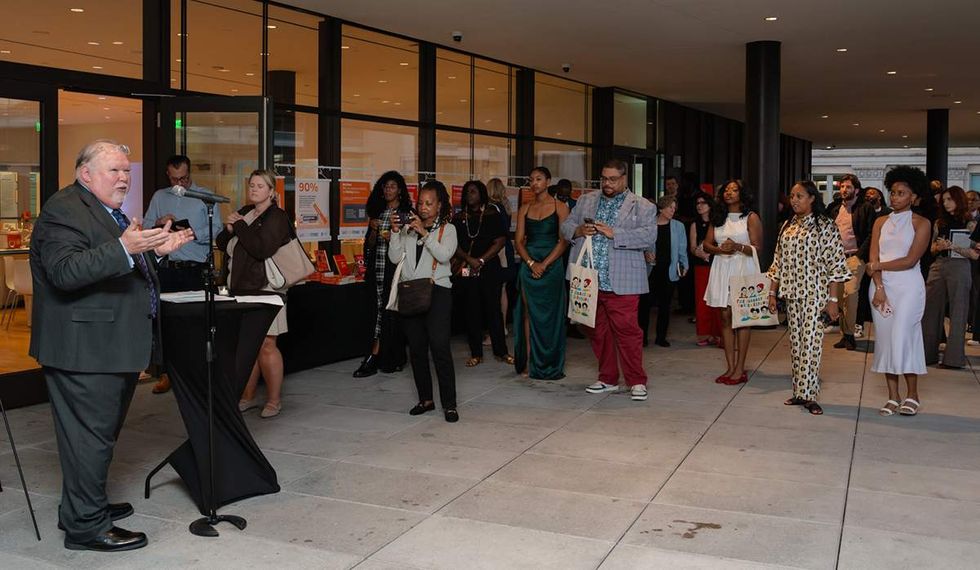 Skip Dye, chair of Penguin Random House’sIntellectual Freedom Taskforce, welcomes attendees to the Save Our Stories Supper.Courtesy Penguin Random House
Among the evening’s most moving speakers was Mychal Threets, PBS’s resident librarian and the new host of Reading Rainbow. Known for his joyful, affirming social media posts about libraries and mental health, Threets was generous with his time, posing for selfies, chatting with guests, and reflecting on taking over the role once held by LeVar Burton, whom he praised for inspiring a generation of readers.
Related: Kamala Harris defends LGBTQ+ teachers & condemns book bans at teacher labor union conference
“Banning books is banning stories. Banning stories is banning existence. Banning existence is banning hope,” Threets told the crowd. “No voice should ever be silenced. No voice should ever be made to feel invisible. Together, we have the joy of uplifting stories.”
Jason Reynolds, the acclaimed novelist and former National Ambassador for Young People’s Literature, added, “Sometimes reading the books that everyone is afraid of gives us permission to write the thing that we are afraid of.”
For Trevor Baldwin, the straight nephew of literary gay civil rights icon James Baldwin, the evening’s themes were deeply personal. In an interview with The Advocate, he said that his uncle’s legacy of honesty and defiance remains a guiding post.
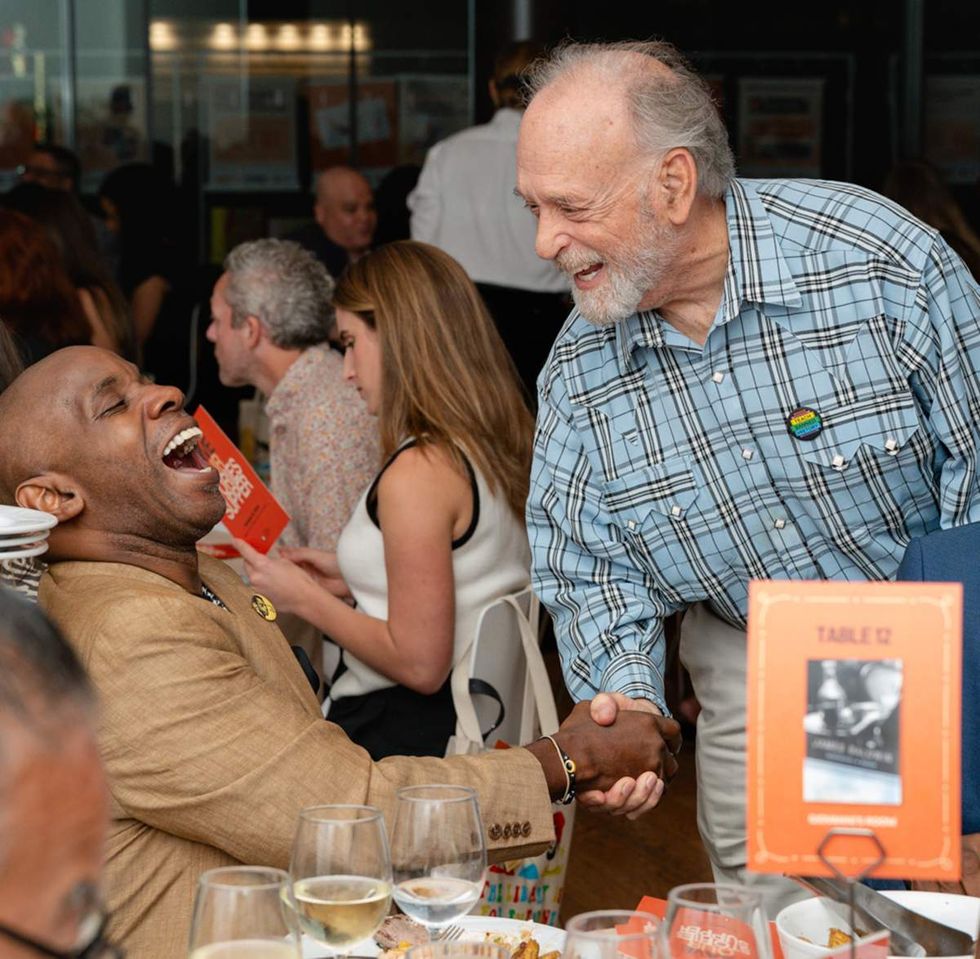 (from left) Trevor Baldwin and Mark VonnegutCourtesy Penguin Random House
“He made the choice early on to let you know who he was,” Baldwin said. “The question is, Would a publisher today have the courage to publish Giovanni’s Room in 2025? That’s the irony of it.”
Baldwin said his uncle’s work transcended labels. “Giovanni’s Room didn’t turn me gay,” he said. “I can read it as literature. Something might turn someone off, but that’s not a reason to erase it.”
Related: There have already been 4,000 instances of book banning in America this school year: report
Authors throughout the night framed the defense of books as a moral and civic imperative.
“Banned books save lives,” said Mark Vonnegut, son of writer Kurt Vonnegut. “If there is something worth banning, it might be worth reading.”
“To ban books is to ban revolutions — societal and internal,” said Ibram X. Kendi, author of How to Be an Antiracist. “To defend banned books is to defend the revolutions that make us human.”
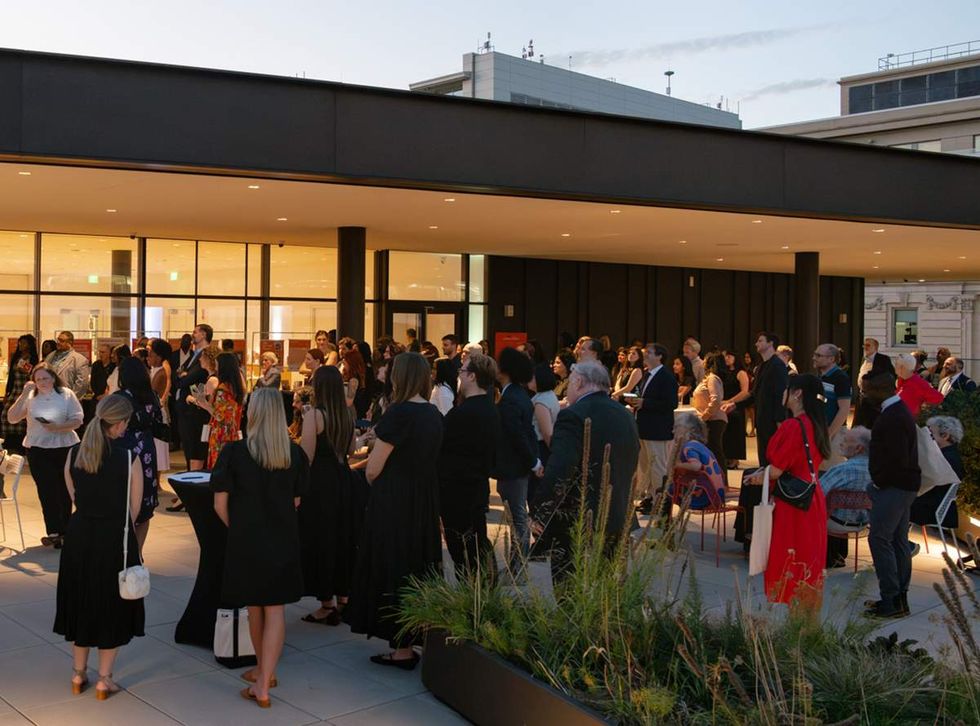 Save Our Stories Supper attendees enjoy drinks and finger foods atop the Martin Luther Jr. Memorial Library in Washington, D.C.Courtesy Penguin Random House
“In small, rural communities, when a child is LGBTQ or BIPOC, oftentimes there is no community,” said Sherry Scheline, director of the Donnelly Public Library in Idaho. “What they have is the stories that we give them. When we save those stories, we are saving those lives.”
Malinda Lo, author of Last Night at the Telegraph Club, noted that bans carry real economic and personal costs. “Getting your books banned does not lead to the bestseller list,” she said. “When our books are banned, our First Amendment rights are violated, and our voices are directly silenced.”
As the evening wound down, David Levithan, a founding member of Authors Against Book Bans, urged vigilance. “We know the tidal wave is coming,” he said. “When the resistance comes, you have to keep pushing anyway.”