'%3E%3Cpath d='M16.3574 35.6519H12.9537L15.0491 18.8873L16.3574 35.6519ZM30.4229 54.0093L22.309 0.994385H7.91795L0 54.0093H10.6634L11.5802 46.3855H17.4014L17.9914 54.0093H30.4229Z' fill='%23971B20'/%3E%3Cpath d='M48.2073 41.8813C48.2073 43.4049 47.4892 44.0011 46.1144 44.0011H43.7595V11.0687H46.1144C47.4892 11.0687 48.2073 11.6636 48.2073 13.1885V41.8813ZM59.5273 43.6695V11.3326C59.5273 3.71323 53.5729 0.994385 47.8157 0.994385H31.7213V54.0093H47.8157C53.5729 54.0093 59.5273 51.29 59.5273 43.6695Z' fill='%23971B20'/%3E%3Cpath d='M90.183 0.994385H78.6039L75.0711 30.6157L71.9955 0.994385H59.4346L69.2474 54.0093H80.373L90.183 0.994385Z' fill='%23971B20'/%3E%3Cpath d='M107.063 42.3448C107.063 43.7359 105.951 44.5974 104.643 44.5974C103.269 44.5974 102.157 43.7359 102.157 42.3448V12.658C102.157 11.2676 103.269 10.4058 104.643 10.4058C105.951 10.4058 107.063 11.2676 107.063 12.658V42.3448ZM119.233 43.2723V11.7312C119.233 6.36384 112.952 -3.8147e-06 104.643 -3.8147e-06C96.2667 -3.8147e-06 89.9867 6.36384 89.9867 11.7312V43.2723C89.9867 48.6393 96.2667 55 104.643 55C112.952 55 119.233 48.6393 119.233 43.2723Z' fill='%23971B20'/%3E%3Cpath d='M150.976 43.9349V33.7309H139.069V42.3448C139.069 43.7359 137.957 44.5974 136.582 44.5974C135.076 44.5974 133.964 43.7359 133.964 42.3448V12.658C133.964 11.2676 135.076 10.4058 136.582 10.4058C137.957 10.4058 139.069 11.2676 139.069 12.658V21.2723H150.976V11.0687C150.976 5.70107 145.283 -3.8147e-06 136.582 -3.8147e-06C127.75 -3.8147e-06 121.796 5.70107 121.796 11.0687V43.9349C121.796 49.3022 127.75 55 136.582 55C145.283 55 150.976 49.3022 150.976 43.9349Z' fill='%23971B20'/%3E%3Cpath d='M167.478 35.6519H164.076L166.17 18.8873L167.478 35.6519ZM181.544 54.0093L173.432 0.994385H159.037L151.123 54.0093H161.785L162.704 46.3855H168.523L169.114 54.0093H181.544Z' fill='%23971B20'/%3E%3Cpath d='M205.412 10.4058V0.994385H177.081V10.4058H185.392V54.0093H197.428V10.4058H205.412Z' fill='%23971B20'/%3E%3Cpath d='M230.002 54.0093V43.9349H218.914V31.8746H226.635V21.8028H218.914V10.4058H230.002V0.994385H206.875V54.0093H230.002Z' fill='%23971B20'/%3E%3C/g%3E%3Cdefs%3E%3CclipPath id='clip0_260_7080'%3E%3Crect width='230' height='55' fill='white'/%3E%3C/clipPath%3E%3C/defs%3E%3C/svg%3E)
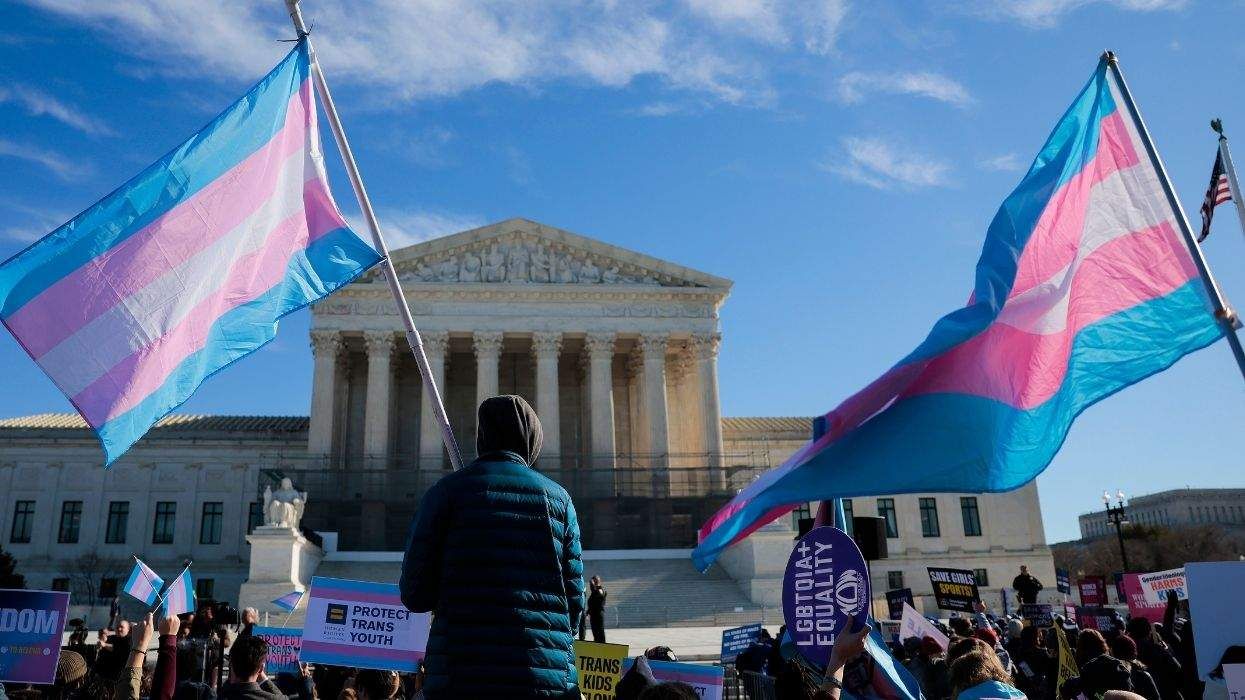

The U.S. Supreme Court on Tuesday heard nearly four hours of arguments in two cases, Little v. Hecox from Idaho and West Virginia v. B.P.J., that could define the future of transgender women and girls’ participation in school sports nationwide.
Keep up with the latest in LGBTQ+ news and politics. Sign up for The Advocate's email newsletter.
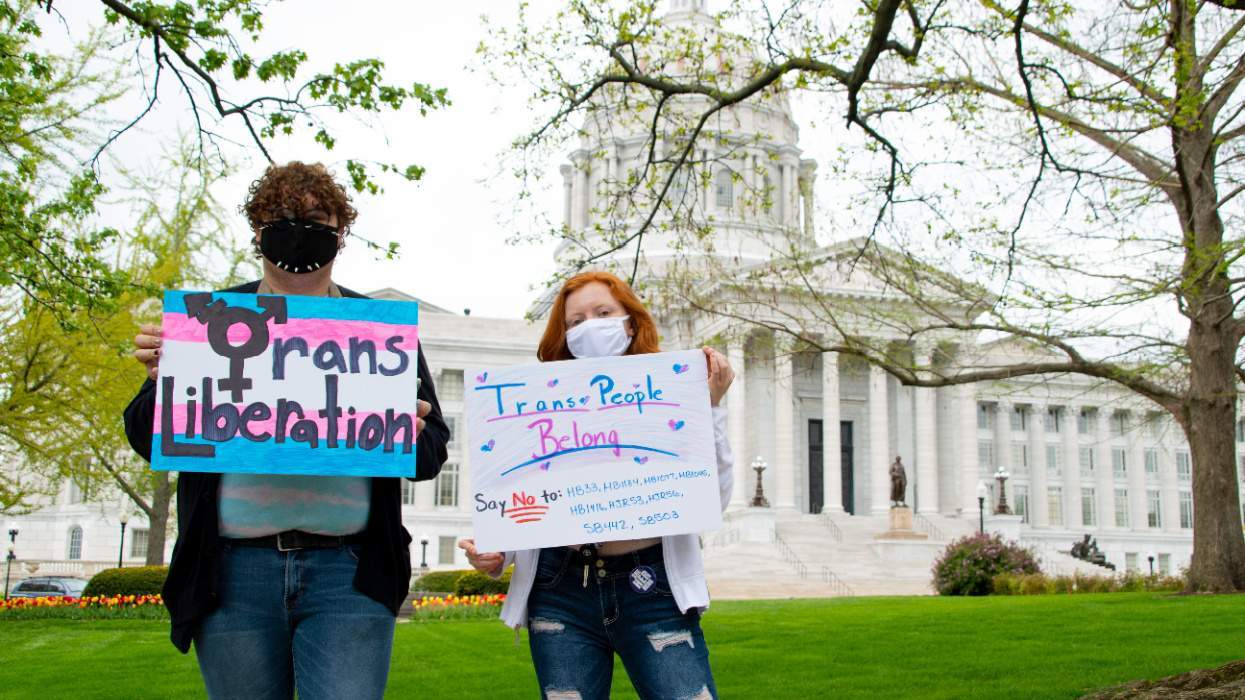
A large and raucous crowd formed outside the court, where dueling groups held rallies. Supporters of transgender people appeared to outnumber detractors. Some traveled from across the country for the “Fight for the T in Team” rally organized by Lambda Legal, the American Civil Liberties Union, and Legal Voice, which featured transgender youth, athletes, parents, members of Congress, and civil rights leaders calling for equal access to school sports.
Related: Supreme Court seems likely to rule against transgender athletes in school sports programs
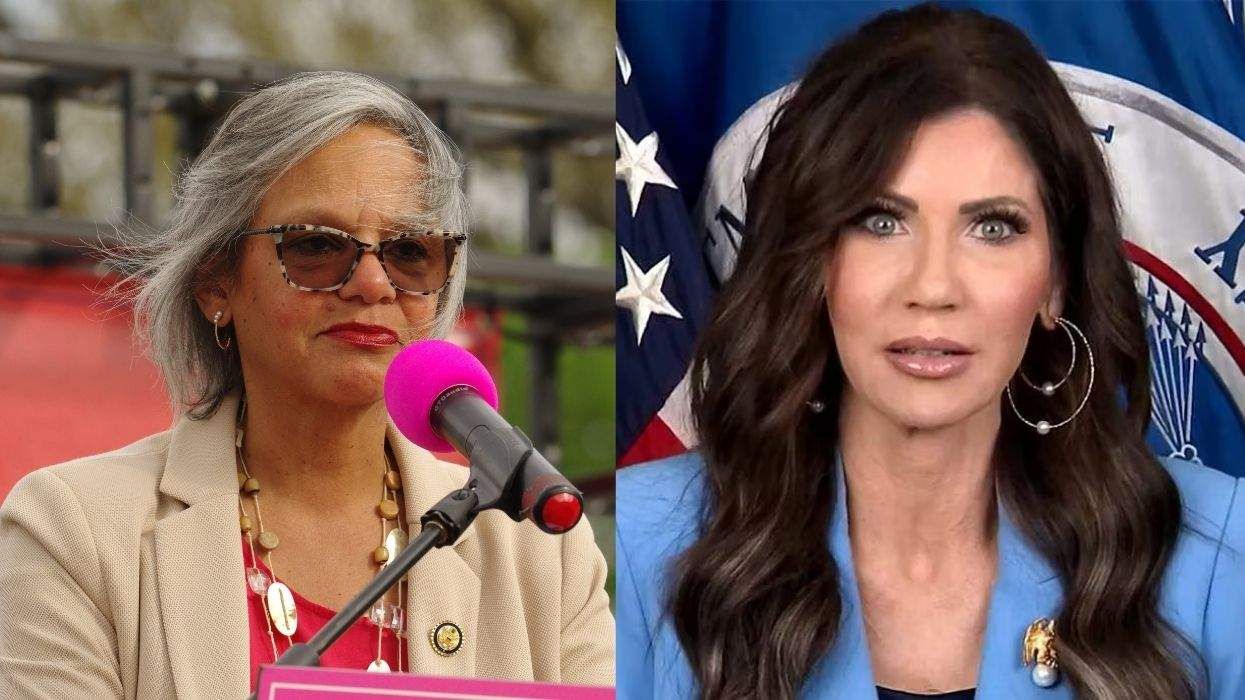
Congressional Equality Caucus Chair Rep. Mark Takano of California addressed demonstrators and sharply criticized Education Secretary Linda McMahon, who was speaking simultaneously at a nearby anti-trans rally. “If trans employees exist, surely trans teenagers exist. If trans teenagers exist, surely trans children exist,” Takano said. “If trans employees have a right not to be discriminated against in the workplace, trans kids have a right to a free and equal education in school.”
Related: Supreme Court hands Trump huge immunity win, narrows ability to prosecute presidents
In 2020, the Supreme Court ruled in Bostock that discrimination against gay or transgender people in the workplace is unconstitutional.
Inside, the courtroom was filled to capacity, with noticeably more men than women in attendance.
Three men — Idaho Solicitor General Alan M. Hurst, West Virginia Solicitor General Michael R. Williams, and U.S. Justice Department Principal Deputy Solicitor General Hashim M. Mooppan — took turns standing at the lectern to defend statewide bans excluding transgender girls and women from female sports teams. In the first case, the only woman to argue was Kathleen R. Hartnett, who represented a transgender college student challenging Idaho’s law.
At counsel table sat Chase Strangio, the ACLU attorney and the first out transgender lawyer to argue before the Supreme Court — in the Skrmetti case in December 2024. In that case, Strangio argued against Tennessee’s ban on gender-affirming care for minors. The Court upheld that ban last summer. Lambda Legal attorneys Sasha Buchert and Jose Abrigo were in the audience.
Right-wing figures, including conservative commentator Ben Ferguson, were in the courtroom. Former Fox News host and far-right podcaster Megyn Kelly sat in the press section.
Related: Supreme Court to rule on two cases that could reshape access to health care for LGBTQ+ people
Based on the tenor of the questioning, particularly from the Court’s conservative majority, the justices appeared inclined to uphold the statewide bans.
Outside the court, Buchert told The Advocate she felt “a little bit of a better feeling than I had after Skrmetti,” saying Justice Neil Gorsuch appeared unwilling to abandon the Court’s 2020 Bostock ruling protecting transgender workers. “They left some outs,” she said. “If they don’t want to rule on this right now, there’s a way to do it without totally screwing over the trans community.” She also said Justice Brett Kavanaugh “surprised me” with questions that were “not quite as dogmatic” as in past cases, adding, “There is hope.”
Angela Dallara, GLAAD’s director of rapid response and campaigns, said the size of the rally reflected broad public concern. “This is not just about trans people,” she told The Advocate. “It’s solidarity between all of us … about the values we believe in — freedom, equal treatment, and participation in sports among all of us.”
Here are seven key takeaways from the arguments.
First, boys’ and girls’ teams are legal
From the opening minutes of arguments, the justices made clear that the basic structure of school sports is not on trial. No member of the Court suggested that separating teams by sex violates the Constitution or federal law.
Williams repeatedly emphasized that Title IX was designed with sex-separated teams in mind and exists in part to protect girls’ sports. He told the justices that “maintaining separate boys’ and girls’ sports teams ensures that girls can safely and fairly compete in school sports,” and warned that dismantling that structure would “turn Title IX … into a law that actually denies those opportunities for girls.” He added that “biological sex matters in athletics in ways both obvious and undeniable.”
Related: 5 takeaways from the Supreme Court ruling on gender-affirming care
Kavanaugh echoed that view, signaling that the legality of separate teams is long-settled and that the Court does not need to reopen broader questions about sex discrimination to resolve these cases. Gorsuch pushed the point further, explaining that sports occupy a unique legal category under the Javits Amendment, a 1974 directive that explicitly instructed federal agencies to allow separate teams. He described athletics as “very different than Title VII,” the federal employment discrimination law, underscoring that sports have their own special rules that have governed schools for more than half a century.
Second, the real fight is about whether transgender girls can ever be treated like other girls for sports
Once the Court accepted that sex-separated teams are lawful, the focus shifted to whether transgender girls can ever be considered similar enough to cisgender girls to be allowed to compete on girls’ teams.
Related: Supreme Court rules states can ban gender-affirming care for youth in U.S. v. Skrmetti
Hartnett, who represents a transgender student challenging Idaho’s ban, argued that the state’s law erases critical medical realities. She told the justices that many transgender girls take puberty blockers or hormone therapy that change muscle mass, strength, and other physical traits that are central to athletic performance. Treating all transgender girls as if they share the same physical characteristics, she said, is both medically inaccurate and legally unfair. “The question in this case is, if the person had actually mitigated their sex-based advantage, their exclusion doesn’t match the statutory interest,” Hartnett told the Court.
Justice Ketanji Brown Jackson pressed Idaho’s lawyer on why the state lumps medically treated transgender girls into the same category as everyone assigned male at birth. She said that transgender girls who have undergone treatment are “not similarly situated to the broader class of males the state relies on,” warning that Idaho’s ban sweeps in students who may not present any of the fairness or safety concerns the state claims to be addressing. Her questioning highlighted what may be the case's core issue: whether the Constitution allows states to rely on broad labels, or whether they must look more closely at the actual bodies and circumstances of the students they are excluding.
Third, the states say they are not required to make case-by-case exceptions
Lawyers for the states argued that the Constitution does not require schools to treat every student as a unique medical case in order to keep sex-separated sports. Mooppan warned that forcing schools to make individualized exceptions for transgender girls would fundamentally change how equal protection law works.
Related: 7 key takeaways from the Supreme Court’s ‘reverse discrimination’ case
“Intermediate scrutiny requires a substantial relation, not a perfect fit,” Mooppan told the Court, meaning that the Constitution allows laws that are generally reasonable even if they are not perfectly tailored to every individual situation. He argued that schools are not constitutionally required to “monitor the testosterone levels of female athletes,” review puberty histories, or conduct individualized medical screenings to decide who can join girls’ teams. In his view, forcing schools into that role would require invasive biological policing that Title IX was never meant to create.
Gorsuch echoed that concern. He warned that allowing individualized carve-outs could “undermine the justification for the separation” itself, meaning that once courts require exceptions, the entire legal basis for having separate boys’ and girls’ teams could begin to unravel. In practical terms, the states argue that the Constitution permits broad rules even when they are imperfect in individual cases, and that courts should not force schools into serving as medical review boards.
Fourth, the bans operate only in one direction — and the state admitted it
One of the clearest moments of the arguments came when Justice Amy Coney Barrett pressed Idaho’s solicitor general on whether transgender boys are treated the same way as transgender girls.
“Is it true that biological girls, trans boys, can play on boys’ teams?” Barrett asked.
“Anyone can play on boys’ teams, Your Honor,” Hurst replied.
That exchange revealed how the bans actually work in real life. Cisgender girls and transgender boys are allowed to play on boys’ teams, but transgender girls are categorically barred from girls’ teams. The laws do not keep transgender students out of sports altogether. Rather, they only prevent transgender girls from playing on teams that match their gender identity.
Fifth, Justice Sonia Sotomayor said the bans look like sex discrimination
Justice Sonia Sotomayor cut straight to the constitutional core of the case, rejecting the states’ effort to portray the bans as neutral eligibility rules rather than discriminatory classifications.
“There’s no question here that a male who identifies as a female … is being excluded from a female sport,” she said. “By its nature, that’s a sex classification.”
Her point was not simply semantic. Sotomayor was signaling that once a law sorts people based on sex-linked traits, it triggers some of the strongest civil rights protections in American law. She warned that states should not be permitted to escape that scrutiny by creatively redefining who qualifies as male or female. In her view, allowing legislatures to narrow the definition of protected groups would give governments a roadmap for excluding politically unpopular communities while claiming neutrality on paper.
If courts were to accept Idaho’s framing, she suggested, lawmakers could redraw civil rights categories themselves, shrinking protections rather than confronting whether an exclusion can survive constitutional review. That, she warned, would weaken decades of precedent designed to prevent governments from disguising discrimination behind technical definitions, and would open the door to new forms of sex-based exclusion far beyond sports.
Sixth, the court has not decided whether transgender people deserve stronger constitutional protection
One of the biggest unresolved questions hanging over the case is whether transgender people should be treated as a protected group under the Constitution, similar to how the law treats discrimination based on sex or race.
Gorsuch raised that issue with Idaho’s lawyer, asking whether transgender people qualify as a group that has faced enough discrimination to trigger stronger constitutional safeguards. Hurst acknowledged that reality, telling the Court that “there has been significant discrimination against transgender people.” But he argued that this discrimination does not resemble what he described as the historic, legally entrenched exclusions faced by cisgender women and racial minorities, such as being barred from voting, holding certain jobs, or owning property, and therefore should not trigger heightened constitutional protection.
The justices did not signal that they are ready to settle that question. But the stakes are enormous. A ruling recognizing transgender people as a protected class would dramatically strengthen their legal rights across American life, affecting schools, workplaces, housing, and public accommodations, far beyond the issue of sports.
Seventh, the court may rule narrowly
Several justices suggested they are looking for a way to decide these cases without rewriting civil rights law nationwide.
Joshua A. Block, representing the transgender student in the West Virginia case, warned that applying the sports regulations to transgender girls “is a complete exclusion from the program,” effectively barring them from an entire category of school life rather than simply regulating competitive conditions.
Kavanaugh suggested that even if the Court sides with the states, the ruling could be narrow. Williams agreed, telling the Court that Congress explicitly authorized sex-separated teams and that this special treatment “does not automatically extend” to employment, housing, or other areas governed by federal civil rights laws.
The Court’s decisions, expected by June, are poised to determine whether states may continue enforcing blanket bans on transgender girls in school sports — or whether the Constitution requires a more individualized, medically informed approach to athletic participation.