'%3E%3Cpath d='M16.3574 35.6519H12.9537L15.0491 18.8873L16.3574 35.6519ZM30.4229 54.0093L22.309 0.994385H7.91795L0 54.0093H10.6634L11.5802 46.3855H17.4014L17.9914 54.0093H30.4229Z' fill='%23971B20'/%3E%3Cpath d='M48.2073 41.8813C48.2073 43.4049 47.4892 44.0011 46.1144 44.0011H43.7595V11.0687H46.1144C47.4892 11.0687 48.2073 11.6636 48.2073 13.1885V41.8813ZM59.5273 43.6695V11.3326C59.5273 3.71323 53.5729 0.994385 47.8157 0.994385H31.7213V54.0093H47.8157C53.5729 54.0093 59.5273 51.29 59.5273 43.6695Z' fill='%23971B20'/%3E%3Cpath d='M90.183 0.994385H78.6039L75.0711 30.6157L71.9955 0.994385H59.4346L69.2474 54.0093H80.373L90.183 0.994385Z' fill='%23971B20'/%3E%3Cpath d='M107.063 42.3448C107.063 43.7359 105.951 44.5974 104.643 44.5974C103.269 44.5974 102.157 43.7359 102.157 42.3448V12.658C102.157 11.2676 103.269 10.4058 104.643 10.4058C105.951 10.4058 107.063 11.2676 107.063 12.658V42.3448ZM119.233 43.2723V11.7312C119.233 6.36384 112.952 -3.8147e-06 104.643 -3.8147e-06C96.2667 -3.8147e-06 89.9867 6.36384 89.9867 11.7312V43.2723C89.9867 48.6393 96.2667 55 104.643 55C112.952 55 119.233 48.6393 119.233 43.2723Z' fill='%23971B20'/%3E%3Cpath d='M150.976 43.9349V33.7309H139.069V42.3448C139.069 43.7359 137.957 44.5974 136.582 44.5974C135.076 44.5974 133.964 43.7359 133.964 42.3448V12.658C133.964 11.2676 135.076 10.4058 136.582 10.4058C137.957 10.4058 139.069 11.2676 139.069 12.658V21.2723H150.976V11.0687C150.976 5.70107 145.283 -3.8147e-06 136.582 -3.8147e-06C127.75 -3.8147e-06 121.796 5.70107 121.796 11.0687V43.9349C121.796 49.3022 127.75 55 136.582 55C145.283 55 150.976 49.3022 150.976 43.9349Z' fill='%23971B20'/%3E%3Cpath d='M167.478 35.6519H164.076L166.17 18.8873L167.478 35.6519ZM181.544 54.0093L173.432 0.994385H159.037L151.123 54.0093H161.785L162.704 46.3855H168.523L169.114 54.0093H181.544Z' fill='%23971B20'/%3E%3Cpath d='M205.412 10.4058V0.994385H177.081V10.4058H185.392V54.0093H197.428V10.4058H205.412Z' fill='%23971B20'/%3E%3Cpath d='M230.002 54.0093V43.9349H218.914V31.8746H226.635V21.8028H218.914V10.4058H230.002V0.994385H206.875V54.0093H230.002Z' fill='%23971B20'/%3E%3C/g%3E%3Cdefs%3E%3CclipPath id='clip0_260_7080'%3E%3Crect width='230' height='55' fill='white'/%3E%3C/clipPath%3E%3C/defs%3E%3C/svg%3E)


Donald Trump has announced a hostile takeover of Washington D.C., deploying the National Guard in an effort to clear the nation's capitol of homeless people and supposedly crack down on violent crime.
Trump revealed the plans Monday morning after NBC reported that up to 1,000 National Guard troops would be deployed to the city, and about 450 federal officers from 18 agencies — including 120 Federal Bureau of Investigation (FBI) agents — were reassigned from other duties over the weekend and deployed to patrol high-traffic areas in D.C.
Related: Donald Trump begins authoritarian takeover of Washington, D.C.
The announcement comes as violent crime in the city has significantly decreased, refuting the president's claims that D.C. has gotten "out of control." The objectives that Trump can actually achieve with the deployment are the usurping of Congress' authority and the continuation of his flagrant power grabs.
Here's what you need to know about what's happening — and what's not happening — in D.C.
Why is Trump deploying the National Guard in D.C.?
Trump said at a press conference that he would take control of the Metropolitan Police Department and deploy the D.C. National Guard in an effort to supposedly “rescue our nation’s capital from crime" by "removing homeless encampments from all over our parks."
"We're moving the encampments away, trying to take care of people," he said. "Some of those people, we don't know how they even got there. Some of those people are from different countries, different parts of the world. Nobody knows who they are. They have no idea. But they're there, getting rid of the people from underpasses and public spaces from all over the city. There are many places that they can go, and we're going to help them as much as you can help, but they'll not be allowed to turn our capital into a wasteland for the world to see."
Trump did not say where the homeless people would be sent.
Trump also said that he would "bring in the military if it's needed," and that he intends to replace judges, stating, "We're going to be appointing some judges. We have some open spots, and we're going to take people because the judges are letting killers out."
Is DOGE involved in Trump's D.C. National Guard deployment?
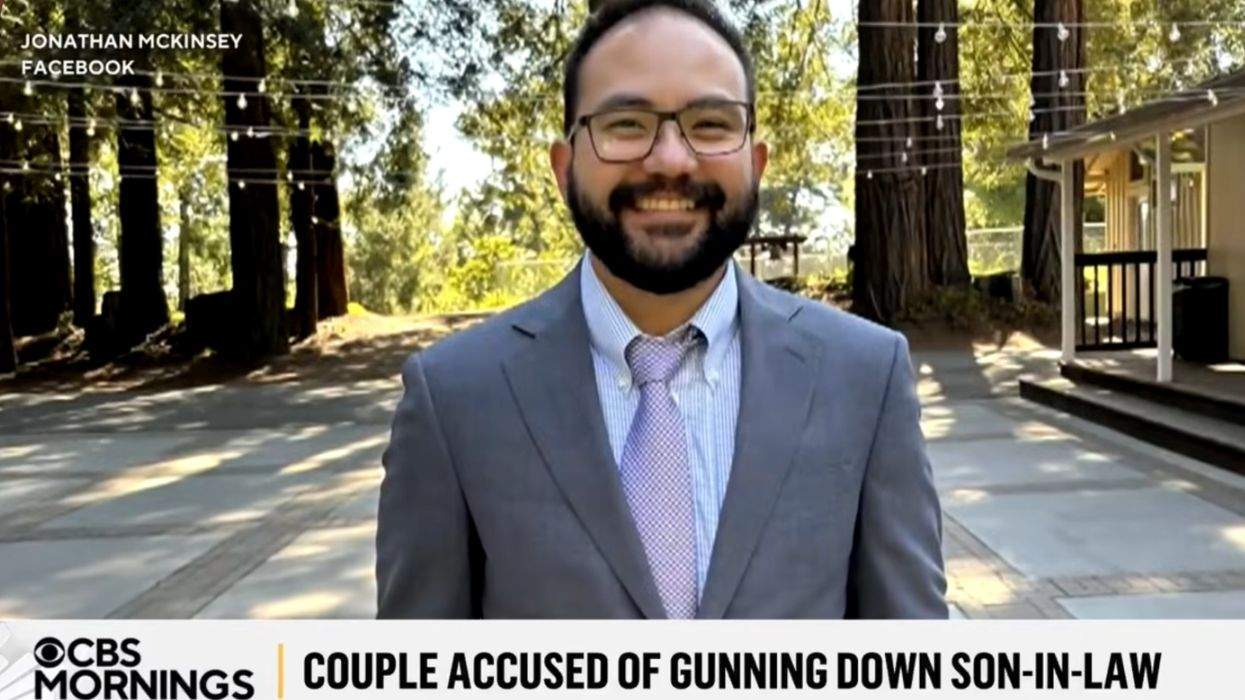
One case of violent crime Trump cited in his press conference was the assault and robbery of 19-year-old Edward Coristine, one of the original members of the so-called Department of Government Efficiency (DOGE) who goes by the nickname "Big Balls."
The attack occurred over the weekend, resulting in a black iPhone valued at around $1,000 being reportedly stolen. Two 15-year-old suspects were arrested as they attempted to flee the scene.
Elon Musk, the former head of DOGE, claimed in a post to X that “a gang of about a dozen young men tried to assault a woman in her car at night in DC,” and "a @Doge team member saw what was happening, ran to defend her and was severely beaten to the point of concussion, but he saved her.” The police report via POLITICO disputes this, as Coristine told officers that he and the woman, identified in the report as his “significant other," were approached at their car.
What is the violent crime rate in D.C.?
Violent crime has drastically decreased in Washington D.C. over the past two years. So far in 2025, violent crime is down 26 percent from last year, according to Metropolitan Police Department data, with robbery down 28 percent, assault with a dangerous weapon down 20 percent, and homicide down 12 percent.
The data is considered preliminary, as statistics for the full year will not be available until the year is over. The data was last updated Monday, likely in response to Trump's claims.
Around 14.5 percent adult residents in D.C. identify as LGBTQ+, according to a 2023 Williams Institute study, the highest percentage in the nation and nearly double the rate of the next-highest state. D.C. also has one of the largest unhoused populations in the nation, a 2019 report from Christian aid organization Central Union Mission found, which is twice the national average and equates to roughly 9.3 homeless people for every 1,000 residents.
LGBTQ+ adults are twice as likely as the general population to have experienced homelessness in their lifetime, according to a 2020 report from the Williams Institute, with 17 percent of sexual minorities reporting that they have experienced homelessness.
How did D.C.'s mayor respond to Trump?
Democratic Mayor Muriel Bowser called Trump’s claims about crime in D.C. “hyperbolic and false” and warned against deploying the National Guard in a Sunday interview with MSNBC's The Weekend. She stressed that while "there are very specific things in our law that would allow the president to have more control over our police department, none of those conditions exist in our city right now."
"We're going to keep talking to the president, working with his people on the issues that are high priority for him," Bowser said. "Now, if the priority is to show force in an American city, we know he can do that here. But it won't be because there's a spike in crime."
D.C. Attorney General Brian Schwalb said in a post on X that the Trump Administration’s actions are "unprecedented, unnecessary, and unlawful."
"There is no crime emergency in the District of Columbia," he wrote. "Violent crime in DC reached historic 30-year lows last year, and is down another 26% so far this year. We are considering all of our options and will do what is necessary to protect the rights and safety of District residents."
Can the president take control of D.C. police?
Section 740 of the 1973 District of Columbia Home Rule Act allows the federalization of the Metropolitan Police Department when the president “determines that special conditions of an emergency nature exist."
The president must notify Congress within 48 hours of taking control, specifically members “of the Committees on the District of Columbia of the Senate and the House of Representatives" — the House Oversight and Government Reform Committee and the Senate Homeland Security and Governmental Affairs Committee.
The president must then get Congressional approval within 30 days to retain control, requiring Congress to pass “joint resolution authorizing such an extension.” The law contains no protocol for when Congress is not in session. Congress is currently adjourned until September 2.
Can the president deploy the National Guard?
The ability to call upon the National Guard is typically reserved for governors, or in the case of Washington D.C., the mayor. The president is allowed to mobilize the National Guard during Congressionally-sanctioned national emergencies or wars.
Section 1076 of the John Warner Defense Authorization Act of 2007 allowed the president "to employ the Armed Forces and National Guard in federal service to restore public order in cases of natural disaster, epidemic or other public health emergency, terrorist attack or incident, or domestic violence." It also required that the president "notify Congress within 14 days of the exercise of such authority."
Some of the provisions were repealed with the National Defense Authorization Act of 2008. Section 1814 requires the Secretary of State "to prepare and submit to Congress a plan (and plan update) for the use of the Armed Forces and National Guard for responding to natural disasters, acts of terrorism, and other man-made disasters," and section 1822 requires the president "to establish a bipartisan Council of Governors to advise the Secretary, the Secretary of Homeland Security, and the White House Homeland Security Council on matters related to the National Guard and civil support missions."
Will Trump deploy the National Guard in other cities?
Trump said that he intends to repeat his actions in D.C. and deploy the National Guard in other Democratic cities as part of his so-called "beautification" plans.
"Other cities are hopefully watching this," he said at Monday's press conference. "Maybe they'll self-clean up, and maybe they'll self-do this and get rid of the cashless bail thing and all of the things that caused the problem. They're watching us today, and if they don't learn their lesson, if they haven't studied us properly, because we're going to be very successful. I have zero doubt about that. If we need to, we're gonna do the same thing in Chicago, which is a disaster. We have a mayor there who's totally incompetent."
This story has been updated with additional information.