'%3E%3Cpath d='M16.3574 35.6519H12.9537L15.0491 18.8873L16.3574 35.6519ZM30.4229 54.0093L22.309 0.994385H7.91795L0 54.0093H10.6634L11.5802 46.3855H17.4014L17.9914 54.0093H30.4229Z' fill='%23971B20'/%3E%3Cpath d='M48.2073 41.8813C48.2073 43.4049 47.4892 44.0011 46.1144 44.0011H43.7595V11.0687H46.1144C47.4892 11.0687 48.2073 11.6636 48.2073 13.1885V41.8813ZM59.5273 43.6695V11.3326C59.5273 3.71323 53.5729 0.994385 47.8157 0.994385H31.7213V54.0093H47.8157C53.5729 54.0093 59.5273 51.29 59.5273 43.6695Z' fill='%23971B20'/%3E%3Cpath d='M90.183 0.994385H78.6039L75.0711 30.6157L71.9955 0.994385H59.4346L69.2474 54.0093H80.373L90.183 0.994385Z' fill='%23971B20'/%3E%3Cpath d='M107.063 42.3448C107.063 43.7359 105.951 44.5974 104.643 44.5974C103.269 44.5974 102.157 43.7359 102.157 42.3448V12.658C102.157 11.2676 103.269 10.4058 104.643 10.4058C105.951 10.4058 107.063 11.2676 107.063 12.658V42.3448ZM119.233 43.2723V11.7312C119.233 6.36384 112.952 -3.8147e-06 104.643 -3.8147e-06C96.2667 -3.8147e-06 89.9867 6.36384 89.9867 11.7312V43.2723C89.9867 48.6393 96.2667 55 104.643 55C112.952 55 119.233 48.6393 119.233 43.2723Z' fill='%23971B20'/%3E%3Cpath d='M150.976 43.9349V33.7309H139.069V42.3448C139.069 43.7359 137.957 44.5974 136.582 44.5974C135.076 44.5974 133.964 43.7359 133.964 42.3448V12.658C133.964 11.2676 135.076 10.4058 136.582 10.4058C137.957 10.4058 139.069 11.2676 139.069 12.658V21.2723H150.976V11.0687C150.976 5.70107 145.283 -3.8147e-06 136.582 -3.8147e-06C127.75 -3.8147e-06 121.796 5.70107 121.796 11.0687V43.9349C121.796 49.3022 127.75 55 136.582 55C145.283 55 150.976 49.3022 150.976 43.9349Z' fill='%23971B20'/%3E%3Cpath d='M167.478 35.6519H164.076L166.17 18.8873L167.478 35.6519ZM181.544 54.0093L173.432 0.994385H159.037L151.123 54.0093H161.785L162.704 46.3855H168.523L169.114 54.0093H181.544Z' fill='%23971B20'/%3E%3Cpath d='M205.412 10.4058V0.994385H177.081V10.4058H185.392V54.0093H197.428V10.4058H205.412Z' fill='%23971B20'/%3E%3Cpath d='M230.002 54.0093V43.9349H218.914V31.8746H226.635V21.8028H218.914V10.4058H230.002V0.994385H206.875V54.0093H230.002Z' fill='%23971B20'/%3E%3C/g%3E%3Cdefs%3E%3CclipPath id='clip0_260_7080'%3E%3Crect width='230' height='55' fill='white'/%3E%3C/clipPath%3E%3C/defs%3E%3C/svg%3E)
By the time the final applause faded inside the Grand Ballroom at the JW Marriott in Washington, D.C., on Saturday afternoon, one truth had settled over the room with unmistakable clarity: In the second Trump era, silence is no longer a political posture. It is a liability.
Keep up with the latest in LGBTQ+ news and politics. Sign up for The Advocate's email newsletter.
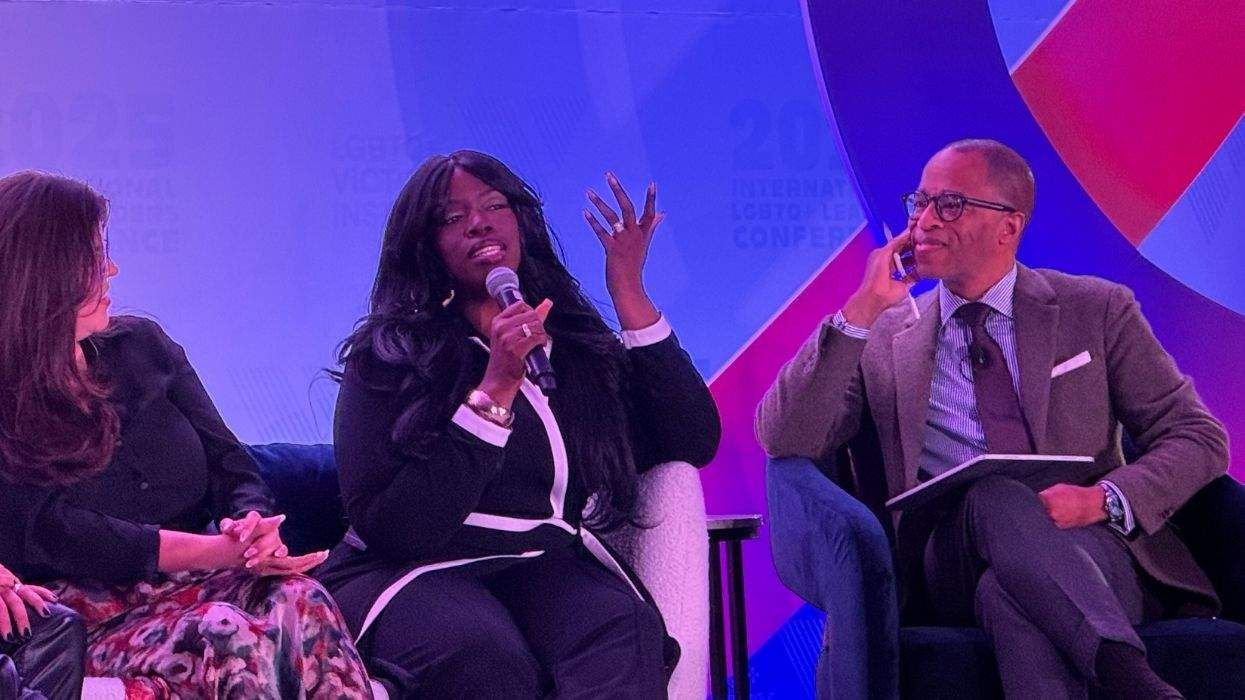
The closing plenary of the LGBTQ+ Victory Institute’s 2025 International LGBTQ+ Leaders Conference, “Going Viral for Change: Winning Hearts and Votes in the Digital Era,” unfolded less like a social media seminar than a moral reckoning for public leadership. Moderated by Pulitzer Prize-winning journalist and MS NOW's The Weekend cohost Jonathan Capehart, the panel brought together transgender writer and communications strategist Charlotte Clymer, San Antonio, Texas City Councilmember Jalen McKee-Rodriguez, California Democratic Congressman Robert Garcia’s communications director Sara Guerrero, and viral content creator and social media strategist RaeShanda Lias to interrogate what it now means to tell the truth in a political ecosystem engineered for distortion.
Related: From NBC’s peacock carpet to MS NOW: The Weekend hosts step into a new era in cable television
“How do we go viral?” Clymer asked, summarizing the most common question posed to political clients. “The answer is tantalizingly simple: You say the things others are too scared to say — because that’s what leadership means.”
Clymer, a military veteran and nationally recognized political communicator, made clear that virality itself was not the goal. Memory was.
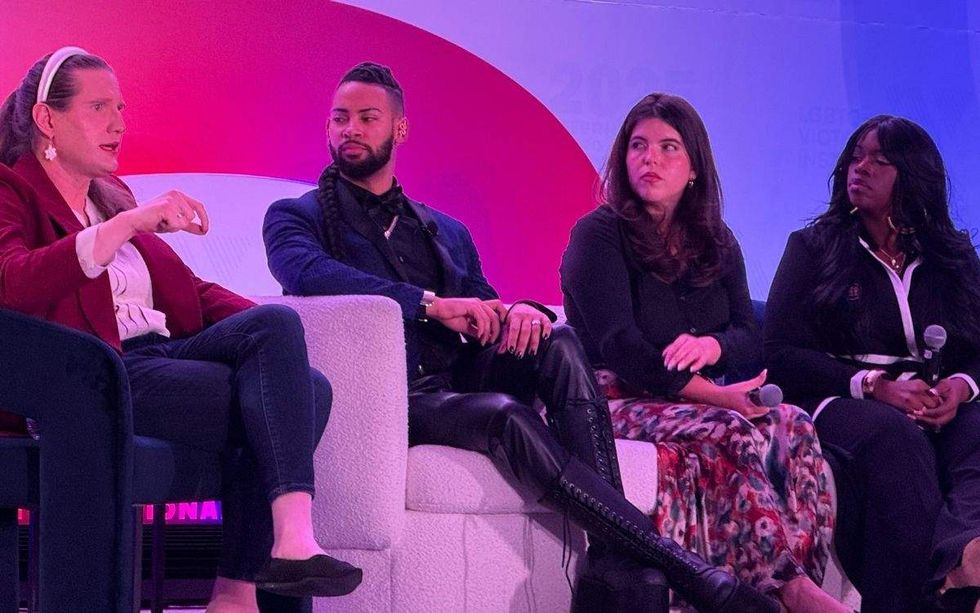 Charlotte Clymer speaks at the 2025 International LGBTQ+ Leaders Conference.Christopher Wiggins for The Advocate
She warned of what she described as an approaching political amnesia — a future in which lawmakers who remained silent during the mass removal of transgender service members from the military, amid rising violence against trans people, would later claim they did not understand the stakes.
“They will claim ignorance,” she said. “They will claim they didn’t remember. We will remember.”
She invoked leaders who, she said, chose visibility over safety: Kentucky Gov. Andy Beshear vetoing anti-trans legislation, Virginia Gov.-elect Abigail Spanberger refusing to abandon trans people during her gubernatorial campaign, Delaware Congresswoman Sarah McBride, the first out trans member of Congress, and federal lawmakers who showed up to rallies even when advisers urged retreat. Silence, Clymer argued, would not age well.
McKee-Rodriguez traced his own pathway to virality through a different lens: representation.
Elected in 2021 at just 26 years old, McKee-Rodriguez became the first out gay man elected to the San Antonio City Council and the first out gay Black man elected to any office in Texas. He is former public school math teacher and AmeriCorps volunteer, and his governing style, rooted in block walking, open office hours, community clean-ups, and direct aid to families, also informed his philosophy of digital engagement.
Related: Three lesbian attorneys general beating back Trumpism in court warn of marriage equality’s peril
“What people really want is someone who’s going to be themselves — be authentic,” McKee-Rodriguez told the audience. “When you grow up feeling like being yourself is going to get you rejected, and then you see someone like you being chosen, that changes everything.”
Social media, he said, carries a dual force. It can compress the world into catastrophe — war footage, hospital bombings, relentless crisis — or it can collapse distance entirely, creating instant recognition between strangers.
“You realize there are people experiencing the world the same way you are,” he said. “And suddenly the world feels small enough to touch.”
Guerrero, who helps shape Garcia’s public voice as the first out gay Latino to serve as a ranking member of a House committee, framed virality not as an abstraction but as an instrument with real-world consequences.
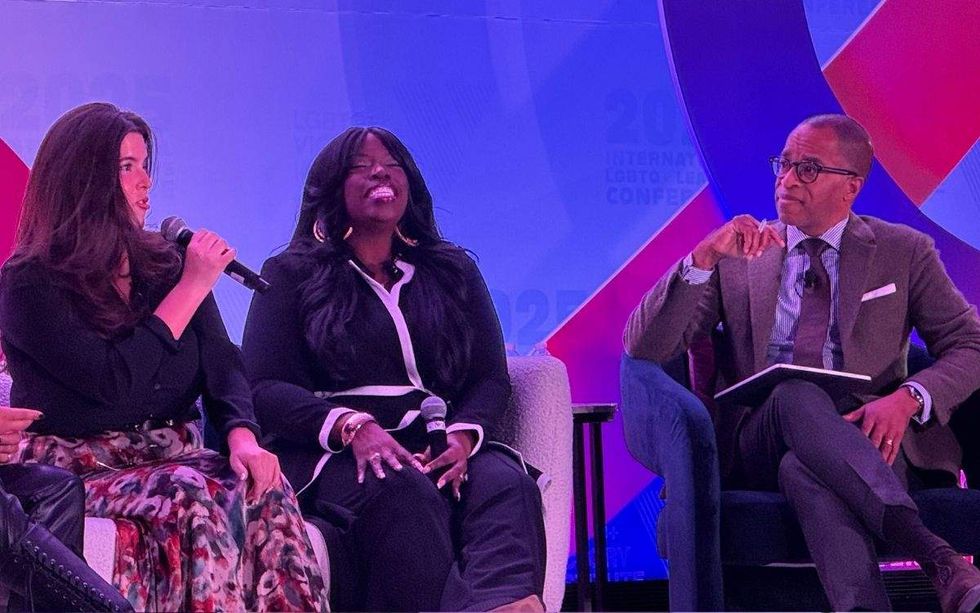 Sara Guerrero talks about her boss, Rep. Robert Garcia, and how he approaches social media.Christopher Wiggins for The Advocate
After the election, Garcia’s refusal to tamp down his anger, including his profane condemnation of Trump, sparked controversy online. It also, Guerrero said, tapped into something raw among voters.
Related: Joe Biden says MAGA Republicans want to make LGBTQ+ people ‘into something scary’
“There were people cutting the clips just to focus on the f word,” she said. “But what they were really responding to was the anger people wanted to see from their leaders.”
That visibility has not been without danger. Guerrero described a recent death threat against Garcia that escalated into a real-world security breach at the U.S. Capitol. Politics, she made clear, is no longer safely contained to screens.
McKee-Rodriguez echoed that reality, recounting harassment following public announcements about his marriage to his husband, Nathan.
“People think because you’re a public servant, they can talk to you any kind of way,” he said. “That’s not part of the job.”
If McKee-Rodriguez articulated the emotional labor of representation, Lias laid bare the mechanics of digital endurance.
A social media strategist, Out100 honoree, and recent NAACP Image Award nominee whose online audience numbers in the millions, she spoke with blistering directness during the panel.
“We have a rapist in the White House,” she said, as Capehart interjected, “alleged.” She went on, “We have a criminal in the White House.” Capehart fired back, “confirmed.”
Lias continued, “People want you to show up as yourself. They’ve got to feel that.”
In an interview with The Advocate ahead of the session, Lias revealed the strategy behind the spectacle. Her goal, she said, is not outrage for its own sake — it is survival through balance.
“I like to take everything that’s happening, not just the salacious headlines,” she said. “I’ll put a drunk raccoon falling through a liquor store ceiling in the same video as me talking about this administration.”
The pairing is intentional. It keeps people from collapsing under the weight of nonstop crisis while still delivering facts.
“A lot of people are overwhelmed,” she said. “I don’t just want to hammer them with all the dreadful things.”
Lias also used both the panel and her interview to articulate the personal ethics guiding her platform. She described a “whole list” of what she will not tolerate: transphobia, homophobia, racism, xenophobia, ableism — what she collectively called “all the isms.”
“You can disengage from people who are harming you,” she said. “It may be lonely at times, but you have your peace. And I pick peace over everything.”
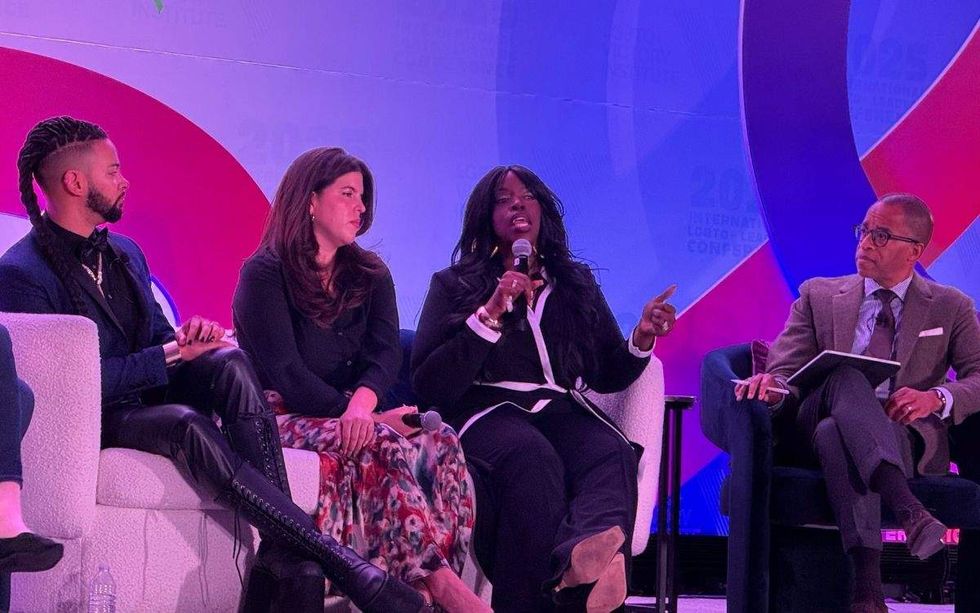 RaeShanda Lias addreses a crowd at the LGBTQ+ Victory Institute's International Leaders Conference.Christopher Wiggins for The Advocate
Lias was even more unsparing about how she navigates the emotional toll of online abuse — and when disengagement gives way to confrontation.
“I enjoy my time online. I post and log off,” she said. “I don’t have time to be online, sticking around with people that hate me or my skin color, my sexuality, or any of that.” But for those who deliberately target her or others with dehumanization, she made her boundary unmistakable.
“Most of them do not have the intellectual fortitude,” she said. “And I didn’t acquire these degrees and pay all this money to argue with you online.” Then, underscoring the line between civility and self-preservation, Lias added, “F*ck them.”
The panel’s philosophical center ultimately returned to Clymer’s forceful rejection of what she called a corrosive media lie: the idea that the nation is simply experiencing another “culture war.”
Related: Robert Garcia calls himself 'gayest' member of Congress
“We are not in the middle of a culture war,” she said. “We are in conflict with a political movement organized entirely around who they hate and who they want erased.”
Calling for clarity rather than civility, Clymer argued that profanity was not the obscenity — dehumanization was.
“What’s really profane is calling immigrants criminals, calling countries ‘shitholes,’ weaponizing religion against trans kids,” she said.
As the session drew to a close, the advice to the room’s elected officials and aspiring candidates sharpened into a direct command: Stop sanding yourselves down for public comfort.
“Be your truest self,” McKee-Rodriguez said. “People don’t want to meet a character you created.”
And for Lias, the boundary between disagreement and danger could not be more explicit.
“If you start going into my skin color or my sexuality,” she said, “that is not an agree-to-disagree situation.”