'%3E%3Cpath d='M16.3574 35.6519H12.9537L15.0491 18.8873L16.3574 35.6519ZM30.4229 54.0093L22.309 0.994385H7.91795L0 54.0093H10.6634L11.5802 46.3855H17.4014L17.9914 54.0093H30.4229Z' fill='%23971B20'/%3E%3Cpath d='M48.2073 41.8813C48.2073 43.4049 47.4892 44.0011 46.1144 44.0011H43.7595V11.0687H46.1144C47.4892 11.0687 48.2073 11.6636 48.2073 13.1885V41.8813ZM59.5273 43.6695V11.3326C59.5273 3.71323 53.5729 0.994385 47.8157 0.994385H31.7213V54.0093H47.8157C53.5729 54.0093 59.5273 51.29 59.5273 43.6695Z' fill='%23971B20'/%3E%3Cpath d='M90.183 0.994385H78.6039L75.0711 30.6157L71.9955 0.994385H59.4346L69.2474 54.0093H80.373L90.183 0.994385Z' fill='%23971B20'/%3E%3Cpath d='M107.063 42.3448C107.063 43.7359 105.951 44.5974 104.643 44.5974C103.269 44.5974 102.157 43.7359 102.157 42.3448V12.658C102.157 11.2676 103.269 10.4058 104.643 10.4058C105.951 10.4058 107.063 11.2676 107.063 12.658V42.3448ZM119.233 43.2723V11.7312C119.233 6.36384 112.952 -3.8147e-06 104.643 -3.8147e-06C96.2667 -3.8147e-06 89.9867 6.36384 89.9867 11.7312V43.2723C89.9867 48.6393 96.2667 55 104.643 55C112.952 55 119.233 48.6393 119.233 43.2723Z' fill='%23971B20'/%3E%3Cpath d='M150.976 43.9349V33.7309H139.069V42.3448C139.069 43.7359 137.957 44.5974 136.582 44.5974C135.076 44.5974 133.964 43.7359 133.964 42.3448V12.658C133.964 11.2676 135.076 10.4058 136.582 10.4058C137.957 10.4058 139.069 11.2676 139.069 12.658V21.2723H150.976V11.0687C150.976 5.70107 145.283 -3.8147e-06 136.582 -3.8147e-06C127.75 -3.8147e-06 121.796 5.70107 121.796 11.0687V43.9349C121.796 49.3022 127.75 55 136.582 55C145.283 55 150.976 49.3022 150.976 43.9349Z' fill='%23971B20'/%3E%3Cpath d='M167.478 35.6519H164.076L166.17 18.8873L167.478 35.6519ZM181.544 54.0093L173.432 0.994385H159.037L151.123 54.0093H161.785L162.704 46.3855H168.523L169.114 54.0093H181.544Z' fill='%23971B20'/%3E%3Cpath d='M205.412 10.4058V0.994385H177.081V10.4058H185.392V54.0093H197.428V10.4058H205.412Z' fill='%23971B20'/%3E%3Cpath d='M230.002 54.0093V43.9349H218.914V31.8746H226.635V21.8028H218.914V10.4058H230.002V0.994385H206.875V54.0093H230.002Z' fill='%23971B20'/%3E%3C/g%3E%3Cdefs%3E%3CclipPath id='clip0_260_7080'%3E%3Crect width='230' height='55' fill='white'/%3E%3C/clipPath%3E%3C/defs%3E%3C/svg%3E)
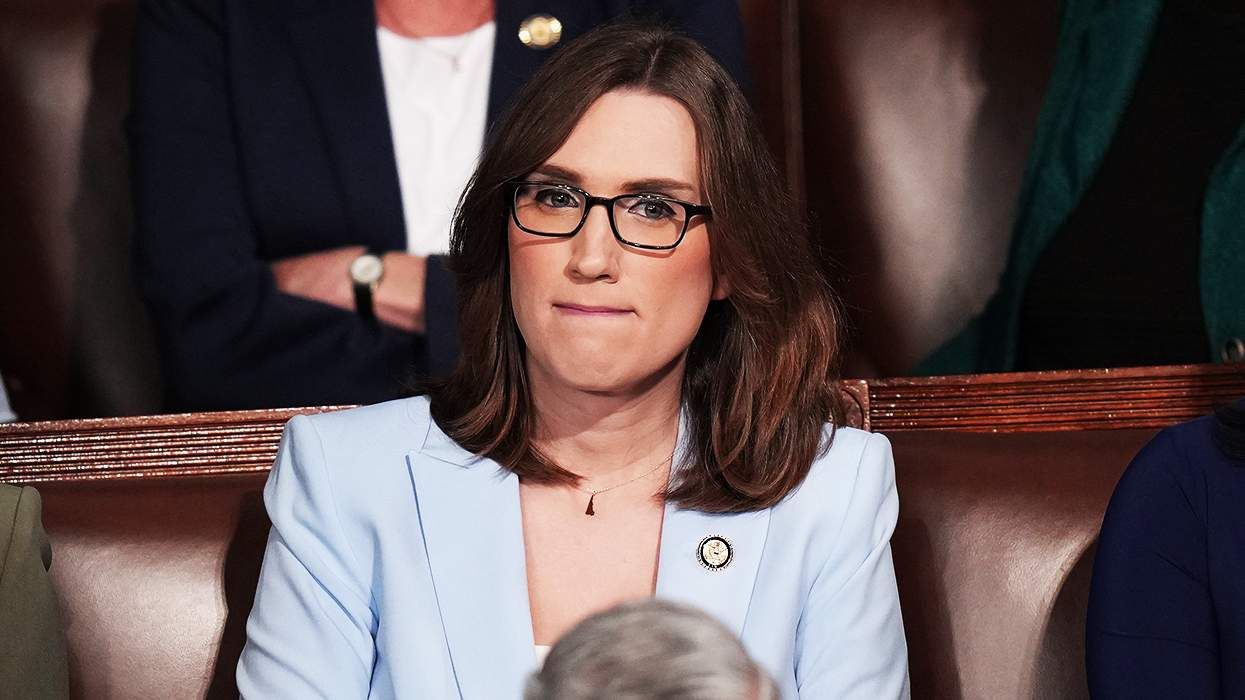

Nearly one year after making history as the first out transgender member of the U.S. House of Representatives, Delaware Democrat Sarah McBride has spent her first term navigating both the exhilaration of progress and the exhaustion of being a symbol in a Congress with a Republican majority that is often hostile to her existence.
In an exclusive interview with The Advocate in her Capitol Hill office, McBride reflected on the moment she called her darkest day, the wave of transphobia that followed, and the quieter victories that have defined her first 10 months in office.
Keep up with the latest in LGBTQ+ news and politics. Sign up for The Advocate's email newsletter.
The first time The Advocate sat down together for an interview with McBride after she won her historic election was November 15, 2024, inside a designated media broadcast room in the Cannon House Office Building in Washington, D.C. It was orientation week for new members of Congress, and Sarah McBride, then 34, Delaware’s newly elected congresswoman, was radiating something between fatigue and disbelief.
“I’m just trying to breathe it all in,” she said at the time. A few days later, the joy turned.
“The high of orientation,” McBride explained when The Advocate met her again almost a year later, in late October, this time in her Longworth Building office, “was met with probably the deepest low of my life outside of losing my husband to cancer.”
She paused before naming it. “Calling it a ‘bathroom controversy’ feels cheap. It was so much more than that.”
Related: As the first out trans person in Congress, Sarah McBride is ready to fight for us
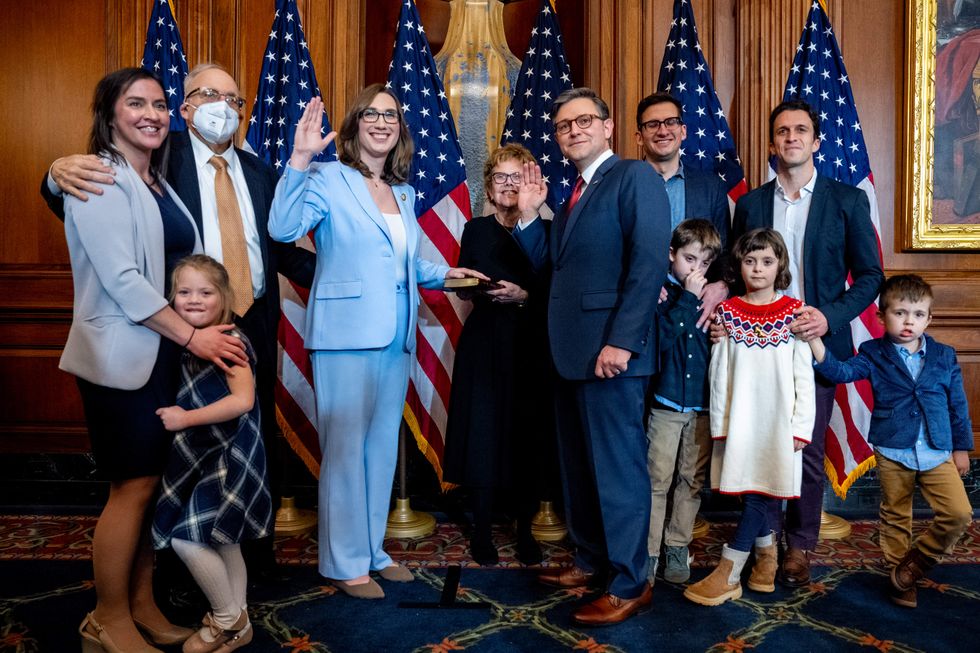 Speaker of the House Mike Johnson (R-LA) poses with Rep. Sarah McBride (D-DE) and members of McBride's family during a ceremonial swearing-in photo after being re-elected Speaker on the first day of the 119th Congress in the U.S. Capitol Building on January 03, 2025 in Washington, DCAndrew Harnik/Getty Images
The House bathroom ban
That low came 15 days after her November 5 election. On November 20, when Republican House Speaker Mike Johnson, who has called gender-affirming care “child abuse,” banned transgender people from using restrooms aligned with their gender identity in House-controlled spaces. McBride responded by saying she would comply with all House rules.
Behind the scenes, Democrats tried to cushion the cruelty. Several quietly offered McBride access to the private single-person restrooms in their Capitol offices — small acts of solidarity in the face of a policy many called cruel and absurd.
The following day, on November 21, The Advocate reported the reaction within the trans community. It was a fracture in what had otherwise been a celebration. Some activists wanted defiance; others accused McBride of being too measured. One person said it felt like “being pulled right under the wheels of the bus by someone I thought was trying to pull me out.”
McBride told The Advocate she understood where those people were coming from.
“When people say, ‘You’re the first trans person in this role. We expect you to fight at every moment,’ I understand that expectation,” she said. “I understand the feeling of being let down.”
But she described her response not as withdrawal, but as resolve.
“My strategy, though imperfect, is about sustaining influence, not just visibility,” she said. “If I let them make me the issue, then the actual issues — health care, housing, jobs — get lost.”
The new rule transformed a basic human function into a political test.
“I entered at an incredibly dangerous time for our country,” McBride said. “The cultural momentum that it felt like we had in the 2010s has given way to a cruelty and cultural regression that I don’t know that we’ve seen since the 1800s.”
For her, the episode revealed how outrage itself had become performance. She said that people targeting trans people were just wanting to incite, but she didn't want to feed into their actions. Her refusal to respond in kind, she explained, was not detachment but discipline.
“The country needs a clear visual contrast between the inhumanity of anti-equality politicians and our literal humanity,” she said. “In a world where someone might see a photo or video for just a millisecond while scrolling, that contrast has to be obvious.”
She invoked the moral power of the civil-rights movement — students walking silently into newly integrated schools as mobs jeered.
“It was unfair that they had to walk forward in silence,” she said. “But in doing so, they made clear to the public who was right and who was wrong.”
Still, she acknowledged how isolating that stance could be.
“It’s not viscerally comforting for some people in my own community,” she said. “But leadership requires us to do things that aren’t easy.”
When Reps. Boebert and Mace stormed a bathroom looking for McBride
On January 23, that hostility turned surreal.
Republican U.S. Reps. Lauren Boebert of Colorado and Nancy Mace of South Carolina stormed into a women’s restroom in the Capitol after reportedly believing McBride was inside, only to confront a different cisgender woman.
McBride wasn’t there but told The Advocate later that the episode was “predictable and predicted.”
She reiterated that she “wasn’t here to fight about bathrooms,” but to “fight for Delawareans — to bring down the costs facing families” and do the work voters had sent her to do.
“It was theater,” she said. “[Boebert and Mace] wanted to provoke, to get a reaction.”
But she understood the optics.
“The right caricatures trans people as a political act rather than a human existence,” she said. “When you humanize yourself, you rob them of that framing.”
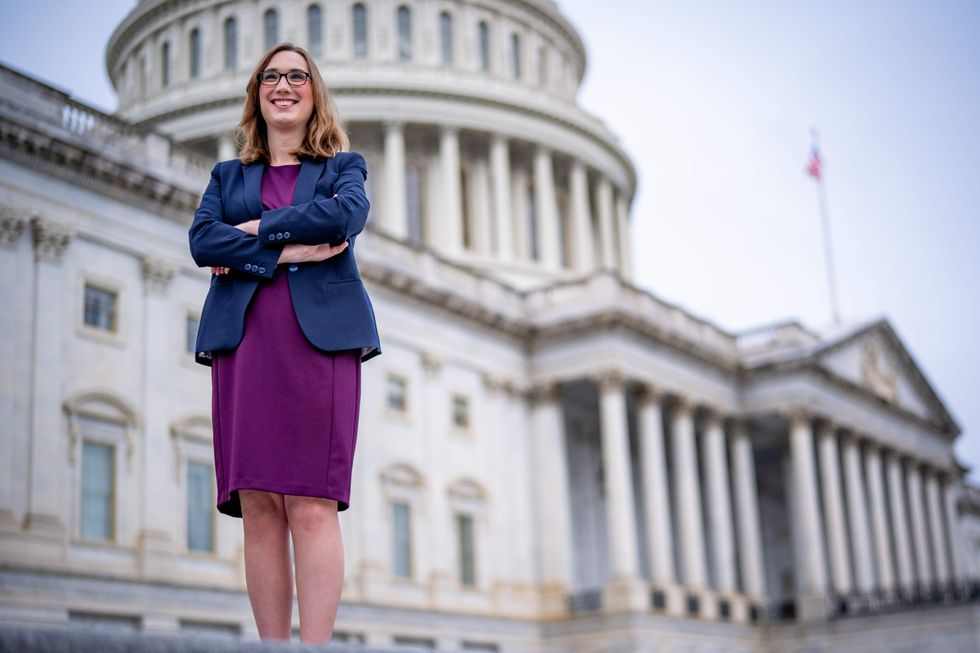 Rep.-elect Sarah McBride (D-DE) poses for a photograph after joining other congressional freshmen of the 119th Congress for a group photograph on the steps of the House of Representatives at the U.S. Capitol Building on November 15, 2024 in Washington, DCAndrew Harnik/Getty Images
Even amid the transphobia, McBride showed up in Congress. She helped unite Democrats against anti-LGBTQ+ amendments to the National Defense Authorization Act, introduced measures to reverse Trump’s transgender military ban, and co-sponsored the Equality Act, the Pride in Mental Health Act, and the Veterans Healthcare Equality Act.
Related: Sarah McBride's first bill just passed Congress & not one Republican voted against it
She joined colleagues pressing the State Department to restore LGBTQ+ human-rights data, opposed cuts to suicide-prevention programs, and fought discriminatory passport policies.
“I am really proud that thus far we have kept our party together and united in defense of the trans community,” she said. “I would never claim credit for that, but I do believe I have played a role in both the public and private tactics that I’ve employed in helping our party in the aftermath of an election when many pundits said the lesson was that supporting trans people and defending trans people had cost us that election.”
McBride said the hate aimed at trans people can be stopped two ways. “One is to change public opinion. The other is to win back power. In a democracy, you can’t have one without the other,” she said.
Her strategy, however, hasn’t silenced her critics in the trans community. Some trans advocates continue to view her restraint as complicity.
“Some trans people feel like I’m asking them to absorb more than they’ve agreed to,” she said. “That’s a fair criticism. And I live with it.”
But she insists disagreement is not division.
“If I believe in discipline and strategy, I have to accept the consequences,” she said. “Some will agree, some won’t. I’m proud of the first group. I understand the second.”
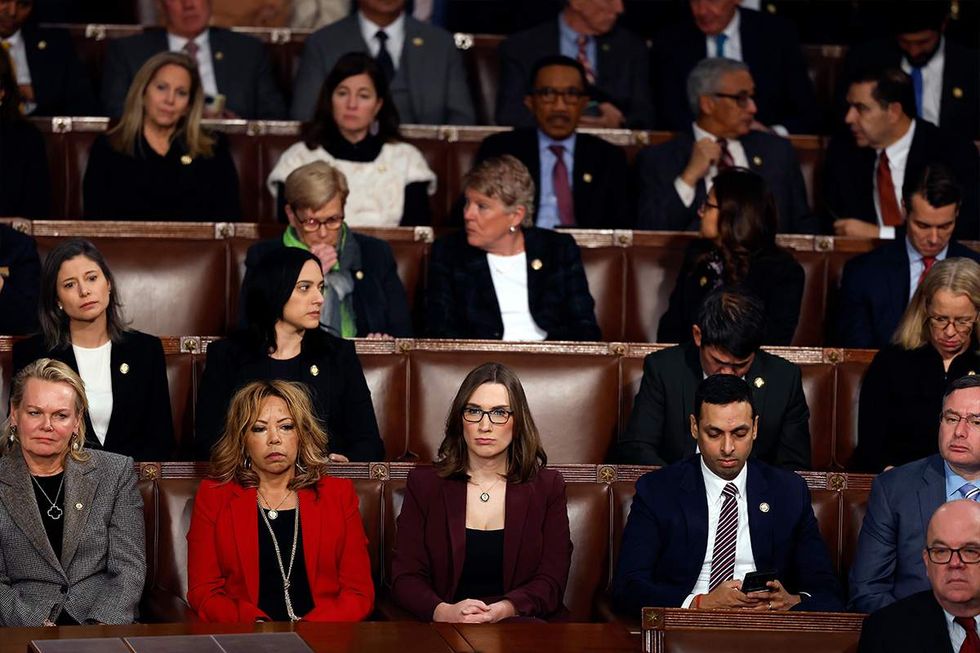 U.S. Rep. Sarah McBride (D-DE) (C) sits with fellow Democrats during a joint session of Congress to ratify the 2024 Presidential election at the U.S. Capitol on January 06, 2025 in Washington, DC.Anna Moneymaker/Getty Images
The Delaware difference
Deleware continues to be McBride's focus, she said.
“Wherever I go, in our northern bluer county or our redder southern one, at every Wawa, at least one person stops me with a message of love and support,” she said. “I can’t tell you how much that means to me.”
She laughed, remembering those stops. The previous weekend she stopped at four or five Wawas, she estimated, while traveling to No Kings rallies.
“I have always been proud to be a Delawarean,” she said, “but I am particularly grateful to be a Delawarean right now. The love and the support that I experience from my constituents — not because I’m unique, but because we all have one another’s backs — that solidarity is incredibly energizing and motivating.”
Sometimes, she said, she has to add some more time to get groceries now that she's recognized in public more often. It's all worth it, though.
"Meeting people where they are"
McBride said some of her politics have been misconstrued by some people, especially her trans critics.
“When people hear ‘meeting people where they are,’ they think I’m talking about right-wing politicians,” she said. “I’m not. I’m talking about voters — people with goodwill and questions.”
“If you lump everyone who’s still on a journey with the far right,” she said, “you cap your coalition at about 30 percent. You push potential allies toward extremists.”
“I’ve never successfully convinced someone by starting with, ‘You’re a bigot and every concern you have is ridiculous,’” she said. “That destroys credibility.”
For McBride, persuasion is itself a form of courage. “It’s comforting to preach to our choir,” she said. “But this is a moment where we have no alternative but to have the courage to grow our congregation.”
Her sense of humor remains intact. “I’m authentically a cringe millennial,” she said, laughing. “My humor is authentically cringe millennial.”
Her online voice — part sincerity, part self-aware absurdism — serves as a connection. “Social media is a competitive attention economy,” she said. “If bringing the wholeness of who I am, including my cringiness, helps me break through, I’m happy to volunteer as tribute.”
Still, she knows the risks. “I don’t think that you can be in politics today and not worry about your physical safety, and I would be lying if I said that I don’t worry about it,” she said. “Not just because I’m an elected official, but because I’ve entered Congress at a particularly toxic moment for trans people.”
She recalled nearly not running at all. “When I was deciding whether to run for this office,” she said, “one of the questions I had to ask myself was, ‘Am I willing to take this risk?’ Because we had been hearing a lot of things about the risk to my physical safety, even if I just ran, and I almost didn’t run in part because of that. But then I decided that if I didn’t run because of that, then that would mean they win.”
“If they can successfully intimidate us out of public life,” she continued, “then that is a surefire way for us to not only be pushed back into the shadows, but to see a politics that is perhaps unstoppably cruel toward us.”
She added, firmly: “There is absolutely no room for violence in our politics. And that is true regardless of who is the victim of that violence, regardless of what their perspective is, and what their political affiliation is. Because if there is ever even an inch of acceptance around political violence, no one is safe.”
Nearly a year after that first conversation in Canon, McBride’s tone is calm but unyielding. Her “darkest day,” she said, taught her that leadership isn’t about avoiding confrontation. It’s about choosing how to confront.
“When I’m physically with other LGBTQ people, including other trans people,” she said, “the number who come up to me and say, ‘You’re handling this exactly right,’ is fundamentally different from what you see online.”
“The internet can impact real life,” she added. “But it isn’t representative of it.”