'%3E%3Cpath d='M16.3574 35.6519H12.9537L15.0491 18.8873L16.3574 35.6519ZM30.4229 54.0093L22.309 0.994385H7.91795L0 54.0093H10.6634L11.5802 46.3855H17.4014L17.9914 54.0093H30.4229Z' fill='%23971B20'/%3E%3Cpath d='M48.2073 41.8813C48.2073 43.4049 47.4892 44.0011 46.1144 44.0011H43.7595V11.0687H46.1144C47.4892 11.0687 48.2073 11.6636 48.2073 13.1885V41.8813ZM59.5273 43.6695V11.3326C59.5273 3.71323 53.5729 0.994385 47.8157 0.994385H31.7213V54.0093H47.8157C53.5729 54.0093 59.5273 51.29 59.5273 43.6695Z' fill='%23971B20'/%3E%3Cpath d='M90.183 0.994385H78.6039L75.0711 30.6157L71.9955 0.994385H59.4346L69.2474 54.0093H80.373L90.183 0.994385Z' fill='%23971B20'/%3E%3Cpath d='M107.063 42.3448C107.063 43.7359 105.951 44.5974 104.643 44.5974C103.269 44.5974 102.157 43.7359 102.157 42.3448V12.658C102.157 11.2676 103.269 10.4058 104.643 10.4058C105.951 10.4058 107.063 11.2676 107.063 12.658V42.3448ZM119.233 43.2723V11.7312C119.233 6.36384 112.952 -3.8147e-06 104.643 -3.8147e-06C96.2667 -3.8147e-06 89.9867 6.36384 89.9867 11.7312V43.2723C89.9867 48.6393 96.2667 55 104.643 55C112.952 55 119.233 48.6393 119.233 43.2723Z' fill='%23971B20'/%3E%3Cpath d='M150.976 43.9349V33.7309H139.069V42.3448C139.069 43.7359 137.957 44.5974 136.582 44.5974C135.076 44.5974 133.964 43.7359 133.964 42.3448V12.658C133.964 11.2676 135.076 10.4058 136.582 10.4058C137.957 10.4058 139.069 11.2676 139.069 12.658V21.2723H150.976V11.0687C150.976 5.70107 145.283 -3.8147e-06 136.582 -3.8147e-06C127.75 -3.8147e-06 121.796 5.70107 121.796 11.0687V43.9349C121.796 49.3022 127.75 55 136.582 55C145.283 55 150.976 49.3022 150.976 43.9349Z' fill='%23971B20'/%3E%3Cpath d='M167.478 35.6519H164.076L166.17 18.8873L167.478 35.6519ZM181.544 54.0093L173.432 0.994385H159.037L151.123 54.0093H161.785L162.704 46.3855H168.523L169.114 54.0093H181.544Z' fill='%23971B20'/%3E%3Cpath d='M205.412 10.4058V0.994385H177.081V10.4058H185.392V54.0093H197.428V10.4058H205.412Z' fill='%23971B20'/%3E%3Cpath d='M230.002 54.0093V43.9349H218.914V31.8746H226.635V21.8028H218.914V10.4058H230.002V0.994385H206.875V54.0093H230.002Z' fill='%23971B20'/%3E%3C/g%3E%3Cdefs%3E%3CclipPath id='clip0_260_7080'%3E%3Crect width='230' height='55' fill='white'/%3E%3C/clipPath%3E%3C/defs%3E%3C/svg%3E)
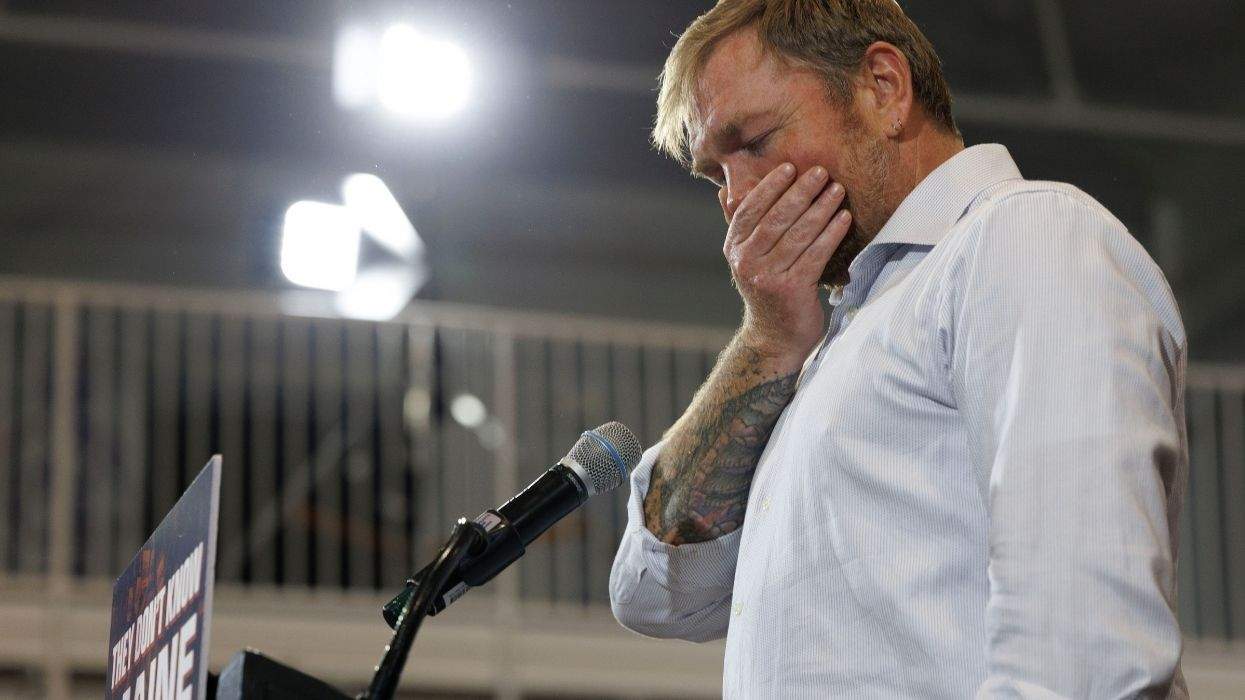

Graham Platner, the scandal-plagued Maine Democrat whose U.S. Senate campaign became a national test of whether an insurgent progressive could survive repeated revelations about his past, said Wednesday night that he is suspending campaign operations and intends to withdraw from the race.
Platner posted a more than 10-minute video to X at 8:10 p.m. Eastern, two days after POLITICO reported that a woman who dated him accused him of forcing her to have sex with him five years ago. Platner again denied the rape allegation, calling it “all false” and saying, “The things that have been claimed did not happen. It’s not real.”
At times, Platner appeared to get emotional as he spoke directly to camera, repeatedly denying the allegation while saying the campaign could no longer function without the fundraising, voter data and institutional support needed to compete.
“We believe that for the movement to continue, it can’t be me,” Platner said. “And for that reason, we are suspending campaign operations.”
A fight over what comes next
Related: Graham Platner welcomes attacks from 'fascists and bigots' over his support for trans rights
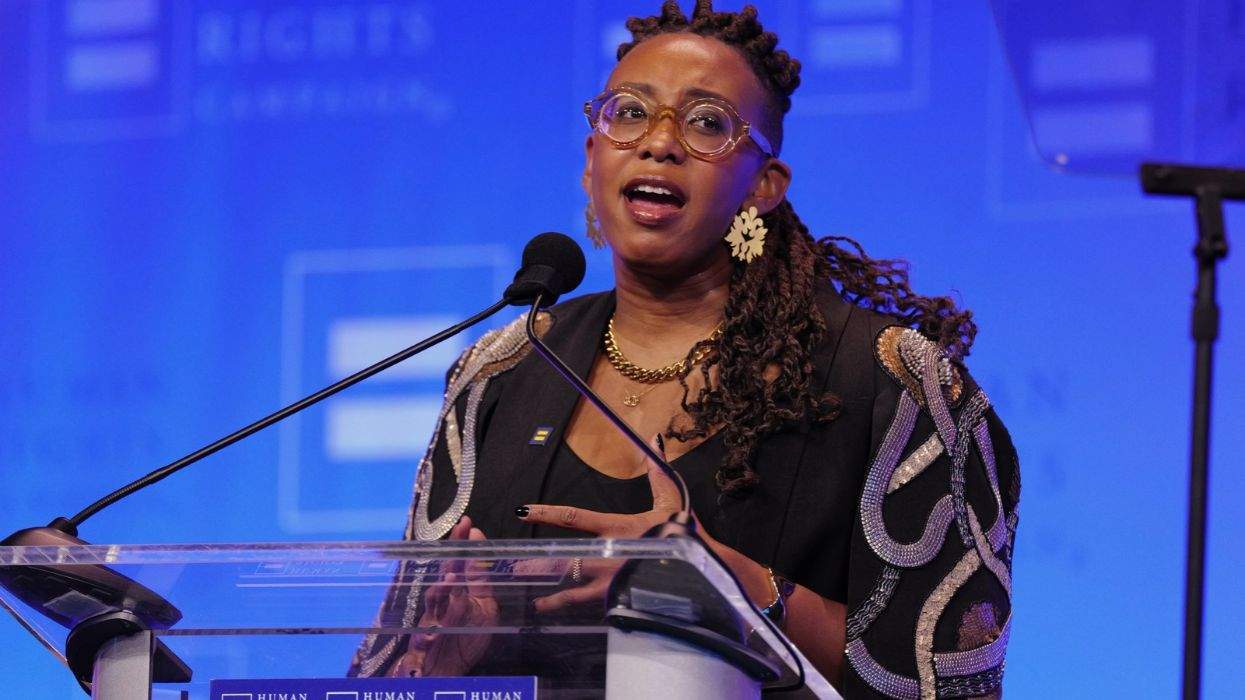
The announcement marked a stunning collapse for a candidate who, two weeks earlier, spoke with The Advocate about his primary victory, his support for transgender rights, and the national transgender rights PAC endorsement that was supposed to help him consolidate LGBTQ+ support heading into November.
In that June 24 interview, Platner framed his campaign as a movement-building project and said he welcomed attacks over his support for trans rights.
“You can either be a coward about it, and you can play into their game, or you cannot be a coward, and you can understand that trans rights are human rights,” Platner told The Advocate. “Human rights cover absolutely everyone.”
Now, Platner said he intends to file paperwork to withdraw, while urging Democrats not to replace him through what he described as a closed process controlled by Washington.
The fight over what comes next had already begun before Platner posted his video. Late Tuesday, Maine Democratic Party Executive Director Devon Murphy-Anderson said in a video posted to social media that the party was working to develop a replacement process that would be “open, inclusive, transparent, and fair,” but accused Platner’s team of trying to influence it.
“Unfortunately, Graham Platner’s team has repeatedly reached out to us in an attempt to put their thumb on the scale of what this process looks like,” Murphy-Anderson said. “We have repeatedly reiterated to Graham Platner’s team that they have no role in determining our next Democratic nominee for the U.S. Senate, nor in determining what this process looks like.”
Related: Graham Platner’s allies turn on him after bombshell sexual assault report
Under Maine law, the timing matters. Platner has until 5 p.m. Monday, July 13, to formally withdraw in a way that allows Democrats to replace him on the general election ballot. If he does, the party has until 5 p.m. July 27 to make a replacement nomination. Maine’s general election is Nov. 3, and ranked-choice voting will be used in federal races.
“My name might be on the ballot right now, but that ballot line belongs to the people of Maine,” Platner said.
A once-promising challenge to Susan Collins
The stakes are unusually high. Before the latest allegation detonated his candidacy, Platner had emerged as one of Democrats’ strongest recruits against Republican U.S. Sen. Susan Collins, a five-term incumbent who has long survived in a state that often votes Democratic at the federal level.
A University of New Hampshire Survey Center poll released in late May found Platner leading Collins 51 percent to 42 percent among likely general election voters. A UMass Lowell/YouGov poll released in June showed a narrower but still favorable race for Platner, with him ahead 48 percent to 43 percent.
Platner’s primary win was also not marginal. Bangor Daily News reported that he won 77.7 percent of the vote in the June 9 Democratic primary, while Gov. Janet Mills, who had suspended her campaign but remained on the ballot, received 16.7 percent. Maine Public reported that Platner had received more than 150,000 votes, more than any Democratic U.S. Senate candidate in a Maine primary since the state began electing senators by popular vote in 1918.
Now Democrats must decide whether they can preserve that energy without the candidate who built it.
Platner denies wrongdoing
“This is incredibly difficult because I know that some will think it’s an admission of guilt and it most certainly is not,” Platner said in the video. “We’re not doing it because of the allegations. We’re doing it because of the structures that are being taken away from us by those in power.”
He said he learned of the allegation through press inquiries and accused “a corporate media system and the political establishment” of acting as “judge, jury and executioner.” He also suggested the timing was designed to force him from the ballot before he became the official nominee.
“I only have until July 13th until I am officially the nominee,” he said. “This was the last week to try to get me off of the ballot.”
Months of scandals
The fallout began Monday after POLITICO reported the allegation from Jenny Racicot, who said Platner sexually assaulted her in 2021. The Washington Post later published its own interviews with Racicot and reported a separate allegation from another ex-girlfriend, Lyndsey Fifield, who accused Platner of removing condoms without her consent during sex when they dated years earlier. Platner has denied the sexual misconduct allegations.
Those allegations were the latest in a months-long series of controversies. Platner had already apologized for online comments described as misogynistic and racially insensitive; for a since-covered tattoo that resembled Nazi imagery, which he said he did not recognize at the time; and for Reddit posts The Advocate reported included homophobic slurs, anti-LGBTQ+ jokes and sexually explicit stories denigrating gay men. The Wall Street Journal reported that Platner had sent sexually explicit texts to multiple women during his marriage, and The New York Times reported that several women who had dated him described unsettling or volatile behavior. Platner has repeatedly described his past as part of a difficult period in his life and argued that opponents were weaponizing it to stop his campaign.
LGBTQ+, women’s support evaporates
The Christopher Street Project, a national political organization dedicated to electing transgender rights advocates, rescinded its endorsement of Platner after the sexual assault allegation and called on him to leave the race less than two weeks after backing him in an exclusive interview with The Advocate.
“Christopher Street Project is an organization that believes survivors, and that commitment cannot be conditional,” Tyler Hack, the group’s executive director, said in a statement to The Advocate on Monday. “Given the seriousness of the allegations and our commitment to believing survivors, we believe the most responsible path forward would be for Graham Platner to step aside. We are calling on him to do so and are rescinding our endorsement in this race.”
Hack said the decision reflected the standards the group believes movements must apply to themselves.
The group also sought to separate its call for Platner to step aside from the broader stakes of defeating Collins.
“We must defeat Susan Collins, a far-right Republican who refuses to support the 988 LGBTQ+ Youth Access Act and won’t stand with trans service members,” Hack said. “Defeating Collins cannot require us to compromise the values that brought us into this work in the first place. We must take back power and build a movement rooted in trust in and care for one another.”
That reversal was quickly followed by defections from prominent Democrats. U.S. Rep. Ro Khanna of California withdrew his endorsement, saying sexual assault or violence against women was a “red line.” U.S. Sen. Ruben Gallego of Arizona also rescinded his support, calling the allegation “troubling and deeply serious.” U.S. Rep. Ritchie Torres of New York wrote that he had “no endorsement to rescind” but said Platner should drop out.
Planned Parenthood Action Fund, which had also endorsed Platner, also rescinded its endorsement.
In the June 24 interview with The Advocate, Platner said he was “honored” to have the Christopher Street Project’s support and said he would not engage in politics willing to sacrifice marginalized people for short-term gain.
“You cannot treat politics as a game in which you can occasionally sell people out or occasionally just kind of push people under the bus for short-term gains,” he said then, “because a politics that’s willing to sell anybody out is eventually going to sell everybody out.”
A chaotic new phase
In Wednesday’s video, Platner said his supporters had built a campaign around health care, ending U.S. support for overseas wars, reducing corruption, and removing money from politics. He said the people who voted for him in June deserved an open process to determine what comes next.
“People in DC need to stay in DC,” he said. “Decisions should not be made in back rooms by people in places of political power.”
The race now enters a chaotic new phase for Democrats, who had viewed Maine as one of their best pickup opportunities in the fight for control of the Senate. Platner warned that national party leaders and donor networks had already committed to withholding money from the race if he remained the nominee.
“They would rather see Susan Collins win than have me be the next senator from Maine,” he said.