'%3E%3Cpath d='M16.3574 35.6519H12.9537L15.0491 18.8873L16.3574 35.6519ZM30.4229 54.0093L22.309 0.994385H7.91795L0 54.0093H10.6634L11.5802 46.3855H17.4014L17.9914 54.0093H30.4229Z' fill='%23971B20'/%3E%3Cpath d='M48.2073 41.8813C48.2073 43.4049 47.4892 44.0011 46.1144 44.0011H43.7595V11.0687H46.1144C47.4892 11.0687 48.2073 11.6636 48.2073 13.1885V41.8813ZM59.5273 43.6695V11.3326C59.5273 3.71323 53.5729 0.994385 47.8157 0.994385H31.7213V54.0093H47.8157C53.5729 54.0093 59.5273 51.29 59.5273 43.6695Z' fill='%23971B20'/%3E%3Cpath d='M90.183 0.994385H78.6039L75.0711 30.6157L71.9955 0.994385H59.4346L69.2474 54.0093H80.373L90.183 0.994385Z' fill='%23971B20'/%3E%3Cpath d='M107.063 42.3448C107.063 43.7359 105.951 44.5974 104.643 44.5974C103.269 44.5974 102.157 43.7359 102.157 42.3448V12.658C102.157 11.2676 103.269 10.4058 104.643 10.4058C105.951 10.4058 107.063 11.2676 107.063 12.658V42.3448ZM119.233 43.2723V11.7312C119.233 6.36384 112.952 -3.8147e-06 104.643 -3.8147e-06C96.2667 -3.8147e-06 89.9867 6.36384 89.9867 11.7312V43.2723C89.9867 48.6393 96.2667 55 104.643 55C112.952 55 119.233 48.6393 119.233 43.2723Z' fill='%23971B20'/%3E%3Cpath d='M150.976 43.9349V33.7309H139.069V42.3448C139.069 43.7359 137.957 44.5974 136.582 44.5974C135.076 44.5974 133.964 43.7359 133.964 42.3448V12.658C133.964 11.2676 135.076 10.4058 136.582 10.4058C137.957 10.4058 139.069 11.2676 139.069 12.658V21.2723H150.976V11.0687C150.976 5.70107 145.283 -3.8147e-06 136.582 -3.8147e-06C127.75 -3.8147e-06 121.796 5.70107 121.796 11.0687V43.9349C121.796 49.3022 127.75 55 136.582 55C145.283 55 150.976 49.3022 150.976 43.9349Z' fill='%23971B20'/%3E%3Cpath d='M167.478 35.6519H164.076L166.17 18.8873L167.478 35.6519ZM181.544 54.0093L173.432 0.994385H159.037L151.123 54.0093H161.785L162.704 46.3855H168.523L169.114 54.0093H181.544Z' fill='%23971B20'/%3E%3Cpath d='M205.412 10.4058V0.994385H177.081V10.4058H185.392V54.0093H197.428V10.4058H205.412Z' fill='%23971B20'/%3E%3Cpath d='M230.002 54.0093V43.9349H218.914V31.8746H226.635V21.8028H218.914V10.4058H230.002V0.994385H206.875V54.0093H230.002Z' fill='%23971B20'/%3E%3C/g%3E%3Cdefs%3E%3CclipPath id='clip0_260_7080'%3E%3Crect width='230' height='55' fill='white'/%3E%3C/clipPath%3E%3C/defs%3E%3C/svg%3E)

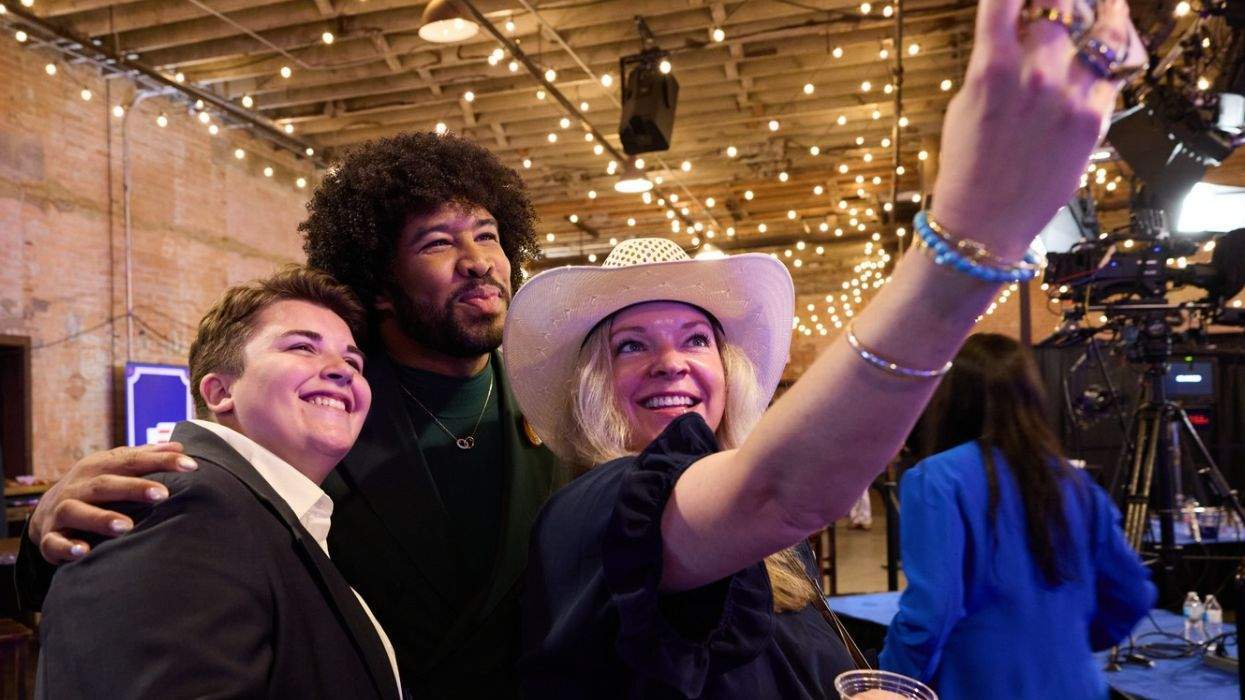
At a small table in a bright corner of Joe’s Coffeehouse in Atlanta, the October sunlight streaming through a window that opened to the sidewalk, Georgia state Rep. Ruwa Romman spoke with deliberate calm, the cadence of someone who has lived through the politics of fear. The eclectic east Atlanta café, taken over by the Human Rights Campaign to celebrate LGBTQ+ stories, buzzed with quiet energy on National Coming Out Day as the 31-year-old Democrat, the first Muslim woman and first Palestinian American elected to Georgia’s General Assembly, joined LGBTQ+ community members and allies in a show of solidarity.
Keep up with the latest in LGBTQ+ news and politics. Sign up for The Advocate's email newsletter.
“I think in particular now more than ever, we need to be showing support for those the Trump administration has been targeting,” Romman told The Advocate on Saturday. “Especially if you’re an elected official, this is the time to show up. Sometimes showing up really is the only thing we can do, but if that’s the only thing, we should be doing it.”
Romman said her presence at the coffeehouse that morning was about more than symbolism. The same patterns of fear and misinformation used to vilify Muslims after 9/11, she said, are now being deployed against transgender Americans. “I’ve had to know the difference between those who are militantly hateful versus those who are ignorantly hateful,” she said. “That is something that, particularly as a child, I felt really, in hindsight, took a lot of my childhood away. But at the same time, I noticed how big a difference it made in those around me for them to know someone like me.”
Familiar script of fear
Romman said the legislative tactics targeting transgender youth through laws that take away their rights echo the same frameworks once used to marginalize her community. “When I was in middle school, we had to get forms signed by other teams to allow me to play basketball while wearing a headscarf,” she said.
For Romman, the logic is painfully cyclical. “Every time there’s a bill targeting a group of people, it’s almost the same exact bill,” she said. “They just swap out the name.”
She added, “That methodology was the exact same one that the first anti-trans bill that came during my first year in office in 2023 [used], almost word for word.”
In both cases, the language of “protection” masked exclusion, she said. “Back then, they said it was for the protection of athletes, to level the playing field,” she explained. “It came from a place of ignorance, but also political expediency.”
She told The Advocate she has directly questioned Republican colleagues who back such bills. “I asked, is there any district or office that could be flipped through Muslim voters, trans voters, pick any small minority group? And they said no" she recalled. “And that’s my point — there’s a ton of political benefit and no political downside. And to me, that makes you a bigot.”
From organizer to candidate
Just weeks before the interview, Romman announced her campaign for governor, a move that the Georgia Recorder described as “history-making” in a state where Democrats have long struggled to reclaim the governor’s mansion. Her platform, the publication reported, focuses on raising wages, restoring rural hospitals, ensuring food security, and investing in small businesses.
Her campaign builds on a decade of civic work that includes leadership with the Georgia Muslim Voter Project, Asian Americans Advancing Justice, and the Asian American Advocacy Fund. This year, she launched Project 159, a grassroots initiative to organize volunteers across all 159 Georgia counties as a direct challenge to the notion that Democrats can’t compete statewide.
She joins a crowded Democratic field that includes former Atlanta Mayor Keisha Lance Bottoms, state Sen. Jason Esteves, former DeKalb County CEO Michael Thurmond, and former Lt. Gov. Geoff Duncan.
The weight of representation
Romman told The Advocate that being “the first” comes with both privilege and pressure. “When I first got elected, I very intentionally spoke to all of my colleagues regardless of political affiliation,” she said. “If you are the first, it raises the bar. Because whether it’s fair or not, how I legislate will reflect on the rest of the community.”
She said her decision to run for governor was driven by a conviction that compromise isn’t the same as progress. “I have not seen the kind of representation that is demanded of this moment,” she said. “One that isn’t necessarily saying, ‘Let’s see how much we can compromise,’ but instead asks, ‘What if we could raise the bar?’”
Her Southern and Arab identities, she added, inform how she connects with voters. “Arabs and Southerners, the only difference between us is that Arabs drink their tea hot and Southerners drink theirs cold, and both very, very sweet,” she said with a laugh. “It actually isn’t weird that someone like me is willing to represent a state like Georgia. People here are wondering how they can afford their utility bills, housing costs, and wages that are staying the same.”
Governing with empathy
Romman’s vision for Georgia centers on what she calls moral clarity: a government that protects, not punishes. “It’s absurd that we’re still talking about subsidies instead of talking about expanding health care access to everybody,” she said of the ongoing fight that has led to the federal government shutdown. “We have one of the highest bond ratings in the country. … What if we actually raised the bar for people?”
That same principle drives her defense of LGBTQ+ Georgians. Romann said she would not support any bill that targets the rights of trans adults or kids. “What we allow governments to do to other people will be done upon us,” she said. “If I’m governor, I’ll absolutely veto every bill that comes to my desk that targets minority groups of people. I find it to be an atrocious way to govern.”