'%3E%3Cpath d='M16.3574 35.6519H12.9537L15.0491 18.8873L16.3574 35.6519ZM30.4229 54.0093L22.309 0.994385H7.91795L0 54.0093H10.6634L11.5802 46.3855H17.4014L17.9914 54.0093H30.4229Z' fill='%23971B20'/%3E%3Cpath d='M48.2073 41.8813C48.2073 43.4049 47.4892 44.0011 46.1144 44.0011H43.7595V11.0687H46.1144C47.4892 11.0687 48.2073 11.6636 48.2073 13.1885V41.8813ZM59.5273 43.6695V11.3326C59.5273 3.71323 53.5729 0.994385 47.8157 0.994385H31.7213V54.0093H47.8157C53.5729 54.0093 59.5273 51.29 59.5273 43.6695Z' fill='%23971B20'/%3E%3Cpath d='M90.183 0.994385H78.6039L75.0711 30.6157L71.9955 0.994385H59.4346L69.2474 54.0093H80.373L90.183 0.994385Z' fill='%23971B20'/%3E%3Cpath d='M107.063 42.3448C107.063 43.7359 105.951 44.5974 104.643 44.5974C103.269 44.5974 102.157 43.7359 102.157 42.3448V12.658C102.157 11.2676 103.269 10.4058 104.643 10.4058C105.951 10.4058 107.063 11.2676 107.063 12.658V42.3448ZM119.233 43.2723V11.7312C119.233 6.36384 112.952 -3.8147e-06 104.643 -3.8147e-06C96.2667 -3.8147e-06 89.9867 6.36384 89.9867 11.7312V43.2723C89.9867 48.6393 96.2667 55 104.643 55C112.952 55 119.233 48.6393 119.233 43.2723Z' fill='%23971B20'/%3E%3Cpath d='M150.976 43.9349V33.7309H139.069V42.3448C139.069 43.7359 137.957 44.5974 136.582 44.5974C135.076 44.5974 133.964 43.7359 133.964 42.3448V12.658C133.964 11.2676 135.076 10.4058 136.582 10.4058C137.957 10.4058 139.069 11.2676 139.069 12.658V21.2723H150.976V11.0687C150.976 5.70107 145.283 -3.8147e-06 136.582 -3.8147e-06C127.75 -3.8147e-06 121.796 5.70107 121.796 11.0687V43.9349C121.796 49.3022 127.75 55 136.582 55C145.283 55 150.976 49.3022 150.976 43.9349Z' fill='%23971B20'/%3E%3Cpath d='M167.478 35.6519H164.076L166.17 18.8873L167.478 35.6519ZM181.544 54.0093L173.432 0.994385H159.037L151.123 54.0093H161.785L162.704 46.3855H168.523L169.114 54.0093H181.544Z' fill='%23971B20'/%3E%3Cpath d='M205.412 10.4058V0.994385H177.081V10.4058H185.392V54.0093H197.428V10.4058H205.412Z' fill='%23971B20'/%3E%3Cpath d='M230.002 54.0093V43.9349H218.914V31.8746H226.635V21.8028H218.914V10.4058H230.002V0.994385H206.875V54.0093H230.002Z' fill='%23971B20'/%3E%3C/g%3E%3Cdefs%3E%3CclipPath id='clip0_260_7080'%3E%3Crect width='230' height='55' fill='white'/%3E%3C/clipPath%3E%3C/defs%3E%3C/svg%3E)
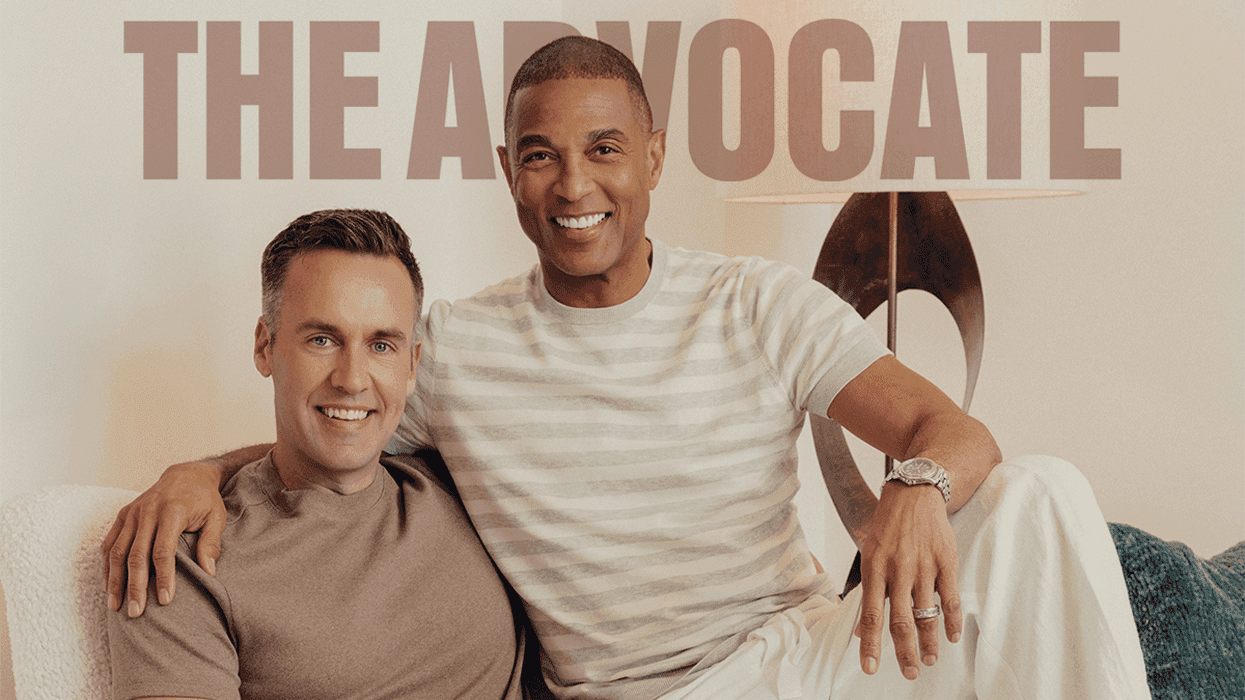
When I sit down with Don Lemon and husband Tim Malone over Zoom for this cover story, nothing works. The calendar invite never made it to Malone. The video feed is frozen — Lemon can hear me, but I cannot see him. The connection drops. Lemon is somewhere in his Manhattan apartment fixing lunch, and when he tries to talk me through the technical situation, he cuts out mid-sentence. We establish, after some back-and-forth, that he is going to switch to AirPods, which requires him to stay in the room he is in; otherwise, he will lose the signal entirely. Then we wait. Malone, meanwhile, appears on screen looking completely unbothered. “Hey, guys,” he says. “How are you?”
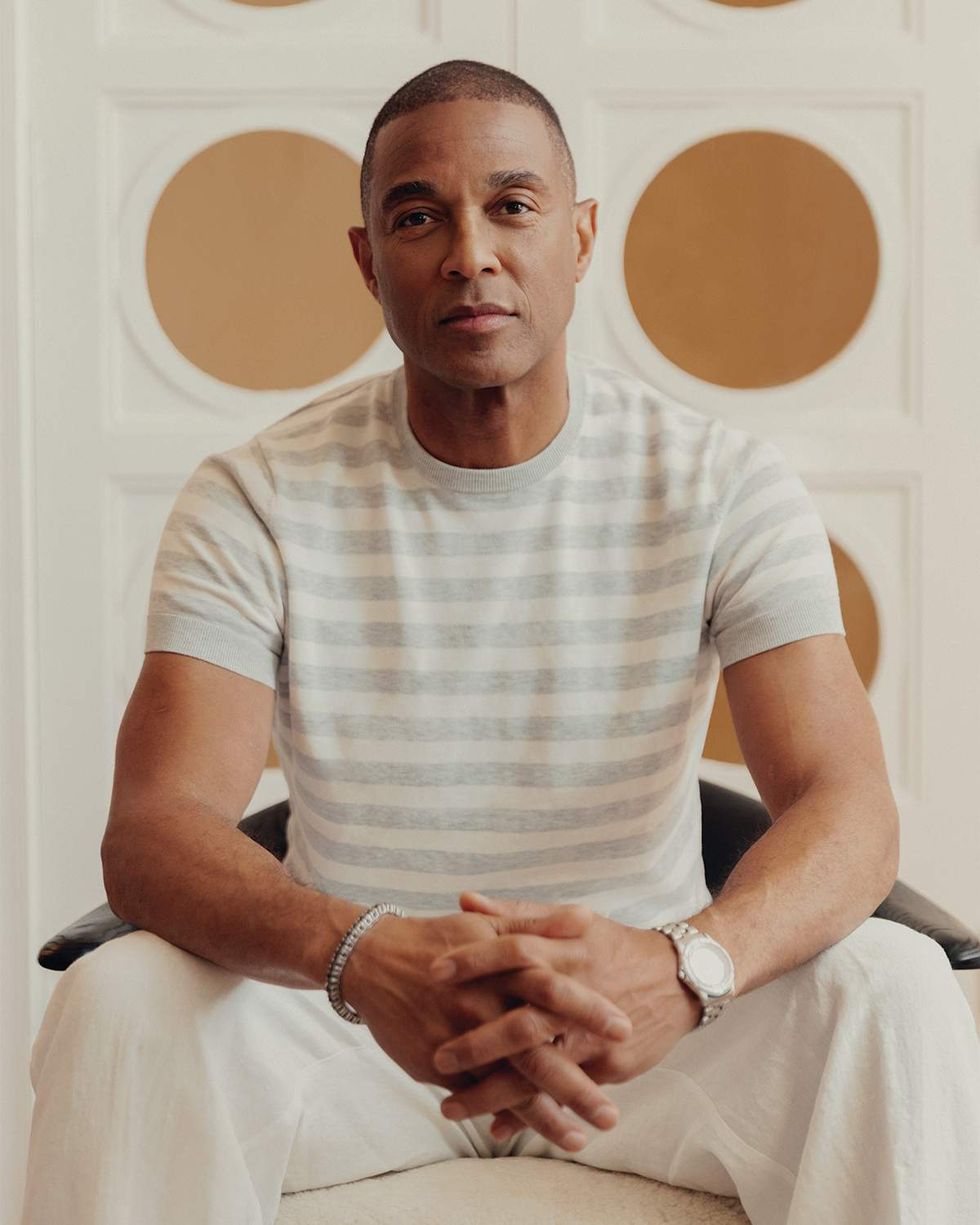 Don LemonSequoyah Wildwyn-Dechter
They are juggling pets, glitches, travel schedules, court dates, and the strange rhythms of life under constant public scrutiny. One moment, Lemon is discussing constitutional protections for journalism. Next, he is interrupting himself to ask whether one of their dogs has been fed.
The oscillation between gravity and domesticity feels strangely perfect for this chapter of Lemon’s life. He has become, in the eyes of many Americans, less like a television anchor and more like a companion navigating democratic institutional collapse alongside them in real time.
From cable news star to independent media powerhouse
Lemon has already lived several public lives.
There was the ambitious young reporter from Louisiana with the relentless local news hustle, climbing the television industry ladder that often tolerated Black men only so long as they remained carefully legible to white America. Then came the CNN years, when Lemon became a nightly presence in millions of homes during an era defined by Donald Trump’s first term: COVID-19, racial unrest after George Floyd was killed by a white Minneapolis police officer, and democratic instability after Trump refused to accept the outcome of the 2020 election. Lemon was celebrated and mocked; he was polarizing and comforting. But he was unmistakably central to the architecture of cable news during one of the most volatile periods in modern American history.
And now, under Trump 2.0, there is this version of Don Lemon: untethered from legacy television, indicted by the federal government, transformed into an independent media force with millions of fiercely loyal followers — and more culturally relevant than he has ever been.
“Legacy media will have more viewers than me,” Lemon tells me. “But there is no comparison in the relevance department.”
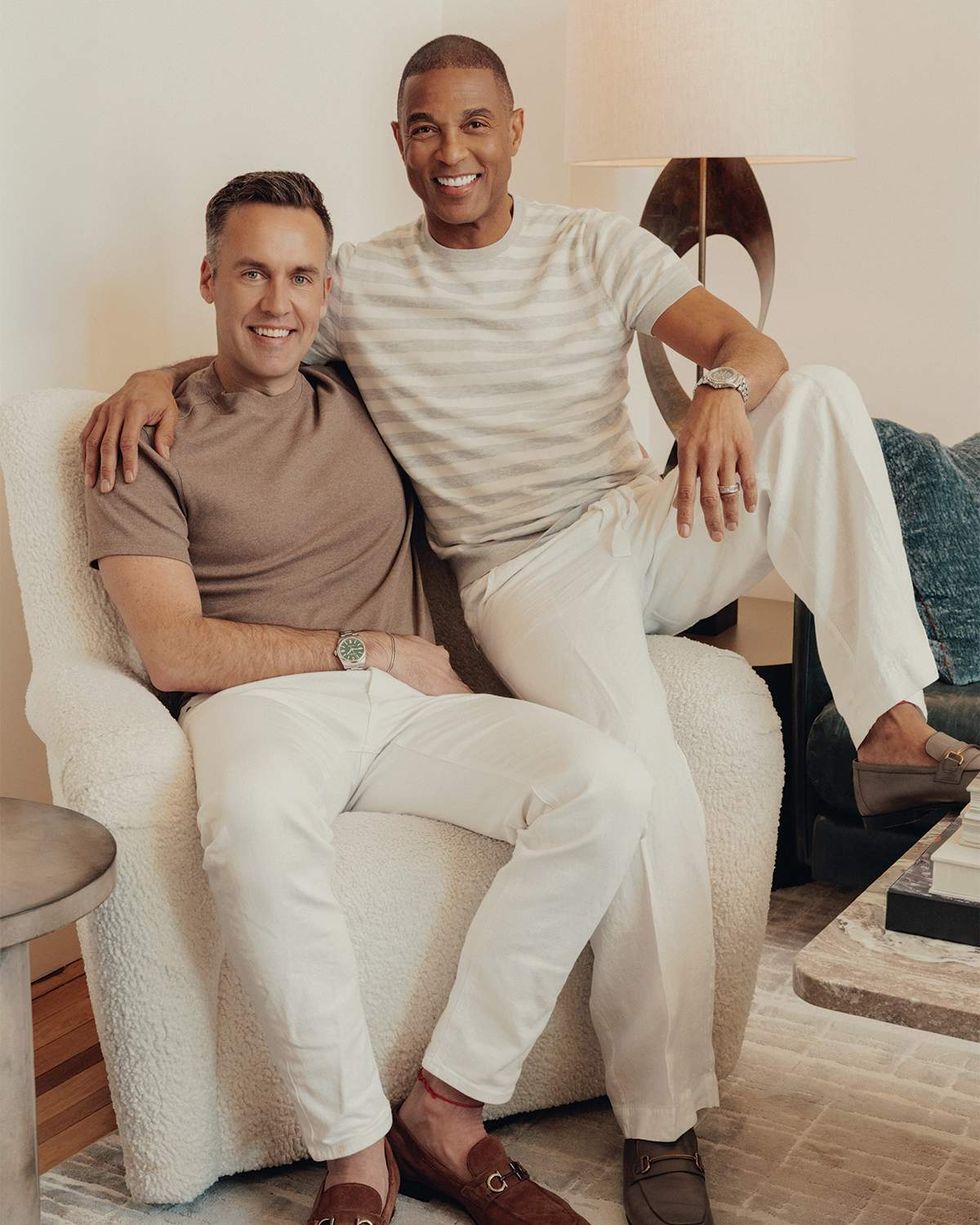 Tim Malone and Don Lemon at home.Sequoyah Wildwyn-Dechter
A few weeks before our interview, Lemon and I crossed paths several times during White House Correspondents’ Dinner weekend in Washington. We chatted briefly at the YouTube and C-SPAN pre-party circuit, then again at Grindr’s sprawling Georgetown gathering, an event so packed and chaotic that it quickly became one of the most talked-about events of the weekend.
The WHCD weekend has long revolved around legacy media institutions and old Washington power structures. But this year, one of the hottest invitations in town went to a queer dating app, which hosted politicians, journalists, influencers, and LGBTQ+ leaders at a Georgetown mansion, while lines stretched down the block and paparazzi gathered to capture the comings and goings.
Lemon moved through the crowds, part journalist, part celebrity, part resistance figure, part independent media mogul. People swarmed him nearly everywhere he went.
The arrest that changed everything
Months earlier, Lemon encountered a far more unsettling swarm when federal agents from the Department of Homeland Security surrounded him. The morning that he was taken into federal custody in Los Angeles, he was staying in a hotel to cover the Grammys. It was late January, just past midnight on the West Coast, when he was arrested.
“Last night, the Department of Justice sent a team of federal agents to arrest me in the middle of the night for something that I’ve been doing for the last 30 years,” Lemon said the following afternoon, standing outside a federal courthouse in Los Angeles, his husband’s hand firmly clasped in his own. “And that is covering the news.”
The White House celebrated. But that image of two men holding hands and stepping into a blaze of cameras — with one facing what many legal experts considered to be bogus federal charges — went around the world in hours.
In that moment, Lemon, whom many had written off as a cable news casualty when CNN let him go years earlier, became something he had never quite been before.
Undeniable.
“I just want to be clear,” Lemon says now, a smile in his voice. “That started happening way before the arrest. The arrest just sort of kicked it up even more.”
Lemon and eight others were charged under the Freedom of Access to Clinic Entrances Act, or FACE Act, with conspiracy against the right of religious freedom at a place of worship. The charges stem from his coverage of an anti-ICE protest inside Cities Church in St. Paul, Minnesota, where one of the pastors serves as an acting director of an ICE field office.
Protests had surged in Minneapolis and St. Paul after a federal immigration agent killed Renée Good, a 37-year-old mother of three whom advocates described as queer, during an enforcement action. Days later, Alex Pretti, a 37-year-old ICU nurse, was shot and killed by ICE agents. Lemon was at the church doing what journalists do, pointing a camera at something important and asking questions.
He has pleaded not guilty.
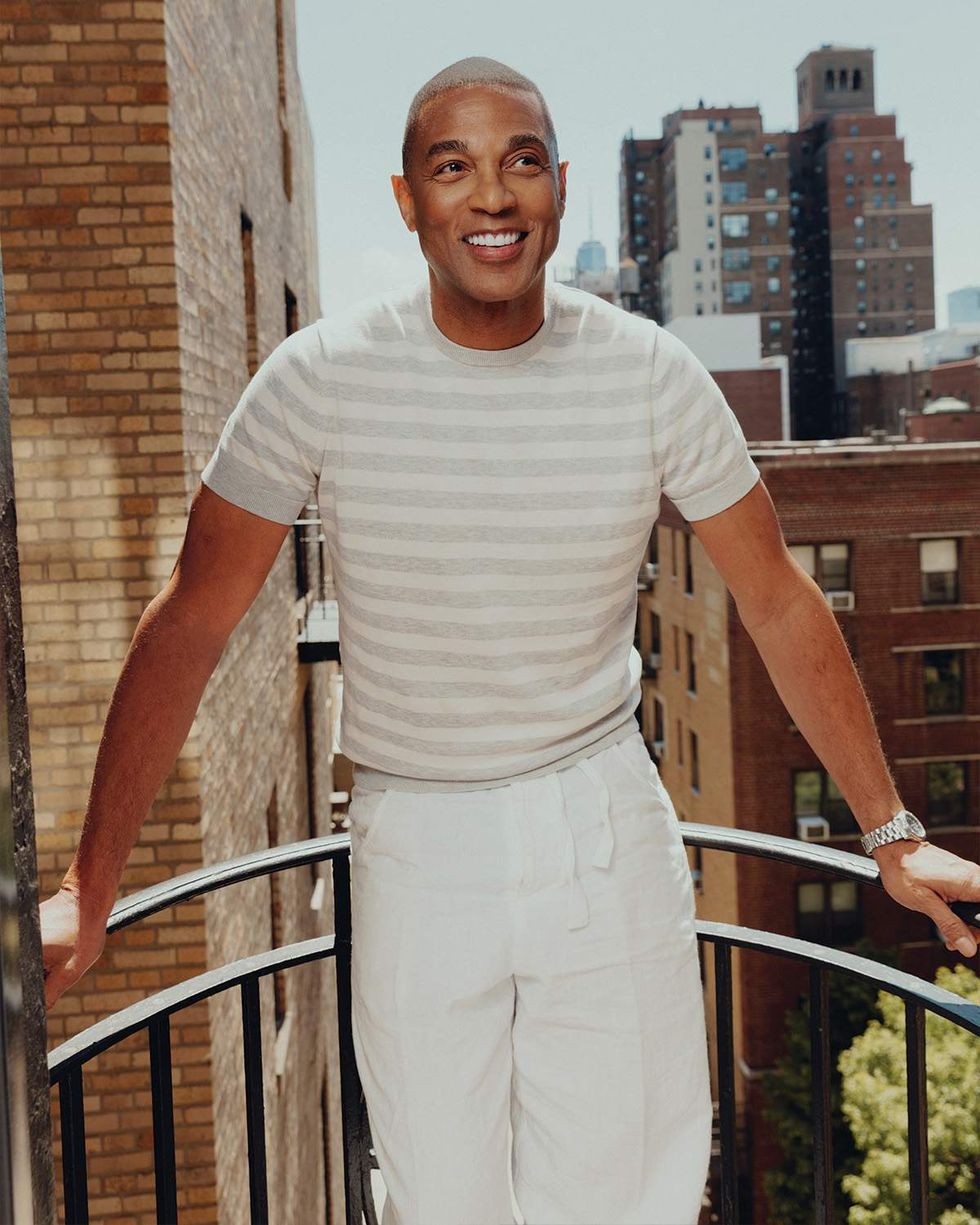 Don LemonSequoyah Wildwyn-Dechter
Why press freedom advocates are watching his case
A federal magistrate judge had refused to sign the initial charging complaint. That reportedly angered then-Attorney General Pam Bondi. Federal prosecutors found another path forward, and agents were dispatched to Los Angeles.
At his February arraignment in St. Paul, Lemon’s attorneys said the Department of Homeland Security had seized his phone and asked for its return.
The implications landed hard among journalists who understood what that meant.
A phone is not just a device. It is an archive, a living record of sources and communications that encompasses more than any single story. To hand it to investigators is to expose a reporter’s entire professional life.
“The process is the punishment,” Lemon said outside the courthouse that day.
“It made us stronger,” Malone tells me when asked about the arrest’s impact on the couple’s relationship.
Then he describes the night it happened. The calls. The war room was assembled by friends and team members while Lemon sat in custody, unaware of what was unfolding outside.
“Don has no idea, still probably, everything that happened from midnight to 7 a.m.,” Malone says.
Lemon learned the news was everywhere only when he walked past a small office where agents had a television on and saw a chyron reading: Former CNN anchor arrested.
“Uh-oh,” he remembers thinking. “How long has that been going on?”
Life after CNN and the break with Elon Musk
To understand Don Lemon in 2026, you have to understand what came before.
After 17 years at CNN, Lemon was abruptly fired in April 2023, following months of mounting turmoil inside the network. His ouster came after a string of controversies, including on-air remarks about then-presidential candidate Nikki Haley that many viewers and colleagues criticized as sexist. Lemon later said he was “stunned” by the decision and learned of it through his agent, while CNN publicly disputed that account.
After leaving the network, Lemon agreed to launch a new show on Elon Musk’s platform X in 2024. The partnership was supposed to symbolize Musk’s vision for transforming the social media company into a digital town square where independent journalism could thrive.
But the arrangement imploded almost immediately after Lemon conducted a wide-ranging interview with Musk, touching on hate speech on the platform, politics, content moderation, and the richest man in the world’s reported drug use.
Hours later, Musk abruptly canceled the partnership.
Lemon later sued Musk and X over the collapsed agreement, alleging fraud, breach of contract, and reputational damage stemming from what reports said could have been a multimillion-dollar media deal.
“When people show you who they are, believe them,” Lemon says about the ordeal.
“He’s not necessarily a free speech absolutist,” Lemon says. “Free speech absolutist only as long as you are maybe agreeing, as long as you’re of like mind.”
Building Lemon Nation
Lemon subsequently launched The Don Lemon Show, streaming live on YouTube, Instagram, TikTok, Substack, Facebook, and Twitch. No corporate boss. No advertiser pressure. No assignment desk decides what counts as news.
He called his audience “Lemon Nation.”
And Lemon Nation showed up. Today, Lemon Media Network has surpassed 10 million followers across platforms, with more than 50 percent growth in the past year. There’s even “Lemon Head” merch.
“A lot of people wrote my career obituary,” he says. “And thank goodness they turned out to be wrong.”
Unlike traditional cable audiences, which continue to age and shrink, Lemon’s audience increasingly exists within the creator economy: fragmented, digitally native, highly participatory, and intensely loyal.
The Don Lemon Show swept its categories at the 30th annual Webby Awards, taking both the Webby and the People’s Voice Award for Best Video Podcast Host. It also won multiple NAACP Image Awards, including the Outstanding News and Information Award.
Lemon recently announced a major expansion: a new director of operations hired from McKinsey, a new Washington correspondent, promotions for founding team members who built the operation from scratch, and the launch of a daily newsletter, The Lemon Lucky 7.
“Two years ago, people told me independent media was a step down,” Lemon says. “Ten million followers later, I think we’ve answered that.”
Former White House press secretary Karine Jean-Pierre, who recently honored Lemon at the Truth Awards in Los Angeles, told me that Lemon’s willingness to continue speaking publicly despite mounting legal pressure is precisely what has elevated his stature.
“Don Lemon has never shied away from seeking the truth and holding the powerful accountable,” she says. “Even when powerful forces tried to silence him, limit his reach, or take his freedom, he continues to speak out. Don is compassionate, courageous, and unwavering in his voice when it matters most.”
As the legal and political battles around Lemon intensify, and his media empire grows, Malone has become both a protector and a grounding force.
A love story that began on election night
Lemon and Malone’s love story began on a Friday night in the Hamptons in 2016, at a restaurant called Almond. Malone was seeing someone else. Lemon was single. A giant paddleboard served as the unlikely connective tissue of their early friendship. Lemon could not fit it on his helicopter ride home, so Malone drove it back to New York City.
They kept in touch. Eventually, Malone’s relationship ended. Lemon invited him to a party on election night 2016, where Malone sat down and immediately knocked over the table, sending candles and glasses flying.
“It kind of broke the ice,” Lemon says as Malone cringes knowingly.
They left early that night, as results from Florida and Pennsylvania came in and the numbers began to turn. Neither wanted to be alone.
Malone ended up at Lemon’s apartment in Harlem and wore one of his shirts to the subway the next morning, riding through a city in stunned silence. On a train full of shell-shocked New Yorkers, Malone felt compelled to announce to anyone nearby: “I didn’t vote for him.”
“That kind of sealed the deal,” Lemon says. Now their marriage has become central to the national story itself.
That famous photo
The courthouse photo, which Lemon embraces as his The Bodyguard moment, resonates because it was real. Malone, jaw set and scanning the crowd with visible intensity, walked slightly ahead of Lemon through a crush of cameras and shouting reporters while gripping his husband’s hand tightly. Lemon, dressed in a cream-colored suit and glasses, looked composed beside him, flashing a smile, almost serene amid the chaos. Malone says the actual exit was unplanned, and that multiple strategy calls about how Lemon would leave the building were overridden in real time by circumstance.
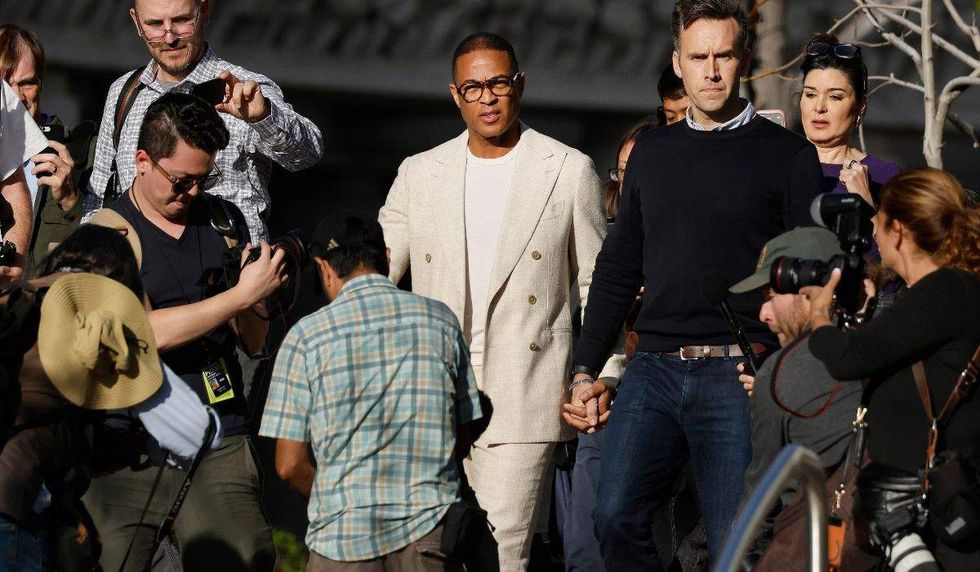 Journalist Don Lemon (C) holds hands with husband Tim Malone as they leave federal court on January 30, 2026, in Los Angeles, California. Lemon was arrested in Beverly Hills in connection to a protest he had covered at a Minnesota church. HMario Tama/Getty Images
Lemon believes the image did something beyond politics.
“It’s not just for a gay couple, but for a gay interracial couple,” he says.
Black women who used to swarm him at events now swarm Malone instead. “Now they’re like, ‘Hey, Tim,’” Lemon says, grinning. “And I’m like, ‘What about me?’”
Staying grounded
Away from the cameras, their life is surprisingly ordinary.
They obsess over their three rescue dogs, Boomer, Barkley, and Gus, all seniors who sleep in the couple’s bed and take over most of it (some nights, one dog dad will sleep in a guest bedroom to avoid disturbing the sleeping canines). Lemon has taken up video games to decompress. He plays Mario Kart and says he is attempting to learn Fortnite.
“I would much rather be at home just chilling with my husband and my dogs and with a movie or a fire or just peace and quiet,” he says.
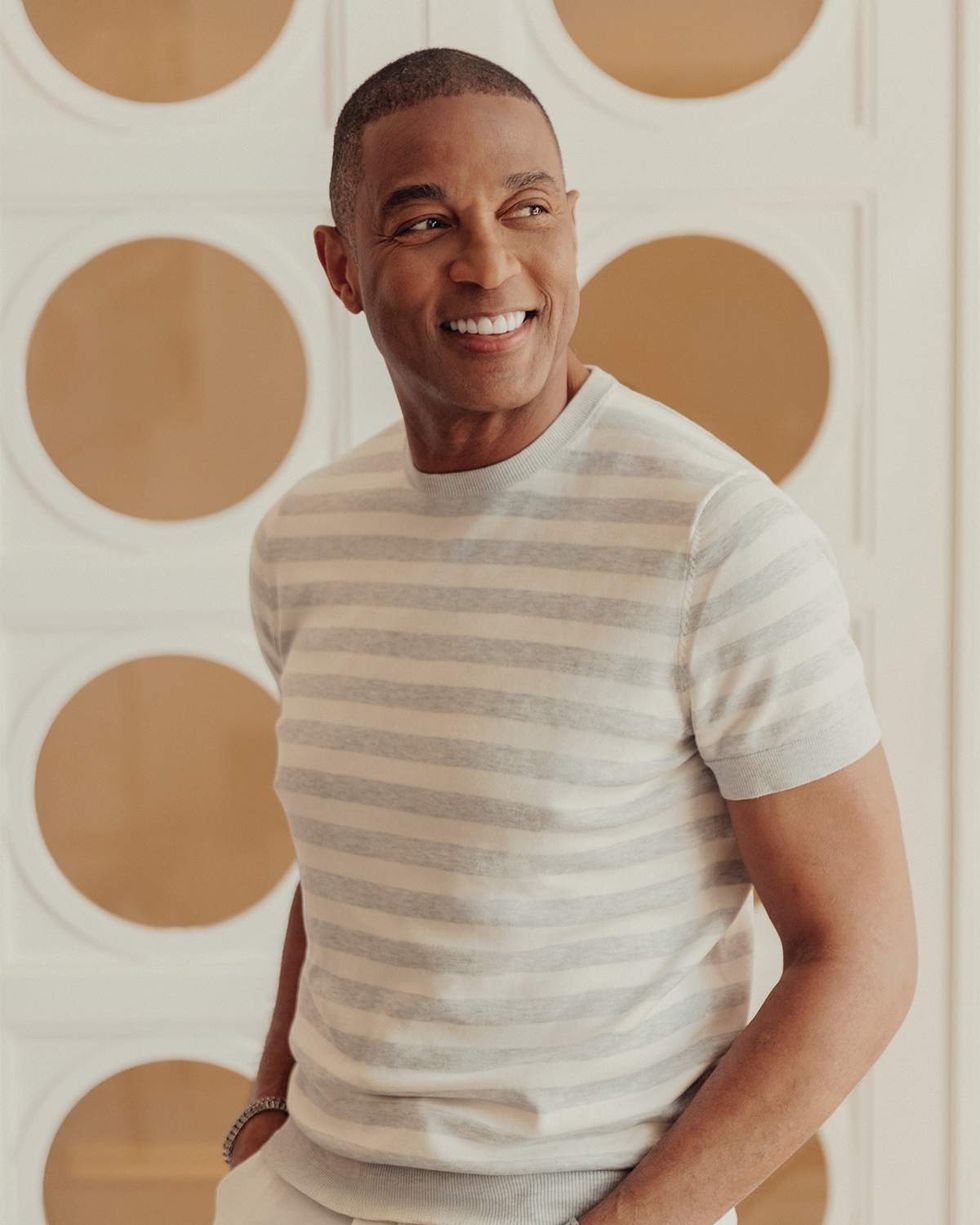 Don LemonSequoyah Wildwyn-Dechter
His social battery, he admits, is close to empty. But neither man sounds resentful about the attention. If anything, they seem startled by the emotional intensity of it all. Malone describes strangers now constantly approaching them, wanting photos, conversations, or simply a moment to say thank you.
“People are just really kind,” Malone says. “It’s actually very sweet.” Lemon nods. “I appreciate every single person who comes up to me,” he says. “Because without them, none of this exists.”
But the arrest has made Lemon more physically watchful. He describes jumping when strangers approach him unexpectedly, the visceral remnant of being grabbed in the middle of the night. Malone says it “takes away a little bit of innocence.”
And yet neither seems interested in retreating. During the cover shoot, Lemon laughs and announces, “I’m proud to be a big old gay.”
“You cannot insult me by calling me gay. When I tell people, they’re like, ‘You’re gay.’ And I’m like, ‘Great, thank you.’”
On the rights of trans people, whose voices he has amplified on his show, he does not hedge.
“Just leave trans people alone. Just leave them alone. Let them be,” he says. “The very people who say they believe in God — God says, do not judge. They are judging people rather than embracing them. I don’t think that’s very God-like.”
On a possible presidential run — a notion that has trailed him since appearances on Pod Save America and at a journalism summit in London, where he told an audience, “I actually do think I can run this country better than Donald Trump” — he demurs.
“I’m not floating any possibility,” he says. “These are people asking me those questions.”
He adds, “If the opportunity presented itself and the people wanted me, why wouldn’t I? I definitely think that I could run this country better than Donald Trump. At least I could run it with a lot more humility and a lot more empathy.”
When I ask Malone if he is ready to be the first gentleman, he says, “Sure.”
When Trump is out of office, the legal battles are resolved, and history has its chance to sort things out, what do Lemon and Malone hope people remember?
“I hope people remember that there are people who stood for the right thing,” Lemon says. “That I did the right thing. That I stood up for not only what I believe my God, my Savior, would want, but also for what is best for humankind. That I put my principles and my morals first. And not just personal gain.”
He pauses. “That when the time came, I stood for the right thing, and I did not back down, and I didn’t cower.”
This cover story is part of The Advocate's July-Aug 2026 print issue, on newsstands July 7. Support queer media and subscribe — or download the issue through Apple News+, Zinio, Nook, or PressReader starting June 18.
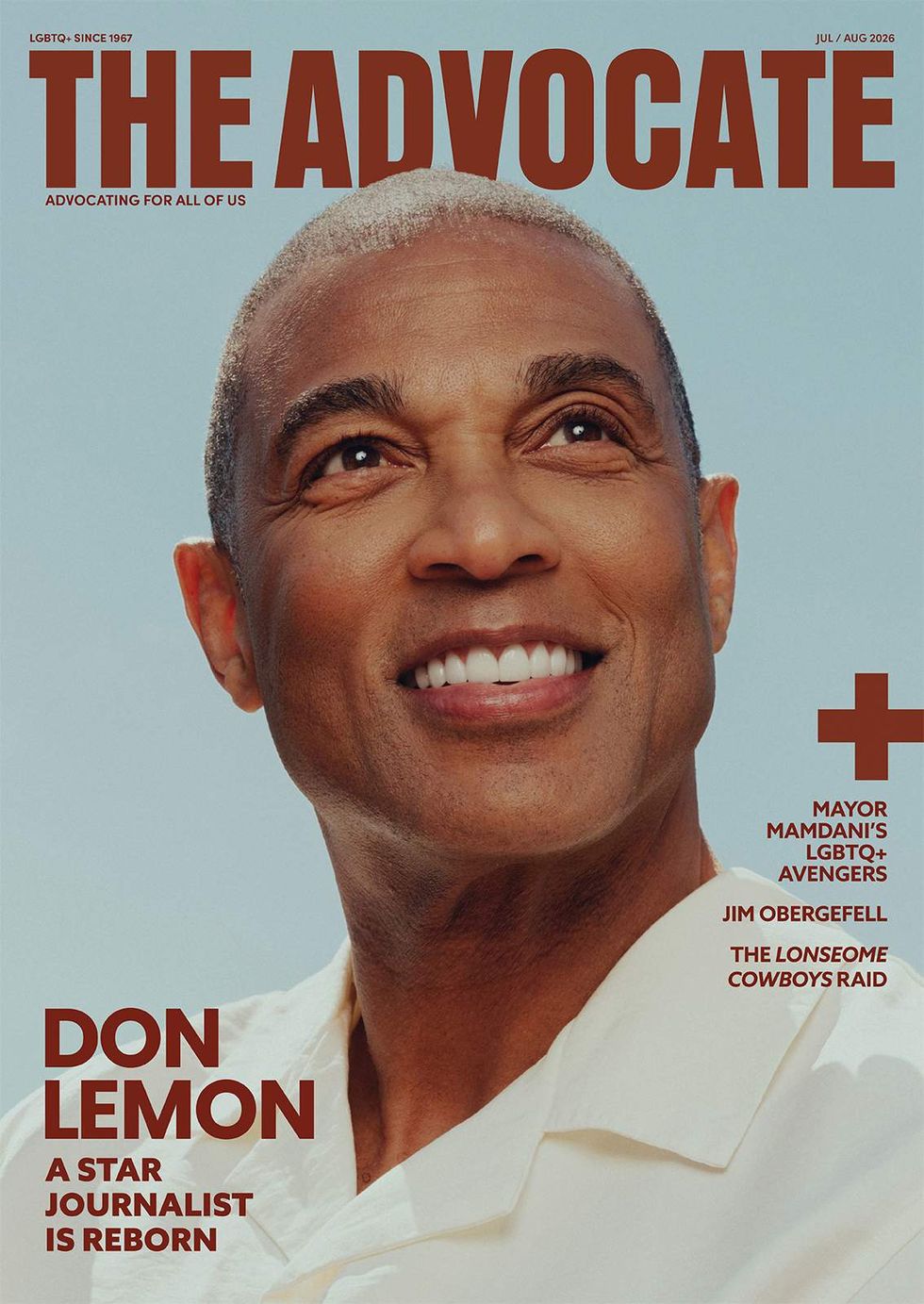
Photography Sequoyah Wildwyn-Dechter @sequoyah.nyc
Photo Assistant Marc J. Franklin @marcjfranklin
Grooming Ricardo Delgado @touchthisskin