'%3E%3Cpath d='M16.3574 35.6519H12.9537L15.0491 18.8873L16.3574 35.6519ZM30.4229 54.0093L22.309 0.994385H7.91795L0 54.0093H10.6634L11.5802 46.3855H17.4014L17.9914 54.0093H30.4229Z' fill='%23971B20'/%3E%3Cpath d='M48.2073 41.8813C48.2073 43.4049 47.4892 44.0011 46.1144 44.0011H43.7595V11.0687H46.1144C47.4892 11.0687 48.2073 11.6636 48.2073 13.1885V41.8813ZM59.5273 43.6695V11.3326C59.5273 3.71323 53.5729 0.994385 47.8157 0.994385H31.7213V54.0093H47.8157C53.5729 54.0093 59.5273 51.29 59.5273 43.6695Z' fill='%23971B20'/%3E%3Cpath d='M90.183 0.994385H78.6039L75.0711 30.6157L71.9955 0.994385H59.4346L69.2474 54.0093H80.373L90.183 0.994385Z' fill='%23971B20'/%3E%3Cpath d='M107.063 42.3448C107.063 43.7359 105.951 44.5974 104.643 44.5974C103.269 44.5974 102.157 43.7359 102.157 42.3448V12.658C102.157 11.2676 103.269 10.4058 104.643 10.4058C105.951 10.4058 107.063 11.2676 107.063 12.658V42.3448ZM119.233 43.2723V11.7312C119.233 6.36384 112.952 -3.8147e-06 104.643 -3.8147e-06C96.2667 -3.8147e-06 89.9867 6.36384 89.9867 11.7312V43.2723C89.9867 48.6393 96.2667 55 104.643 55C112.952 55 119.233 48.6393 119.233 43.2723Z' fill='%23971B20'/%3E%3Cpath d='M150.976 43.9349V33.7309H139.069V42.3448C139.069 43.7359 137.957 44.5974 136.582 44.5974C135.076 44.5974 133.964 43.7359 133.964 42.3448V12.658C133.964 11.2676 135.076 10.4058 136.582 10.4058C137.957 10.4058 139.069 11.2676 139.069 12.658V21.2723H150.976V11.0687C150.976 5.70107 145.283 -3.8147e-06 136.582 -3.8147e-06C127.75 -3.8147e-06 121.796 5.70107 121.796 11.0687V43.9349C121.796 49.3022 127.75 55 136.582 55C145.283 55 150.976 49.3022 150.976 43.9349Z' fill='%23971B20'/%3E%3Cpath d='M167.478 35.6519H164.076L166.17 18.8873L167.478 35.6519ZM181.544 54.0093L173.432 0.994385H159.037L151.123 54.0093H161.785L162.704 46.3855H168.523L169.114 54.0093H181.544Z' fill='%23971B20'/%3E%3Cpath d='M205.412 10.4058V0.994385H177.081V10.4058H185.392V54.0093H197.428V10.4058H205.412Z' fill='%23971B20'/%3E%3Cpath d='M230.002 54.0093V43.9349H218.914V31.8746H226.635V21.8028H218.914V10.4058H230.002V0.994385H206.875V54.0093H230.002Z' fill='%23971B20'/%3E%3C/g%3E%3Cdefs%3E%3CclipPath id='clip0_260_7080'%3E%3Crect width='230' height='55' fill='white'/%3E%3C/clipPath%3E%3C/defs%3E%3C/svg%3E)


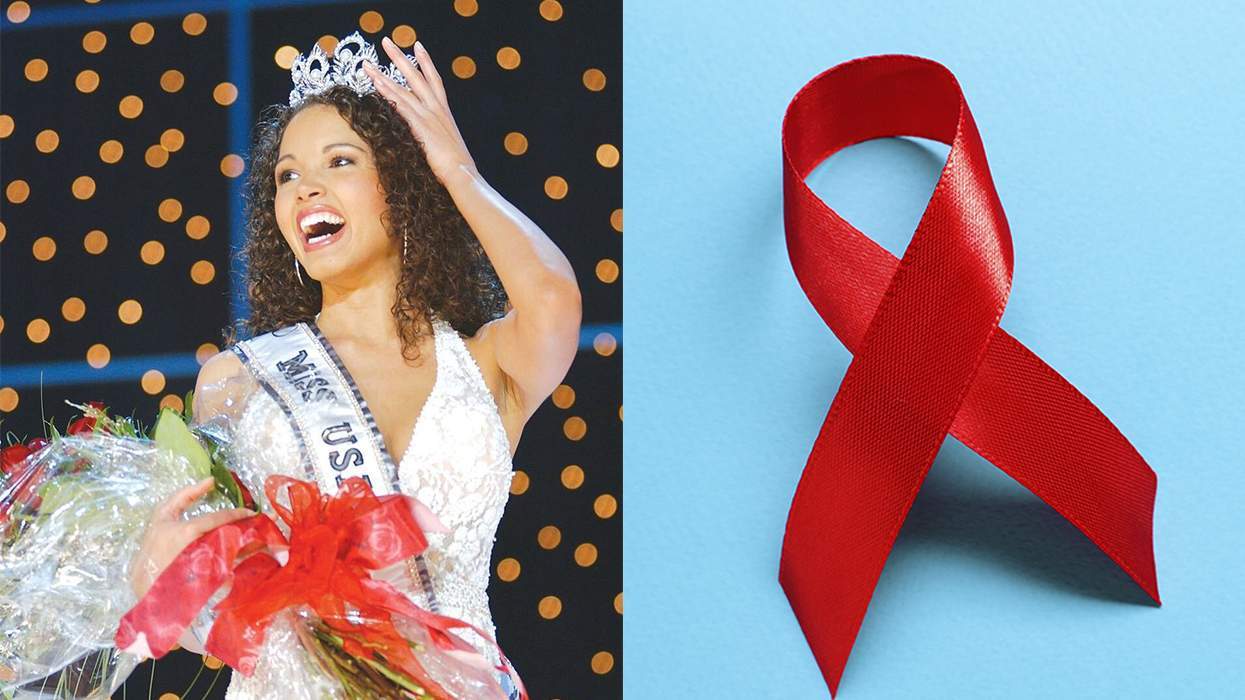
The quest for a vaccine against HIV has been going on for about 40 years — almost as long as the virus that causes AIDS has been known to scientists and the public. There has been some progress recently with vaccines created with messenger RNA, or mRNA, but last week notorious anti-vaxxer Robert F. Kennedy Jr., the secretary of Health and Human Services, canceled $500 million in government grants to develop new mRNA vaccines, claiming those already in use aren’t effective. Well, they are, and the cancellation threatens the development of more. Also, the Trump administration had already cut millions for HIV vaccine research in general. Here’s a look at mRNA and its potential to prevent HIV and other diseases.
Keep up with the latest in LGBTQ+ news and politics. Sign up for The Advocate's email newsletter.
What is messenger RNA, and how does it work?
Messenger RNA, full name messenger ribonucleic acid, is a molecule in the body that carries instructions to make proteins. “To enter cells smoothly, mRNA travels within a protective bubble called a Lipid Nanoparticles,” says an online article from drugmaker Pfizer. “Once inside, our cells read the mRNA as a set of instructions, building proteins that match up with parts of the pathogen called antigens. The immune system sees these foreign antigens as invaders — dispatching defenders called antibodies and T-cells — and training the immune system for potential future attacks. So, if and when the real virus comes along, the body might recognize it — sounding the alarm to help defend against infection and illness.”
Or, as an Associated Press article puts it, “Pick the right virus protein to target, and the body turns into a mini vaccine factory.”
French scientists Jacques Monod, François Jacob, and others at Institut Pasteur were investigating genetics in the 1960s, and their work led to the discovery of mRNA. Monod and Jacob published a paper on it in 1961, and they received the Nobel Prize in physiology or medicine for their work in 1965.
What vaccines use messenger RNA?
So far, the only mRNA-based vaccines in use outside of trials are for COVID-19. Katalin Karikó and Drew Weissman won the Nobel Prize in medicine in 2023 for discoveries in 2020 that enabled the use of mRNA in vaccines to fight COVID. In early experiments with animals, their bodies rejected lab-grown mRNA with which they’d been injected. But Karikó and Weissman found that a minor change to mRNA would allow it to stay in the body. Based on their work, BioNTech-Pfizer and Moderna created mRNA vaccines for COVID.
Kennedy’s claim that mRNA vaccines aren’t effective is contradicted by the track record of the COVID vaccines. They can’t always prevent infection — that’s not expected of vaccines for respiratory viruses — but they can and do prevent severe illness and death. Messenger RNA vaccines also can be updated more quickly than vaccines using other techniques.
“We would likely only now be coming out of the depths of COVID without the mRNA vaccines,” Dr. Paul Hunter, a professor of medicine at the University of East Anglia in the U.K., told the AP in 2023.
What is mRNA’s potential for an HIV vaccine?
Since the 1980s, efforts to create an HIV vaccine have been marked by optimism followed by disappointment; there is no HIV vaccine on the market. But recent studies of mRNA-based HIV vaccines show promise.
Research published in Science in May, based on one clinical trial in the U.S. and one in Rwanda and South Africa, indicated that these vaccines induced an early response in the immune system that, if built upon, could lead to the creation of antibodies with the capacity to block HIV. The U.S. trial included a booster shot, which stepped up the response.
Then at the end of July, Science Translational Medicine published the results of a third trial, which involved 108 adults at 10 sites around the U.S. The researchers tried out three mRNA-based vaccines, two of which were designed to make the protein bind to a cell membrane, and one of which allowed the protein to roam freely about the body. The first two were the most effective, as 80 percent of those receiving either one produced antibodies against that protein. The researchers did a companion study of animals, which showed promising results as well.
Scientists also say mRNA could provide a cure for HIV, tracking down the virus as it hides. But this has yet to be tested on humans or animals.
What's the future of mRNA-based vaccines?
Kennedy’s action is certainly a setback, although researchers may find other sources of funding. Scientists have been working on mRNA vaccines against bird flu and cancer as well as HIV. It’s not clear yet how many contracts have been affected, although it has been reported that HHS’s Biomedical Advanced Research and Development Authority canceled a grant to Moderna to develop a bird flu vaccine. Overall, though Kennedy is doing harm by putting doubts in the public’s mind about mRNA vaccines, Dr. Peter Hotez, a professor of pediatrics and molecular virology at Baylor College of Medicine in Houston, recently told ABC News.
“What he’s done is he’s caused uncertainty among the American people about the safety and effectiveness of mRNA for any condition, including cancer,” Hotez said. “And in fact, mRNA technology is probably the most exciting technology we have now for cancer and also other noncommunicable illnesses. … Even though he may not be canceling any cancer vaccine contracts through BARDA, it may have collateral deleterious in terms of squashing enthusiasm for the technology.”