'%3E%3Cpath d='M16.3574 35.6519H12.9537L15.0491 18.8873L16.3574 35.6519ZM30.4229 54.0093L22.309 0.994385H7.91795L0 54.0093H10.6634L11.5802 46.3855H17.4014L17.9914 54.0093H30.4229Z' fill='%23971B20'/%3E%3Cpath d='M48.2073 41.8813C48.2073 43.4049 47.4892 44.0011 46.1144 44.0011H43.7595V11.0687H46.1144C47.4892 11.0687 48.2073 11.6636 48.2073 13.1885V41.8813ZM59.5273 43.6695V11.3326C59.5273 3.71323 53.5729 0.994385 47.8157 0.994385H31.7213V54.0093H47.8157C53.5729 54.0093 59.5273 51.29 59.5273 43.6695Z' fill='%23971B20'/%3E%3Cpath d='M90.183 0.994385H78.6039L75.0711 30.6157L71.9955 0.994385H59.4346L69.2474 54.0093H80.373L90.183 0.994385Z' fill='%23971B20'/%3E%3Cpath d='M107.063 42.3448C107.063 43.7359 105.951 44.5974 104.643 44.5974C103.269 44.5974 102.157 43.7359 102.157 42.3448V12.658C102.157 11.2676 103.269 10.4058 104.643 10.4058C105.951 10.4058 107.063 11.2676 107.063 12.658V42.3448ZM119.233 43.2723V11.7312C119.233 6.36384 112.952 -3.8147e-06 104.643 -3.8147e-06C96.2667 -3.8147e-06 89.9867 6.36384 89.9867 11.7312V43.2723C89.9867 48.6393 96.2667 55 104.643 55C112.952 55 119.233 48.6393 119.233 43.2723Z' fill='%23971B20'/%3E%3Cpath d='M150.976 43.9349V33.7309H139.069V42.3448C139.069 43.7359 137.957 44.5974 136.582 44.5974C135.076 44.5974 133.964 43.7359 133.964 42.3448V12.658C133.964 11.2676 135.076 10.4058 136.582 10.4058C137.957 10.4058 139.069 11.2676 139.069 12.658V21.2723H150.976V11.0687C150.976 5.70107 145.283 -3.8147e-06 136.582 -3.8147e-06C127.75 -3.8147e-06 121.796 5.70107 121.796 11.0687V43.9349C121.796 49.3022 127.75 55 136.582 55C145.283 55 150.976 49.3022 150.976 43.9349Z' fill='%23971B20'/%3E%3Cpath d='M167.478 35.6519H164.076L166.17 18.8873L167.478 35.6519ZM181.544 54.0093L173.432 0.994385H159.037L151.123 54.0093H161.785L162.704 46.3855H168.523L169.114 54.0093H181.544Z' fill='%23971B20'/%3E%3Cpath d='M205.412 10.4058V0.994385H177.081V10.4058H185.392V54.0093H197.428V10.4058H205.412Z' fill='%23971B20'/%3E%3Cpath d='M230.002 54.0093V43.9349H218.914V31.8746H226.635V21.8028H218.914V10.4058H230.002V0.994385H206.875V54.0093H230.002Z' fill='%23971B20'/%3E%3C/g%3E%3Cdefs%3E%3CclipPath id='clip0_260_7080'%3E%3Crect width='230' height='55' fill='white'/%3E%3C/clipPath%3E%3C/defs%3E%3C/svg%3E)

This story is part of History is Queer, an Advocate series examining key LGBTQ+ moments, events, and people in history and their ongoing impact. Is there a piece of LGBTQ+ history we should write about? Email us at history@advocate.com.
Before the National LGBTQ Task Force, before the Human Rights Campaign, even before the Stonewall uprising, there was the Mattachine Society.
The organization, formed in 1950 in Los Angeles, can’t claim to be the first gay rights group (no one used LGBTQ+ back then) — that honor goes to the short-lived, Chicago-based Society for Human Rights, founded in 1924, and an inspiration for Mattachine. But Mattachine can claim to be the first one that lasted long — into the 1970s.
The founders of the Mattachine Society included labor organizer Harry Hay, Bob Hull, Chuck Rowland, Dale Jennings, Konrad Stevens, James Gruber, and Rudi Gernreich (the latter most famous as a fashion designer). The group took its name from the Societé Mattachine, a satirical dance and theater troupe in medieval France.
At first the Mattachine Society was secretive, with its leaders’ names unknown to members. It functioned as a support group for gay people — the membership was mostly men — and served to educate them about fighting for equal rights in conservative post-World War II America.
Hay, who had been a member of the Communist Party, soon ran afoul of that conservatism. He was called before the U.S. House Un-American Activities Committee in 1955, but the committee members decided he was insignificant, so he did not face any punishment. However, he had already split from the Mattachine Society two years earlier, as the other leaders feared his presence would bring the attention of politicians who were out to purge Communists. Mattachine did get investigated by the FBI between 1953 and 1956. After Hay’s departure, the group became public, and in the 1950s and ’60s it could claim thousands of members in chapters in cities throughout the nation, including San Francisco, New York, Boston, Chicago, and Washington, D.C.
Related: After the 2024 election, we can be inspired by these historical LGBTQ+ movements against oppression
Generally, the Mattachine Society worked within the political and legal system to advance gay rights, rather than taking to the streets. Members discussed how to avoid entrapment by police and how to fight any criminal charges. They talked about how to resist the pathologization of homosexuality by organized religion and mental health groups. They held “sip-ins” in bars to make their presence known. They published ONE Magazine, the first widely distributed gay publication, and several chapters had newsletters.
Some considered the Mattachine Society hostile to women, but certain chapters had women members. Eva Freund, for instance, was one of the first women in the D.C. chapter, where Frank Kameny, now legendary, was president. She found some of the men patronizing, but she stood up to them, she told The Washington Post in 2019. “I did not act in a meek and subservient fashion, which was what I was expected to do,” Freund said. She eventually turned her attention to the D.C. chapter of the National Organization for Women, becoming its first out lesbian member.
Related: Remembering Frank Kameny: Here's why he was a gay rights pioneer
One of her memories of Mattachine was coediting and distributing the D.C. chapter’s newsletter, the Insider. It was mostly distributed in bars, and when one bar owner turned her and another Mattachine member away, fearing the newsletter would call unwanted attention to the nightclub, Freund and her colleague sneaked copies into the restrooms. “We figured they’d get found eventually,” she told the Post. “Perhaps it was our attempts to keep pushing this that helped people rethink what they were doing on a personal level.”
Most Mattachine chapters disbanded by the 1970s, when there was a new, post-Stonewall style of activism. Some members joined the Gay Liberation Front, founded in the wake of Stonewall, and others even denounced the Stonewall uprising because they worried it would set the movement back. New York Mattachine members posted a sign on a window at the Stonewall Inn urging “peaceful and quiet conduct.”
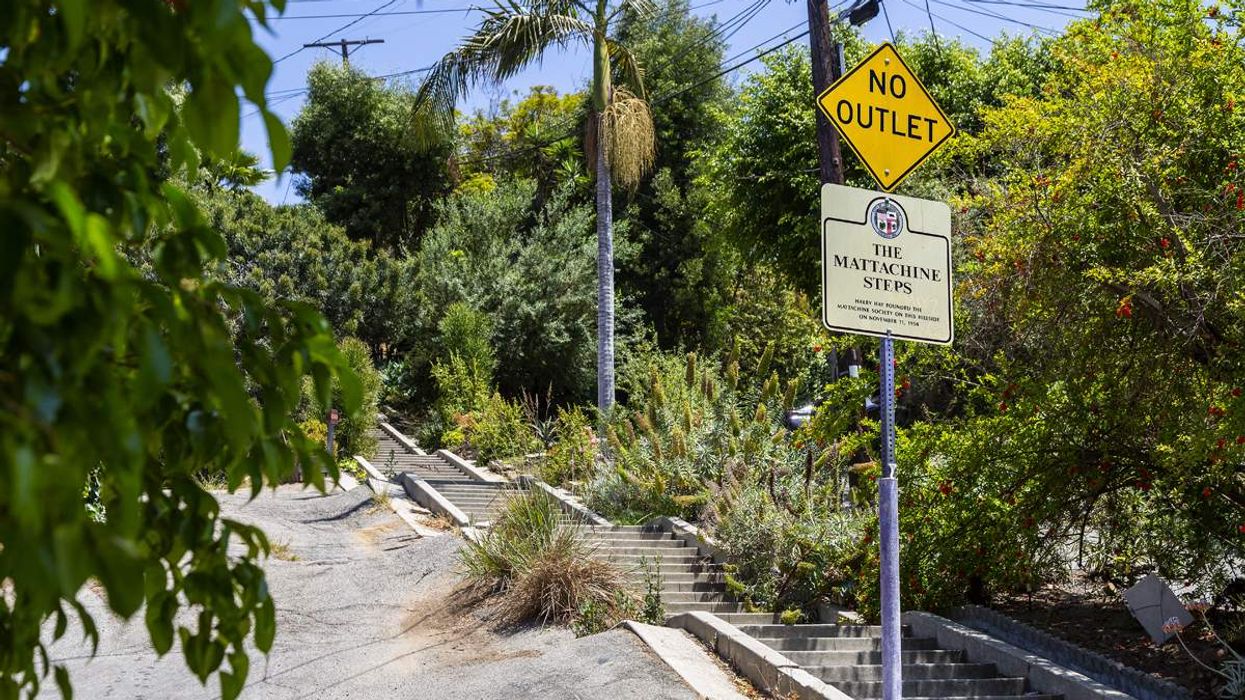
Harry Hay, however, praised those who rose up at Stonewall. “The importance of Stonewall is that it changed the pronoun from I to we,” Hay once told the Associated Press. “When I told them at Stonewall that I had been thrown out of the Mattachine Society because I insisted that we were a cultural minority and not individuals, they couldn’t believe that. By the time of Stonewall they thought we had always been a cultural minority.” Hay went on to found the Radical Faeries and lived to be 90, dying in 2002. There was a failed attempt to make his L.A. home a historic landmark, but the stairs leading to it — the Mattachine Steps — have been given that distinction by the city.
Related: The 20+ best LGBTQ+ historic sites and artifacts to add to your bucket list
Some have carried on the Mattachine name. Mattachine Midwest was founded in Chicago in 1965 as an independent organization after the demise of at least two chapters affiliated with the national group. It endured until 1986, providing support groups, a crisis hotline, and other services in addition to its political activism.
In 2011, Charles Francis founded a reimagined Mattachine Society of Washington, D.C., which does what he calls “archive activism — identifying, conserving and interpreting the LGBTQ historical record.”
The history of the Mattachine Society and those associated with it has been chronicled in books, plays, and films. The Trouble With Harry Hay: Founder of the Modern Gay Movement, a biography by Stuart Timmons, was published in 1990. Behind the Mask of the Mattachine by James T.T. Sears came out in 2007. The Temperamentals by Jon Marans, a play dealing with the society’s founding, premiered off-Broadway in 2009. The documentary Hope Along the Wind: The Life of Harry Hay, directed by Eric Slade, was released in 2002. And the NYC LGBT Historic Sites Project recently hosted a Zoom discussion titled “Homosexuals Are Different”: Mattachine Society & LGBTQ Rights in the 1950s, which was recorded and can be viewed below.
- YouTube youtu.be