'%3E%3Cpath d='M16.3574 35.6519H12.9537L15.0491 18.8873L16.3574 35.6519ZM30.4229 54.0093L22.309 0.994385H7.91795L0 54.0093H10.6634L11.5802 46.3855H17.4014L17.9914 54.0093H30.4229Z' fill='%23971B20'/%3E%3Cpath d='M48.2073 41.8813C48.2073 43.4049 47.4892 44.0011 46.1144 44.0011H43.7595V11.0687H46.1144C47.4892 11.0687 48.2073 11.6636 48.2073 13.1885V41.8813ZM59.5273 43.6695V11.3326C59.5273 3.71323 53.5729 0.994385 47.8157 0.994385H31.7213V54.0093H47.8157C53.5729 54.0093 59.5273 51.29 59.5273 43.6695Z' fill='%23971B20'/%3E%3Cpath d='M90.183 0.994385H78.6039L75.0711 30.6157L71.9955 0.994385H59.4346L69.2474 54.0093H80.373L90.183 0.994385Z' fill='%23971B20'/%3E%3Cpath d='M107.063 42.3448C107.063 43.7359 105.951 44.5974 104.643 44.5974C103.269 44.5974 102.157 43.7359 102.157 42.3448V12.658C102.157 11.2676 103.269 10.4058 104.643 10.4058C105.951 10.4058 107.063 11.2676 107.063 12.658V42.3448ZM119.233 43.2723V11.7312C119.233 6.36384 112.952 -3.8147e-06 104.643 -3.8147e-06C96.2667 -3.8147e-06 89.9867 6.36384 89.9867 11.7312V43.2723C89.9867 48.6393 96.2667 55 104.643 55C112.952 55 119.233 48.6393 119.233 43.2723Z' fill='%23971B20'/%3E%3Cpath d='M150.976 43.9349V33.7309H139.069V42.3448C139.069 43.7359 137.957 44.5974 136.582 44.5974C135.076 44.5974 133.964 43.7359 133.964 42.3448V12.658C133.964 11.2676 135.076 10.4058 136.582 10.4058C137.957 10.4058 139.069 11.2676 139.069 12.658V21.2723H150.976V11.0687C150.976 5.70107 145.283 -3.8147e-06 136.582 -3.8147e-06C127.75 -3.8147e-06 121.796 5.70107 121.796 11.0687V43.9349C121.796 49.3022 127.75 55 136.582 55C145.283 55 150.976 49.3022 150.976 43.9349Z' fill='%23971B20'/%3E%3Cpath d='M167.478 35.6519H164.076L166.17 18.8873L167.478 35.6519ZM181.544 54.0093L173.432 0.994385H159.037L151.123 54.0093H161.785L162.704 46.3855H168.523L169.114 54.0093H181.544Z' fill='%23971B20'/%3E%3Cpath d='M205.412 10.4058V0.994385H177.081V10.4058H185.392V54.0093H197.428V10.4058H205.412Z' fill='%23971B20'/%3E%3Cpath d='M230.002 54.0093V43.9349H218.914V31.8746H226.635V21.8028H218.914V10.4058H230.002V0.994385H206.875V54.0093H230.002Z' fill='%23971B20'/%3E%3C/g%3E%3Cdefs%3E%3CclipPath id='clip0_260_7080'%3E%3Crect width='230' height='55' fill='white'/%3E%3C/clipPath%3E%3C/defs%3E%3C/svg%3E)

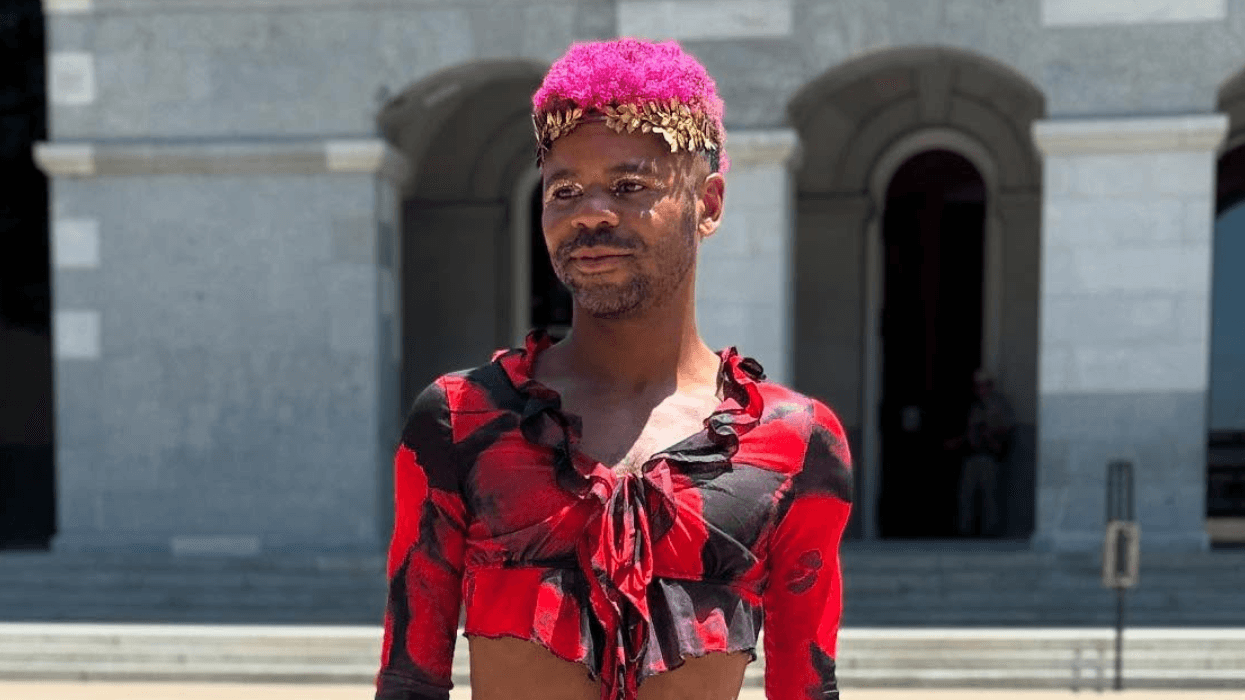
Sam Castañeda Holdren had never had any dealings with Scouting America. He had never been part of the organization, never volunteered with it. He never learned how to pitch a tent or to distinguish edible from toxic mushrooms. That’s why he also never imagined he would find himself defending against a lawsuit brought by it.
Keep up with the latest in LGBTQ+ news and politics. Sign up for The Advocate's email newsletter.
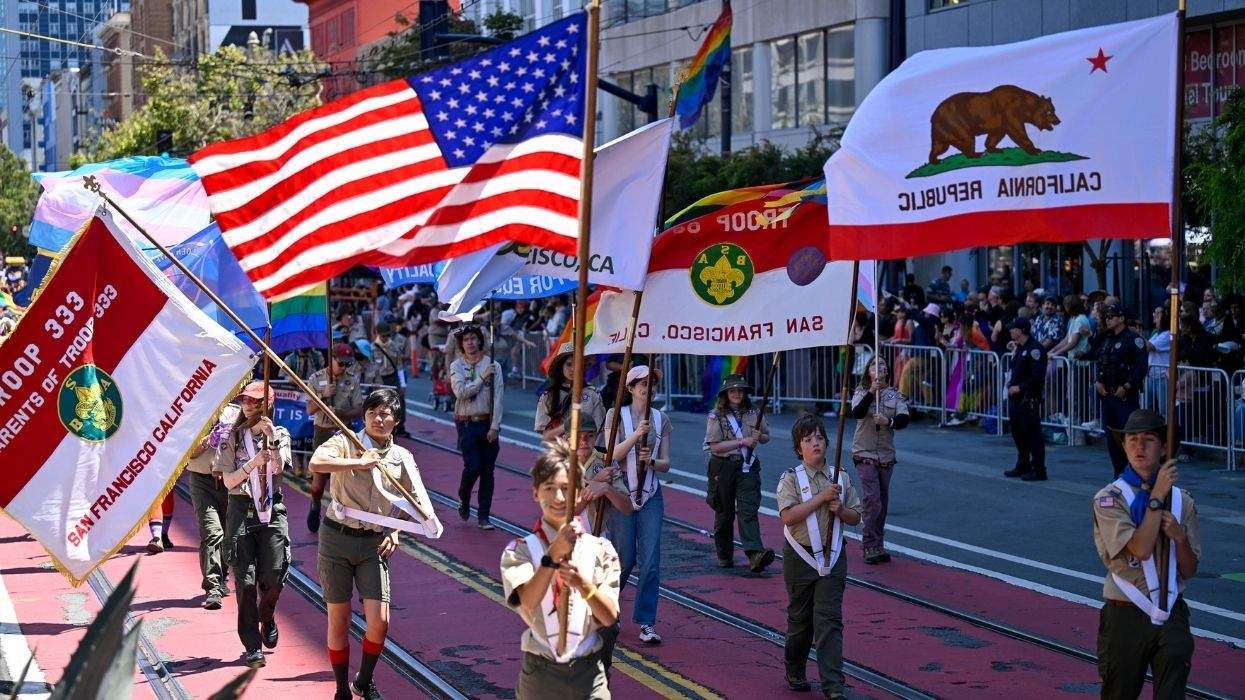
But in late February, the youth organization formerly known as the Boy Scouts of America sued the Arizona entrepreneur over the name of his LGBTQ-focused travel brand: Queer Scout.
Related: Scouting America says transgender kids are still welcome after Pete Hegseth claimed they weren’t (
The lawsuit, filed February 25 in federal court in Texas, accuses Holdren’s companies, Toro International LLC and Q Tours LLC, of trademark infringement and unfair competition tied to the use of the word “scout.” Scouting America argues the brand improperly trades on a family of trademarks built around the terms “SCOUT,” “SCOUTS,” and “SCOUTING,” which the organization says have been associated with its youth programs for more than a century.
The complaint asks a judge to block Holdren from using the name “Queer Scout,” along with any related websites and social media accounts, and seeks damages and attorneys’ fees.
For Holdren, who runs LGBTQ+ travel experiences in Colombia through the company Out in Colombia, the lawsuit felt surreal.
“We’re just a small LGBTQ-owned travel company serving adult travelers,” Holdren said in an interview with The Advocate. “It’s really difficult to see how anyone could realistically confuse an LGBTQ tourism brand called Queer Scout with a youth scouting organization.”
A travel brand built around queer community
The brand grew out of Holdren’s tourism venture, organizing experiences for LGBTQ+ travelers visiting Colombia.
The trips range from boat tours and cultural excursions to nightlife events and community gatherings designed to connect visitors with local queer communities. The business primarily targets adult travelers seeking LGBTQ-friendly tourism experiences.
Nothing about the venture resembles a youth program, Holdren said.
Still, Scouting America argues that the name could cause confusion because scouting organizations also organize group outings, trips, and activities. The complaint states that the defendants have used the Queer Scout name in marketing materials, on social media, and on a website promoting the services, and lawyers are asking that this stop.
A fight over the word “scout”
Jeremy Kapteyn, an Arizona attorney representing Holdren, said the dispute raises a broader legal question about who can claim exclusive rights to the word “scout.”
“There are hundreds of federal trademark registrations that include the term ‘scout’ or ‘scouts,’ and over a hundred of those are currently in use in commerce,” Kapteyn told The Advocate.
Related: Why the Boy Scouts of America is changing its name and embracing everyone
Because the term is so widely used, Kapteyn said, the strength of Scouting America’s claim to exclusive rights over it may be limited. Kapteyn also pointed to a prior legal argument by the Boy Scouts in a dispute with the Girl Scouts, in which the organization argued that the phrase “Girl Scouts” was distinct from its own trademarks because of the word “girl.”
By that logic, he said, the phrase Queer Scout is even more clearly distinguishable. “Queer Scout is at least as distinct, if not more, than Girl Scouts,” he said.
Kapteyn said he believes the organization may be overreaching in the case. “I think the Boy Scouts are overreaching and being a little bit overly aggressive in the face of public evidence that their marks are not as strong as what they’re asserting,” he said.
Questions about timing
The lawsuit also arrives at a complicated moment for Scouting America.
Earlier this month, Trump administration Defense Secretary Pete Hegseth publicly pressured the organization to reconsider diversity policies tied to its longstanding relationship with the Pentagon, raising questions about whether the scouting group would continue allowing transgender youth to participate.
The organization told The Advocate that all young people would remain welcome in its ranks.
Kapteyn said he believes the legal dispute would likely have occurred regardless of the political pressure, though the timing has raised questions.
“It certainly makes the circumstances a little more interesting,” he said, noting that the organization has simultaneously emphasized inclusive policies while facing demands from federal officials to roll them back.
Asked about the lawsuit, Scouting America declined to comment. “We do not comment on active litigation,” the organization said in an email to The Advocate.
A high-stakes fight
For Holdren, the case could have significant consequences.
Trademark litigation in federal court can cost hundreds of thousands of dollars, which is a daunting prospect for a small travel startup. Kapteyn acknowledged that the imbalance may shape the outcome. “In disputes like this, the party with the strongest resources often has a significant advantage,” he said.
Still, Holdren said he hopes to fight the case if possible. “I’ve been bullied my whole life,” he said. “I don’t want to back down if I don’t have to.”