'%3E%3Cpath d='M16.3574 35.6519H12.9537L15.0491 18.8873L16.3574 35.6519ZM30.4229 54.0093L22.309 0.994385H7.91795L0 54.0093H10.6634L11.5802 46.3855H17.4014L17.9914 54.0093H30.4229Z' fill='%23971B20'/%3E%3Cpath d='M48.2073 41.8813C48.2073 43.4049 47.4892 44.0011 46.1144 44.0011H43.7595V11.0687H46.1144C47.4892 11.0687 48.2073 11.6636 48.2073 13.1885V41.8813ZM59.5273 43.6695V11.3326C59.5273 3.71323 53.5729 0.994385 47.8157 0.994385H31.7213V54.0093H47.8157C53.5729 54.0093 59.5273 51.29 59.5273 43.6695Z' fill='%23971B20'/%3E%3Cpath d='M90.183 0.994385H78.6039L75.0711 30.6157L71.9955 0.994385H59.4346L69.2474 54.0093H80.373L90.183 0.994385Z' fill='%23971B20'/%3E%3Cpath d='M107.063 42.3448C107.063 43.7359 105.951 44.5974 104.643 44.5974C103.269 44.5974 102.157 43.7359 102.157 42.3448V12.658C102.157 11.2676 103.269 10.4058 104.643 10.4058C105.951 10.4058 107.063 11.2676 107.063 12.658V42.3448ZM119.233 43.2723V11.7312C119.233 6.36384 112.952 -3.8147e-06 104.643 -3.8147e-06C96.2667 -3.8147e-06 89.9867 6.36384 89.9867 11.7312V43.2723C89.9867 48.6393 96.2667 55 104.643 55C112.952 55 119.233 48.6393 119.233 43.2723Z' fill='%23971B20'/%3E%3Cpath d='M150.976 43.9349V33.7309H139.069V42.3448C139.069 43.7359 137.957 44.5974 136.582 44.5974C135.076 44.5974 133.964 43.7359 133.964 42.3448V12.658C133.964 11.2676 135.076 10.4058 136.582 10.4058C137.957 10.4058 139.069 11.2676 139.069 12.658V21.2723H150.976V11.0687C150.976 5.70107 145.283 -3.8147e-06 136.582 -3.8147e-06C127.75 -3.8147e-06 121.796 5.70107 121.796 11.0687V43.9349C121.796 49.3022 127.75 55 136.582 55C145.283 55 150.976 49.3022 150.976 43.9349Z' fill='%23971B20'/%3E%3Cpath d='M167.478 35.6519H164.076L166.17 18.8873L167.478 35.6519ZM181.544 54.0093L173.432 0.994385H159.037L151.123 54.0093H161.785L162.704 46.3855H168.523L169.114 54.0093H181.544Z' fill='%23971B20'/%3E%3Cpath d='M205.412 10.4058V0.994385H177.081V10.4058H185.392V54.0093H197.428V10.4058H205.412Z' fill='%23971B20'/%3E%3Cpath d='M230.002 54.0093V43.9349H218.914V31.8746H226.635V21.8028H218.914V10.4058H230.002V0.994385H206.875V54.0093H230.002Z' fill='%23971B20'/%3E%3C/g%3E%3Cdefs%3E%3CclipPath id='clip0_260_7080'%3E%3Crect width='230' height='55' fill='white'/%3E%3C/clipPath%3E%3C/defs%3E%3C/svg%3E)
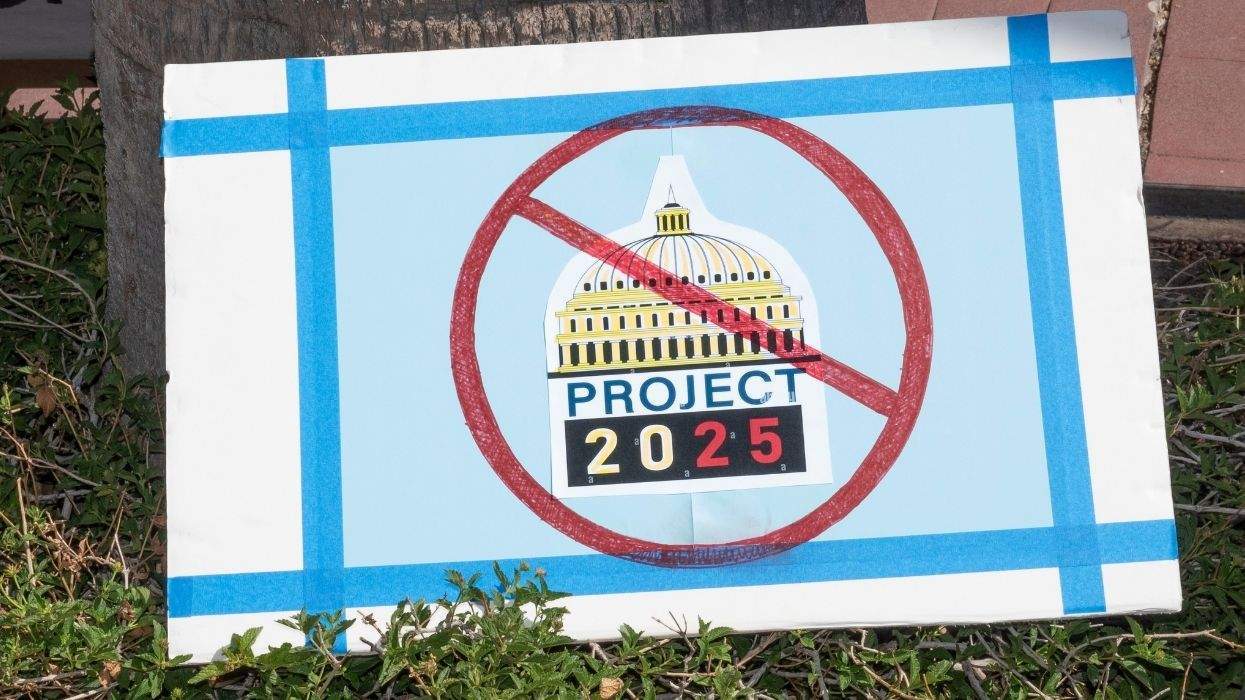

Project 2025 is not a future scenario. It is already unfolding, visible in the quiet failures and the louder substitutions that are beginning to define daily life. What we are watching is not the collapse of government, but its reconfiguration, as the systems meant to serve people weaken while the systems built to monitor, track, and control them become more visible, more coordinated, and more difficult to question.
Keep up with the latest in LGBTQ+ news and politics. Sign up for The Advocate's email newsletter.
That shift has moved into airports, one of the most routine and widely shared spaces in American life. A recent case at San Francisco International Airport made that visible in a way that is difficult to dismiss. A woman and her nine-year-old daughter were identified before they ever reached their gate, flagged through passenger data, and located by federal agents inside the terminal. She was detained in public, in front of her child, and deported within days.
What made that possible was not only the presence of enforcement but the coordination behind it. The Transportation Security Administration had access to the passenger list. Immigration and Customs Enforcement had access to the enforcement authority. Information moved between them before the woman ever arrived at the airport, turning what most people still experience as a civilian system into an enforcement mechanism that operates in advance of the individual it is acting on.
Related: Yes, Republicans who vowed retribution are now admitting Project 2025 is real
Related: Project 2025 vowed to roll back LGBTQ+ rights. Here's everything Trump has done so far
This is how structural change happens in practice. Not through a single declaration, but through the alignment of systems that already exist, each operating within its own mandate, each individually defensible, and together capable of producing outcomes that feel very different from the world people believe they are moving through.
At the same time, other parts of that world are being reshaped in ways that reinforce the same direction of travel. The federal government is advancing legislation that would require documentary proof of citizenship to vote, creating new barriers that fall hardest on the same communities already navigating legal and economic precarity. Courts are weighing decisions that could further weaken voting protections. Policies restricting reproductive care, targeting transgender people, and encouraging surveillance between neighbors are spreading across the country, each framed as a discrete issue, but together forming a pattern that is increasingly difficult to separate from the broader question of who is allowed to participate fully in public life.
The role of enforcement within that pattern is becoming clearer, not only as a matter of immigration policy, but as a question of proximity. How close the state is permitted to get to your body, your identity, your movement, and what it can take from you once you are within reach.
Related: Project 2025 creator is happy beyond his wildest dreams, so your worst nightmares are coming true
Related: Project 2025's creator is 'ecstatic' over Trump's terrible cabinet picks
Imagine being a woman in Georgia, navigating a system that has narrowed her medical choices to almost nothing, and finding herself not only a patient but a suspect, her body treated as evidence and her private decision recast as a crime. Or imagine standing on a public street, recording what is happening around you, and finding yourself restrained, searched, and entered into a database you did not consent to, your identity reduced to data points that can be stored, matched, and acted on long after the moment has passed.
For some people, this is already the lived reality of a system in which the boundaries between governance and enforcement are no longer clearly defined. The state does not need to announce a new order if it can operate one in practice, case by case, interaction by interaction, until the pattern becomes difficult to ignore.
I was in lower Manhattan on September 11, working in the financial district a few blocks from the World Trade Center. We saw the planes hit, and then we were among the people running north along the island, trying to understand what had just happened. For a time, everything felt suspended. No one knew what would follow.
For people who lived through the last time this country reorganized itself around fear, the pattern is difficult to ignore. What is different now is not only the scale, but the level of integration, as systems that once operated in parallel begin to converge around a more fundamental question of identity: who is legible to the state, who can be verified, and who cannot.
That question is already being tested in ways that extend far beyond immigration enforcement. Efforts to require documentary proof of citizenship to vote, to restrict access to gender affirming care, and to standardize how identity is recorded and recognized across agencies are not separate debates so much as variations on the same underlying shift. The more those systems align, the more power they hold, not only to monitor movement, but to define the terms under which a person is recognized at all.
For trans people, that pressure is already visible: the growing gap between lived identity and the documents required to move through institutions without friction, and the increasing risk that a mismatch between the two can trigger scrutiny, denial, or worse. What is being built is not only a system that tracks where you go, but one that determines whether you are allowed to exist within it on your own terms.
For an increasing number of people, that future is already here. The question is how much longer it will be treated as someone else’s problem.
Opinions is dedicated to featuring a wide range of inspiring personal stories and impactful opinions from the LGBTQ+ community and its allies. Visit Advocate.com/submit to learn more about submission guidelines. Views expressed in Opinions are those of the guest writers, columnists, and editors, and do not directly represent the views of The Advocate or our parent company, equalpride.