'%3E%3Cpath d='M16.3574 35.6519H12.9537L15.0491 18.8873L16.3574 35.6519ZM30.4229 54.0093L22.309 0.994385H7.91795L0 54.0093H10.6634L11.5802 46.3855H17.4014L17.9914 54.0093H30.4229Z' fill='%23971B20'/%3E%3Cpath d='M48.2073 41.8813C48.2073 43.4049 47.4892 44.0011 46.1144 44.0011H43.7595V11.0687H46.1144C47.4892 11.0687 48.2073 11.6636 48.2073 13.1885V41.8813ZM59.5273 43.6695V11.3326C59.5273 3.71323 53.5729 0.994385 47.8157 0.994385H31.7213V54.0093H47.8157C53.5729 54.0093 59.5273 51.29 59.5273 43.6695Z' fill='%23971B20'/%3E%3Cpath d='M90.183 0.994385H78.6039L75.0711 30.6157L71.9955 0.994385H59.4346L69.2474 54.0093H80.373L90.183 0.994385Z' fill='%23971B20'/%3E%3Cpath d='M107.063 42.3448C107.063 43.7359 105.951 44.5974 104.643 44.5974C103.269 44.5974 102.157 43.7359 102.157 42.3448V12.658C102.157 11.2676 103.269 10.4058 104.643 10.4058C105.951 10.4058 107.063 11.2676 107.063 12.658V42.3448ZM119.233 43.2723V11.7312C119.233 6.36384 112.952 -3.8147e-06 104.643 -3.8147e-06C96.2667 -3.8147e-06 89.9867 6.36384 89.9867 11.7312V43.2723C89.9867 48.6393 96.2667 55 104.643 55C112.952 55 119.233 48.6393 119.233 43.2723Z' fill='%23971B20'/%3E%3Cpath d='M150.976 43.9349V33.7309H139.069V42.3448C139.069 43.7359 137.957 44.5974 136.582 44.5974C135.076 44.5974 133.964 43.7359 133.964 42.3448V12.658C133.964 11.2676 135.076 10.4058 136.582 10.4058C137.957 10.4058 139.069 11.2676 139.069 12.658V21.2723H150.976V11.0687C150.976 5.70107 145.283 -3.8147e-06 136.582 -3.8147e-06C127.75 -3.8147e-06 121.796 5.70107 121.796 11.0687V43.9349C121.796 49.3022 127.75 55 136.582 55C145.283 55 150.976 49.3022 150.976 43.9349Z' fill='%23971B20'/%3E%3Cpath d='M167.478 35.6519H164.076L166.17 18.8873L167.478 35.6519ZM181.544 54.0093L173.432 0.994385H159.037L151.123 54.0093H161.785L162.704 46.3855H168.523L169.114 54.0093H181.544Z' fill='%23971B20'/%3E%3Cpath d='M205.412 10.4058V0.994385H177.081V10.4058H185.392V54.0093H197.428V10.4058H205.412Z' fill='%23971B20'/%3E%3Cpath d='M230.002 54.0093V43.9349H218.914V31.8746H226.635V21.8028H218.914V10.4058H230.002V0.994385H206.875V54.0093H230.002Z' fill='%23971B20'/%3E%3C/g%3E%3Cdefs%3E%3CclipPath id='clip0_260_7080'%3E%3Crect width='230' height='55' fill='white'/%3E%3C/clipPath%3E%3C/defs%3E%3C/svg%3E)


A Tennessee Republican says a new bill regulating how students address teachers is about “clarity” and “biological reality.” But a transgender educator who appears to have prompted the legislation says it has turned their life into a target.
Keep up with the latest in LGBTQ+ news and politics. Sign up for The Advocate's email newsletter.
Max Bearden begins each school year the same way. “Hey, guys, I’m Teacher B!”
In the elementary classrooms where they work, with children navigating profound disabilities, trauma, and behavioral challenges, that introduction is enough. It always has been. “The kids do not care,” Bearden told The Advocate. “They’re just focused on, am I a person they can trust?” The answer, for them, is yes.
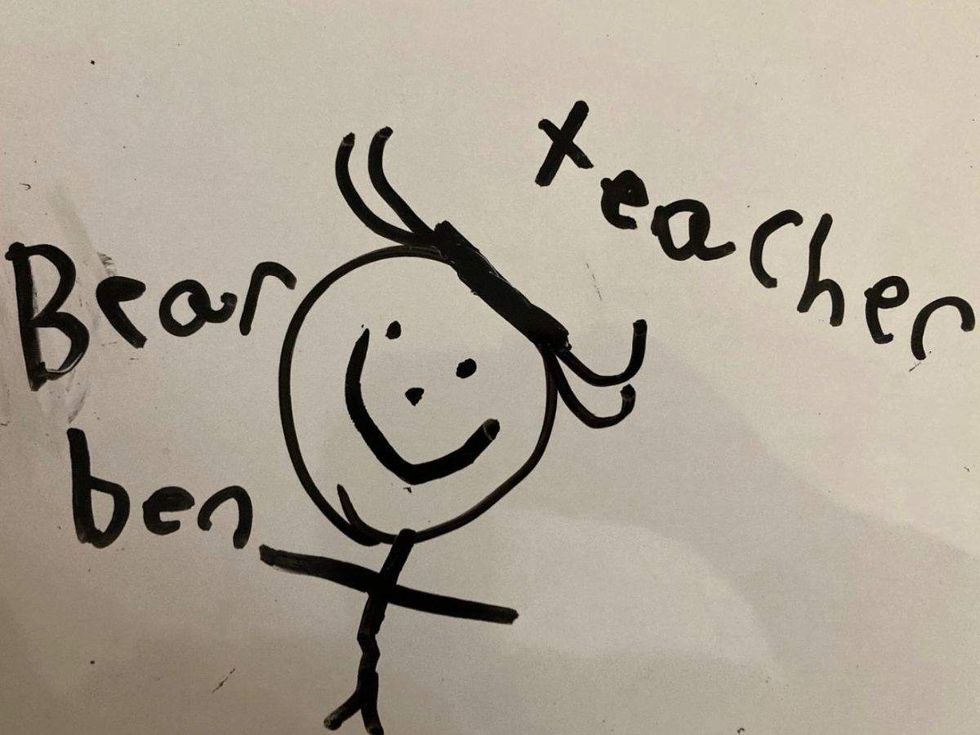 A student's drawing refering to Teacher Bearden, or Teacher B.Max Bearden
But outside those classrooms, Bearden has become something else: the center of a political argument, and, increasingly, a flashpoint.
Republican state Rep. Aron Mayberry has introduced legislation that would expand Tennessee’s existing restrictions on pronoun use to also regulate titles like “Mr.” and “Ms.” in schools and across public institutions. The bill would bar policies that require people to use honorifics that conflict with what Mayberry calls “biological reality.”
The legislation, HB1666, returns to the statehouse this week amid growing opposition. An online petition urging lawmakers to withdraw the bill had gathered at least 139 signatures as of Tuesday.
Related: Tennessee Republicans advance bill targeting what students can call transgender educators
At 23, Bearden works as a special education instructor in a Tennessee public school, supporting high-needs students one-on-one while completing the coursework to become a licensed teacher. Bearden believes that they are the unnamed transgender educator cited by Mayberry as the inspiration for the new legislation.
“I’m pretty sure I’m that person,” Bearden said. “But even if it’s not me, it’s about someone. And that’s not good enough.”
Mayberry, responding to questions from The Advocate, positioned the proposed law as a matter of clarity.
“This legislation ensures that educators, students, and state employees are not compelled by policy to use honorifics that conflict with biological reality,” he said. He described the bill as a way to keep expectations “consistent and transparent,” and to ensure students are not placed in situations that conflict with what he called “objective, biological reality.”

He also rejected the idea that the bill targets any one individual, writing that “someone choosing to go by a neutral title like ‘Teacher B’ would not be affected,” and asserting that a person who claimed otherwise “is not a teacher.”
Related: Tennessee bill could create public registry of trans residents’ medical info
Related: Tennessee lawmakers weigh a dozen new Republican anti-LGBTQ+ bills
The distinction is both technical and political. Bearden is not yet a certified teacher of record. But they work daily in classrooms, support some of the most vulnerable students in their district, and are addressed by children and colleagues as “Teacher B.”
And, they say, the bill’s intent was never abstract. “When it was introduced, he said, ‘This is inspired by a person in my county that’s transgender,’” Bearden said. “So it feels really targeted.”
The consequences have not remained confined to legislative language.
Since the proposal became public, Bearden says they have been inundated with harassing messages calling them a “pedophile,” telling them to kill themself, insisting they do not belong in public life. “When an elected legislator draws a target on your back personally, it gets a lot harder,” they said.
The shift has been visible in quieter ways, too.
Parents who once greeted them warmly now pull their children closer. Students still run up and shout, “I love Teacher B,” but adults intervene. At school, Bearden has adapted, using a single-stall restroom to avoid confrontation. In public, they move more cautiously.
“I feel safer than a lot of people,” they said. “But I still don’t feel safe.” Inside the classroom, though, the work continues much as it always has. Bearden’s students are not debating policy. They are learning to regulate their emotions, communicate, and trust. Progress can be incremental, even invisible, until it isn’t.
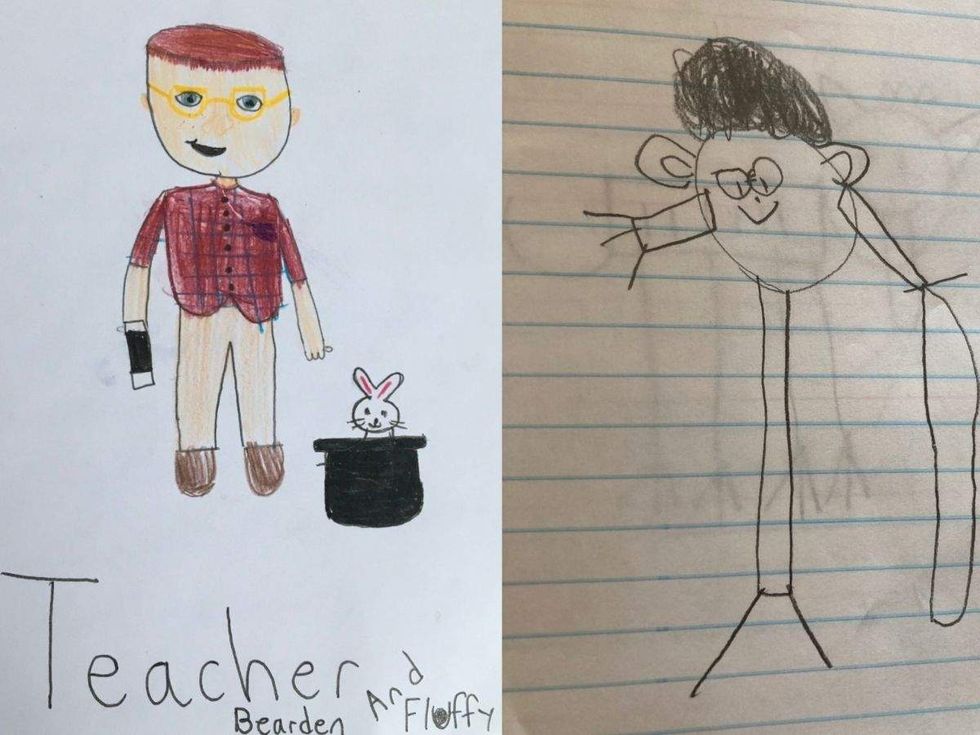 Max Bearden's kids drew images of their teacher, Teacher B.Max Bearden
“The first time I had a little autistic boy who was completely nonverbal … one day he just walked out the door and said, ‘See you tomorrow,’” Bearden recalled. “I just lost it.” These are the moments that define the job. They are also the moments that, to Bearden, make the broader political conversation feel detached from reality.
Mayberry has argued the bill is necessary to prevent confusion and conflict, citing instances in Tennessee schools where educators have asked students to use nontraditional honorifics such as “Mx.” He emphasized that neutral titles like “teacher” or “coach” would remain permissible.
But Bearden says the real disruption begins when lawmakers intervene. “As soon as you limit a kid’s expression and you put doubts into a kid’s mind, of course they’re going to react to that,” they said. “That singles me out more than being trans ever did.”
In Tennessee, that intervention is not isolated. Bearden describes a steady accumulation of restrictions on bathrooms, on sports participation, and on books that shape daily life for transgender people.
“There are lives behind these laws,” they said. “It’s not just a piece of paper.” Still, they have chosen to stay.
Bearden grew up in a rural part of the state and did not meet another transgender person until adulthood. Now, they see their presence as an obligation to students, to younger queer people, to a version of Tennessee that has not yet fully arrived.
“Someone has to,” they said. “I am here, and I belong here.” That sense of responsibility shows up in small acts, like volunteering at a food bank, mentoring students, and being visible in spaces where, not long ago, they might have felt alone.
A coworker recently told Bearden they were proud of them. “I literally almost sobbed,” they said. The support, they note, is often private. The opposition is not. “They’re screaming that hate from the rooftops,” Bearden said. “I want that support to be loud.”