'%3E%3Cpath d='M16.3574 35.6519H12.9537L15.0491 18.8873L16.3574 35.6519ZM30.4229 54.0093L22.309 0.994385H7.91795L0 54.0093H10.6634L11.5802 46.3855H17.4014L17.9914 54.0093H30.4229Z' fill='%23971B20'/%3E%3Cpath d='M48.2073 41.8813C48.2073 43.4049 47.4892 44.0011 46.1144 44.0011H43.7595V11.0687H46.1144C47.4892 11.0687 48.2073 11.6636 48.2073 13.1885V41.8813ZM59.5273 43.6695V11.3326C59.5273 3.71323 53.5729 0.994385 47.8157 0.994385H31.7213V54.0093H47.8157C53.5729 54.0093 59.5273 51.29 59.5273 43.6695Z' fill='%23971B20'/%3E%3Cpath d='M90.183 0.994385H78.6039L75.0711 30.6157L71.9955 0.994385H59.4346L69.2474 54.0093H80.373L90.183 0.994385Z' fill='%23971B20'/%3E%3Cpath d='M107.063 42.3448C107.063 43.7359 105.951 44.5974 104.643 44.5974C103.269 44.5974 102.157 43.7359 102.157 42.3448V12.658C102.157 11.2676 103.269 10.4058 104.643 10.4058C105.951 10.4058 107.063 11.2676 107.063 12.658V42.3448ZM119.233 43.2723V11.7312C119.233 6.36384 112.952 -3.8147e-06 104.643 -3.8147e-06C96.2667 -3.8147e-06 89.9867 6.36384 89.9867 11.7312V43.2723C89.9867 48.6393 96.2667 55 104.643 55C112.952 55 119.233 48.6393 119.233 43.2723Z' fill='%23971B20'/%3E%3Cpath d='M150.976 43.9349V33.7309H139.069V42.3448C139.069 43.7359 137.957 44.5974 136.582 44.5974C135.076 44.5974 133.964 43.7359 133.964 42.3448V12.658C133.964 11.2676 135.076 10.4058 136.582 10.4058C137.957 10.4058 139.069 11.2676 139.069 12.658V21.2723H150.976V11.0687C150.976 5.70107 145.283 -3.8147e-06 136.582 -3.8147e-06C127.75 -3.8147e-06 121.796 5.70107 121.796 11.0687V43.9349C121.796 49.3022 127.75 55 136.582 55C145.283 55 150.976 49.3022 150.976 43.9349Z' fill='%23971B20'/%3E%3Cpath d='M167.478 35.6519H164.076L166.17 18.8873L167.478 35.6519ZM181.544 54.0093L173.432 0.994385H159.037L151.123 54.0093H161.785L162.704 46.3855H168.523L169.114 54.0093H181.544Z' fill='%23971B20'/%3E%3Cpath d='M205.412 10.4058V0.994385H177.081V10.4058H185.392V54.0093H197.428V10.4058H205.412Z' fill='%23971B20'/%3E%3Cpath d='M230.002 54.0093V43.9349H218.914V31.8746H226.635V21.8028H218.914V10.4058H230.002V0.994385H206.875V54.0093H230.002Z' fill='%23971B20'/%3E%3C/g%3E%3Cdefs%3E%3CclipPath id='clip0_260_7080'%3E%3Crect width='230' height='55' fill='white'/%3E%3C/clipPath%3E%3C/defs%3E%3C/svg%3E)


This year, a book I coauthored about the heroic couples behind marriage equality came out. Writing it gave me the gift of speaking with many of the men and women who put their love and their privacy on the line to demand something simple and very human.
They fought hard for the right to marry the person they love, and with each of their victories, the ones we love.
Writing the book brought me into conversation with so many others, not only those who I interviewed and wrote about for the book, but also couples who approached me at book signings or sent messages after reading it, eager to tell me about their own marriages.
Related: The Advocate's John Casey reflects on a decade of marriage equality in new book
They spoke about parents or in-laws who refused to attend their weddings. They spoke about being “the first” gay couple to marry in their town or church. And they spoke about not realizing how long and hard the road to marriage equality really was.
Many assume the movement began in the mid-2000s, but it didn’t. The struggle stretches back over half a century, most notably to a sizzling September day in 1972 when Jack Baker and Michael McConnell became the first same-sex couple to, very briefly, legally marry. They found a loophole that was quickly closed, and they went on to fight hard to make their marriage legal.
What followed was 40-plus years of relentless advocacy, legal creativity, and human courage, from Baker and McConnell to my much adored friend Jim Obergefell, whose name now sits alongside Brown, Roe, and Loving in the canon of civil rights history.
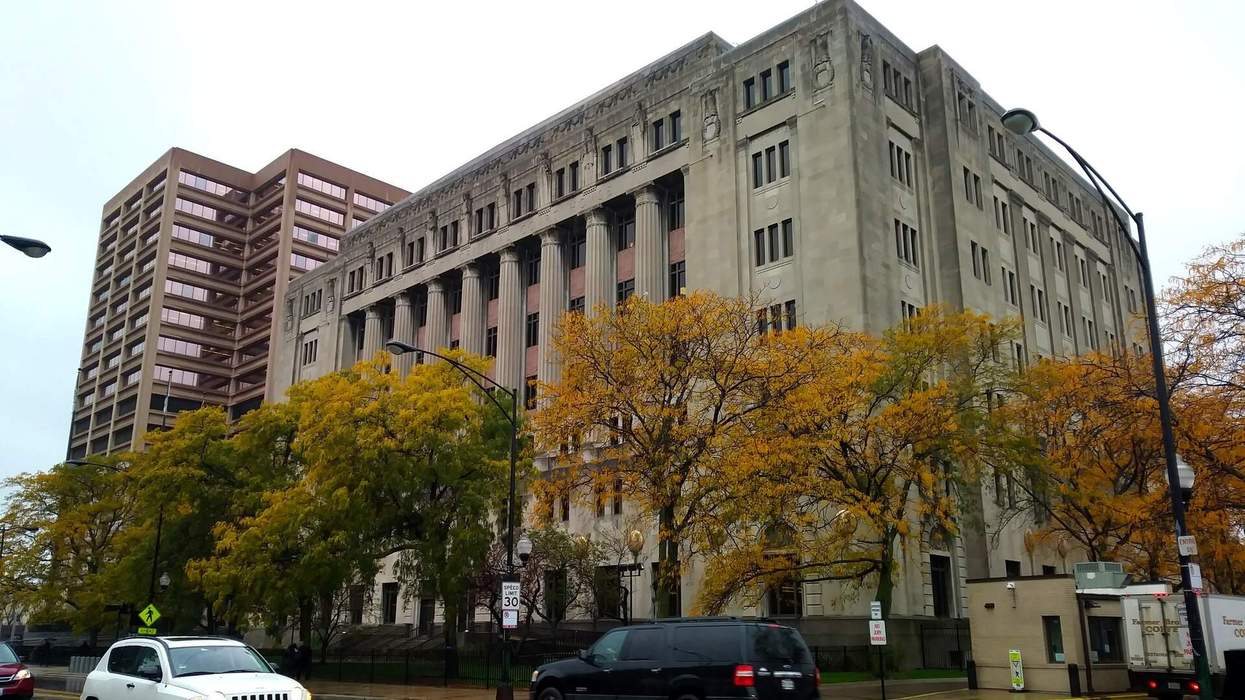
And yet this week, the Supreme Court agreed to consider whether to revisit Obergefell v. Hodges, the decision that made marriage equality the law of the land.
Related: Jim Obergefell: 10 years after my Supreme Court win, marriage equality is under attack
The court will consider whether to hear a challenge brought by the acrimonious Kim Davis, the former Kentucky county clerk who refused in 2015 to issue marriage licenses to same-sex couples. The petition asks the court not only to overturn lower court rulings denying Davis’s religious freedom defense, but to revisit the landmark Obergefell v. Hodges decision
A recent Gallup survey found approximately 69 percent of U.S. adults support legal same-sex marriage. The survey also found that Republican support has dropped 14 points since 2022. That is not surprising, since Christian conservatives have been obsessed with taking U.S. society back to the repressed days of the 1950s. They call marriage equality their persecution.
For someone who has spent the last few years immersed in this history, the news from the court felt like a gut punch, not because I’m surprised, but because I’ve seen firsthand what’s at stake.
At one recent Q&A event for our book, as my fellow authors Frankie Frankeny, Jim Obergefell, and I spoke about the long fight for marriage, I noticed a man in his 20s scrolling through his phone, barely paying attention. He couldn't have cared less about the fact that we were imploring people to be vigilant.
Look, I don’t fault him, and one young person’s reaction is hardly representative of all queer Gen Z members. After all, he grew up in a country where, for his short life, marriage equality has long existed. But his distraction was a metaphor for our moment. If we aren’t paying attention, we risk losing what generations fought so hard to win.
When I spoke with Evan Wolfson, the founder of Freedom to Marry and one of the architects of marriage equality, he told me that while it’s unlikely the court would overturn Obergefell, “it could happen.” And that possibility alone should shake every one of us out of complacency.
Related: Iconic marriage equality activist Evan Wolfson on the future of marriage equality
It’s tempting to draw comparisons to Roe v. Wade. To say, “They did it once, they’ll do it again.” But I see the two cases as very different. Abortion, tragically, has always been politicized in a way that marriage was not. And the Christian right built its brand around abortion soon after the Roe ruling in 1972. Marriage equality is an entirely different story.
Public opinion on marriage equality has grown only stronger over time, with broad majorities of Americans supporting the right of same-sex couples to marry. The social and emotional investment in this right runs deep.
Still, I’ve been around long enough not to underestimate this court. It’s hard to imagine a more ideologically narrow-minded bunch of homophobes, i.e. Alito, Thomas, Kavanaugh, Gorsuch, and to a lesser degree, perhaps, Barrett and Roberts.
These six justices, especially in recent months, more often than not, rule as a block. I tell everyone who asks that these throwbacks are seemingly insulated from the real-world consequences of their decisions. They have no grasp of the reality of changes in society.
Harvard Law Professor Mark Tushnet told me this week that what made former Justice Thurgood Marshall, who he clerked for and wrote two books about, so extraordinary was his real-world experience. Marshall had a deep understanding of how the law affects human lives. That empathy is sorely missing today.
And yet, perhaps naïvely, I still hold a flicker of hope. I’ve written before that Justice Amy Coney Barrett might one day surprise us. I said that her experiences as a mother, as someone who sees the fullness of family in all its forms, and whose children probably bend her ear, might lead her to defend our democracy, or at least our dignity.
So far, I’ve been wrong. But when it comes to marriage, I refuse to abandon hope entirely.
The court could decide to punt, which is the other option, and say that marriage should be left to the states. I call this taking the “lazy way out.” But even if the justices did that, they can’t undo what I have seen first hand, and what has already been lived, celebrated, and cherished.
Too many couples have stood before family and friends, before their communities, and before God to declare their love. Too many parents have walked their sons or daughters down the aisle. Too many lives have been changed for the better. More and more people know a queer couple. More and more people have been to a same-sex wedding.
You can’t take those moments, frozen in time in photos, videos, and social posts, and throw them away, rip them up, or delete them.
The court can take up the Kim Davis case. It can issue decisions meant to narrow or reinterpret Obergefell. But it can never take away the truth of our marriages or the moral and social legitimacy those marriages have cemented in the hearts of millions.
The justices can try to erase a ruling, but they can’t erase love. The first word in the title of our book is Love, and it’s there for a reason.
Because marriage equality is not an abstract right, it’s a lived reality about love. It’s about celebrating anniversaries, sharing mortgages, vacations, grocery bills, the remote control, and all manner of what makes a marriage so special, trying, and loving.
There are also those who adopt children, take care of aging parents and chosen families together. It’s the daily practice of love and commitment, no different and no less sacred than anyone else’s.
There’s no difference between a same-sex marriage and a marriage between a man and a woman. As queer couples live in neighborhoods around the country, send their kids to school, balance the checkbook each month, they are doing exactly what their straight neighbors and friends do,
If the Supreme Court justices want to revisit it, let them. They’ll see a country unwilling to go backward. Because no matter what the court decides, love has already won, and it will continue to prevail.
Voices is dedicated to featuring a wide range of inspiring personal stories and impactful opinions from the LGBTQ+ community and its allies. Visit Advocate.com/submit to learn more about submission guidelines. Views expressed in Voices stories are those of the guest writers, columnists, and editors, and do not directly represent the views of The Advocate or our parent company, equalpride.