'%3E%3Cpath d='M16.3574 35.6519H12.9537L15.0491 18.8873L16.3574 35.6519ZM30.4229 54.0093L22.309 0.994385H7.91795L0 54.0093H10.6634L11.5802 46.3855H17.4014L17.9914 54.0093H30.4229Z' fill='%23971B20'/%3E%3Cpath d='M48.2073 41.8813C48.2073 43.4049 47.4892 44.0011 46.1144 44.0011H43.7595V11.0687H46.1144C47.4892 11.0687 48.2073 11.6636 48.2073 13.1885V41.8813ZM59.5273 43.6695V11.3326C59.5273 3.71323 53.5729 0.994385 47.8157 0.994385H31.7213V54.0093H47.8157C53.5729 54.0093 59.5273 51.29 59.5273 43.6695Z' fill='%23971B20'/%3E%3Cpath d='M90.183 0.994385H78.6039L75.0711 30.6157L71.9955 0.994385H59.4346L69.2474 54.0093H80.373L90.183 0.994385Z' fill='%23971B20'/%3E%3Cpath d='M107.063 42.3448C107.063 43.7359 105.951 44.5974 104.643 44.5974C103.269 44.5974 102.157 43.7359 102.157 42.3448V12.658C102.157 11.2676 103.269 10.4058 104.643 10.4058C105.951 10.4058 107.063 11.2676 107.063 12.658V42.3448ZM119.233 43.2723V11.7312C119.233 6.36384 112.952 -3.8147e-06 104.643 -3.8147e-06C96.2667 -3.8147e-06 89.9867 6.36384 89.9867 11.7312V43.2723C89.9867 48.6393 96.2667 55 104.643 55C112.952 55 119.233 48.6393 119.233 43.2723Z' fill='%23971B20'/%3E%3Cpath d='M150.976 43.9349V33.7309H139.069V42.3448C139.069 43.7359 137.957 44.5974 136.582 44.5974C135.076 44.5974 133.964 43.7359 133.964 42.3448V12.658C133.964 11.2676 135.076 10.4058 136.582 10.4058C137.957 10.4058 139.069 11.2676 139.069 12.658V21.2723H150.976V11.0687C150.976 5.70107 145.283 -3.8147e-06 136.582 -3.8147e-06C127.75 -3.8147e-06 121.796 5.70107 121.796 11.0687V43.9349C121.796 49.3022 127.75 55 136.582 55C145.283 55 150.976 49.3022 150.976 43.9349Z' fill='%23971B20'/%3E%3Cpath d='M167.478 35.6519H164.076L166.17 18.8873L167.478 35.6519ZM181.544 54.0093L173.432 0.994385H159.037L151.123 54.0093H161.785L162.704 46.3855H168.523L169.114 54.0093H181.544Z' fill='%23971B20'/%3E%3Cpath d='M205.412 10.4058V0.994385H177.081V10.4058H185.392V54.0093H197.428V10.4058H205.412Z' fill='%23971B20'/%3E%3Cpath d='M230.002 54.0093V43.9349H218.914V31.8746H226.635V21.8028H218.914V10.4058H230.002V0.994385H206.875V54.0093H230.002Z' fill='%23971B20'/%3E%3C/g%3E%3Cdefs%3E%3CclipPath id='clip0_260_7080'%3E%3Crect width='230' height='55' fill='white'/%3E%3C/clipPath%3E%3C/defs%3E%3C/svg%3E)


Today, February 7, is National Black HIV/AIDS Awareness Day. The day, observed annually since 1999, highlights the importance of HIV prevention, routine testing, and early care for a population still disproportionately affected by the disease. Here’s what to know about HIV in the Black community.
Black Americans accounted for about 38 percent of HIV diagnoses among people aged 13 or older in the U.S. in 2023, the latest year for which data is available, according to the Centers for Disease Control and Prevention. But they make up only about 14 percent of the population. The HIV diagnosis rate among Black Americans was 42 per 100,000 people, whereas the overall rate was 13.7 per 100,000. Black Americans accounted for 43 percent of HIV-related deaths among people aged 13 or older.
Among males aged 13-24 years, Black males accounted for the highest percentage — 47 percent — of diagnoses attributed to male-to-male sexual contact.
Among females in the U.S., its territories, and associated states, Black females accounted for 50 percent of HIV diagnoses, while representing only 13 percent of the population. Black females also had the highest HIV diagnosis rate (19.6), which was three times the rate (6.7) among Hispanic/Latino females and 11 times the rate (1.8) among white females. And a study of Black transgender women in seven major cities in 2019 and 2020 found that 62 percent had HIV.
Related: 13 Black community organizations fighting HIV in the U.S. you should know
There are several reasons for the disproportionate representation of Black Americans among people with HIV. Some are financial, but race can’t be separated from economic factors. The poverty rate for Black Americans was 17.1 percent in 2022, a record low, according to the U.S. Census Bureau. But the poverty rate for all of the U.S. was 11.5 percent.
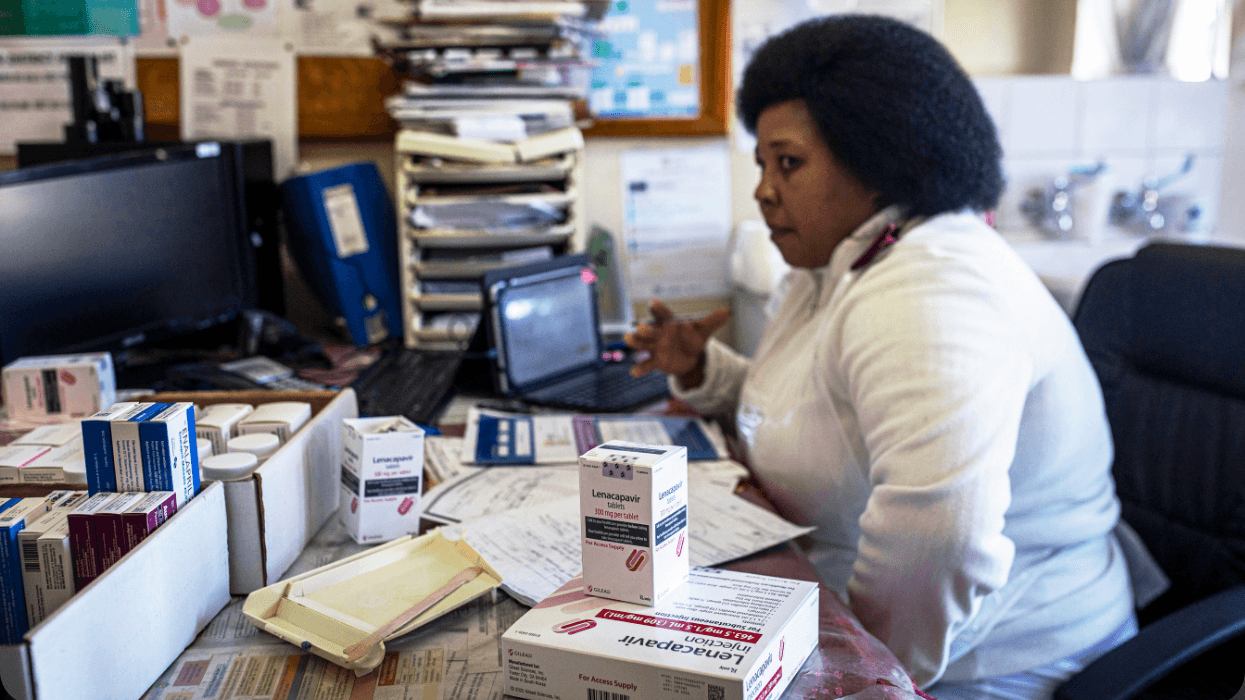
Low incomes, whether at the poverty level or somewhat above, often mean lack of insurance coverage and therefore less access to health care. So there is a problem getting the drugs that suppress the virus to an undetectable and therefore untransmittable level.
“Black people face disparities related to linkage to care and viral suppression,” health care group KFF notes. “At the end of 2022, 88% of Black people with HIV were diagnosed, 64% were linked to care, and 53% were virally suppressed. In comparison, 89% of White people with HIV were diagnosed, 70% were linked to care, and 63% were virally suppressed.”
- YouTube www.youtube.com
Many Black Americans distrust the health care system, given its history, and that may keep some from seeking care. There was the 20th century study of untreated syphilis in Black men, in which the men weren’t even told they had syphilis and weren’t treated for it. Also, due to beliefs in eugenics, sometimes Black women were sterilized against their will, and the cervical cells of Henrietta Lacks, whose life in medical experimentation was documented in a book, were harvested without her knowledge or consent.
In a 2024 survey of Black Americans by the Pew Research Center, 51 percent of respondents said the U.S. medical system “was designed to hold was designed to hold Black people back a great deal or fair amount,” Pew reports.
Black Americans lag other populations in adopting pre-exposure prophylaxis, a.k.a. PrEP — the use of a drug to prevent HIV-negative people from acquiring the virus through sex. In 2022, they accounted for just 14 percent of PrEP users, compared to 17 percent for Hispanic Americans and 64 percent for white Americans.
“A number of factors underscore the gaps, including low public awareness about PrEP, a shortage of providers who routinely prescribe PrEP, and larger access-to-care issues,” notes a 2024 article on the Morehouse School of Medicine website. “For example, AIDSVu data show states that have expanded Medicaid eligibility have higher PrEP use rates than states that have not expanded.”
“We’re slowly seeing PrEP filter into primary care settings and there’s a newer generation of doctors being educated on it,” Philip Chan, an associate professor of medicine and behavioral and social sciences at Brown University, said in the article. “But it’s been slow.”
Related: What the AIDS crisis stole from Black gay men
Black Americans do have a higher rate of testing for HIV, according to KFF. In 2022, 57 percent of Black adults reported having ever been tested for HIV, while 44 percent of Latino adults did and 32 percent of white adults. Twenty percent of Black people with HIV reported testing positive late in their illness, when they had already progressed to AIDS. That was similar to the rate among Latinos and white people.
Another factor in the high rate of HIV among Black Americans is a limited pool of sexual partners, some researchers say. Usually, their partners are within their own race, and given the small size of this population, that makes HIV more prevalent.
What’s more, Black Americans are more likely than others to be criminalized for HIV, as they are often subjected to "heightened surveillance, arrest, and conviction within the criminal legal system," according to a new report from the Williams Institute, a research center at the University of California, Los Angeles, School of Law.
"Most HIV criminal laws were enacted before effective HIV treatment and prevention tools became widely available," said Nathan Cisneros, director of the HIV Criminalization Project at the Williams Institute. "In recent years, there has been a push to reform or repeal these laws as policymakers and the public increasingly recognize that these laws can discourage testing, increase stigma, and deepen disparities — especially for Black Americans."
In this landscape, National Black HIV/AIDS Awareness Day is a day to have conversations encouraging testing, treatment, and prevention, while also noting the need to address the barriers that lead to health disparities.
“Every statistic about HIV represents a person — a son, a daughter, a friend, a neighbor — whose health and dignity matter,” leaders of five organizations wrote recently in the New York Amsterdam News. “Every delayed policy, every underfunded clinic, every overlooked community deepens an injustice that has lasted for generations. Cuts to Medicaid funding will only worsen the impact of HIV on communities of color.
“We can commemorate National Black HIV/AIDS Awareness Day, but we cannot afford to commemorate another decade of disparities. The science is clear, the tools are here, and the need is urgent. The only question left is whether we will act. We are getting closer to ending the epidemic for all, but we must keep moving toward this goal.”