'%3E%3Cpath d='M16.3574 35.6519H12.9537L15.0491 18.8873L16.3574 35.6519ZM30.4229 54.0093L22.309 0.994385H7.91795L0 54.0093H10.6634L11.5802 46.3855H17.4014L17.9914 54.0093H30.4229Z' fill='%23971B20'/%3E%3Cpath d='M48.2073 41.8813C48.2073 43.4049 47.4892 44.0011 46.1144 44.0011H43.7595V11.0687H46.1144C47.4892 11.0687 48.2073 11.6636 48.2073 13.1885V41.8813ZM59.5273 43.6695V11.3326C59.5273 3.71323 53.5729 0.994385 47.8157 0.994385H31.7213V54.0093H47.8157C53.5729 54.0093 59.5273 51.29 59.5273 43.6695Z' fill='%23971B20'/%3E%3Cpath d='M90.183 0.994385H78.6039L75.0711 30.6157L71.9955 0.994385H59.4346L69.2474 54.0093H80.373L90.183 0.994385Z' fill='%23971B20'/%3E%3Cpath d='M107.063 42.3448C107.063 43.7359 105.951 44.5974 104.643 44.5974C103.269 44.5974 102.157 43.7359 102.157 42.3448V12.658C102.157 11.2676 103.269 10.4058 104.643 10.4058C105.951 10.4058 107.063 11.2676 107.063 12.658V42.3448ZM119.233 43.2723V11.7312C119.233 6.36384 112.952 -3.8147e-06 104.643 -3.8147e-06C96.2667 -3.8147e-06 89.9867 6.36384 89.9867 11.7312V43.2723C89.9867 48.6393 96.2667 55 104.643 55C112.952 55 119.233 48.6393 119.233 43.2723Z' fill='%23971B20'/%3E%3Cpath d='M150.976 43.9349V33.7309H139.069V42.3448C139.069 43.7359 137.957 44.5974 136.582 44.5974C135.076 44.5974 133.964 43.7359 133.964 42.3448V12.658C133.964 11.2676 135.076 10.4058 136.582 10.4058C137.957 10.4058 139.069 11.2676 139.069 12.658V21.2723H150.976V11.0687C150.976 5.70107 145.283 -3.8147e-06 136.582 -3.8147e-06C127.75 -3.8147e-06 121.796 5.70107 121.796 11.0687V43.9349C121.796 49.3022 127.75 55 136.582 55C145.283 55 150.976 49.3022 150.976 43.9349Z' fill='%23971B20'/%3E%3Cpath d='M167.478 35.6519H164.076L166.17 18.8873L167.478 35.6519ZM181.544 54.0093L173.432 0.994385H159.037L151.123 54.0093H161.785L162.704 46.3855H168.523L169.114 54.0093H181.544Z' fill='%23971B20'/%3E%3Cpath d='M205.412 10.4058V0.994385H177.081V10.4058H185.392V54.0093H197.428V10.4058H205.412Z' fill='%23971B20'/%3E%3Cpath d='M230.002 54.0093V43.9349H218.914V31.8746H226.635V21.8028H218.914V10.4058H230.002V0.994385H206.875V54.0093H230.002Z' fill='%23971B20'/%3E%3C/g%3E%3Cdefs%3E%3CclipPath id='clip0_260_7080'%3E%3Crect width='230' height='55' fill='white'/%3E%3C/clipPath%3E%3C/defs%3E%3C/svg%3E)


If you thought the SAVE Act could not become more dangerous, recent news from Washington suggests otherwise.
Keep up with the latest in LGBTQ+ news and politics. Sign up for The Advocate's email newsletter.
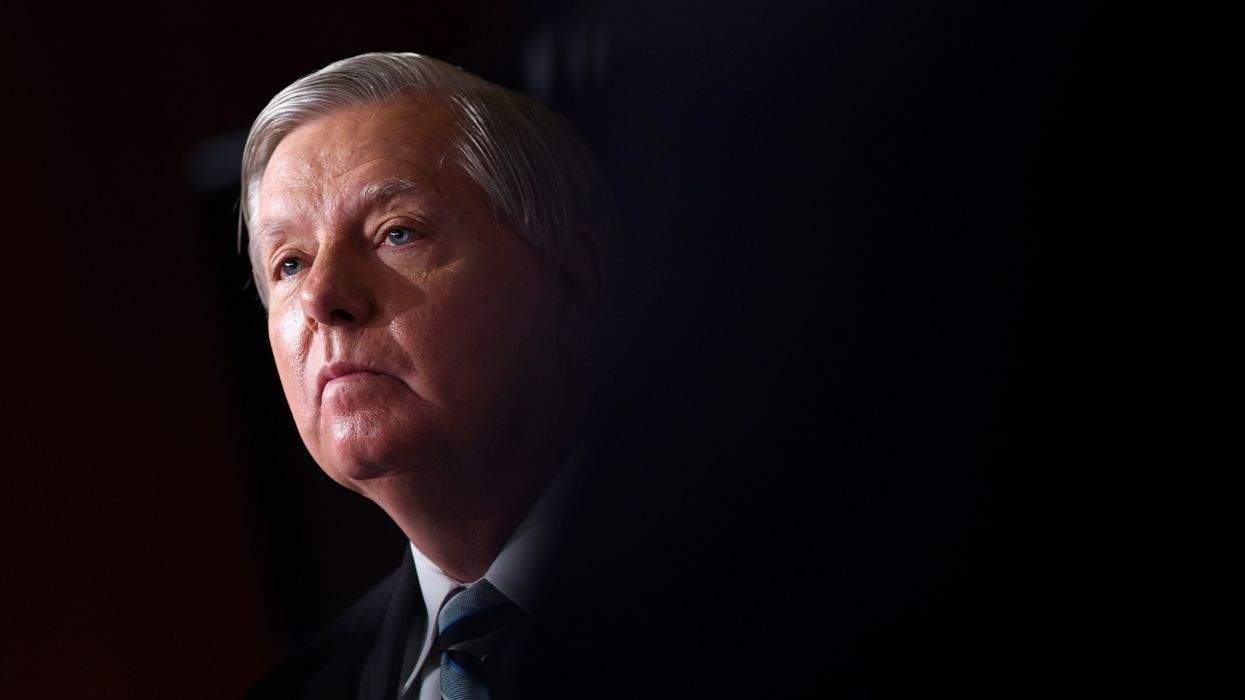
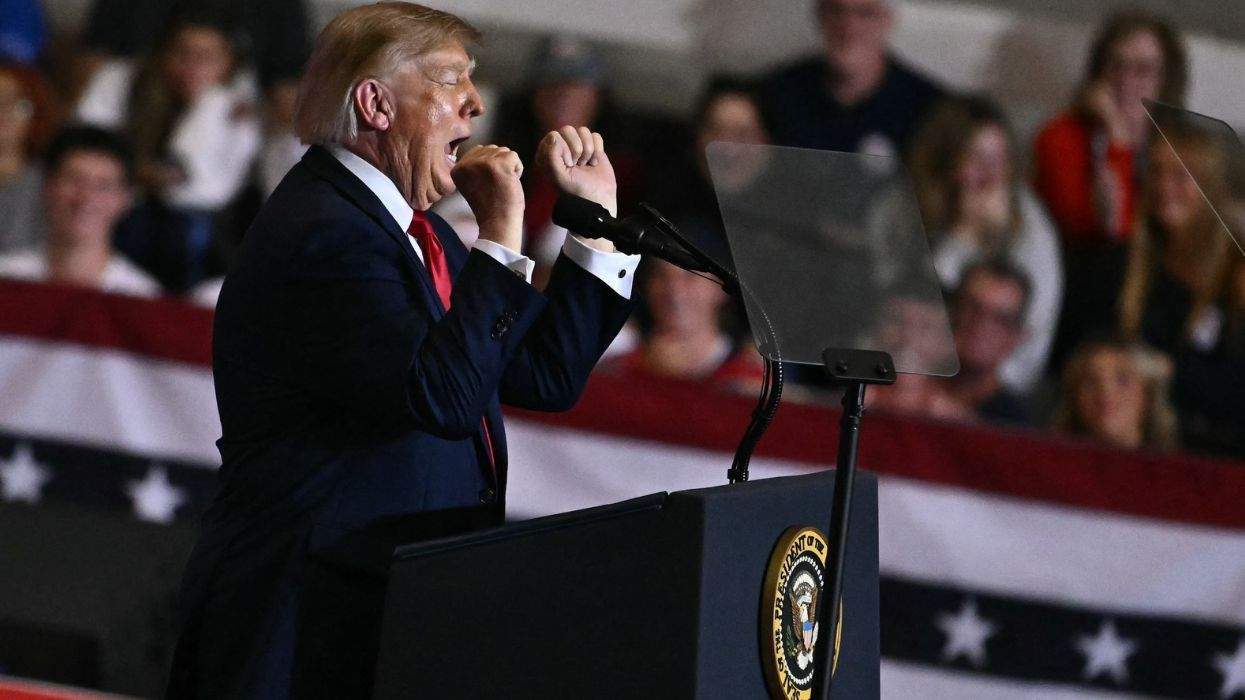
As Congress debates the legislation, President Donald Trump has urged lawmakers to attach additional provisions targeting transgender Americans, including restrictions on transgender athletes and limits on gender-affirming care for minors. What began as a bill framed around election administration is quickly becoming a vehicle for expanding government authority over identity itself.
That escalation should alarm far more people than just the transgender community. The logic driving the SAVE Act has never been confined to a single group.
It is also arriving at a moment when many Americans are already losing faith in the political system itself.
Related: How the Republicans’ SAVE America Act will disenfranchise married & LGBTQ+ Americans
Related: How the SAVE Act would make it harder for trans people, married women, and some men to vote
At nearly every party or happy hour I have attended in recent months, the conversation eventually lands in the same uneasy place. Someone asks, half joking and half serious, “Are we even going to have another election?”
When I say, "When I say yes, of course we will," the response is rarely reassuring. The room fills with the same shrug of resignation. Maybe it will not matter. Maybe the system is already too broken. Maybe the outcome is already decided.
That quiet surrender is more dangerous than it sounds. Giving up before the fight even begins is exactly where those working to restrict the electorate hope we will land.
One of the most troubling developments in American politics today is the growing cynicism about voting itself. In recent election cycles, a strain of political culture, especially online, has embraced the idea that refusing to participate is a form of protest, that withholding a vote somehow delegitimizes a flawed system. People are tired, and progress feels fragile.
Voter suppression does not rely only on laws and paperwork. It also depends on discouragement. It depends on convincing people their vote does not matter, that the system cannot be changed, and that staying home is somehow an act of resistance rather than surrender.
Disengagement delivers exactly what those restricting the electorate hope for. Fewer voters. Less scrutiny. Fewer obstacles to laws like the SAVE Act moving forward with limited public resistance.
Queer communities understand something about this dynamic. The rights we have secured were not achieved by abandoning imperfect institutions. They were won by forcing those institutions to change — decades of work insisting that laws recognize lives once ignored.
Every expansion of freedom in this country, from the end of poll taxes to marriage equality, has depended on people showing up to claim a political system that did not yet fully claim them.
The latest developments around the SAVE Act only underline the point.
As the bill moves through Congress, Trump has pushed to attach new provisions targeting transgender Americans. In effect, the warning signs are now written in bold type. A bill supposedly about election administration is quickly becoming a platform for regulating identity itself.
And if anyone believes that escalation will stop with the transgender community, history suggests otherwise. Once governments begin expanding the bureaucratic tools used to sort, verify, and exclude people from public life, the boundaries rarely stop where they begin.
Giving in to cynicism may feel satisfying in the moment, but democracy has never been protected by disengagement. When governments begin building new administrative gates around the vote, the answer cannot be retreat.
The answer must be more participation. More attention. More people are insisting that the ballot belongs to everyone.
That is precisely what makes the SAVE Act so alarming.
American exclusion rarely begins with a declaration that certain people should be pushed out of public life. It begins with rules, procedures, and paperwork, the quiet insistence that participation is still available to everyone so long as they can produce the right document, satisfy the right standard, and survive the right bureaucracy.
Framed as an election integrity measure, the SAVE Act would require documentary proof of citizenship to register to vote, creating new barriers between millions of eligible Americans and the ballot box. Restrictions on voting rarely announce themselves as attacks on democracy. They arrive wrapped in the language of order, legitimacy, and fraud prevention, even when their real effect is to make participation harder for the people already most exposed to exclusion.
We have seen this before.
Voting was once restricted to white male property owners. Later came poll taxes, literacy tests, language barriers, and selective enforcement, mechanisms that appeared neutral on paper but functioned as tools of exclusion.
Even after the Voting Rights Act of 1965 marked a major democratic breakthrough, the struggle did not end. The weakening of those protections after Shelby County v. Holder opened the door to a new wave of restrictive laws, from voter identification requirements to polling place closures that have disproportionately affected already marginalized communities.
Much of modern LGBTQ+ rights history has involved confronting the state itself. Long before major statutory protections existed, lesbian, gay, bisexual, and transgender Americans challenged government censorship, criminalization, employment discrimination, and the denial of basic legal recognition.
The state decided whose family counted. Whose identity was legitimate. Whose existence could be treated as a legal problem. For decades, LGBTQ+ people have lived inside bureaucratic systems that treat identity as something to be verified, contested, corrected, or denied.
Trans Americans know this especially well, navigating constantly shifting rules around birth certificates, driver’s licenses, passports, and gender markers.
Many queer people have lived with mismatched records, inconsistent documentation, or legal systems that lag behind the truth of their own lives.
When governments expand their authority to decide which documents are sufficient and which identities are coherent enough to pass bureaucratic inspection, they are not simply protecting elections. They are building a system that sorts the public into those who are easily recognized and those who must continually prove themselves.
And queer people are far from the only ones at risk.
Women who changed their names after marriage may not have matching documents. Naturalized citizens often face greater bureaucratic hurdles than native-born citizens. Low-income Americans may struggle to obtain or replace official records. Disabled voters, rural communities, Indigenous voters, language minority communities, and countless others whose lives do not neatly fit bureaucratic assumptions can quickly find themselves locked out of the most basic act of citizenship.
A society that makes voting harder through paperwork is not becoming more secure. It is becoming more comfortable with exclusion. There will always be reasons to believe the system is broken. There will always be voices insisting participation is pointless. But the people building new barriers around the vote are counting on exactly that reaction.
Ignore the noise. Show up anyway. Vote.
Josh Ackley is a political strategist and the frontman of the queerpunk band The Dead Betties. @momdarkness @thedeadbetties
Voices is dedicated to featuring a wide range of inspiring personal stories and impactful opinions from the LGBTQ+ community and its allies. Visit out.com/submit to learn more about submission guidelines. We welcome your thoughts and feedback on any of our stories. Email us at voices@equalpride.com. Views expressed in Voices stories are those of the guest writers, columnists, and editors, and do not directly represent the views of Out or our parent company, equalpride.