'%3E%3Cpath d='M16.3574 35.6519H12.9537L15.0491 18.8873L16.3574 35.6519ZM30.4229 54.0093L22.309 0.994385H7.91795L0 54.0093H10.6634L11.5802 46.3855H17.4014L17.9914 54.0093H30.4229Z' fill='%23971B20'/%3E%3Cpath d='M48.2073 41.8813C48.2073 43.4049 47.4892 44.0011 46.1144 44.0011H43.7595V11.0687H46.1144C47.4892 11.0687 48.2073 11.6636 48.2073 13.1885V41.8813ZM59.5273 43.6695V11.3326C59.5273 3.71323 53.5729 0.994385 47.8157 0.994385H31.7213V54.0093H47.8157C53.5729 54.0093 59.5273 51.29 59.5273 43.6695Z' fill='%23971B20'/%3E%3Cpath d='M90.183 0.994385H78.6039L75.0711 30.6157L71.9955 0.994385H59.4346L69.2474 54.0093H80.373L90.183 0.994385Z' fill='%23971B20'/%3E%3Cpath d='M107.063 42.3448C107.063 43.7359 105.951 44.5974 104.643 44.5974C103.269 44.5974 102.157 43.7359 102.157 42.3448V12.658C102.157 11.2676 103.269 10.4058 104.643 10.4058C105.951 10.4058 107.063 11.2676 107.063 12.658V42.3448ZM119.233 43.2723V11.7312C119.233 6.36384 112.952 -3.8147e-06 104.643 -3.8147e-06C96.2667 -3.8147e-06 89.9867 6.36384 89.9867 11.7312V43.2723C89.9867 48.6393 96.2667 55 104.643 55C112.952 55 119.233 48.6393 119.233 43.2723Z' fill='%23971B20'/%3E%3Cpath d='M150.976 43.9349V33.7309H139.069V42.3448C139.069 43.7359 137.957 44.5974 136.582 44.5974C135.076 44.5974 133.964 43.7359 133.964 42.3448V12.658C133.964 11.2676 135.076 10.4058 136.582 10.4058C137.957 10.4058 139.069 11.2676 139.069 12.658V21.2723H150.976V11.0687C150.976 5.70107 145.283 -3.8147e-06 136.582 -3.8147e-06C127.75 -3.8147e-06 121.796 5.70107 121.796 11.0687V43.9349C121.796 49.3022 127.75 55 136.582 55C145.283 55 150.976 49.3022 150.976 43.9349Z' fill='%23971B20'/%3E%3Cpath d='M167.478 35.6519H164.076L166.17 18.8873L167.478 35.6519ZM181.544 54.0093L173.432 0.994385H159.037L151.123 54.0093H161.785L162.704 46.3855H168.523L169.114 54.0093H181.544Z' fill='%23971B20'/%3E%3Cpath d='M205.412 10.4058V0.994385H177.081V10.4058H185.392V54.0093H197.428V10.4058H205.412Z' fill='%23971B20'/%3E%3Cpath d='M230.002 54.0093V43.9349H218.914V31.8746H226.635V21.8028H218.914V10.4058H230.002V0.994385H206.875V54.0093H230.002Z' fill='%23971B20'/%3E%3C/g%3E%3Cdefs%3E%3CclipPath id='clip0_260_7080'%3E%3Crect width='230' height='55' fill='white'/%3E%3C/clipPath%3E%3C/defs%3E%3C/svg%3E)
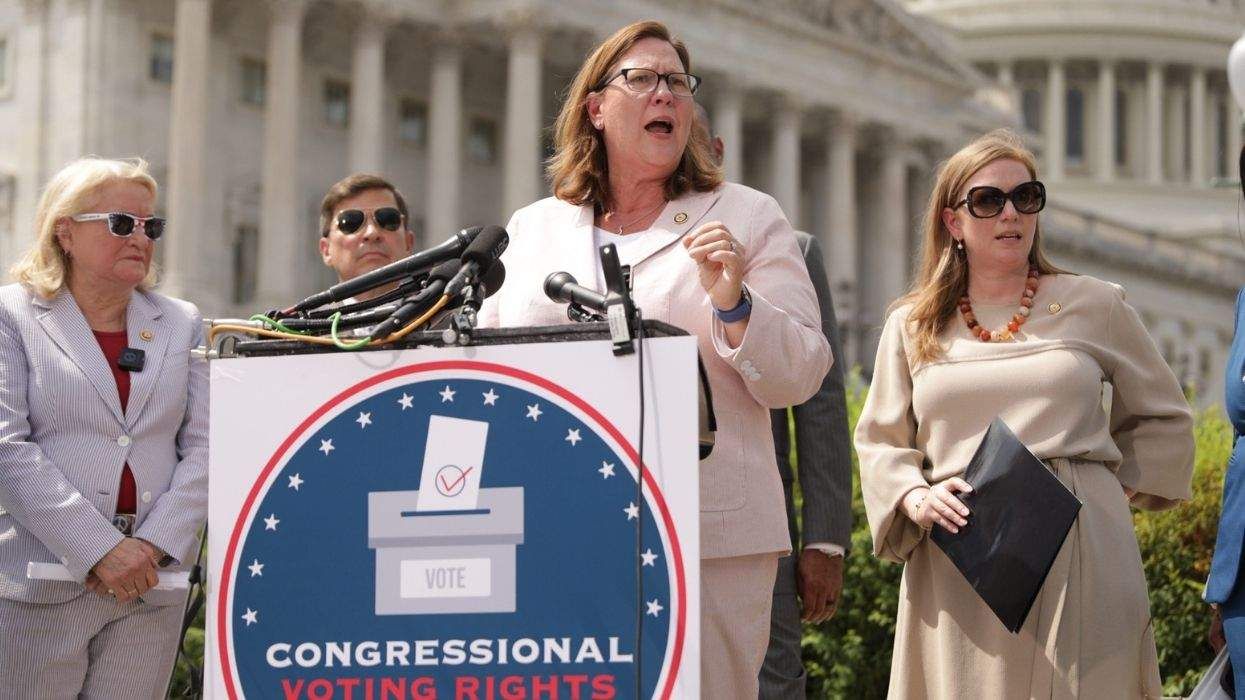
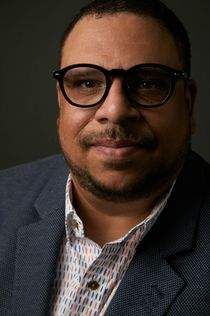
When Texas Congresswoman Julie Johnson stepped onto the House floor in January as part of the 119th Congress, she already had pragmatic instincts of a seasoned legislator, but now she was making history. Johnson is the first out LGBTQ+ member of Congress ever elected from the South. She is also one of the few first-year lawmakers entering the Washington, D.C. maelstrom with years of bipartisan legislative wins already under her belt.
Keep up with the latest in LGBTQ+ news and politics. Sign up for The Advocate’s email newsletter.
Now, one year after her election and only weeks from marking her first anniversary in office, Johnson describes her first year not as a transition into federal lawmaking but as an urgent defensive stand against what she sees as a rising authoritarian threat.
“I’m full of purpose,” Johnson told The Advocate during a recent interview in her Capitol Hill office. “There’s so much work to be done up here. I feel like I’m on the defensive team and that’s the role I’ve been in my whole legislative career.”
Related: Texas is gerrymandering the only LGBTQ+ member of Congress from the South out of her seat
It is a role she knows intimately, one shaped by the legislative battles of Texas, the escalating polarization of national politics, and the sharpening sense that democratic institutions are under siege.
Pragmatism in an era of polarization
Johnson arrived in Congress with an impressive legislative résumé. In the Texas House, she passed 108 bills across three terms beginning in 2018, focusing on patient protection, insurance reform, and sensible problem-solving. She authored the first bipartisan Medicaid expansion bill in Texas history and was named Texas Monthly’s 2019 “Freshman of the Year,” earning additional recognition from the Texas Medical Association and Texas CASA.
 Rep. Julie Johnson speaks outside the U.S. Capitol.Office of Congresswoman Julie Johnson
Her legislative approach stands apart in a political era marked by viral theatrics and escalating rhetoric.
“There are workhorses and showhorses in everything,” she said. “I definitely am on the workhorse side of things.”
In Congress, Johnson now serves as the vice ranking member of the House Homeland Security Committee and sits on the House Foreign Affairs and House Administration committees. Her early legislative efforts have centered on bipartisan bills addressing prior authorization abuses in health care, deceptive uses of artificial intelligence in elections, consumer product returns, and financial pathways for families seeking homeownership.
Related: LGBTQ+ members of Congress demand Marco Rubio restore queer human rights violation tracking
“I’m very practical. I’m very results-oriented. I’m policy-wonky and really try to do good, solid work,” Johnson said.
But even the most detailed policy work cannot exist separately from a political climate increasingly defined by existential concerns.
A summer gerrymander and a courtroom reversal
Just six months into her term, Johnson became the target of one of Texas’s most consequential partisan maneuvers. In August, Republican lawmakers redrew the state’s congressional map and gerrymandered her out of the 32nd District, the seat she currently represents. The redrawn lines fractured the communities that elected her and pushed her into newly configured terrain in a Republican attempt to weaken Democratic representation the Lone Star State.
Then, in mid-November, the political map shifted once again. On Tuesday, shortly after her interview with The Advocate, a federal three-judge panel blocked Texas from using its new map for the 2026 midterms, ordering the state to revert to its 2021 district lines. The court said “substantial evidence” showed that the new map racially gerrymandered districts. The ruling undercut Republican plans to increase their congressional majority from 25 to 30 seats.
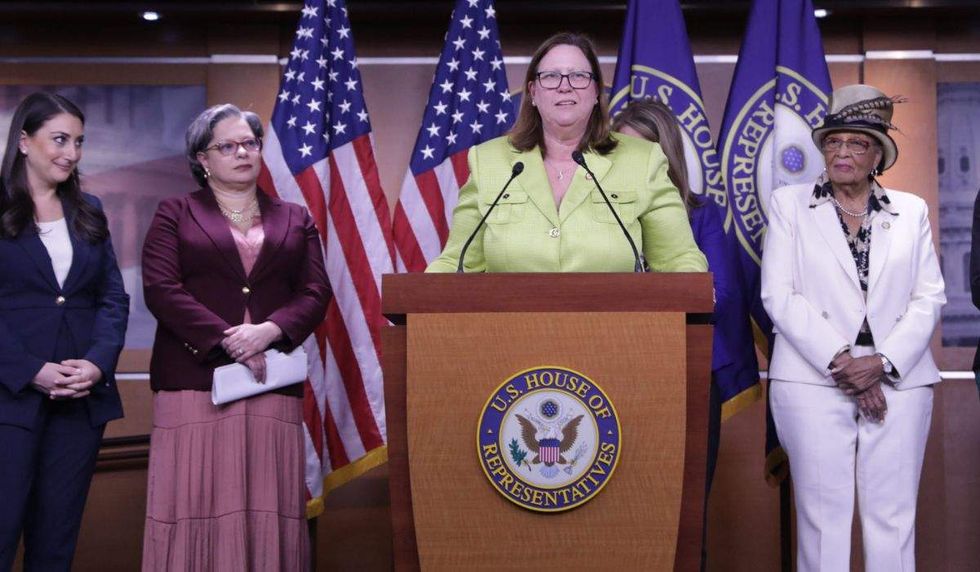 U.S. Rep. Julie Johnson speaking at a press conference at the U.S. Capitol.Office of Congresswoman Julie Johnson
Johnson viewed the untimely mid-decade gerrymander as part of a broader landscape in which democratic norms are being tested. In an effort to blunt the Texas advantage, California Gov. Gavin Newsom spearheaded a ballot initiative that passed handily in early November, allowing state officials to redraw maps to benefit Democrats.
“Being in the majority is everything,” Johnson said. “I’m really happy Democrats got it together and fought back really hard.”
If the 2021 lines stand, Johnson intends to run under her current district. If later appeals result in reinstating the Republican-drawn map, she plans to run in the newly configured 33rd District, which includes significant parts of her existing base.
The government shutdown and a nation asking Democrats to fight
Johnson’s first year coincided with contentious debates over government funding and attempts to leverage Affordable Care Act subsidies in shutdown negotiations. Her district includes approximately 100,000 ACA participants, people whose health care would be directly affected by congressional stalemates, Johnson noted.
She said constituents were unequivocal.
Related: 200+ lawmakers demand Speaker Mike Johnson end anti-trans rhetoric in Congress
“People told me: Stand firm, don’t let ’em take our health care,” she said.
As shutdown politics intensified, public pressure mounted on Democrats to “fight harder.”
She argued that Democrats used every available lever, including refusing to vote for legislation she described as “untenable.”
“Whenever we have the lever to pull, we pull it,” she said. “But sometimes they wanted us to pull levers that we didn’t have.”
Life as an LGBTQ+ trailblazer
Long before serving in elected office, Johnson experienced the instability and fear that defined LGBTQ+ life in the decades before workplace protections and marriage equality. She came out, she said, at a time when job loss, insurance loss, and family separation were real risks.
“You couldn’t be out at work,” she said. “The threat of termination, discrimination in all forms, was very real.”
Her experiences shape her conviction that LGBTQ+ representation is vital, not symbolic. She recalled late nights in the Texas Capitol when conservative colleagues would ask sincere questions about queer life — questions they felt too ashamed or fearful to ask publicly.
Related: Julie Johnson just made history as the first LGBTQ+ person ever elected to Congress from the South
“We have to have people in the smaller rooms who can share the stories of our struggle,” she said. “That’s what leads to understanding and compassion.”
She said similar conversations have taken place in Congress, particularly with freshman Republicans who, once they meet her family, find their assumptions challenged.
“It’s tough to hate up close,” Johnson said.
Outside Washington, Johnson returns to her North Texas ranch, where she cooks, gardens, and drives her John Deere tractor across land once tended by her grandfather. The quiet, she said, is restorative, a reminder of the values she represents.
“I love the peace and the quiet, the big sunrise and the engulfing sunset,” she said.
The waning effectiveness of using trans people in the culture war
The past year has seen a cascade of anti-trans messaging from campaign ads to floor speeches. Johnson pointed to the 2024 and 2025 Virginia elections, where she saw “incredibly transphobic” advertisements, as evidence of the tactic’s attempt to gain national traction.
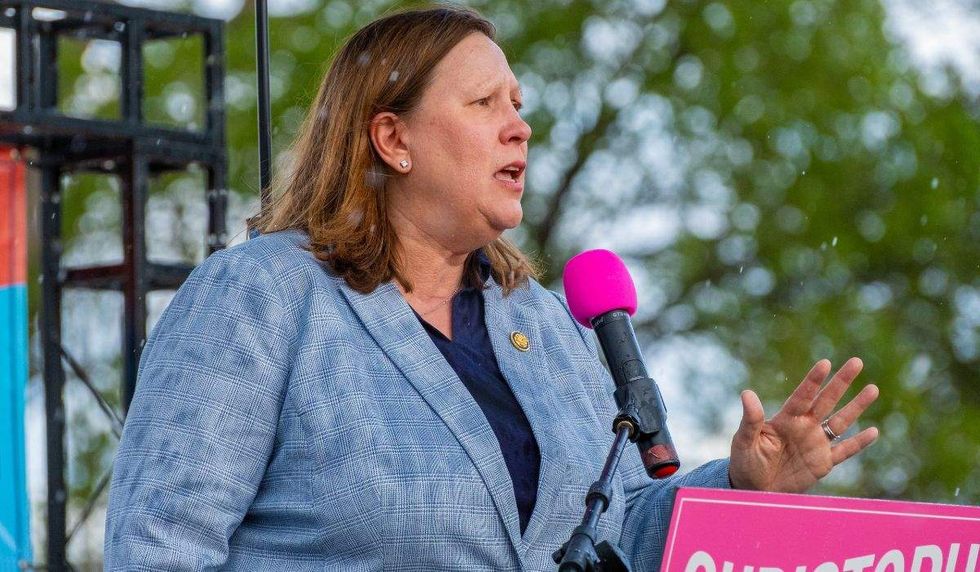 Julie Johnson addressing supporters at a speakin event.Office of Congresswoman Julie Johnson
“It was initially successful,” she said, because many Americans lacked “sympathy, empathy, understanding, compassion” for transgender people.
But she said voters are increasingly recognizing the cost of allowing fear-based rhetoric to shape policy.
“People got sucked into a narrative of transphobia,” she said, “and they realized that didn’t do them any good.”
Johnson recalled one moment from the campaign trail that crystallized how misinformation had warped voters’ priorities. While door-knocking during her last election, she met a young Latine man in his late 20s or early 30s still living with his parents. When she asked whether he planned to vote, he immediately demanded to know her position on “boys in girls’ sports.” The question struck her as revealing.
She said she asked him why, of all the issues affecting his life — the cost of housing, wages, and economic opportunity — he had chosen that one. “Why did you not ask me what I am going to do to give you opportunities to get your own house?” she recalled telling him. “Why did you not ask me what I am going to do to make sure you get a good wage that you can afford to not live in your parents’ house?”
She said that the young man admitted he had never thought about it that way and acknowledged he didn’t know any transgender people and wasn’t aware that the policy he was concerned about did not exist in Texas. “I feel really stupid right now,” Johnson said he told her. She said the moment revealed how effectively political messaging can divert voters’ attention from their own material needs.
“It reminded me that people got pulled into a transphobic narrative that didn’t serve them,” she said, “and they’re beginning to understand that.”
She praised Delaware Congresswoman Sarah McBride, the first out transgender member of Congress, who was sworn in as part of the same class as Johnson, for her poise, productivity, and example.
“She’s handling herself in the most admirable way,” Johnson said.
Frustration, resolve, and a return to the ranch
As Democrats look toward the next election cycle, Johnson said the party must prioritize restoring constitutional balance. She emphasized reasserting Congress’s authority over appropriations and taxation; restoring subpoena power requiring administration officials to testify under oath; and creating legal guardrails to prevent abuses of executive authority by President Donald Trump.
“We need boundaries on the executive to prevent an authoritarian takeover,” she said.
 Rep. Julie Johnson with her John Deere tractor.Office of Congresswoman Julie Johnson
Two forces frustrate Johnson most: Republican lawmakers who privately condemn discriminatory policies but refuse to challenge them publicly, and widespread voter disengagement.
“Eight million registered voters didn’t vote in Texas,” she said of the 2024 election. “If 10 percent of them voted, we’d have a very different outcome.”
Yet she remains forward-looking. The milestone of her first year in Congress, she said, reinforces how far the country has come, and how much farther it must go.
“My hope lies in the truth and what’s right,” Johnson said. “That I, a little old lesbian from Dallas, Texas, can come here and be a member of the United States Congress gives me great hope.”