'%3E%3Cpath d='M16.3574 35.6519H12.9537L15.0491 18.8873L16.3574 35.6519ZM30.4229 54.0093L22.309 0.994385H7.91795L0 54.0093H10.6634L11.5802 46.3855H17.4014L17.9914 54.0093H30.4229Z' fill='%23971B20'/%3E%3Cpath d='M48.2073 41.8813C48.2073 43.4049 47.4892 44.0011 46.1144 44.0011H43.7595V11.0687H46.1144C47.4892 11.0687 48.2073 11.6636 48.2073 13.1885V41.8813ZM59.5273 43.6695V11.3326C59.5273 3.71323 53.5729 0.994385 47.8157 0.994385H31.7213V54.0093H47.8157C53.5729 54.0093 59.5273 51.29 59.5273 43.6695Z' fill='%23971B20'/%3E%3Cpath d='M90.183 0.994385H78.6039L75.0711 30.6157L71.9955 0.994385H59.4346L69.2474 54.0093H80.373L90.183 0.994385Z' fill='%23971B20'/%3E%3Cpath d='M107.063 42.3448C107.063 43.7359 105.951 44.5974 104.643 44.5974C103.269 44.5974 102.157 43.7359 102.157 42.3448V12.658C102.157 11.2676 103.269 10.4058 104.643 10.4058C105.951 10.4058 107.063 11.2676 107.063 12.658V42.3448ZM119.233 43.2723V11.7312C119.233 6.36384 112.952 -3.8147e-06 104.643 -3.8147e-06C96.2667 -3.8147e-06 89.9867 6.36384 89.9867 11.7312V43.2723C89.9867 48.6393 96.2667 55 104.643 55C112.952 55 119.233 48.6393 119.233 43.2723Z' fill='%23971B20'/%3E%3Cpath d='M150.976 43.9349V33.7309H139.069V42.3448C139.069 43.7359 137.957 44.5974 136.582 44.5974C135.076 44.5974 133.964 43.7359 133.964 42.3448V12.658C133.964 11.2676 135.076 10.4058 136.582 10.4058C137.957 10.4058 139.069 11.2676 139.069 12.658V21.2723H150.976V11.0687C150.976 5.70107 145.283 -3.8147e-06 136.582 -3.8147e-06C127.75 -3.8147e-06 121.796 5.70107 121.796 11.0687V43.9349C121.796 49.3022 127.75 55 136.582 55C145.283 55 150.976 49.3022 150.976 43.9349Z' fill='%23971B20'/%3E%3Cpath d='M167.478 35.6519H164.076L166.17 18.8873L167.478 35.6519ZM181.544 54.0093L173.432 0.994385H159.037L151.123 54.0093H161.785L162.704 46.3855H168.523L169.114 54.0093H181.544Z' fill='%23971B20'/%3E%3Cpath d='M205.412 10.4058V0.994385H177.081V10.4058H185.392V54.0093H197.428V10.4058H205.412Z' fill='%23971B20'/%3E%3Cpath d='M230.002 54.0093V43.9349H218.914V31.8746H226.635V21.8028H218.914V10.4058H230.002V0.994385H206.875V54.0093H230.002Z' fill='%23971B20'/%3E%3C/g%3E%3Cdefs%3E%3CclipPath id='clip0_260_7080'%3E%3Crect width='230' height='55' fill='white'/%3E%3C/clipPath%3E%3C/defs%3E%3C/svg%3E)
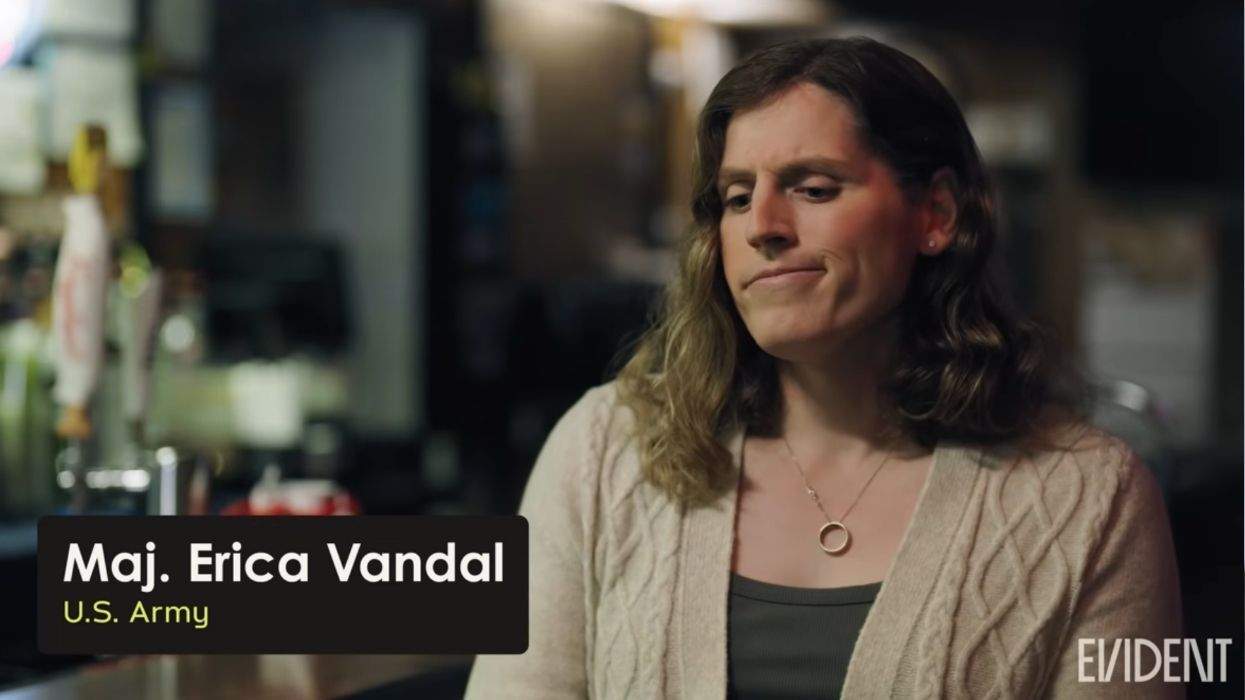

A short documentary about transgender service members forced out of the U.S. military under President Donald Trump has been nominated for a News & Documentary Emmy, bringing renewed attention to a policy that has already reshaped the lives of those at its center.
The film, Fighting to Serve, follows Army Major Erica Vandal, a decorated officer and plaintiff in a federal lawsuit challenging the ban. Produced by Evident Media in collaboration with PBS NewsHour, it is available on YouTube.
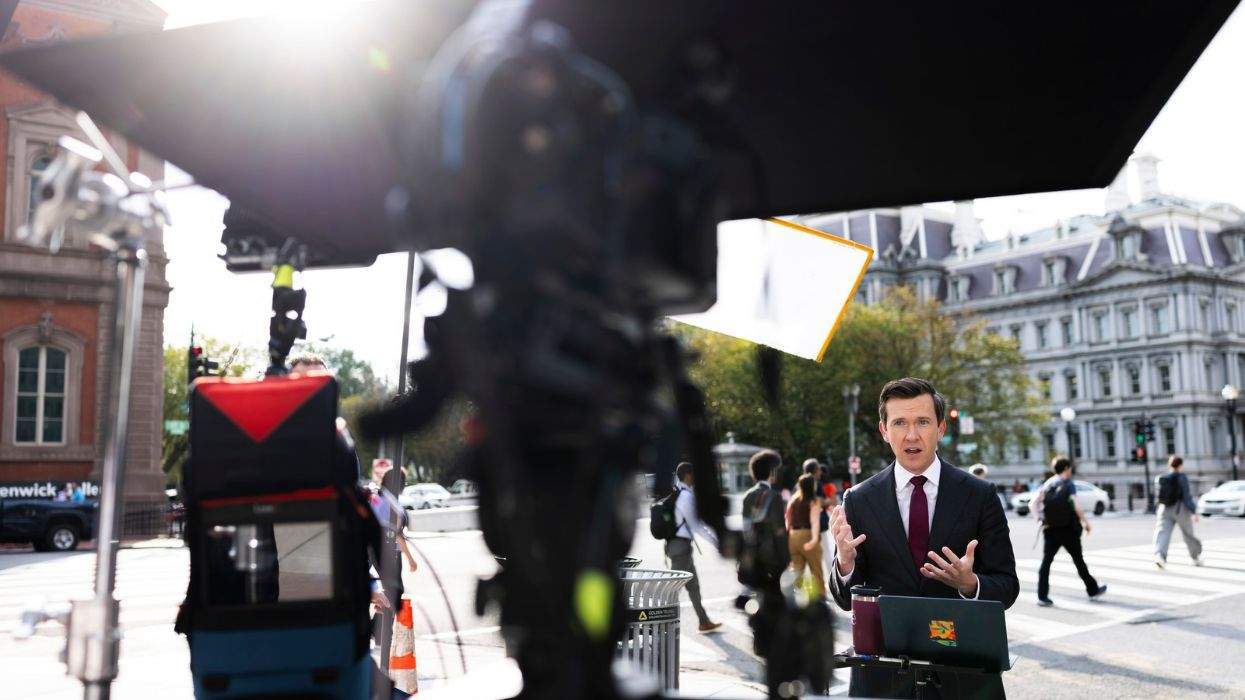
"Honored to be nominated for a News & Documentary Emmy for my reporting on the trans soldiers purged from the military under President Trump," journalist Dan Ming wrote on Instagram, describing the project as part of a series tracking transgender military service across administrations.
For Vandal, the recognition arrives with dissonance. She is no longer in the Army.
When Vandal first spoke with The Advocate last year, she was still in uniform, and the case, Talbott v. USA, appeared to be gaining traction after a federal judge sharply questioned the government's rationale for the ban. At the time, she described a life that had begun to align.
Related: ‘Lesser-known D-Day’ strikes as Pentagon purges transgender patriots serving in the U.S. military
Months later, that external pressure proved definitive. "I was separated from the Army on the 1st of January of this year," she told The Advocate on Wednesday.
The litigation continues, with pretrial motions winding down and further proceedings expected in the months ahead. "The fight's far from over," she said. But the courts have not moved at the pace of the policy.
Vandal said she chose the military’s classification of “voluntary separation,” an involuntary decision shaped in part by her family's practical realities. "I have my two children to worry about," she said.
Remaining in the process would have meant appearing before a board of inquiry she believes would not weigh her record on its merits. "I could submit a stack of evidence and yet because of this policy, the board would still have no choice but to say separate," she said.
To even attend the hearing, she would have to cut her hair and assume the grooming standards of men, according to the Department of Defense’s policies. The distinction between voluntary and involuntary, she suggested, is largely procedural and not reflective of real choice.
Vandal described military service as something more expansive than a job. "It is an identity and a way of life that totally encompasses everything that you do," she said.
That identity, she said, extends beyond work to housing, health care, and community. Its sudden loss leaves service members navigating multiple upheavals at once.
Related: Judge hints at federal class action, orders DOJ evidence in trans military ban case
Now living in Colorado, Vandal is searching for a new career while continuing advocacy work, including serving on the board of SPARTA, which supports transgender service members.
"I am used to that sense of purpose and service, so it's been a struggle," she said.
At the center of the policy are claims about military readiness and cohesion, arguments Vandal and other service members have repeatedly disputed. Research backs them up. A recent review of 58 empirical studies on transgender military service found no data showing that transgender troops are less deployable or that they harm unit cohesion. "Gender-affirming care has zero impact on our ability to deploy," Vandal says in the documentary.
For those affected by Trump's ban, the consequences have been concrete: months of administrative leave, abrupt separations, loss of income, loss of housing, and health care.
"There's this lull in the news and yet the harm of this policy [is] still very much being felt," Vandal said.
Advocacy groups involved in the case say the Emmy nomination underscores what is at stake. GLAD Law and the National Center for LGBTQ Rights, which represent Vandal and others in the Talbott case, noted in statements that Vandal, a 14-year Army veteran who deployed to Afghanistan and earned a Bronze Star, was discharged "solely for being transgender — not for any performance or conduct issue."
For Vandal, the recognition serves a different function. "I'm glad that I can be this representative for the community and help bring focus to the issues," she said. The case continues. The policy remains in force.
Asked whether she would return to the military if the ban were reversed, Vandal needed no time to think.
"I'd still go back in a heartbeat," she said.
Watch the Emmy-nominated documentary Fighting to Serve below.
- YouTube www.youtube.com