'%3E%3Cpath d='M16.3574 35.6519H12.9537L15.0491 18.8873L16.3574 35.6519ZM30.4229 54.0093L22.309 0.994385H7.91795L0 54.0093H10.6634L11.5802 46.3855H17.4014L17.9914 54.0093H30.4229Z' fill='%23971B20'/%3E%3Cpath d='M48.2073 41.8813C48.2073 43.4049 47.4892 44.0011 46.1144 44.0011H43.7595V11.0687H46.1144C47.4892 11.0687 48.2073 11.6636 48.2073 13.1885V41.8813ZM59.5273 43.6695V11.3326C59.5273 3.71323 53.5729 0.994385 47.8157 0.994385H31.7213V54.0093H47.8157C53.5729 54.0093 59.5273 51.29 59.5273 43.6695Z' fill='%23971B20'/%3E%3Cpath d='M90.183 0.994385H78.6039L75.0711 30.6157L71.9955 0.994385H59.4346L69.2474 54.0093H80.373L90.183 0.994385Z' fill='%23971B20'/%3E%3Cpath d='M107.063 42.3448C107.063 43.7359 105.951 44.5974 104.643 44.5974C103.269 44.5974 102.157 43.7359 102.157 42.3448V12.658C102.157 11.2676 103.269 10.4058 104.643 10.4058C105.951 10.4058 107.063 11.2676 107.063 12.658V42.3448ZM119.233 43.2723V11.7312C119.233 6.36384 112.952 -3.8147e-06 104.643 -3.8147e-06C96.2667 -3.8147e-06 89.9867 6.36384 89.9867 11.7312V43.2723C89.9867 48.6393 96.2667 55 104.643 55C112.952 55 119.233 48.6393 119.233 43.2723Z' fill='%23971B20'/%3E%3Cpath d='M150.976 43.9349V33.7309H139.069V42.3448C139.069 43.7359 137.957 44.5974 136.582 44.5974C135.076 44.5974 133.964 43.7359 133.964 42.3448V12.658C133.964 11.2676 135.076 10.4058 136.582 10.4058C137.957 10.4058 139.069 11.2676 139.069 12.658V21.2723H150.976V11.0687C150.976 5.70107 145.283 -3.8147e-06 136.582 -3.8147e-06C127.75 -3.8147e-06 121.796 5.70107 121.796 11.0687V43.9349C121.796 49.3022 127.75 55 136.582 55C145.283 55 150.976 49.3022 150.976 43.9349Z' fill='%23971B20'/%3E%3Cpath d='M167.478 35.6519H164.076L166.17 18.8873L167.478 35.6519ZM181.544 54.0093L173.432 0.994385H159.037L151.123 54.0093H161.785L162.704 46.3855H168.523L169.114 54.0093H181.544Z' fill='%23971B20'/%3E%3Cpath d='M205.412 10.4058V0.994385H177.081V10.4058H185.392V54.0093H197.428V10.4058H205.412Z' fill='%23971B20'/%3E%3Cpath d='M230.002 54.0093V43.9349H218.914V31.8746H226.635V21.8028H218.914V10.4058H230.002V0.994385H206.875V54.0093H230.002Z' fill='%23971B20'/%3E%3C/g%3E%3Cdefs%3E%3CclipPath id='clip0_260_7080'%3E%3Crect width='230' height='55' fill='white'/%3E%3C/clipPath%3E%3C/defs%3E%3C/svg%3E)
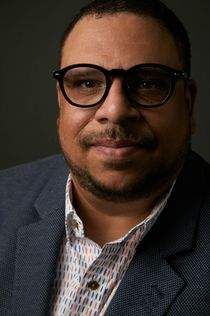
Keith Edwards is taking his audience to the largest Pride celebration in the United States.
On Sunday, the progressive digital commentator will step out from behind the format that made him one of YouTube's most-watched political voices and into the streets of Manhattan to host a live broadcast from the 57th annual New York City Pride March, in partnership with GLAAD.
The livestream, scheduled to begin at noon Eastern on his YouTube channel, will feature conversations from the official NYC Pride float as the parade moves through the city. Edwards said confirmed guests include New York Gov. Kathy Hochul, comedian Kathy Griffin, YouTuber and commentator Adam Mockler, actor Billy Porter, drag performer and television personality Peppermint, and actor and host Jonathan Bennett, along with writer Liz Plank, comedian Rob Anderson, and creator Monte Mader — a list he said is still growing. The broadcast will also raise money for GLAAD and Heritage of Pride.
Edwards has more than 1.2 million YouTube subscribers and a combined following across Instagram, X, TikTok, and Facebook, with his channel currently drawing roughly 40 million views a month. At a moment when audiences increasingly encounter politics and culture through creators rather than cable news panels, those numbers are the point. Edwards is betting he can move Pride across platforms in real time.
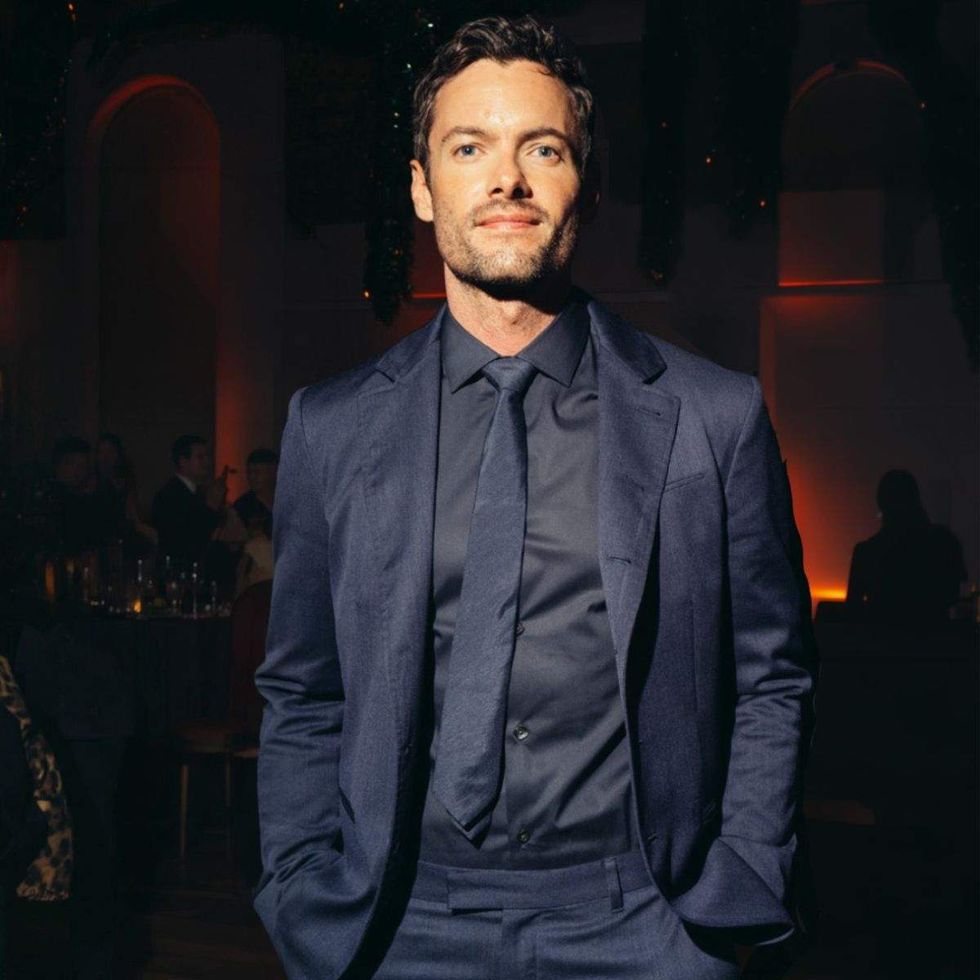 Keith Edwards will host a star-studded NYC Pride livestream on YouTube in partnership with GLAAD.Vikram Valluri + Jeremy Cohen
And for him, the goal isn't simply to stream a parade. It's to make joy a public act at a time when LGBTQ+people, and transgender people in particular, are facing sustained political attacks.
"I think what this is really about is spreading joy at a time when the administration and the country's temperature is wanting to keep us suppressed," Edwards told The Advocate in an interview earlier this month. "One of the most radical things you can do in a moment of extreme fear and a moment of authoritarianism is to experience joy and happiness."
He described New York's parade as one of the country's most visible LGBTQ+ gatherings and said the broadcast is meant for people who can't be there, including anyone watching alone and feeling isolated or afraid.
"For two hours you won't be by yourself," he said. "You can be hanging out with the rest of New York City Pride and me, have a good time, and feel connected."
Related: Inside Grindr’s WHCD party, which was so packed it ran low on alcohol
A Pride broadcast built like a live show
In a follow-up interview on Wednesday, Edwards said the project had grown.
"This is a two-hour show," he said, noting that a production company and roughly 15 to 20 people are involved. Having once produced television himself, he said he understood the scale of the undertaking better than most. "I was telling my team when we signed on, this is a lot of work,” he said.
The broadcast will mix in-person segments from the parade route with remote and recorded appearances. Entertainer Frankie Grande, as well as singer and actress Jessica Vosk, will join in person. Griffin and Hochul are expected to appear remotely, Porter is filming a recorded segment, and Mockler will join remotely from Pride in Chicago. To keep the show moving, Edwards brought on a comedy writer to help shape segments.
"It's not a typical livestream," he said. "I really wanted it to feel engaging." His main worry, he joked, is mundane: “Whether the cell signal holds,” he said. “That is the only thing I'm worried about. Other than that, I'm really excited."
GLAAD's involvement lends the project the institutional weight of one of the country's most influential LGBTQ+ media advocacy organizations, something Edwards said he still hasn't quite absorbed. "It's such a compliment that I haven't even fully let it sink in."
From Warren, Michigan, to one of YouTube's biggest political voices
For all the scale of the production, Edwards talks about his success with a mix of disbelief, gratitude, and Midwestern bluntness.
He grew up in Warren, Michigan, and didn't go to college. It’s something he says he feels no shame about, and a little pride in. "Not a lot of people that come from where I come from even make it out of Warren, Michigan, let alone do something with themselves," he said. "And I did that without a college degree, did it with a lot of help along the way."
He started the channel, he said, because he didn't want to spend years wondering what might have been. "I think we regret the things we don't do. I don't think we often regret the things we try."
Before going full-time, Edwards worked in politics, including as a senior digital adviser to Sen. Jon Ossoff of Georgia and communications director for the Lincoln Project. Now, viewers say watching his videos feels like talking to someone they trust. "I get so many messages like, 'Keith, it's like a friend talking to me each day,'” he said.
That trust, he added, is why he feels a responsibility to use the platform for more than commentary. "We raise money for people, we raise awareness for things that aren't being talked about." He's quick to credit the audience over the algorithm. On television, he noted, "two or three important people decide that you are good enough." On YouTube, "millions of people each day have to collectively agree that you are worth watching."
Related: Ballroom culture shines at New York City Hall Pride celebration
The VA rollback shows the stakes of Pride this year
The livestream arrives during a Pride season shaped by federal rollbacks, anti-trans policies, and growing pressure on hospitals, schools, and public agencies.
Earlier this month, The Advocate reported that the Department of Veterans Affairs had ordered health facilities nationwide to eliminate gender identity-based initiatives and strip the LGBTQ+ designation from a network of medical coordinators created to help LGBTQ+ veterans navigate care. The June 12 directive, signed by Veterans Health Administration Under Secretary for Health John J. Bartrum, instructed facilities to comply with President Donald Trump's executive orders targeting diversity, equity, and inclusion programs and federal recognition of transgender people. LGBTQ+ veteran care coordinators, who serve gay, lesbian, bisexual, queer, and trans vets, were to be redesignated simply as care coordinators.
The VA had maintained that nationwide network since 2016, established after the department concluded that LGBTQ+ veterans often faced unique barriers to care, including stigma and elevated health risks. The directive also raised concerns about PRIDE in All Who Served, a 10-week VA health-education program the department itself had recognized as a best practice and credited with reducing depression, anxiety, and suicide risk among participants.
To Edwards, the rollback fits a deliberate pattern to divide the LGBTQ+ community by targeting transgender people first. "To me, it feels like the final gasp of a dying ideology," he said. "It's upsetting, and it's worrying, but the thing is, all this stuff they're doing is totally reversible if we get people in office who want to defend our rights and equality."
The danger, he argued, is broader than any single program. When the government can strip protections from one part of a marginalized community, it builds a road map for going after the rest. It’s a concern advocates have raised as attacks framed around transgender people sweep into LGBTQ+ health programs, school protections, and even marriage equality.
Related: This NYC LGBTQ+ health clinic is giving away the ultimate Pride Month survival kit
How Edwards thinks Democrats should talk about trans people
Asked how he'd counsel candidates to talk about supporting transgender people — the issue many elected officials seem most afraid to touch — Edwards said the answer is to keep it human.
"Life is hard. Life is hard no matter who you are," he said. "I cannot imagine knowing how hard life is for me, with all the things that I have that make it easier, how much harder it would be knowing the government is doing what it can to make my life difficult."
He'd have leaders start where most people already are. "We all just want to be happy. I don't know anyone who's like, 'No, I actually want to live a sad, miserable life.'" From there, the question answers itself. "Why would we as a government, as a society, as a culture, want to tear people down rather than just lift everyone up, or just leave people alone?" he asked.
He sees the moment as part of a recurring American habit. "Picking one minority group during a generation and attacking them — unfortunately, it's trans people right now."
Edwards extended that critique to his own side. Coming off a night of New York City election results in which Democratic Socialist candidates endorsed by Mayor Zohran Mamdani won their primary elections against powerful incumbents and the Democratic establishment, he argued that the Democratic Party has spent more than a decade running against Trump rather than for anything. "They've run on 'Trump bad' for 11 years, and Trump is president again and in many ways more powerful than ever," he said. "People want to be led. The Democratic base is looking for something different now. People who believe in something, who are willing to fight."
'I'm always very gay'
The livestream carries personal meaning too. Edwards came out at 16, in 2001, after his mother found something on the family computer and asked him about it. She was understanding; his father took two or three years to come around. He knows he was lucky. He had a boyfriend at 16 and went to prom with him. "I had a more normal high school experience, even though at the time being out and gay was pretty abnormal."
Visibility online, he said, is a different thing and not automatic. "In some ways, I'm constantly coming out, because people on my channel do not know I'm gay unless I say it. There is a level of privilege of being able to move in and out of the world depending on the way I want to." He wants viewers who aren't yet out to hear that "it's actually a beautiful, joyous, happy life on the other side when and if you decide to live openly and freely."
Asked how gay he planned to be at New York City Pride, he laughed. "Well, I'm always very gay. I don't know how to be more gay than I am, because I'm so gay. I went to prom with a guy at 16."
That humor runs through his whole pitch for Sunday — fast, fun, welcoming to anyone watching alone in a year when many LGBTQ+ people are quietly asking how bad things can get. His honest answer is that it's bad. His more interesting one is what might come next. "He's torn a lot of things down," Edwards said of Trump, "but what if we rebuild it and it's better than ever before?"
Pride, he said, is where that begins and where defiance can wear a smile rather than a scowl.
"I think the most infuriating thing you can do to a bigot is smile and be happy," he said. "A protest can say to the world that I'm happy, I'm alive, and I'm joyful. That's what Pride's about this year."
Watch Keith Edwards NYC Pride Live below.
NYC Pride 2026 LIVE: Keith Edwards at New York City Pride Parade with GLAAD www.youtube.com