'%3E%3Cpath d='M16.3574 35.6519H12.9537L15.0491 18.8873L16.3574 35.6519ZM30.4229 54.0093L22.309 0.994385H7.91795L0 54.0093H10.6634L11.5802 46.3855H17.4014L17.9914 54.0093H30.4229Z' fill='%23971B20'/%3E%3Cpath d='M48.2073 41.8813C48.2073 43.4049 47.4892 44.0011 46.1144 44.0011H43.7595V11.0687H46.1144C47.4892 11.0687 48.2073 11.6636 48.2073 13.1885V41.8813ZM59.5273 43.6695V11.3326C59.5273 3.71323 53.5729 0.994385 47.8157 0.994385H31.7213V54.0093H47.8157C53.5729 54.0093 59.5273 51.29 59.5273 43.6695Z' fill='%23971B20'/%3E%3Cpath d='M90.183 0.994385H78.6039L75.0711 30.6157L71.9955 0.994385H59.4346L69.2474 54.0093H80.373L90.183 0.994385Z' fill='%23971B20'/%3E%3Cpath d='M107.063 42.3448C107.063 43.7359 105.951 44.5974 104.643 44.5974C103.269 44.5974 102.157 43.7359 102.157 42.3448V12.658C102.157 11.2676 103.269 10.4058 104.643 10.4058C105.951 10.4058 107.063 11.2676 107.063 12.658V42.3448ZM119.233 43.2723V11.7312C119.233 6.36384 112.952 -3.8147e-06 104.643 -3.8147e-06C96.2667 -3.8147e-06 89.9867 6.36384 89.9867 11.7312V43.2723C89.9867 48.6393 96.2667 55 104.643 55C112.952 55 119.233 48.6393 119.233 43.2723Z' fill='%23971B20'/%3E%3Cpath d='M150.976 43.9349V33.7309H139.069V42.3448C139.069 43.7359 137.957 44.5974 136.582 44.5974C135.076 44.5974 133.964 43.7359 133.964 42.3448V12.658C133.964 11.2676 135.076 10.4058 136.582 10.4058C137.957 10.4058 139.069 11.2676 139.069 12.658V21.2723H150.976V11.0687C150.976 5.70107 145.283 -3.8147e-06 136.582 -3.8147e-06C127.75 -3.8147e-06 121.796 5.70107 121.796 11.0687V43.9349C121.796 49.3022 127.75 55 136.582 55C145.283 55 150.976 49.3022 150.976 43.9349Z' fill='%23971B20'/%3E%3Cpath d='M167.478 35.6519H164.076L166.17 18.8873L167.478 35.6519ZM181.544 54.0093L173.432 0.994385H159.037L151.123 54.0093H161.785L162.704 46.3855H168.523L169.114 54.0093H181.544Z' fill='%23971B20'/%3E%3Cpath d='M205.412 10.4058V0.994385H177.081V10.4058H185.392V54.0093H197.428V10.4058H205.412Z' fill='%23971B20'/%3E%3Cpath d='M230.002 54.0093V43.9349H218.914V31.8746H226.635V21.8028H218.914V10.4058H230.002V0.994385H206.875V54.0093H230.002Z' fill='%23971B20'/%3E%3C/g%3E%3Cdefs%3E%3CclipPath id='clip0_260_7080'%3E%3Crect width='230' height='55' fill='white'/%3E%3C/clipPath%3E%3C/defs%3E%3C/svg%3E)

The living room of Ts Madison’s Georgia home in a pristine neighborhood near of Atlanta, which she proudly calls the Ts Starter House, has become both a meeting place and a metaphor. On a Friday in October, ahead of Atlanta Pride weekend, the media entrepreneur, recording artist, and trailblazing television personality sat with Kelley Robinson, president of the Human Rights Campaign, to tape an episode of HRC’s American Dreams podcast before turning to an extended interview with The Advocate.
The two women spoke at length about community, activism, and endurance — and about what the Ts Madison Starter House represents for the next generation of Black transgender women.
“This house is a portal of firsts,” Madison said. “It holds so much energy. I bought it in 2007, three days before my birthday — it was a gift to myself. And now I want it to be a place for the girls coming behind me.”
The Ts Madison Starter House
For Madison, the house is more than a home. It’s an extension of her mission. Here, since she opened her first home to the public in March, formerly incarcerated transgender women find refuge and community to set themselves up for success. “The Starter House is extremely important because here, you have to tell the girls that you’re trans,” she said. “We want you to live completely out loud because we want you to stand in resistance.”
That sense of resistance echoed throughout her afternoon with Robinson. During their podcast recording, Robinson looked at her and said, “You did that. So what is your hope for the women that will come into this Starter House?”
Madison didn’t hesitate. “I want them to plug into the energy that’s in here,” she said. “There’ll never be another Ts Madison, but there’ll always be a you. Use the energy and the force that’s in this house to become you.”
Robinson smiled. “That’s legacy,” she said quietly.
From survival to self-possession
Madison’s rise has been improbable by any measure. She began as a sex worker, an online performer, turned that visibility into entrepreneurship, and eventually became one of the first Black transgender women to executive-produce and star in her own reality series, The Ts Madison Experience, on WE tv.
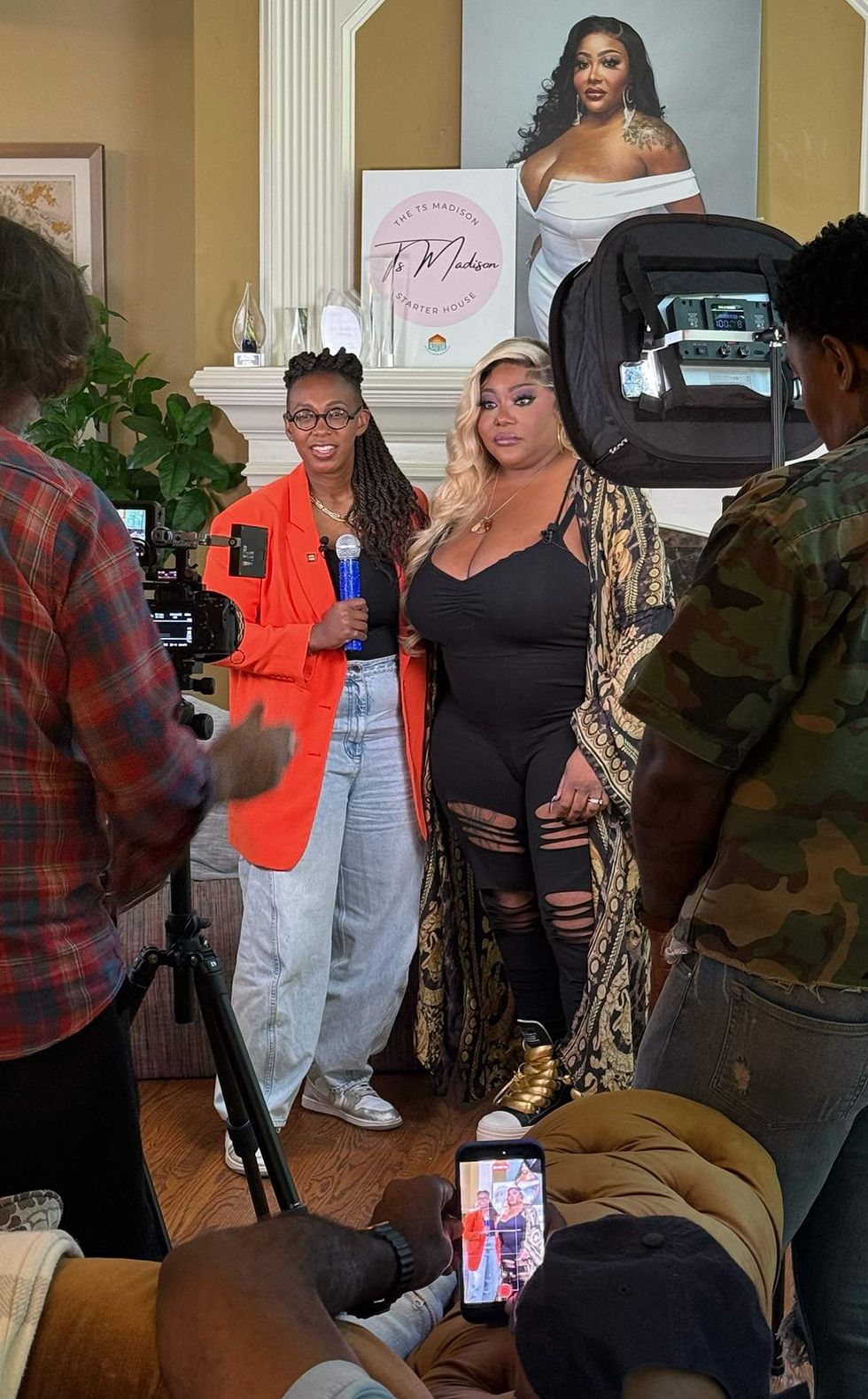 (From left) Kelley Robinson of HRC and Ts Madison, surrounded by journalists, prepare for an interview in the living room of Madison's Georgia home, October 2025. Christopher Wiggins for The Advocate
Her journey was not without setbacks. “I’m important to my community because of all the failures,” she said. “Not in spite of them. Because of them. It’s the no’s, the hurt, the almosts, the doors slamming in your face. All of that was supposed to happen so I could sit here and tell somebody else who’s going through it: you’ll make it.”
She’s since expanded her reach far beyond television. Madison now holds a writing credit alongside Beyoncé on Renaissance. “I’m a Black transgender woman who has publishing with Beyoncé,” she said. “I was a sex worker. It makes me know that my life means something — not just to me, but to a whole community.”
Truth as power
The day’s conversations often returned to the same theme: authenticity as a form of defiance.
“I can be crass; I can be Christian,” Madison said. “I can be it all. Because I know there’s somebody out there exactly like me who I represent.”
Robinson responded with a smile. “As president of the Human Rights Campaign,” she said, “I’m happy that you cuss these people out, because you tell the truth.”
Madison laughed, then turned serious. “Even if I cuss your ass out today, I’ll still fight for your rights the same day,” she said. “I want people to understand that I’m a human being.”
“Being authentically who you are is the most important thing,” she continued. “Everybody else already has their job. Your job is to be yourself.”
The politics of erasure
When The Advocate asked about the Trump administration’s rollback of HIV prevention and transgender health programs, Madison’s tone sharpened.
“If you can do something to the least of people, you’re preparing to do it to the greatest,” she said. “These are white Christian nationalists using the name of the Lord to move wickedly through this world. They’re not worried about anybody’s safety — only about power.”
She warned that scapegoating trans people serves a broader agenda. “They distract people of color by making trans people the enemy,” she said. “But the real enemy is in your government. Take big business out of government. Take Christianity out of government. You can’t govern people if you’ve never lived like the people.”
Robinson emphasized the human toll. “Three billion dollars has been cut from HIV prevention, from mental health services, from the 988 crisis hotline,” she said. “It’s not just about numbers. It’s about people across our communities.”
“The people have the power,” Madison replied. “We put them in office. They work for us.”
Faith, reframed
Madison’s faith is pragmatic, not pious. “Black people need to not participate in any of that stuff,” she said of far-right religious politics. “These are people using God’s name to do harm. They don’t care about your being, your life, your children. It’s about power — about their children’s children being in power.”
For her, resistance itself is a spiritual act. “You have to resist,” she said. “Because if you lie down, you get run over. Standing up builds the wall they can’t get through.”
That imagery — the wall that protects rather than excludes — surfaces again and again in her language. “Don’t lay down,” she told The Advocate. “The only thing that’s laying down is the floor. You can walk over the floor. But you can’t run through a wall.”
“Pack it up, Paula”
During the podcast, Robinson asked what she’d say directly to President Donald Trump. Madison answered without missing a beat.
“Pack it up, Paula,” she said, deadpan. “Your show’s canceled.”
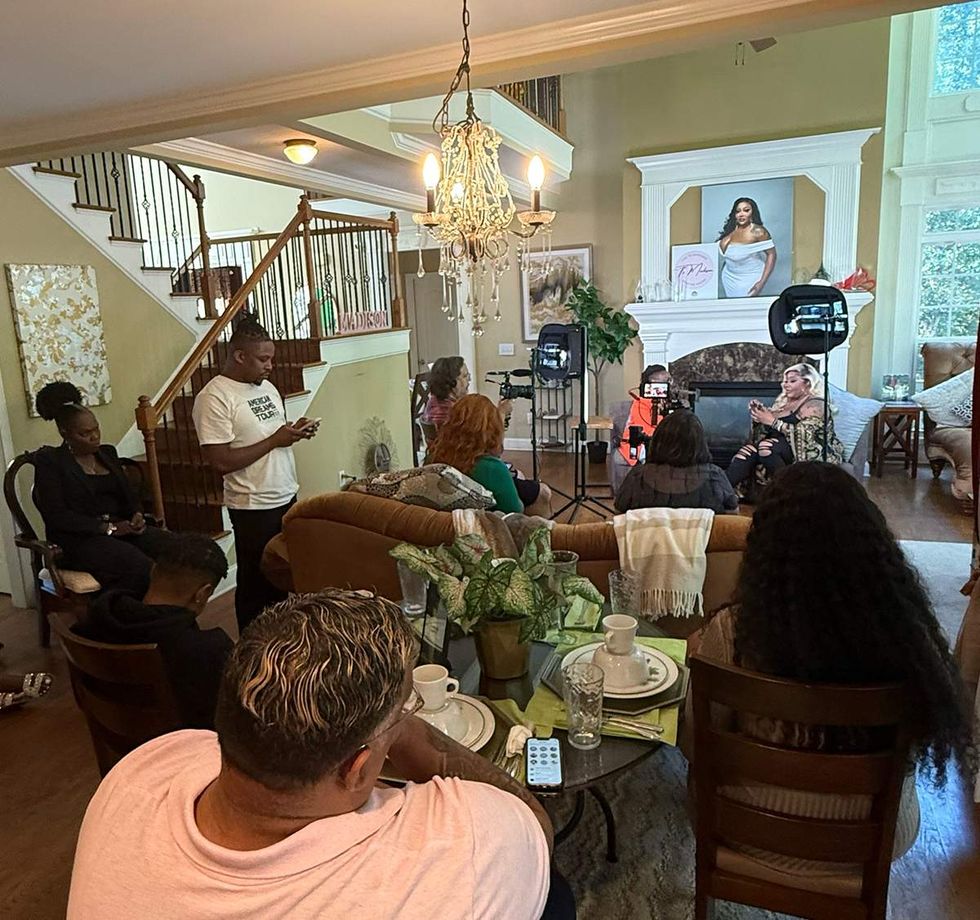 Kelley Robinson of HRC and Ts Madison, surrounded by journalists, in the living room of Madisons Georgia home, October 2025Christopher Wiggins for The Advocate
The HRC production team and audience in the room, including several of Madison’s “girls” who live in the house and other friends, laughed, but Madison pivoted immediately to a critique of the U.S. Supreme Court and the nation’s moral direction. “The Supreme Court needs to be recast like a TV show,” she said. “Christ wouldn’t do none of this. They talk about morality and still haven’t given Black people reparations. You can’t govern over morals and standards when you’ve done none of the moral work yourself.”
She grew more serious. “We don’t need allies,” she said. “We need accomplices. Don’t pray for me. Get out here and fight with me. Don’t love me at night and vote against me in the morning.”
Robinson agreed. “When they come after people like Ts Madison, like [New York Attorney General] Tish James,” she said, “we have to circle around them with love and support. That’s what allyship and accomplishment mean.”
“Get in the car,” Madison added. “Don’t just drive by — drive through.”
James had just been indicted by the Department of Justice weeks after Trump thought he had sent a direct message to Attorney General Pam Bondi, criticizing her for not having secured indictments of some of his enemies, like former FBI Director James Comey, who was indicted days earlier, California U.S. Sen. Adam Schiff, and James.
The American dream
When the topic turned to the “American dream,” Robinson told Madison, “You are the American dream.”
Madison paused, then nodded. “People think the dream is about having millions of dollars or a big house and a family,” she said. “I have homes. I have income. I have stability. So it’s achievable, even when you think it’s not.”
She spoke about her own evolution from sex work to entrepreneurship. “I’m not glorifying it or condemning it,” she said. “What I’m saying is, whatever you do, make it a business. That’s what I did. I built something from it.”
Madison’s version of the American dream is rooted in self-determination. “Right now I’m an entertainer, all around,” she said. “I don’t chase. I attract. I’ve set my goals. I’m not going to be 50 years old trying to figure out what my best job is going to be. My job found me.”
A message to the next generation
Before leaving, The Advocate asked what message she had for transgender women and queer youth watching her rise.
“I want them to know that their existence is a part of activism,” she said. “Exist. Don’t be afraid. Don’t let what you see on television scare you into hiding. You’re a gift to your family. Maybe just a unique version of what they prayed for.”
She paused. “Our new motto has gone beyond protecting the dolls; it’s now about empowering them. What happens after you’re protected? You step into your power. And your power is being human.”
Her final words were both instruction and affirmation. “You’re not a trans and a teacher,” she said. “You’re a teacher who happens to be trans. You’re not a doctor and trans. You’re a doctor who happens to be trans. You’re all of it, at the same time.”
By the time the conversation ended, Madison’s refrain had crystallized into a single idea: that refusing to disappear is itself an act of resistance.
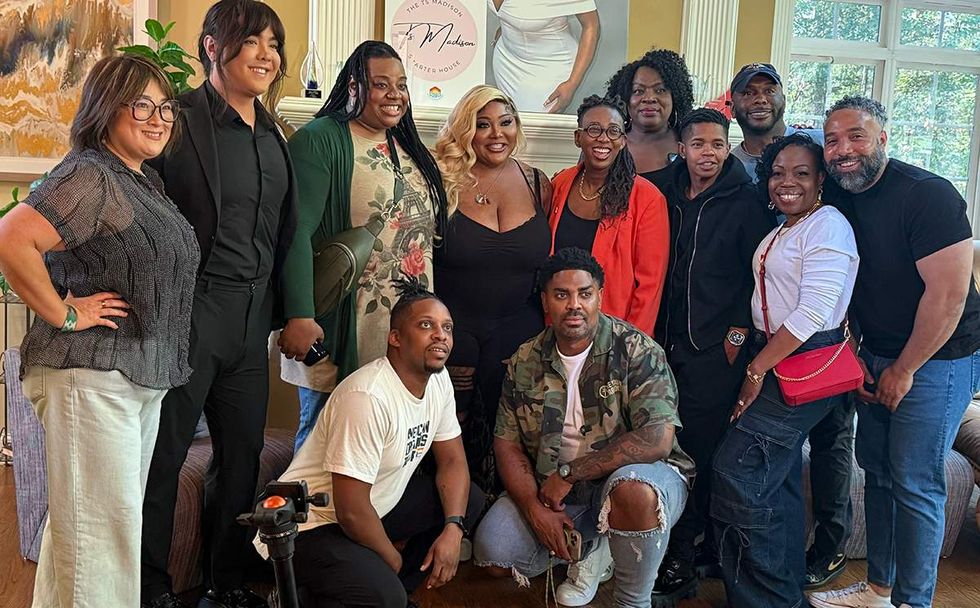 Kelley Robinson of HRC (pictured center, in orange) with Ts Madison and crew in the living room of Madison's Georgia home, October 2025Christopher Wiggins for The Advocate
“The importance of today’s conversation is instilling hope,” she said. “If you watch television long enough, you’ll be afraid. I remember when Trump first got into office, I thought I might need surgery to blend in. Then I shook that off. You don’t need to change yourself to survive. You need to stand in who you are.”
And then, almost as an afterthought, she smiled. “I ain’t going nowhere.”