'%3E%3Cpath d='M16.3574 35.6519H12.9537L15.0491 18.8873L16.3574 35.6519ZM30.4229 54.0093L22.309 0.994385H7.91795L0 54.0093H10.6634L11.5802 46.3855H17.4014L17.9914 54.0093H30.4229Z' fill='%23971B20'/%3E%3Cpath d='M48.2073 41.8813C48.2073 43.4049 47.4892 44.0011 46.1144 44.0011H43.7595V11.0687H46.1144C47.4892 11.0687 48.2073 11.6636 48.2073 13.1885V41.8813ZM59.5273 43.6695V11.3326C59.5273 3.71323 53.5729 0.994385 47.8157 0.994385H31.7213V54.0093H47.8157C53.5729 54.0093 59.5273 51.29 59.5273 43.6695Z' fill='%23971B20'/%3E%3Cpath d='M90.183 0.994385H78.6039L75.0711 30.6157L71.9955 0.994385H59.4346L69.2474 54.0093H80.373L90.183 0.994385Z' fill='%23971B20'/%3E%3Cpath d='M107.063 42.3448C107.063 43.7359 105.951 44.5974 104.643 44.5974C103.269 44.5974 102.157 43.7359 102.157 42.3448V12.658C102.157 11.2676 103.269 10.4058 104.643 10.4058C105.951 10.4058 107.063 11.2676 107.063 12.658V42.3448ZM119.233 43.2723V11.7312C119.233 6.36384 112.952 -3.8147e-06 104.643 -3.8147e-06C96.2667 -3.8147e-06 89.9867 6.36384 89.9867 11.7312V43.2723C89.9867 48.6393 96.2667 55 104.643 55C112.952 55 119.233 48.6393 119.233 43.2723Z' fill='%23971B20'/%3E%3Cpath d='M150.976 43.9349V33.7309H139.069V42.3448C139.069 43.7359 137.957 44.5974 136.582 44.5974C135.076 44.5974 133.964 43.7359 133.964 42.3448V12.658C133.964 11.2676 135.076 10.4058 136.582 10.4058C137.957 10.4058 139.069 11.2676 139.069 12.658V21.2723H150.976V11.0687C150.976 5.70107 145.283 -3.8147e-06 136.582 -3.8147e-06C127.75 -3.8147e-06 121.796 5.70107 121.796 11.0687V43.9349C121.796 49.3022 127.75 55 136.582 55C145.283 55 150.976 49.3022 150.976 43.9349Z' fill='%23971B20'/%3E%3Cpath d='M167.478 35.6519H164.076L166.17 18.8873L167.478 35.6519ZM181.544 54.0093L173.432 0.994385H159.037L151.123 54.0093H161.785L162.704 46.3855H168.523L169.114 54.0093H181.544Z' fill='%23971B20'/%3E%3Cpath d='M205.412 10.4058V0.994385H177.081V10.4058H185.392V54.0093H197.428V10.4058H205.412Z' fill='%23971B20'/%3E%3Cpath d='M230.002 54.0093V43.9349H218.914V31.8746H226.635V21.8028H218.914V10.4058H230.002V0.994385H206.875V54.0093H230.002Z' fill='%23971B20'/%3E%3C/g%3E%3Cdefs%3E%3CclipPath id='clip0_260_7080'%3E%3Crect width='230' height='55' fill='white'/%3E%3C/clipPath%3E%3C/defs%3E%3C/svg%3E)
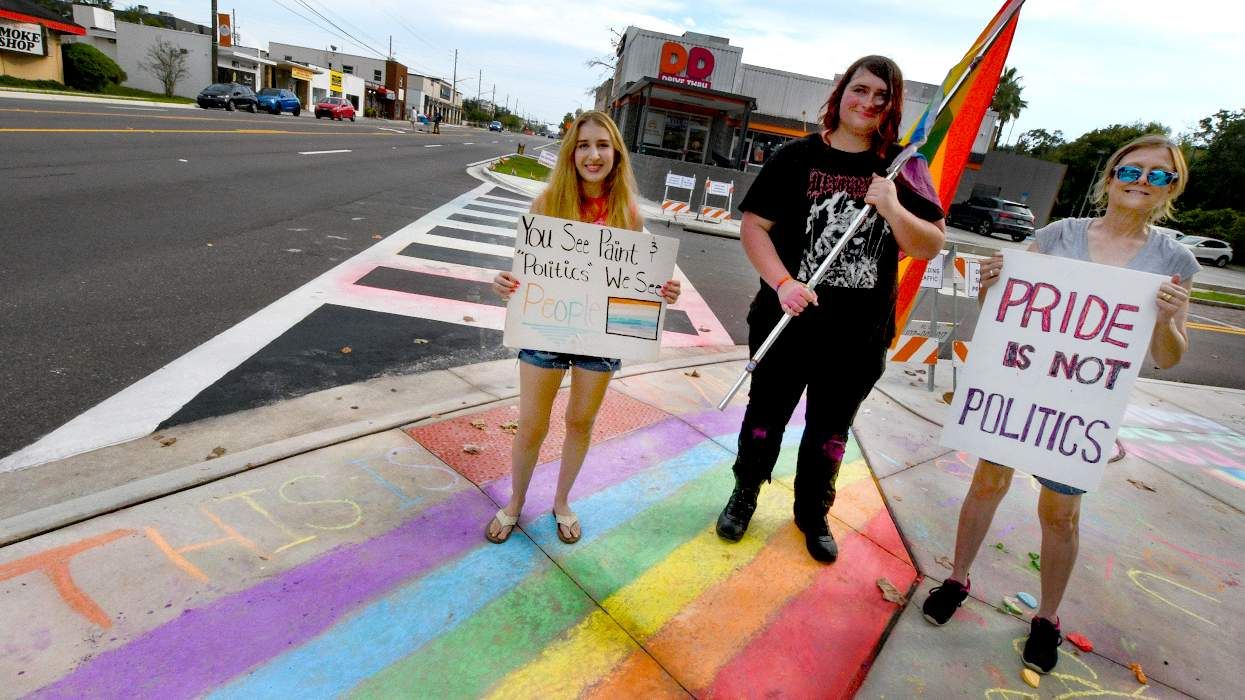

In the name of saving money and lives, state officials attempting to remove rainbow crosswalks might just be wasting both.
U.S. Transportation Secretary Sean Duffy ordered states to eliminate rainbow crosswalks and other "distractions" in July in a supposed effort to prevent traffic fatalities. He did not provide evidence linking decorated crosswalks to traffic fatalities. Instead, he harped on his distaste for the artwork itself, saying, "Roads are for safety, not political messages."
Florida complied with the order in August by quietly painting over a memorial for the Pulse shooting victims in Orlando. Republican Gov. Ron DeSantis later defended the decision, saying the artwork is "not compliant with state and federal standards."
The Florida Department of Transportation has since ordered cities to remove rainbow crosswalks, as well as more than 400 other roadway decorations. The Texas Department of Transportation followed suit, sending a memo to local governments in October directing cities to follow Duffy’s orders by keeping crosswalks “free from distractions.”
Conservatives accuse rainbow crosswalks of being a distraction, but is safety at the core of the issue?. Here's what you need to know about the artwork, including who funds it, if it's safe, and the real reasons behind why it's being removed.
Which cities have rainbow crosswalks?
The first permanent rainbow crosswalk was installed in 2012 on San Vicente Boulevard in West Hollywood (Los Angeles, California). Since then, dozens of cities across the United States and around the world have commissioned local artists to create similar tributes to the LGBTQ+ community.
Several cities in Florida have rainbow crosswalks, such as Orlando, Palm Beach, Miami Beach, and Key West. They're also popular in other California cities, like San Francisco and San Jose. Other major U.S. cities such as Chicago, New York City, Atlanta, Seattle, Philadelphia, Nashville, and Milwaukee also feature the colorful crosswalks.
Rainbow crosswalks can be found in several Canadian cities, like Vancouver, Saskatoon, and Toronto. They can also be found overseas in Dublin, Ireland; Sydney, Australia; Cape Town, South Africa; Vienna, Austria; Taipei, Taiwan; and Paris, France.
Why do cities have rainbow crosswalks?
While many cities erected rainbow crosswalks as a display of solidarity with the LGBTQ+ community — usually during Pride Month — several cities installed them to honor the victims of the 2016 Pulse Massacre, a mass shooting at a popular LGBTQ+ bar in Orlando that claimed 49 lives.
The city of Orlando painted the crosswalk in front of the club's former location to serve as a memorial. The rainbow crosswalk in Atlanta was also dedicated to the Pulse victims when it was installed in 2017, as were those in other Florida cities like Palm Beach.
Why is Florida painting over rainbow crosswalks?
While state officials and the Trump administration claim that rainbow crosswalks are a distraction for drivers, no evidence exists to support this. Lawmakers and activists have accused the administration of using the flimsy excuse to crack down on LGBTQ+ visibility.
Florida state Rep. Anna V. Eskamani, a Democrat from Orlando, previously told The Advocate that the FDOT's decision to paint over the crosswalk in the middle of the night "emphasizes that you’re trying to hide your bigotry.”
“We experienced a tragedy of 49, mostly LGBTQ+ people, being murdered almost ten years ago. And so we wanted to preserve this crosswalk,” she said. “Then, apparently, in the middle of the night, FDOT painted over it, with no notice, no warning, and did not tell the city. We only found out this morning because there was no more crosswalk there. It’s so incredibly shameful."
“This is just layers and layers of absurdity,” Eskamani added. “It’s incredibly authoritarian and fascist ... the state of Florida is sneaking into our cities to pursue their sick political agenda on an issue that isn’t even political. Literally, it’s a memorial.”Are rainbow crosswalks dangerous?
There is no evidence that rainbow crosswalks cause more accidents. To the contrary, increased visibility from decorated crosswalks led to a 37 percent drop in collisions resulting in injuries, a 50 percent reduction in incidents involving pedestrians, and a 17 percent fall in the total crash rate, according to a 2022 study from Bloomberg.
Duffy himself acknowledged in his order to remove rainbow crosswalks that estimated traffic fatalities declined by 3.8 percent from 2023 to 2024 under the Biden administration.
How much do rainbow crosswalks cost?
While the cost of a rainbow crosswalk is minimal, it is unclear how much is being spent to remove them. Atlanta's crosswalk drew controversy when it was installed in 2017 for its $196,000 price tag — though that was only 0.3 of one percent of the city's total transportation budget, 11Alive reported at the time, and the crosswalk would not require maintenance for ten years.
Private donors fund many of the crosswalks, while their removals are publicly funded. The crosswalk in Palm Beach cost $16,000 to install in 2021 and was fully paid for by the Palm Beach County Human Rights Council and the AIDS Healthcare Foundation. Removing the mural would cost about $12,000 of taxpayer money, according to city records via CBS12.
Florida officials have been accused of wasting resources by painting over the rainbow crosswalk outside the Pulse memorial multiple times, as protestors continually restore itwith their own chalk and paint. The state has not revealed the cost of repeatedly painting it over, even refusing a request for information from Fox News.