'%3E%3Cpath d='M16.3574 35.6519H12.9537L15.0491 18.8873L16.3574 35.6519ZM30.4229 54.0093L22.309 0.994385H7.91795L0 54.0093H10.6634L11.5802 46.3855H17.4014L17.9914 54.0093H30.4229Z' fill='%23971B20'/%3E%3Cpath d='M48.2073 41.8813C48.2073 43.4049 47.4892 44.0011 46.1144 44.0011H43.7595V11.0687H46.1144C47.4892 11.0687 48.2073 11.6636 48.2073 13.1885V41.8813ZM59.5273 43.6695V11.3326C59.5273 3.71323 53.5729 0.994385 47.8157 0.994385H31.7213V54.0093H47.8157C53.5729 54.0093 59.5273 51.29 59.5273 43.6695Z' fill='%23971B20'/%3E%3Cpath d='M90.183 0.994385H78.6039L75.0711 30.6157L71.9955 0.994385H59.4346L69.2474 54.0093H80.373L90.183 0.994385Z' fill='%23971B20'/%3E%3Cpath d='M107.063 42.3448C107.063 43.7359 105.951 44.5974 104.643 44.5974C103.269 44.5974 102.157 43.7359 102.157 42.3448V12.658C102.157 11.2676 103.269 10.4058 104.643 10.4058C105.951 10.4058 107.063 11.2676 107.063 12.658V42.3448ZM119.233 43.2723V11.7312C119.233 6.36384 112.952 -3.8147e-06 104.643 -3.8147e-06C96.2667 -3.8147e-06 89.9867 6.36384 89.9867 11.7312V43.2723C89.9867 48.6393 96.2667 55 104.643 55C112.952 55 119.233 48.6393 119.233 43.2723Z' fill='%23971B20'/%3E%3Cpath d='M150.976 43.9349V33.7309H139.069V42.3448C139.069 43.7359 137.957 44.5974 136.582 44.5974C135.076 44.5974 133.964 43.7359 133.964 42.3448V12.658C133.964 11.2676 135.076 10.4058 136.582 10.4058C137.957 10.4058 139.069 11.2676 139.069 12.658V21.2723H150.976V11.0687C150.976 5.70107 145.283 -3.8147e-06 136.582 -3.8147e-06C127.75 -3.8147e-06 121.796 5.70107 121.796 11.0687V43.9349C121.796 49.3022 127.75 55 136.582 55C145.283 55 150.976 49.3022 150.976 43.9349Z' fill='%23971B20'/%3E%3Cpath d='M167.478 35.6519H164.076L166.17 18.8873L167.478 35.6519ZM181.544 54.0093L173.432 0.994385H159.037L151.123 54.0093H161.785L162.704 46.3855H168.523L169.114 54.0093H181.544Z' fill='%23971B20'/%3E%3Cpath d='M205.412 10.4058V0.994385H177.081V10.4058H185.392V54.0093H197.428V10.4058H205.412Z' fill='%23971B20'/%3E%3Cpath d='M230.002 54.0093V43.9349H218.914V31.8746H226.635V21.8028H218.914V10.4058H230.002V0.994385H206.875V54.0093H230.002Z' fill='%23971B20'/%3E%3C/g%3E%3Cdefs%3E%3CclipPath id='clip0_260_7080'%3E%3Crect width='230' height='55' fill='white'/%3E%3C/clipPath%3E%3C/defs%3E%3C/svg%3E)
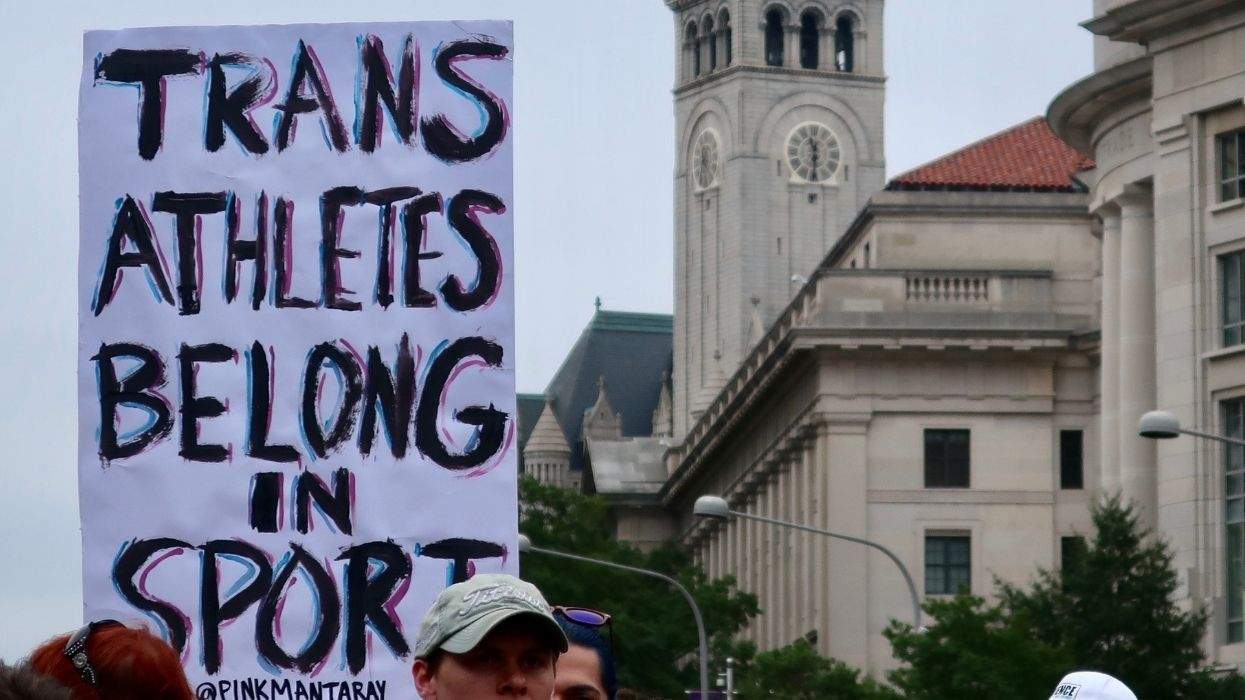

A federal appeals court on Wednesday handed transgender students in Minnesota a significant legal victory, allowing the state to keep enforcing a policy that lets high school athletes compete consistent with their gender identity.
In Female Athletes United v. Ellison, the U.S. Court of Appeals for the Eighth Circuit upheld a lower court’s refusal to block the policy, leaving intact a Minnesota State High School League bylaw adopted in 2016 that allows participation “consistent with their gender identity or expression.”
The challenge came from Female Athletes United, which sought a preliminary injunction barring transgender girls from competing on girls’ teams. The group argued that Minnesota’s policy violates Title IX, the federal law banning sex discrimination in education.
But the Eighth Circuit said the group’s claims were not likely to succeed. Writing for the panel, Judge Raymond Gruender said Title IX does not provide a private right of action for the kind of disparate-impact claims FAU brought here. Instead, the court said, private plaintiffs may sue under Title IX only for intentional discrimination.
Related: Minnesota Supreme Court rules USA Powerlifting's ban on trans women is discrimination
Related: Soon-to-be-ousted Pam Bondi sues Minnesota for letting trans athletes play in school sports
The opinion also rejected FAU’s argument that Minnesota’s refusal to follow Trump administration guidance showed deliberate indifference. President Donald Trump has issued several executive orders, which are not laws, targeting transgender people, including whether they can participate in sports.
“Executive guidance and agency findings, in and of themselves, do not reflect settled law,” the panel wrote, adding that such actions “cannot independently establish a likelihood that certain policies or conduct violate federal rights.”
Instead, the court emphasized that the underlying legal question remains unresolved nationwide.
“There can be no dispute that whether Title IX requires, permits, or prohibits the participation of transgender athletes in female athletics remains an open question of law,” the opinion states.
The U.S. Supreme Court heard two cases this term that will determine whether states can ban transgender women and girls from participating in women’s sports. That decision is expected by July.
Related: Trump administration cracks down on Minnesota sports for allowing trans athletes to compete
Related: Trump admin targets Minnesota for allowing trans girls to participate in sports
The National Women’s Law Center, which filed an amicus brief alongside 19 additional education, civil rights, and gender justice organizations, argued that Minnesota’s inclusive policy is consistent with Title IX’s purpose. The brief says Title IX is meant to ensure equal opportunities and benefits for women and girls and to combat sex stereotypes, not to exclude transgender students.
The brief also warned that exclusionary policies can harm all women and girls by increasing scrutiny of athletes’ bodies and appearances and by encouraging invasive policing of who is considered female enough to compete.
For now, the ruling means Minnesota can continue allowing transgender students to play school sports with their classmates while the broader national legal fight over Title IX and trans athletes continues.