'%3E%3Cpath d='M16.3574 35.6519H12.9537L15.0491 18.8873L16.3574 35.6519ZM30.4229 54.0093L22.309 0.994385H7.91795L0 54.0093H10.6634L11.5802 46.3855H17.4014L17.9914 54.0093H30.4229Z' fill='%23971B20'/%3E%3Cpath d='M48.2073 41.8813C48.2073 43.4049 47.4892 44.0011 46.1144 44.0011H43.7595V11.0687H46.1144C47.4892 11.0687 48.2073 11.6636 48.2073 13.1885V41.8813ZM59.5273 43.6695V11.3326C59.5273 3.71323 53.5729 0.994385 47.8157 0.994385H31.7213V54.0093H47.8157C53.5729 54.0093 59.5273 51.29 59.5273 43.6695Z' fill='%23971B20'/%3E%3Cpath d='M90.183 0.994385H78.6039L75.0711 30.6157L71.9955 0.994385H59.4346L69.2474 54.0093H80.373L90.183 0.994385Z' fill='%23971B20'/%3E%3Cpath d='M107.063 42.3448C107.063 43.7359 105.951 44.5974 104.643 44.5974C103.269 44.5974 102.157 43.7359 102.157 42.3448V12.658C102.157 11.2676 103.269 10.4058 104.643 10.4058C105.951 10.4058 107.063 11.2676 107.063 12.658V42.3448ZM119.233 43.2723V11.7312C119.233 6.36384 112.952 -3.8147e-06 104.643 -3.8147e-06C96.2667 -3.8147e-06 89.9867 6.36384 89.9867 11.7312V43.2723C89.9867 48.6393 96.2667 55 104.643 55C112.952 55 119.233 48.6393 119.233 43.2723Z' fill='%23971B20'/%3E%3Cpath d='M150.976 43.9349V33.7309H139.069V42.3448C139.069 43.7359 137.957 44.5974 136.582 44.5974C135.076 44.5974 133.964 43.7359 133.964 42.3448V12.658C133.964 11.2676 135.076 10.4058 136.582 10.4058C137.957 10.4058 139.069 11.2676 139.069 12.658V21.2723H150.976V11.0687C150.976 5.70107 145.283 -3.8147e-06 136.582 -3.8147e-06C127.75 -3.8147e-06 121.796 5.70107 121.796 11.0687V43.9349C121.796 49.3022 127.75 55 136.582 55C145.283 55 150.976 49.3022 150.976 43.9349Z' fill='%23971B20'/%3E%3Cpath d='M167.478 35.6519H164.076L166.17 18.8873L167.478 35.6519ZM181.544 54.0093L173.432 0.994385H159.037L151.123 54.0093H161.785L162.704 46.3855H168.523L169.114 54.0093H181.544Z' fill='%23971B20'/%3E%3Cpath d='M205.412 10.4058V0.994385H177.081V10.4058H185.392V54.0093H197.428V10.4058H205.412Z' fill='%23971B20'/%3E%3Cpath d='M230.002 54.0093V43.9349H218.914V31.8746H226.635V21.8028H218.914V10.4058H230.002V0.994385H206.875V54.0093H230.002Z' fill='%23971B20'/%3E%3C/g%3E%3Cdefs%3E%3CclipPath id='clip0_260_7080'%3E%3Crect width='230' height='55' fill='white'/%3E%3C/clipPath%3E%3C/defs%3E%3C/svg%3E)

A new youth-led publication is challenging how communities respond to anti-LGBTQ+ violence, urging a move away from policing and incarceration and toward community-based solutions.
The Black Lives Matter and Stop AAPI Hate movements led student Jacqueline Pham to grapple with questions around the criminal legal system and prison reform. Over time, they came to identify as a prison abolitionist, embracing a political framework that calls for dismantling prisons to address systemic racial injustice.
Still, Pham had questions: What does it mean to address acts of violence, like hate crimes, in a justice system that does not rely on punishment or incarceration?
Related: Over 1,000 anti-LGBTQ+ attacks occurred in 2025: report
Related: Hate crimes are on the rise at schools, and it's only getting worse for LGBTQ+ students
After an act of violence, “I want my community to feel validated and legitimate,” Pham recalled thinking. “I don't really like police or prisons, but what other choices do we have?”
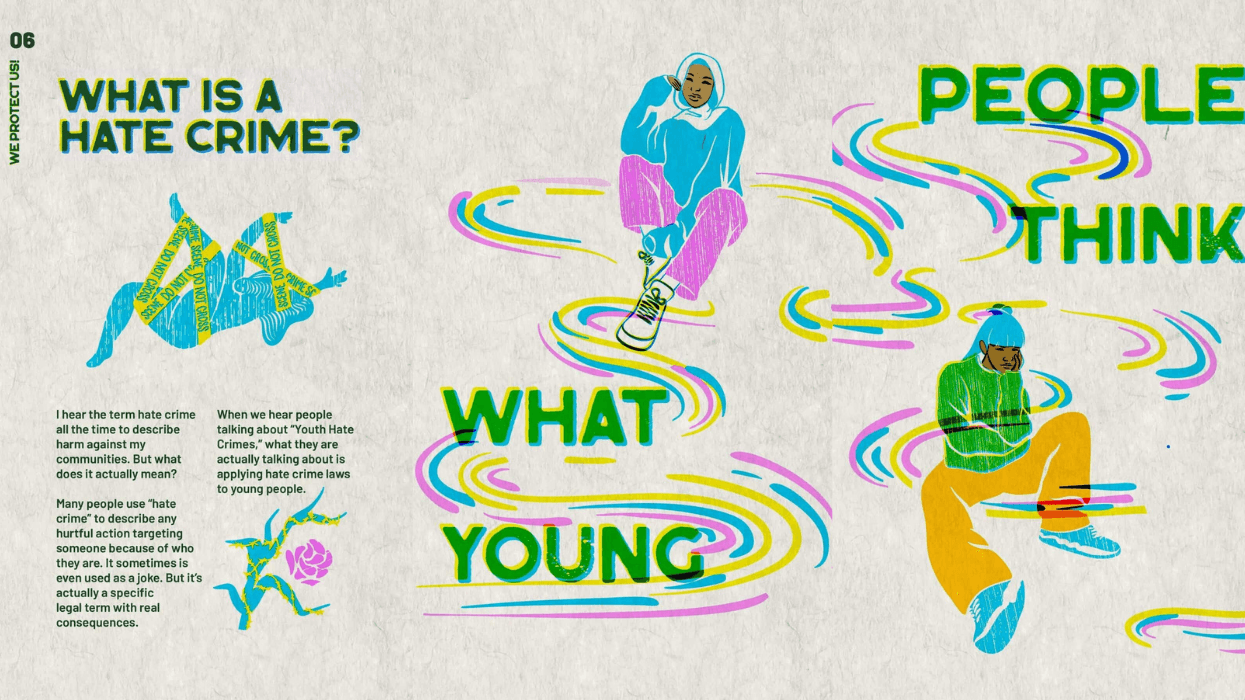
These questions take center stage in a new zine written by Pham and released by the social justice organization GSA Network and the legal rights nonprofit the Transgender Law Center. A zine — short for “magazine” or “fanzine” — is a typically low-cost, self-published booklet that blends personal storytelling, art, and political ideas to share perspectives outside traditional media.
Violent crime is declining in the United States, but LGBTQ+ individuals still face disproportionate risks of identity-based acts of violence. In 2024, 17.2 percent of all hate crimes reported by the Federal Bureau of Investigation targeted individuals based on their sexual orientation, and 4 percent targeted people based on their gender identity.
Discussions around justice and political reform are central to the work of both groups, according to GSA Network Co-Executive Director Gia Loving.
“How do we support folks who have been hurt within [the] community and are looking for accountability?” Loving told The Advocate. “That question’s been coming up … for the last 10 years.”
As a college student, Pham joined the GSA Network as a youth research fellow and helped draft a zine exploring these issues, entitled “We Protect Us.” Illustrated by Jessica Nguyen, the zine is accessible for free online.
The central argument of the zine is that the prison system perpetuates racial injustice and that incarceration does not meaningfully improve safety for marginalized communities. Across federal prisons, 38 percent of people incarcerated are Black, despite Black Americans making up roughly 14 percent of the national population.
The zine calls for community-based support and organizing as both prevention and response to harm, including after experiences like hate crimes.
Related: In GOP-led states with anti-LGBTQ+ laws, school hate crimes quadruple: report
Related: Hate crimes skyrocket in Los Angeles, especially targeting LGBTQ+ people
Related: Anti-transgender hate crimes spike, leading to calls for a public health emergency
“Safety isn’t going to come from the state,” Chris Chavers, senior national policy and programs organizer for the Transgender Law Center, told The Advocate. “All it does is lead to more incarceration and policing.”
The zine asks readers to actively imagine alternatives, featuring discussion prompts and write-in sections designated to help communities envision ways to address harm without relying on policing or incarceration.
It also centers young people, highlighting their role in shaping the future of both prison reform and LGBTQ+ organizing. The zine includes excerpts from interviews with teens. “Young people are very much engaged in real conversations [about] making the world a better place,” Loving said.
Within a prison abolitionist lens, finding solutions to acts of violence against marginalized groups like the LGBTQ+ community will require “a lot of creativity,” Chavers said. The zine, in that sense, is intended to spark conversation at a moment when debates over safety, policing, and LGBTQ+ rights are increasingly urgent.
Youth are “the best people to be in the conversation,” Loving said. “How do you keep yourself safe? We need actual youth leaders brainstorming that.”
This article was written as part of the Future of Queer Media fellowship program at The Advocate, which is underwritten by a generous gift from Morrison Media Group. The program helps support the next generation of LGBTQ+ journalists.