'%3E%3Cpath d='M16.3574 35.6519H12.9537L15.0491 18.8873L16.3574 35.6519ZM30.4229 54.0093L22.309 0.994385H7.91795L0 54.0093H10.6634L11.5802 46.3855H17.4014L17.9914 54.0093H30.4229Z' fill='%23971B20'/%3E%3Cpath d='M48.2073 41.8813C48.2073 43.4049 47.4892 44.0011 46.1144 44.0011H43.7595V11.0687H46.1144C47.4892 11.0687 48.2073 11.6636 48.2073 13.1885V41.8813ZM59.5273 43.6695V11.3326C59.5273 3.71323 53.5729 0.994385 47.8157 0.994385H31.7213V54.0093H47.8157C53.5729 54.0093 59.5273 51.29 59.5273 43.6695Z' fill='%23971B20'/%3E%3Cpath d='M90.183 0.994385H78.6039L75.0711 30.6157L71.9955 0.994385H59.4346L69.2474 54.0093H80.373L90.183 0.994385Z' fill='%23971B20'/%3E%3Cpath d='M107.063 42.3448C107.063 43.7359 105.951 44.5974 104.643 44.5974C103.269 44.5974 102.157 43.7359 102.157 42.3448V12.658C102.157 11.2676 103.269 10.4058 104.643 10.4058C105.951 10.4058 107.063 11.2676 107.063 12.658V42.3448ZM119.233 43.2723V11.7312C119.233 6.36384 112.952 -3.8147e-06 104.643 -3.8147e-06C96.2667 -3.8147e-06 89.9867 6.36384 89.9867 11.7312V43.2723C89.9867 48.6393 96.2667 55 104.643 55C112.952 55 119.233 48.6393 119.233 43.2723Z' fill='%23971B20'/%3E%3Cpath d='M150.976 43.9349V33.7309H139.069V42.3448C139.069 43.7359 137.957 44.5974 136.582 44.5974C135.076 44.5974 133.964 43.7359 133.964 42.3448V12.658C133.964 11.2676 135.076 10.4058 136.582 10.4058C137.957 10.4058 139.069 11.2676 139.069 12.658V21.2723H150.976V11.0687C150.976 5.70107 145.283 -3.8147e-06 136.582 -3.8147e-06C127.75 -3.8147e-06 121.796 5.70107 121.796 11.0687V43.9349C121.796 49.3022 127.75 55 136.582 55C145.283 55 150.976 49.3022 150.976 43.9349Z' fill='%23971B20'/%3E%3Cpath d='M167.478 35.6519H164.076L166.17 18.8873L167.478 35.6519ZM181.544 54.0093L173.432 0.994385H159.037L151.123 54.0093H161.785L162.704 46.3855H168.523L169.114 54.0093H181.544Z' fill='%23971B20'/%3E%3Cpath d='M205.412 10.4058V0.994385H177.081V10.4058H185.392V54.0093H197.428V10.4058H205.412Z' fill='%23971B20'/%3E%3Cpath d='M230.002 54.0093V43.9349H218.914V31.8746H226.635V21.8028H218.914V10.4058H230.002V0.994385H206.875V54.0093H230.002Z' fill='%23971B20'/%3E%3C/g%3E%3Cdefs%3E%3CclipPath id='clip0_260_7080'%3E%3Crect width='230' height='55' fill='white'/%3E%3C/clipPath%3E%3C/defs%3E%3C/svg%3E)
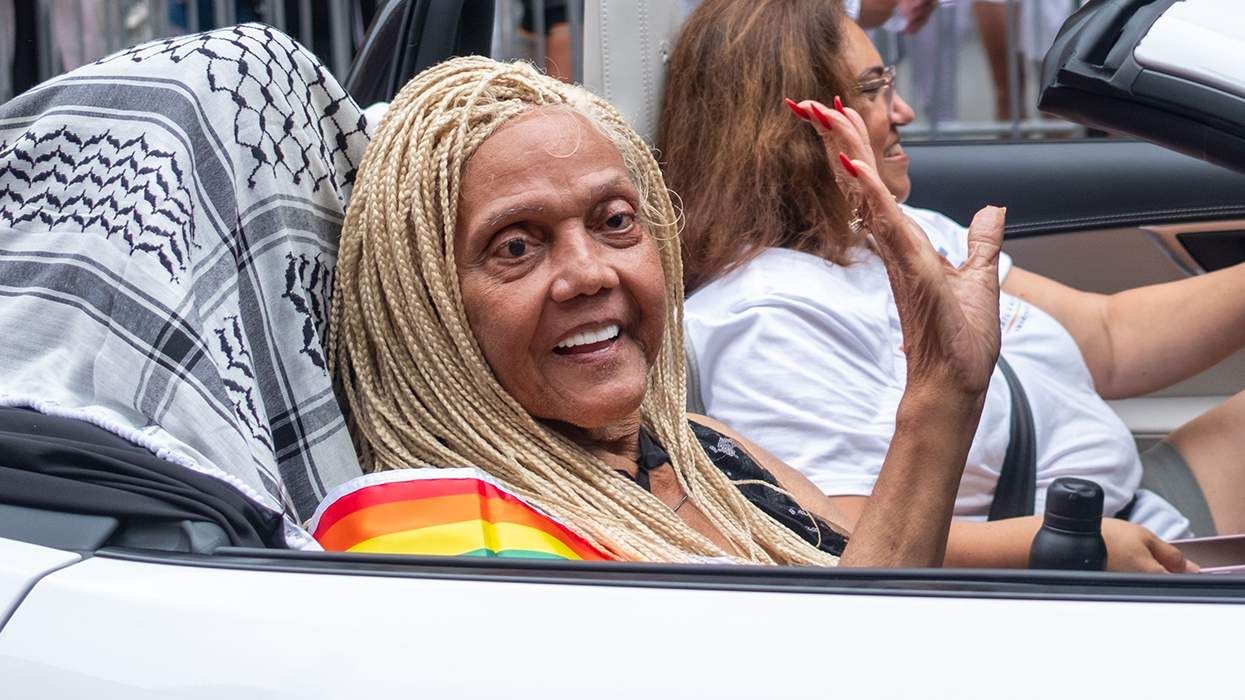

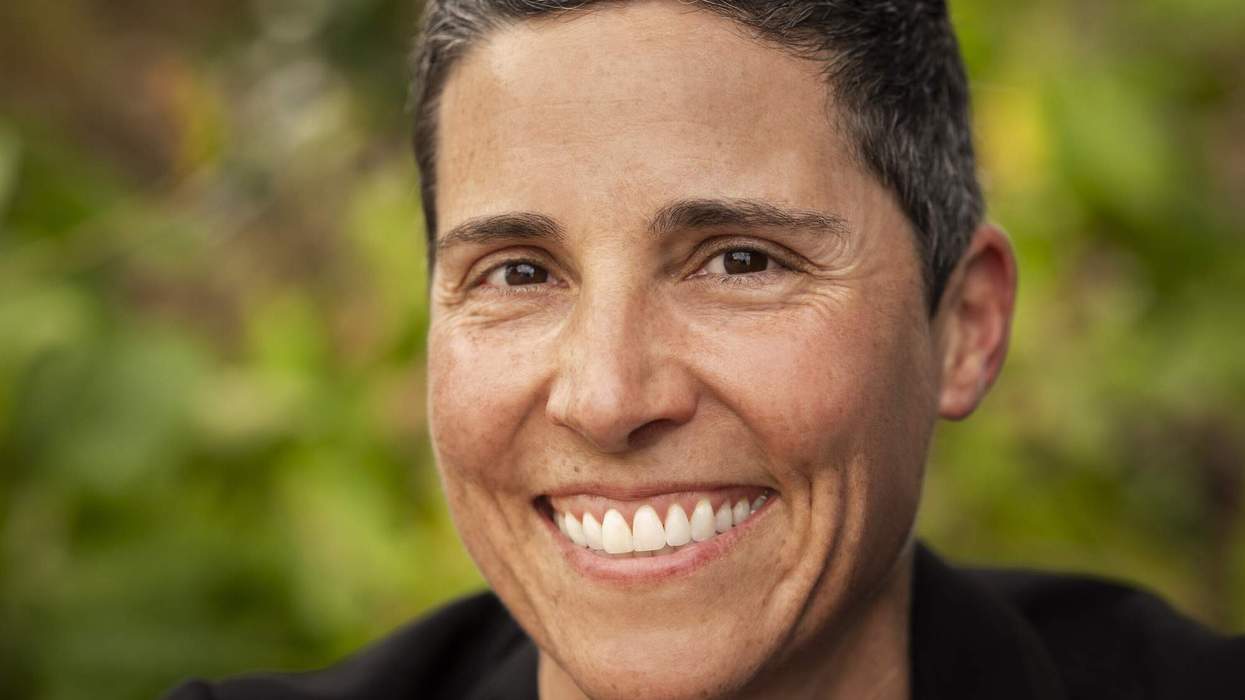
Miss Major Griffin-Gracy, a legendary transgender activist who had been in the movement since Stonewall, died Monday at age 78.
Her death was announced by the House of GG—Griffin-Gracy Retreat and Educational Center, which she founded. She died "in the comfort of her home and surrounded by loved ones in Little Rock, Arkansas," says a statement from the center. "Her enduring legacy is a testament to her resilience, activism, and dedication to creating safe spaces for Black trans communities and all trans people — we are eternally grateful for Miss Major's life, her contributions and how deeply she poured into those she loved."
Miss Major had suffered from health problems for some time and had recently begun receiving hospice care.
She spent more than 50 years fighting for the "trans, gender-nonconforming, and LGB community — especially for Black trans women, trans women of color and those who have survived incarceration and police brutality," the statement continues. Major’s fierce commitment and intersectional approach to justice brought her to care directly for people with HIV/AIDS in New York in the early 1980s, and later to drive San Francisco’s first mobile needle exchange. As director of the TGI Justice Project, she’d return to prisons as a mentor to her ‘gurls’ inside."
She founded House of GG in 2019 as "a space for our community to take a break, swim, enjoy good food, laugh, listen to music, watch movies, and recharge for the ongoing fight for our lives," the statement goes on. "Miss Major fought tirelessly for her people, her love as vast and enduring as the universe she knew herself to be a part of. She was a world builder, a visionary, and unwavering in her devotion to making freedom possible for Black, trans, formerly and currently incarcerated people as well as the larger trans and LGB community. Because of her, countless new possibilities have been made for all of us to thrive — today and for generations to come. She affirmed that our lives hold meaning and that we stand on the shoulders of giants like her, whose courageous love and relentless fight assured our right to live with dignity. We will forever honor her memory, her steadfast presence, and her enduring commitment to our collective liberation."
Miss Major was born October 25, 1946, in Chicago, according to her memoir Miss Major Speaks: Conversations With a Black Trans Revolutionary, written with Toshio Meronek. She was assigned male at birth but knew her true gender was female from an early age, even though she didn’t always have words for it.
She graduated from high school at age 16 and entered college in Minnesota but ran into trouble because she possessed female clothing. In 1962, she moved to New York City, where she worked briefly in a hospital morgue and performed in drag shows, including the Apollo Theater’s famous Jewel Box Review. She also became a sex worker.
Related: What Trans Elder Miss Major Griffin-Gracy Wants You to Know
She participated in the Stonewall uprising of 1969, in which LGBTQ+ people stood up against police harassment at the Stonewall Inn in NYC’s Greenwich Village. Police raids were common, but “I guess we were just sick of their shit,” she said in Miss Major Speaks. “And suddenly we were fighting, and we were kicking their ass.” But the gay rights movement that grew out of Stonewall excluded trans people, she observed in the book.
Later arrested on a robbery charge, she spent time in men’s prisons and mental hospitals in the early 1970s, and she was often severely mistreated. In one of them, however, she met Frank “Big Black” Smith, one of the leaders of the rebellion at the Attica Correctional Facility in New York State, and she has said this experience made her a political person. Upon regaining her freedom, she became an advocate for incarcerated trans people, especially trans women housed in men’s prisons and those who have survived police brutality. She was the first executive director of the Transgender Gender-Variant and Intersex Justice Project, a role she held until she retired in 2015. In that capacity, she often visited trans prisoners and became a mentor to them.
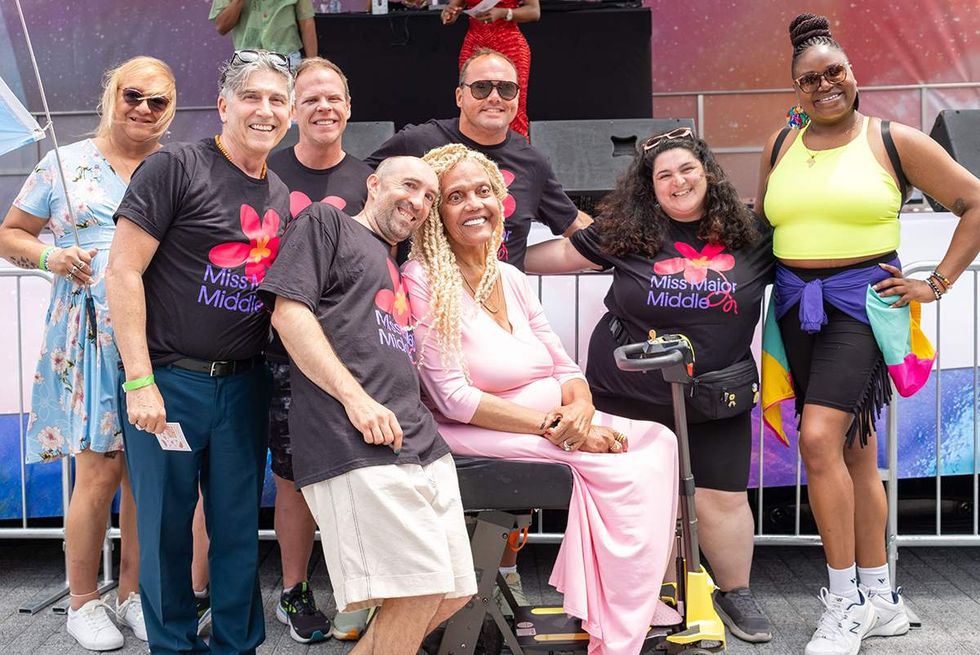 Miss Major Griffin-Gracy (pictured center, in pink) with members of the community during NYC LGBTQ+ Pride festival, 2024Wirestock Creators/Shutterstock
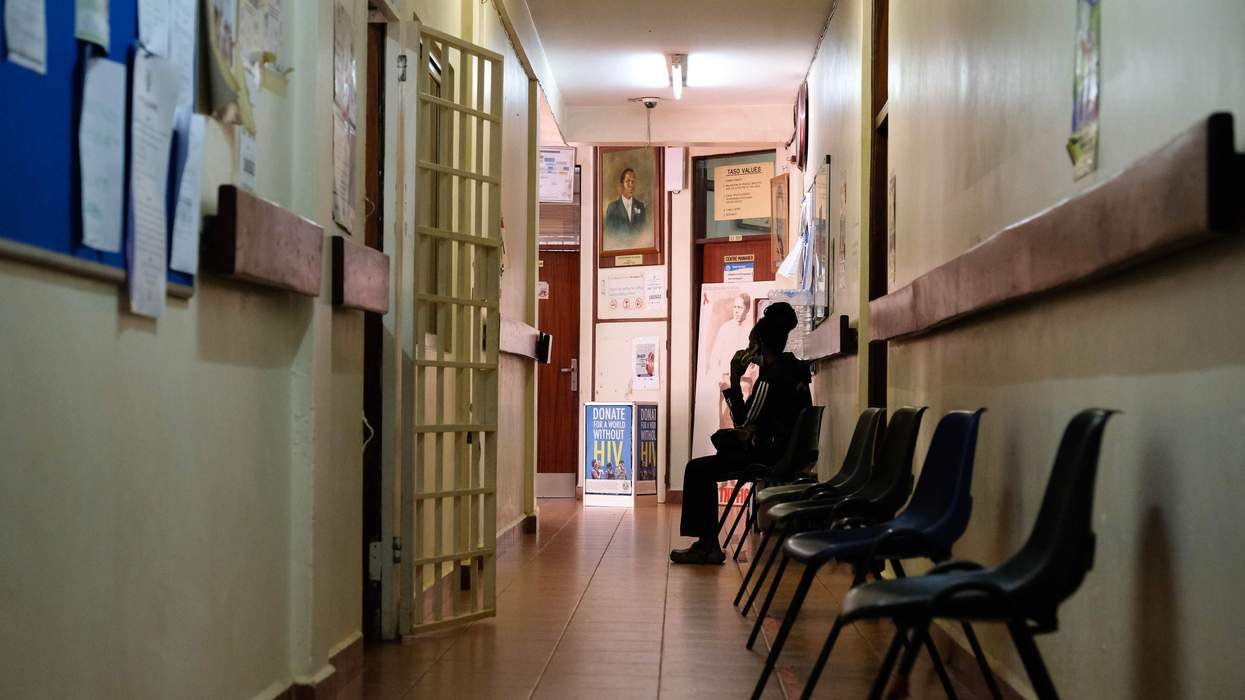
In the 1980s, Miss Major became involved in addressing the AIDS crisis, first in New York. After moving to San Diego with her son Christopher, she started a home health care agency, Angels of Care, to assist people with the disease. She lost a partner, Joe-Bob Michael, to AIDS in 1995. Relocating to San Francisco, she became a health educator with the Tenderloin AIDS Resource Center. She started a drop-in program there for trans people, called GiGi’s Place, and she did street outreach to those who weren’t comfortable with coming to the center. She moved to Little Rock in 2016.
Related: 'Enough is Enough' 10 LGBTQ+ Elders Share Their Words of Wisdom
While Miss Major was often critical of the American political system and the mainstream LGBTQ+ rights movement, she did address the LGBTQ+ Caucus at the Democratic National Convention in Chicago last year. In a powerful and passionate speech, she urged attendees to “put on your best shit and get out there” to defeat Donald Trump.
“I’m not going back. I refuse to go back. And if [Trump] thinks we’re going back, fuck him in his ass,” she said to much applause. She endorsed Kamala Harris for president.
In addition to Christopher, Miss Major is survived by her longtime partner, Beck Witt; sons Asaiah and Jonathon; her many daughters, including Janetta Johnson, her successor at the Miss Major Alexander L. Lee TGIJP Black Trans Cultural Center; her sisters, Tracie O’Brien and Billie Cooper; keeper of spare parts Thom Jeffress; countless community members of who have been shaped by her mentorship and legacy as a leader; and a whole host of family and friends, the statement notes.
Miss Major maintained a sense of joy throughout her life, Meronek wrote in her introduction to their book. “Her joy comes from a place I don’t fully understand,” Meronek observed. “Despite her taste for the macabre — the Saw series of movies are her favorites — she always tempers the dark with earnest sentimentality and optimism.”
Tributes are pouring in from LGBTQ+ rights groups. “All of us at HRC feel a profound sense of loss at the passing of Miss Major Griffin-Gracy,” said a statement from Human Rights Campaign President Kelley Robinson. “She held many roles throughout her life: prison reform and civil rights activist, HIV outreach and prevention educator, executive director, executive producer. To many, though, she was best known as ‘Mom’ — as she mentored and looked over so many younger trans women in the community. A pillar in our community, Miss Major's lifetime of challenging work fundamentally changed and improved the lives of so many, especially Black transgender women. From Stonewall to her HIV activism to her support of so many transgender and gender-nonconforming folks in the South, her legacy is powerful and lasting. We owe her a debt that can never be repaid.”
“Miss Major was my hero and friend for decades," Diego M. Sanchez, vice president for policy and government affairs at PFLAG National, said in a statement. "She was tender, giving, and selfless. She survived with strength and grace when so many Black trans women didn’t and couldn’t. Miss Major never let the world limit her, defining herself unapologetically as the amazing woman she was. She will be forever in my heart."
“We at PFLAG National are deeply saddened to learn of today's passing of Miss Major Griffin-Gracy," added CEO Brian K. Bond. "Her support for young trans people, her work educating on HIV, and her activism on so many fronts not only changed lives; she changed history. While we can never repay the debt of gratitude owed, we can continue building on her work and honoring her legacy with action in support of Black trans people as well as the larger trans and LGBQ+ community. Our thoughts are with her family and all those who knew and loved her.”
“There will never be enough words to fully describe the impact Miss Major had on the LGBTQ+ people, on leaders across movements, on those she loved and were touched by her work and her words," said a statement from Kierra Johnson, president of the National LGBTQ Task Force. "She was a revolutionary, a visionary, a legend — a foundational mother of our movement and an inspiration to those fighting for liberation. She was a sharp and unyielding truth teller. She was also undeniably loving and generous to those who called her Mother, Auntie, colleague and friend. There will never be another like her.
"Mama Major and I chose each other as family. She was a mentor, a sacred inspiration, a strong, brilliant and resilient Black woman who kept it real and loved on me deeply. The hole left in my heart by her ascension is immeasurable, and yet it fills with the stardust she has left behind. Her magic lives on and we will carry on the fight in her name WE ARE because SHE WAS.”
Chase Strangio, co-director of the American Civil Liberties Union's LGBTQ & HIV Project, issued this statement: “Miss Major mothered the entire trans community through decades that spanned the Stonewall rebellion, the AIDS crisis, the ongoing criminalization of sex work, and the backlash to LGBTQ equality waged on the bodies of trans people over the last five years. She showed up in the streets, in state legislatures and city councils, and in court. But above all else, she provided the type of shelter that so many long for and lack in a world of familial, societal, and community rejection.
“When Arkansas became the first state in the country to ban gender affirming medical care for trans adolescents in 2021, Miss Major, having moved to Little Rock to serve her southern trans family after Donald Trump was elected president in 2016, consistently came to court to mobilize in solidarity with the trans young people whose health care was being threatened. She ensured that we never lost touch with our history and that we believed in our power regardless of the outcome of any election, any legislative debate, or any court case. In her honor, we will continue the fight for trans justice, not just in the legal battles we fight but through the love and care we bring to our communities and to this work. Thank you, Miss Major.”
David J. Johns, CEO and Executive Director of the National Black Justice Collective, had this to say:“Miss Major lived her truth loudly and unapologetically for nearly eight decades. From surviving the brutality of incarceration at Attica to standing on the frontlines at Stonewall and beyond, she taught us resilience and love in action. Her pioneering work to center and uplift Black trans women, particularly those who have been incarcerated and faced police brutality, made space for the most powerful and most marginalized members of our community and set the foundation for the freedom work so many of us continue today. ...
“At a time when the rights and dignity of trans people are again under relentless attack, Miss Major’s life reminds us what it means to persevere in the fight for equality so that all LGBTQ+/same-gender loving (SGL) people can live freely and authentically. Her spirit will continue to guide us as we fight for a world where every Black trans person can thrive and live a joy-filled life.
"Thank you, Miss Major, for your pioneering advocacy, for making space for us, and for teaching us that love is liberation. We honor you with our continued commitment to justice in your legacy.”