'%3E%3Cpath d='M16.3574 35.6519H12.9537L15.0491 18.8873L16.3574 35.6519ZM30.4229 54.0093L22.309 0.994385H7.91795L0 54.0093H10.6634L11.5802 46.3855H17.4014L17.9914 54.0093H30.4229Z' fill='%23971B20'/%3E%3Cpath d='M48.2073 41.8813C48.2073 43.4049 47.4892 44.0011 46.1144 44.0011H43.7595V11.0687H46.1144C47.4892 11.0687 48.2073 11.6636 48.2073 13.1885V41.8813ZM59.5273 43.6695V11.3326C59.5273 3.71323 53.5729 0.994385 47.8157 0.994385H31.7213V54.0093H47.8157C53.5729 54.0093 59.5273 51.29 59.5273 43.6695Z' fill='%23971B20'/%3E%3Cpath d='M90.183 0.994385H78.6039L75.0711 30.6157L71.9955 0.994385H59.4346L69.2474 54.0093H80.373L90.183 0.994385Z' fill='%23971B20'/%3E%3Cpath d='M107.063 42.3448C107.063 43.7359 105.951 44.5974 104.643 44.5974C103.269 44.5974 102.157 43.7359 102.157 42.3448V12.658C102.157 11.2676 103.269 10.4058 104.643 10.4058C105.951 10.4058 107.063 11.2676 107.063 12.658V42.3448ZM119.233 43.2723V11.7312C119.233 6.36384 112.952 -3.8147e-06 104.643 -3.8147e-06C96.2667 -3.8147e-06 89.9867 6.36384 89.9867 11.7312V43.2723C89.9867 48.6393 96.2667 55 104.643 55C112.952 55 119.233 48.6393 119.233 43.2723Z' fill='%23971B20'/%3E%3Cpath d='M150.976 43.9349V33.7309H139.069V42.3448C139.069 43.7359 137.957 44.5974 136.582 44.5974C135.076 44.5974 133.964 43.7359 133.964 42.3448V12.658C133.964 11.2676 135.076 10.4058 136.582 10.4058C137.957 10.4058 139.069 11.2676 139.069 12.658V21.2723H150.976V11.0687C150.976 5.70107 145.283 -3.8147e-06 136.582 -3.8147e-06C127.75 -3.8147e-06 121.796 5.70107 121.796 11.0687V43.9349C121.796 49.3022 127.75 55 136.582 55C145.283 55 150.976 49.3022 150.976 43.9349Z' fill='%23971B20'/%3E%3Cpath d='M167.478 35.6519H164.076L166.17 18.8873L167.478 35.6519ZM181.544 54.0093L173.432 0.994385H159.037L151.123 54.0093H161.785L162.704 46.3855H168.523L169.114 54.0093H181.544Z' fill='%23971B20'/%3E%3Cpath d='M205.412 10.4058V0.994385H177.081V10.4058H185.392V54.0093H197.428V10.4058H205.412Z' fill='%23971B20'/%3E%3Cpath d='M230.002 54.0093V43.9349H218.914V31.8746H226.635V21.8028H218.914V10.4058H230.002V0.994385H206.875V54.0093H230.002Z' fill='%23971B20'/%3E%3C/g%3E%3Cdefs%3E%3CclipPath id='clip0_260_7080'%3E%3Crect width='230' height='55' fill='white'/%3E%3C/clipPath%3E%3C/defs%3E%3C/svg%3E)
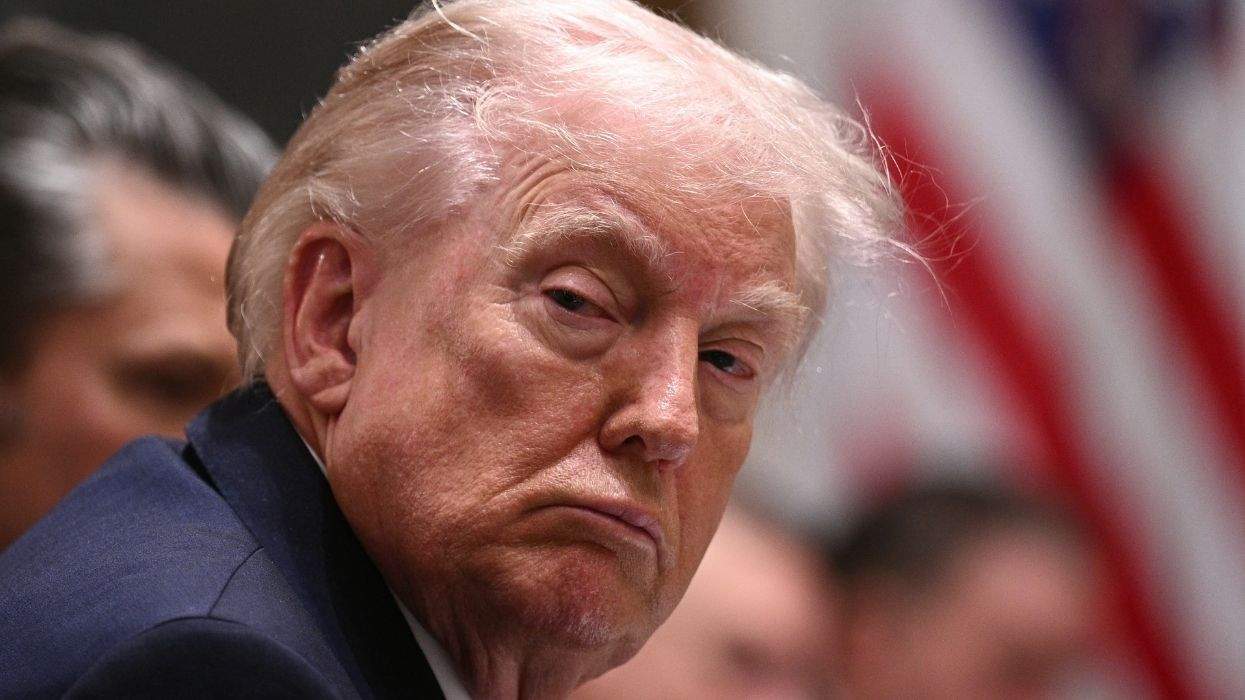
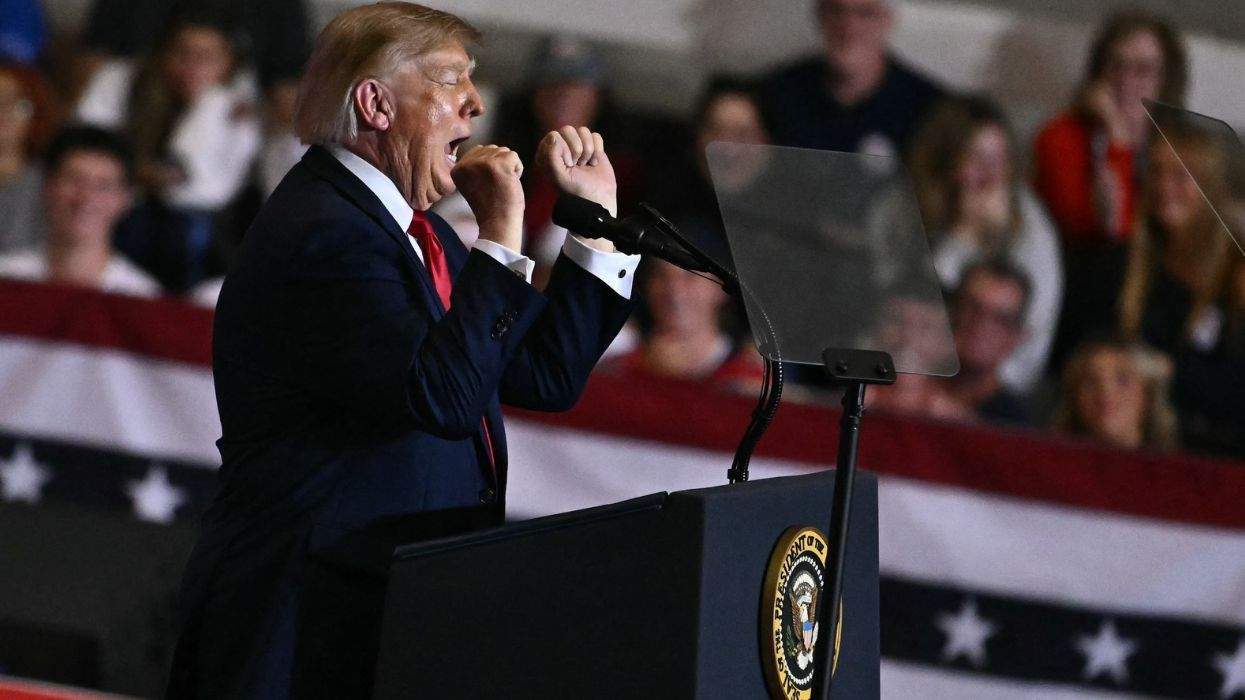
President Donald Trump said Wednesday that the fatal shootings of Alex Pretti and Renée Good by Department of Homeland Security officers in Minneapolis “should have not happened,” offering his most direct acknowledgment yet that two of the most consequential deaths of his second term were unjustified, even as he continued to defend the broader aims of his immigration crackdown.
Keep up with the latest in LGBTQ+ news and politics. Sign up for The Advocate's email newsletter.
In an exclusive interview with NBC Nightly News anchor Tom Llamas at the White House, Trump said he was “not happy with the two incidents,” adding, “It’s both of ’em, not one or the other.” He went on to claim that Pretti “was not an angel” and that Good “was not an angel."
Pressed on whether anything about either person justified what happened to them, Trump drew a clearer line. “No, I don’t,” he said. “It should have not happened. … It was, to me, a very sad incident. Two incidents.”
President Trump talks Minneapol…
Related: Renee Good's family will be represented by the same lawyer as George Floyd
Related: Renee Good's family reveals she randomly encountered ICE and stopped to observe
Both Pretti and Good were U.S. citizens, killed weeks apart during Minnesota DHS operations led by Border Patrol commander Greg Bovino that turned Minneapolis into a national flashpoint. Their deaths sparked protests, drew condemnation from civil rights groups, and prompted renewed scrutiny of what critics describe as the creeping militarization of immigration enforcement inside American cities. Last week, Trump removed Bovino from the operation and appointed White House border czar Tom Homan to lead the response.
The president’s remarks came just a day after Good’s brothers, Luke and Brent Ganger, appeared before a congressional forum to describe their sister not as a threat, but as a mother, a sister, and a woman whose life was abruptly and violently cut short.
Related: Who is Jonathan Ross? ICE agent who killed Renee Good once broke a suspect's car window
Related: Renee Good's family shares independent autopsy results, says DOJ is withholding evidence
Sitting before members of Congress, the brothers spoke about the void Good’s death left in her family and in the lives of her children, rejecting portrayals that cast her as anything other than a civilian who should have gone home that day. Their appearance added emotional gravity to a hearing already shaped by anger and grief, and it sharpened the political pressure now bearing down on the administration.
Trump, in his interview, appeared to try to strike a careful and uneasy balance. He said he would “always be with our great people of law enforcement, ICE, police,” arguing that “if we don’t back them, we don’t have a country.” At the same time, he acknowledged that the two killings had crossed a line. “Nobody could be happy,” he said, adding that agents themselves felt the weight of what had happened.
Related: Trump tries to smear Renee Good and her wife for ICE killing
Related: Powerful House Oversight Democrat calls for Kristi Noem’s impeachment & ICE abolishment
The president also suggested that Minneapolis had changed his thinking about tactics. “I learned that maybe we can use a little bit of a softer touch,” he said, even as he insisted that officers still have to be “tough” because, in his words, they are dealing with hardened criminals.
Trump’s interview also came as Homan announced that 700 federal officers would be pulled back from Minneapolis, a partial retreat from a surge that had inflamed tensions with local leaders. Trump said he did not want to “force ourselves into a city” without cooperation from mayors or governors, hinting at a more conditional approach to future deployments.
Watch Donald Trump's interview with NBC News anchor Tom Llamas below.
- YouTube www.youtube.com