'%3E%3Cpath d='M16.3574 35.6519H12.9537L15.0491 18.8873L16.3574 35.6519ZM30.4229 54.0093L22.309 0.994385H7.91795L0 54.0093H10.6634L11.5802 46.3855H17.4014L17.9914 54.0093H30.4229Z' fill='%23971B20'/%3E%3Cpath d='M48.2073 41.8813C48.2073 43.4049 47.4892 44.0011 46.1144 44.0011H43.7595V11.0687H46.1144C47.4892 11.0687 48.2073 11.6636 48.2073 13.1885V41.8813ZM59.5273 43.6695V11.3326C59.5273 3.71323 53.5729 0.994385 47.8157 0.994385H31.7213V54.0093H47.8157C53.5729 54.0093 59.5273 51.29 59.5273 43.6695Z' fill='%23971B20'/%3E%3Cpath d='M90.183 0.994385H78.6039L75.0711 30.6157L71.9955 0.994385H59.4346L69.2474 54.0093H80.373L90.183 0.994385Z' fill='%23971B20'/%3E%3Cpath d='M107.063 42.3448C107.063 43.7359 105.951 44.5974 104.643 44.5974C103.269 44.5974 102.157 43.7359 102.157 42.3448V12.658C102.157 11.2676 103.269 10.4058 104.643 10.4058C105.951 10.4058 107.063 11.2676 107.063 12.658V42.3448ZM119.233 43.2723V11.7312C119.233 6.36384 112.952 -3.8147e-06 104.643 -3.8147e-06C96.2667 -3.8147e-06 89.9867 6.36384 89.9867 11.7312V43.2723C89.9867 48.6393 96.2667 55 104.643 55C112.952 55 119.233 48.6393 119.233 43.2723Z' fill='%23971B20'/%3E%3Cpath d='M150.976 43.9349V33.7309H139.069V42.3448C139.069 43.7359 137.957 44.5974 136.582 44.5974C135.076 44.5974 133.964 43.7359 133.964 42.3448V12.658C133.964 11.2676 135.076 10.4058 136.582 10.4058C137.957 10.4058 139.069 11.2676 139.069 12.658V21.2723H150.976V11.0687C150.976 5.70107 145.283 -3.8147e-06 136.582 -3.8147e-06C127.75 -3.8147e-06 121.796 5.70107 121.796 11.0687V43.9349C121.796 49.3022 127.75 55 136.582 55C145.283 55 150.976 49.3022 150.976 43.9349Z' fill='%23971B20'/%3E%3Cpath d='M167.478 35.6519H164.076L166.17 18.8873L167.478 35.6519ZM181.544 54.0093L173.432 0.994385H159.037L151.123 54.0093H161.785L162.704 46.3855H168.523L169.114 54.0093H181.544Z' fill='%23971B20'/%3E%3Cpath d='M205.412 10.4058V0.994385H177.081V10.4058H185.392V54.0093H197.428V10.4058H205.412Z' fill='%23971B20'/%3E%3Cpath d='M230.002 54.0093V43.9349H218.914V31.8746H226.635V21.8028H218.914V10.4058H230.002V0.994385H206.875V54.0093H230.002Z' fill='%23971B20'/%3E%3C/g%3E%3Cdefs%3E%3CclipPath id='clip0_260_7080'%3E%3Crect width='230' height='55' fill='white'/%3E%3C/clipPath%3E%3C/defs%3E%3C/svg%3E)


Passing good bills and stalling bad ones
Rainbow flag and scales of justice
vetre/Shutterstock
Although more than 20 states enacted anti-LGBTQ+ laws this year, three states passed supportive ones, and anti-LGBTQ+ legislation withered on the vine in several others. Some conservative states made the list for most failed bills because they such saw a huge volume of such legislation introduced that it was impossible to pass all of it. Here are the 10 states that passed the most pro-LGBTQ+ legislation or had the largest number of bad bills fail. Most of the bill counts are based on information from the American Civil Liberties Union.
Related: The 10 states that have passed the most anti-LGBTQ+ laws this year — and how locals are fighting back
California
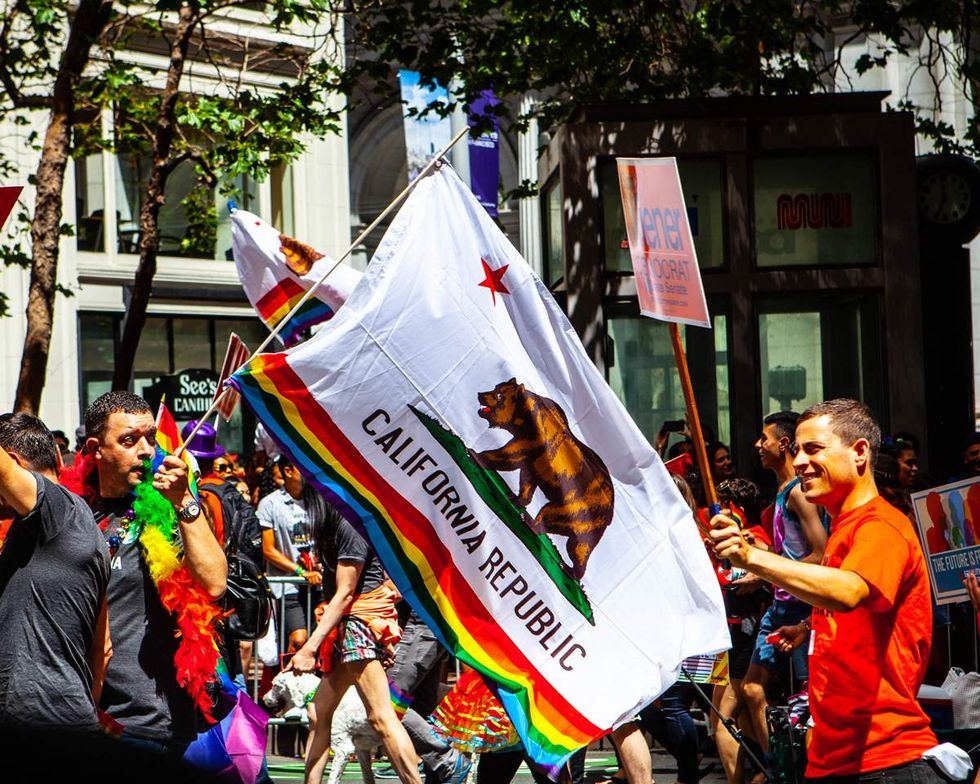
A Pride parade in San Francisco
Lets Design Studio/Shutterstock
As it often is, California was a leader in LGBTQ+ rights in 2025. Democratic Gov. Gavin Newsom, who’s considering a presidential run in 2028, has some doubting his commitment to the transgender community because of his infamous podcast with the late Charlie Kirk, but he did sign six pro-LGBTQ+ or specifically pro-trans bills into law this year while vetoing three.
Those he signed strengthened confidentiality in health care, including for drugs used in gender-affirming care and abortion; sealed transgender and nonbinary adults’ gender transition court records, a privacy protection already available to minors; made paid family leave protections more inclusive of LGBTQ+ people; allowed out-of-state queer couples to access in-state channels when adopting California-born children; mandated that universities provide all students with LGBTQ-specific suicide hotline information; and made it easier to change one's legal name and gender on official documents. He vetoed bills requiring insurers to cover up to a year’s worth of prescribed hormones and to cover HIV prevention drugs without prior authorization. The third bill he vetoed would have required an inclusive view of gender in health education classes. He said the legislation should wait until a state study of health curricula was done.
Also in California, two anti-trans bills failed in committee. One sought to ban trans students from school sports teams, and the other combined a sports ban and restroom restrictions.
Colorado
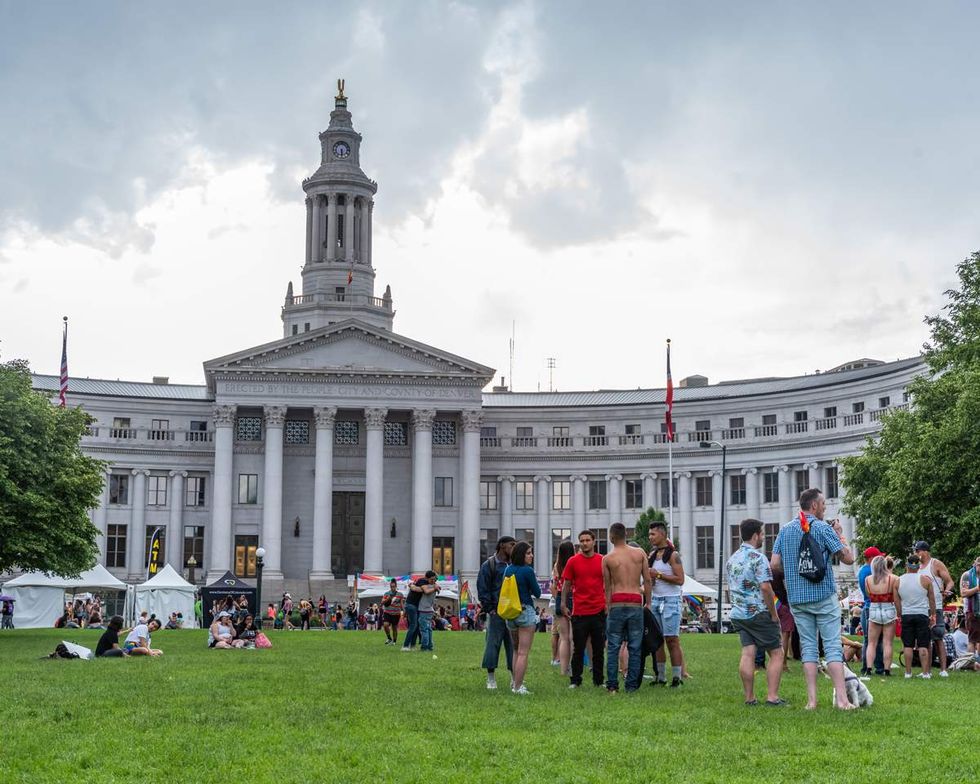
Denver Pride on the lawn outside of the City Council Building
Charles Goudy/Shutterstock
Democratic Colorado Gov. Jared Polis, a gay man, signed three pro-LGBTQ+ bills into law this year. One repealed a state statute that banned same-sex marriage. It had been unenforceable since the U.S. Supreme Court’s marriage equality decision in 2015, but it could have gone into effect if the high court overturned that ruling. Colorado voters had already repealed a similar ban in the state constitution. Polis also signed the Kelly Loving Act, named after a trans victim of the Club Q mass shooting, which classifies intentional deadnaming or misgendering as discrimination, requires schools to recognize students’ chosen names and allow any choice of clothing that doesn’t violate the dress code, and lets people change their gender marker on a state-issued ID without a court order. The third bill requires insurers to cover gender-affirming care that a doctor deems medically necessary. Four anti-trans bills failed to advance in the legislature before the session ended. They all sought to restrict gender-affirming care for minors, and one additionally would force schools to out trans students to their parents.
Massachusetts
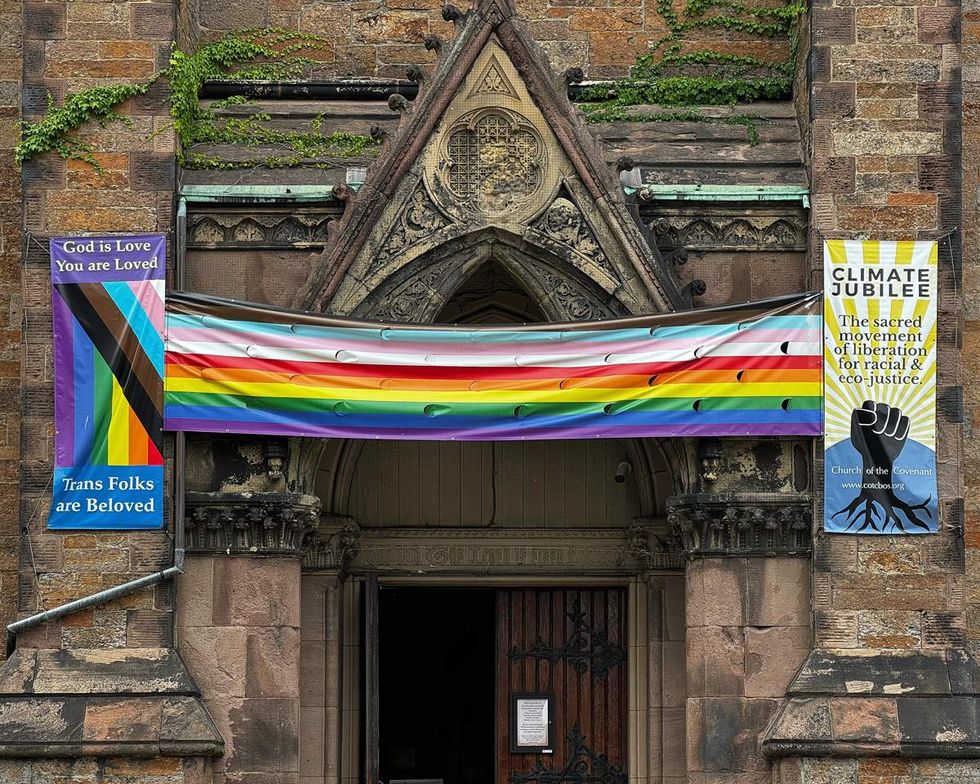
An LGBTQ-inclusive church in Back Bay, Boston
Steve Rosenbach/Shutterstock
Massachusetts Gov. Maura Healey, a Democrat and one of only two out lesbian governors in the nation, signed a bill strengthening the state’s shield law for abortion and gender-affirming care. The original shield law, signed by Gov. Charlie Baker in 2022, keeps states that have banned the lifesaving treatment from punishing those who travel to Massachusetts to receive it by preventing the release of information or the arrest and extradition of someone based on another state’s court orders. The new law further prevents the disclosure of sensitive data, such as a physician’s name, and prohibits local law enforcement from cooperating with other jurisdictions in their investigations. It also directs the Department of Public Health to create an advisory group to help guide businesses as they implement privacy protections for storing or managing electronic medical records.
Five anti-trans bills were introduced in Massachusetts this year, three of them school sports bans, one seeking to ban gender-affirming care for minors, and the other a curriculum censorship and forced outing bill. They were all referred to committees. One of the school sports bans was voted down in committee, while the others remain pending but are unlikely to pass before the legislative session ends this month.
Texas
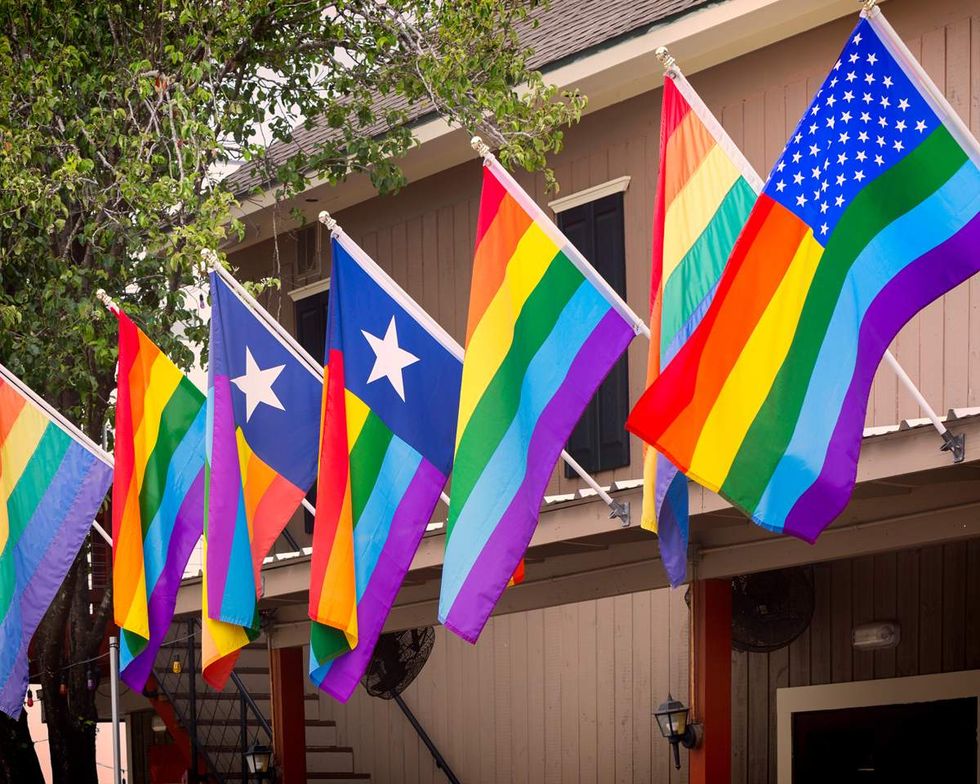
Rainbow Pride flags on display in Houston
michelmond/Shutterstock
Texas enacted five anti-LGBTQ+ laws this year, but that was out of a whopping 97 bills introduced, by the ACLU’s count; other sources say more than 100. So all but five failed to advance before the legislative session ended, making Texas not only one of the top 10 states for passage of anti-LGBTQ+ legislation but one of the top 10 for failure of such bills. Those that didn’t advance included curriculum censorship bills, religious exemptions, protections for those who don’t use a person’s chosen pronouns, school sports and health care restrictions beyond what the state already has, one that would create a felony charge of “gender identity fraud,” and a ban on diversity, equity, and inclusion initiatives. Several anti-trans public accommodations bills were introduced as well, in addition to the bathroom bill that passed when the legislature reconvened in late summer after the return of Democrats who had left the state in hopes of stopping Republican redistricting legislation.
“We’re hearing rhetoric that we’ve heard for a very long time and just more, more bills, a variety of new ways to narrow the rights of trans people,” Jonathan Gooch, communications director for Equality Texas, told The Texas Tribune in May, warning that many of these bills may be revived in future sessions. “It just doesn’t come as a mistake that the number of bills is escalating.”
Related: Texas Democrats fleeing the state also stopped anti-abortion and anti-trans bills
Mississippi

A rainbow flag flies at the entrance of a VA center in Biloxi, Mississippi
Mississippi saw 22 anti-LGBTQ+ bills introduced this year, but only two became law. One deals with restrooms and changing rooms in prisons, saying they must be segregated by sex assigned at birth. Republican Gov. Tate Reeves signed it into law in March. The other is an anti-DEI bill currently blocked by a court. Reeves vetoed legislation that would have banned Medicaid funding for gender-affirming care because, he said, other provisions of the bill would greatly increase costs for the state’s Medicaid program. The other bills that didn’t become law included curriculum censorship, forced outing, college dormitory restrictions, and religious exemptions measures.
Virginia
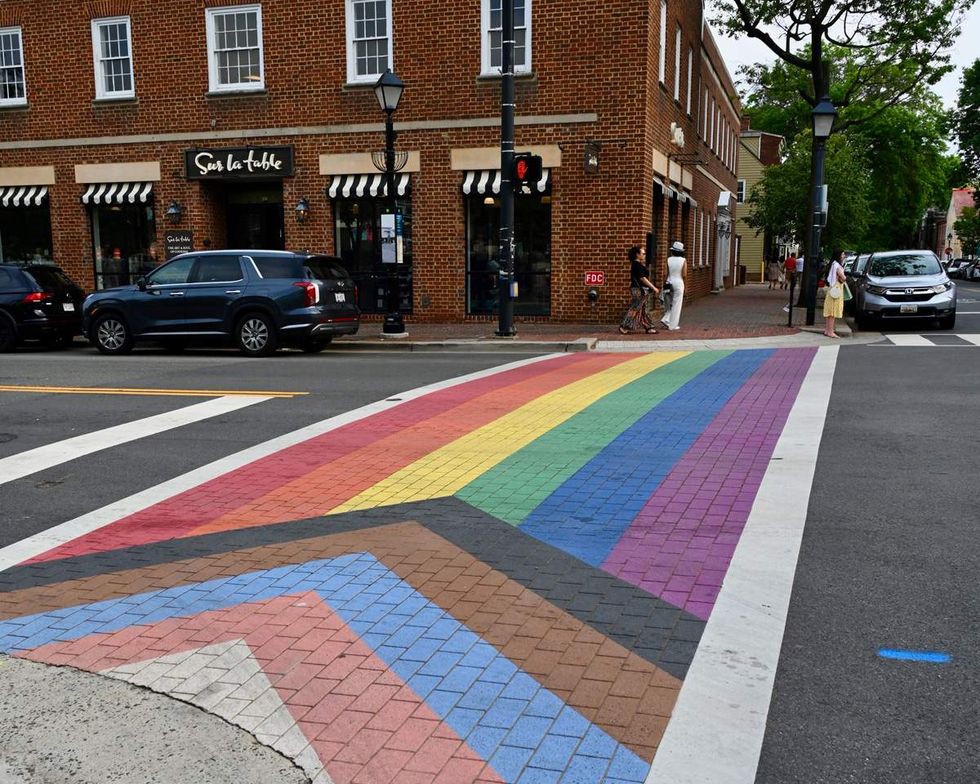
Pride flag painted on a crosswalk in Old Town Alexandria, Virginia
John M. Chase/Shutterstock
In Virginia, a purple state that is becoming much bluer, 17 anti-LGBTQ+ bills were introduced, and none became law, with most dying in committee. They would have banned gender-affirming care for minors, put a binary definition of sex into state law, forced the outing of trans students, restricted school sports participation by trans youth, and more. However, even though the sports bills did not pass, the Virginia High School League barred trans girls from female teams because of Donald Trump’s executive order threatening federal funding over trans inclusion in school sports.
Related: Newly elected Virginia lieutenant governor appoints LGBTQ+ advocate to transition team
Connecticut

People protest the Trump administration on 'No Kings Day'
Adam McCullough/Shutterstock
Connecticut kept 11 anti-LGBTQ+ bills at bay until the legislative session ended. These included school sports bans and restrictions on gender-affirming care for youth. The state has a Democratic governor and Democratic majorities in both its House and Senate, so these bills had little to no chance of advancing.
Idaho
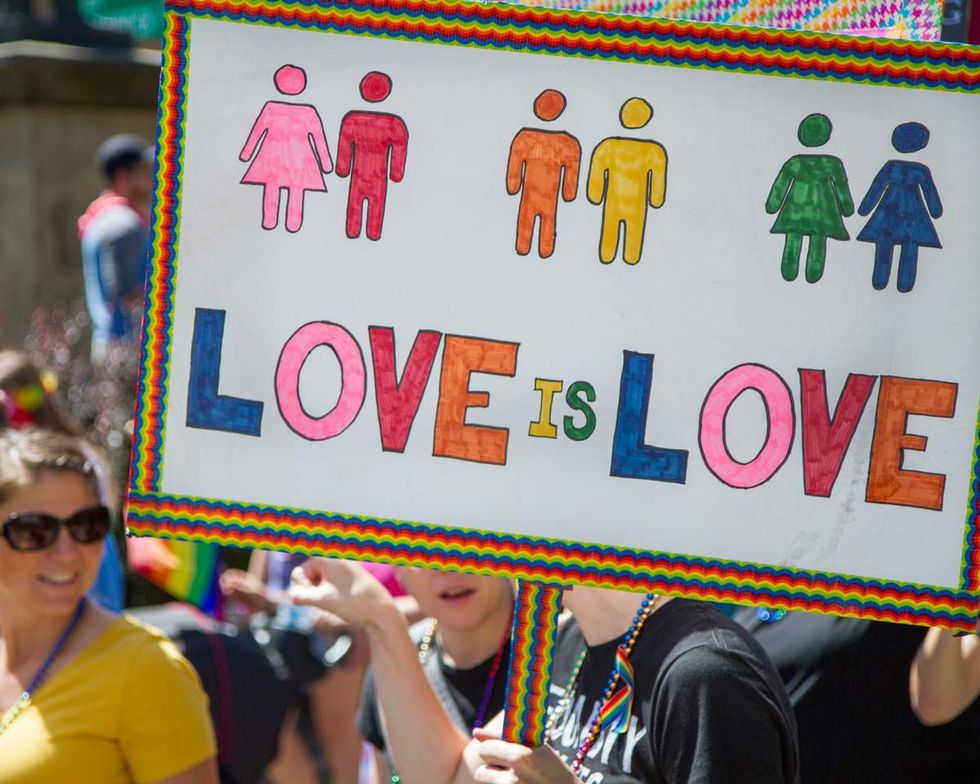
A Pride festival in Boise, Idaho
txking/Shutterstock
Idaho passed seven anti-LGBTQ+ bills into law this year, tying it with neighbor Wyoming for the most, but nine others failed, mostly by dying in committee. So Idaho, like Texas, makes both the list of states that passed the most bad legislation and the list of those that defeated the most. Failed bills included ones that would censor school curricula, restrict health care funding, ban Pride flags, and penalize "indecent" performances such as drag shows.
Arizona
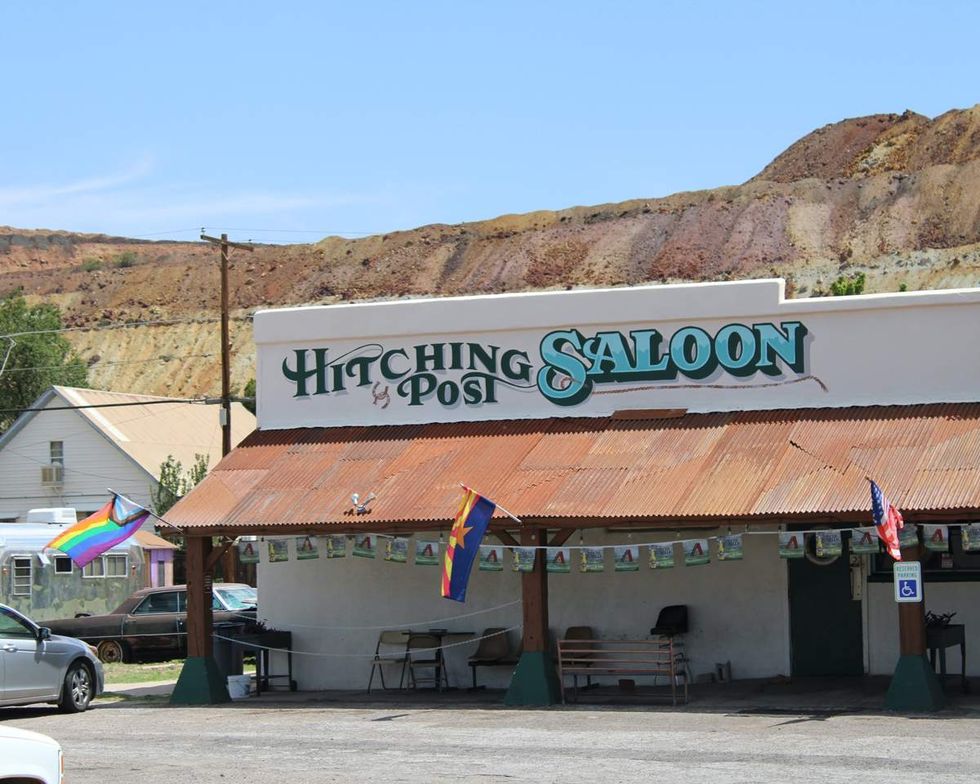
An inclusive LGBTQ+ flag on a business in the rural town of Bisbee, Arizona
Charlotte Evelyn/Shutterstock
Arizona saw eight anti-LGBTQ+ bills introduced, and none became law. Gov. Katie Hobbs, a Democrat with a Republican-controlled legislature, vetoed five of the bills. These included the establishment of a right to sue over gender-affirming care, a ban on use of students’ chosen pronouns, and a ban on changes to the gender marker on birth certificates. Regarding the latter, Hobbs issued this statement: “Today, I vetoed House Bill 2438. This bill will not lower costs, will not increase opportunity, and will not enhance security or freedom for Arizona. I encourage the Legislature to focus on real issues that matter and impact people’s everyday lives.” Another vetoed bill would have created “a byzantine system” of school restroom regulations, as the Phoenix New Times put it. Columnist Erin Reed of Erin in the Morning classifies two other Arizona bills in addition to the ACLU’s count as anti-LGBTQ+, as they sought to ban DEI programs, specifically mentioning initiatives regarding sexual orientation or gender identity. Hobbs vetoed these as well.
Oregon
Group of protesters at Antifa demonstration
Alexander Oganezov/Shutterstock
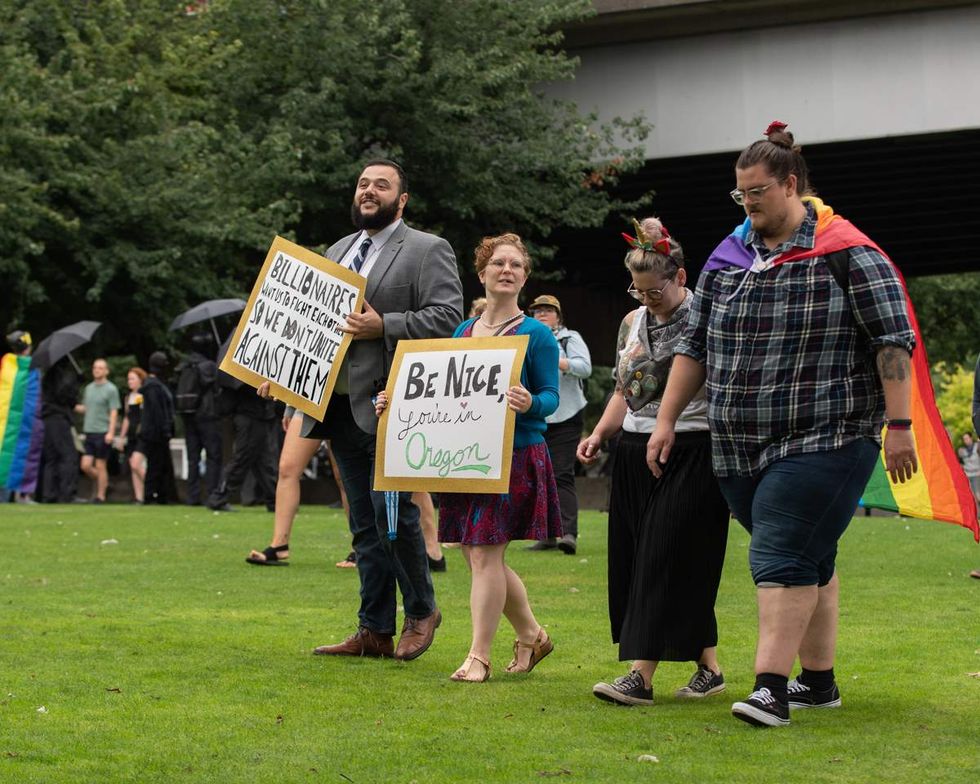
Oregon saw eight anti-LGBTQ+ bills introduced, and they all stalled in committee. These included restrictions on gender-affirming care as well as trans students’ sports participation and restroom use, establishment of religious exemptions, and removal of “gender identity” from certain laws. Oregon has a Democratic governor — Tina Kotek, a lesbian — and Democratic majorities in both legislative chambers, so these measures were doomed.