'%3E%3Cpath d='M16.3574 35.6519H12.9537L15.0491 18.8873L16.3574 35.6519ZM30.4229 54.0093L22.309 0.994385H7.91795L0 54.0093H10.6634L11.5802 46.3855H17.4014L17.9914 54.0093H30.4229Z' fill='%23971B20'/%3E%3Cpath d='M48.2073 41.8813C48.2073 43.4049 47.4892 44.0011 46.1144 44.0011H43.7595V11.0687H46.1144C47.4892 11.0687 48.2073 11.6636 48.2073 13.1885V41.8813ZM59.5273 43.6695V11.3326C59.5273 3.71323 53.5729 0.994385 47.8157 0.994385H31.7213V54.0093H47.8157C53.5729 54.0093 59.5273 51.29 59.5273 43.6695Z' fill='%23971B20'/%3E%3Cpath d='M90.183 0.994385H78.6039L75.0711 30.6157L71.9955 0.994385H59.4346L69.2474 54.0093H80.373L90.183 0.994385Z' fill='%23971B20'/%3E%3Cpath d='M107.063 42.3448C107.063 43.7359 105.951 44.5974 104.643 44.5974C103.269 44.5974 102.157 43.7359 102.157 42.3448V12.658C102.157 11.2676 103.269 10.4058 104.643 10.4058C105.951 10.4058 107.063 11.2676 107.063 12.658V42.3448ZM119.233 43.2723V11.7312C119.233 6.36384 112.952 -3.8147e-06 104.643 -3.8147e-06C96.2667 -3.8147e-06 89.9867 6.36384 89.9867 11.7312V43.2723C89.9867 48.6393 96.2667 55 104.643 55C112.952 55 119.233 48.6393 119.233 43.2723Z' fill='%23971B20'/%3E%3Cpath d='M150.976 43.9349V33.7309H139.069V42.3448C139.069 43.7359 137.957 44.5974 136.582 44.5974C135.076 44.5974 133.964 43.7359 133.964 42.3448V12.658C133.964 11.2676 135.076 10.4058 136.582 10.4058C137.957 10.4058 139.069 11.2676 139.069 12.658V21.2723H150.976V11.0687C150.976 5.70107 145.283 -3.8147e-06 136.582 -3.8147e-06C127.75 -3.8147e-06 121.796 5.70107 121.796 11.0687V43.9349C121.796 49.3022 127.75 55 136.582 55C145.283 55 150.976 49.3022 150.976 43.9349Z' fill='%23971B20'/%3E%3Cpath d='M167.478 35.6519H164.076L166.17 18.8873L167.478 35.6519ZM181.544 54.0093L173.432 0.994385H159.037L151.123 54.0093H161.785L162.704 46.3855H168.523L169.114 54.0093H181.544Z' fill='%23971B20'/%3E%3Cpath d='M205.412 10.4058V0.994385H177.081V10.4058H185.392V54.0093H197.428V10.4058H205.412Z' fill='%23971B20'/%3E%3Cpath d='M230.002 54.0093V43.9349H218.914V31.8746H226.635V21.8028H218.914V10.4058H230.002V0.994385H206.875V54.0093H230.002Z' fill='%23971B20'/%3E%3C/g%3E%3Cdefs%3E%3CclipPath id='clip0_260_7080'%3E%3Crect width='230' height='55' fill='white'/%3E%3C/clipPath%3E%3C/defs%3E%3C/svg%3E)
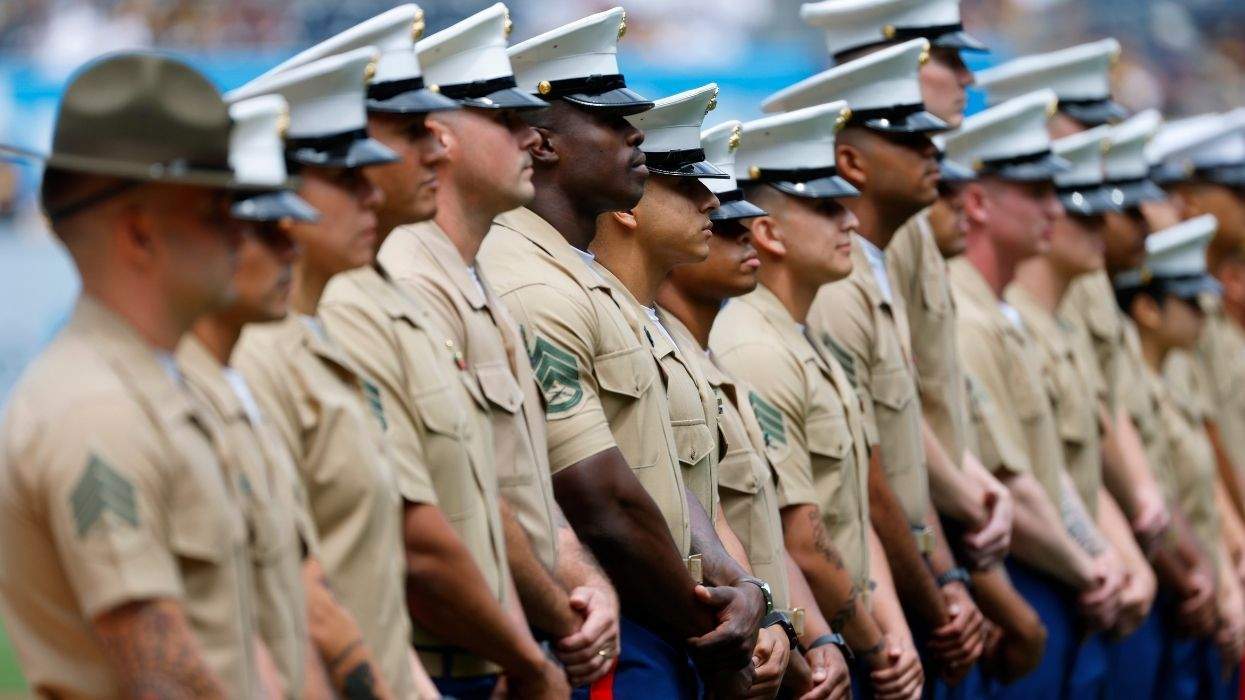
A ban on transgender military service ordered by President Donald Trump within days of taking office, the second time, has left thousands of service members in an unusual and costly limbo. They are still on the payroll but barred from performing the jobs they were trained to do.
For Sabrina Bruce, a Space Force master sergeant who led a cybersecurity team protecting classified satellites, the impact was immediate and operational. Bruce was removed from her post and left on the personnel rolls, meaning her position could not be filled even as critical national security work continued.
“I was just gone,” Bruce told the New York Times.
In an earlier interview with The Advocate, Bruce warned that sidelining highly trained transgender service members does not just affect individuals but weakens the military itself. Removing experienced personnel from specialized roles midstream, she said, creates gaps that are not easily or quickly replaced.
Related: Pentagon spent more on lobster in one month than it did on trans health care all year
Related: Pentagon's waiver for transgender troops forces them to deny their identities, court filing shows
The policy, issued days after Trump took office, was framed by the administration as a move to improve military readiness and reduce costs. But the reality described by affected troops is far messier. Highly trained pilots, doctors, lawyers, and intelligence specialists have been pulled from their posts, often with little notice, and left waiting months for discharge decisions while continuing to collect full pay, the New York Times reports.
Among them is Army Capt. Katie Benn, a decorated air defense officer who had spent 13 years in service and was preparing to deploy to Iraq when she was abruptly told she could not go because she is trans. Nearly a year later, she remains sidelined at home, her bags still packed, waiting for orders that have not come. “I’m trained to take care of soldiers,” she told the Times, “and my soldiers are over there in harm’s way.”
The disruption has cut across ranks and specialties. Navy Chief Petty Officer Parker Moore, who supervised roughly 80 sailors running the nuclear reactor aboard the aircraft carrier U.S.S. Abraham Lincoln, was pulled from duty despite a senior commander warning that Moore’s technical expertise was essential. The ship deployed without Moore, who was later discharged as it entered combat operations, the paper reports.
In the Army’s legal corps, Capt. Ryan Gunderman saw a career cut short after the military paid for three years of law school at Harvard in exchange for six years of service. According to the Times, Gunderman had served less than two years when she was placed on leave, then discharged after months of waiting. “They spent more than half a million dollars on me,” she said.
Others have tried to salvage their careers outside the military. Alyxandra Demetrides, a Blackhawk helicopter pilot deployed in Thailand when the ban took effect, was sent home and spent nearly a year on paid leave before being discharged. She has since retrained as a commercial airline pilot.
For many, the impact has been deeply personal. Army Sgt. 1st Class Julia Becraft, a Bronze Star recipient who deployed three times to Afghanistan, had been slated to lead a platoon before she was ordered to stay away from her unit and placed on leave. The sudden removal led her to seek inpatient mental health care. “It makes you lose faith in the whole system,” she said.
Even those who have tried to fight the decision have faced a pre-determined outcome. Army Sgt. Clara Davis, a military police officer who led investigations and supervised patrols, challenged her separation before a review board but was not allowed to participate unless she conformed to male grooming and uniform standards. She refused and was separated after a hearing in which she could not speak. She remains in limbo awaiting final discharge.
The Pentagon has not publicly disclosed how many service members have been affected or the total cost of paying troops who are not allowed to work. The government told judges last year that about 4,240 transgender troops served in the military, a fraction of the overall force.
The financial rationale for the ban has been undercut by the government’s own data. The Defense Department said in a court filing that it spent about $52 million over a decade on transgender-related medical care, a tiny share of its health budget. In a striking comparison, the military spent more on lobster and crab in a single month than it typically spends in a year on care for transgender troops.
Defense Secretary Pete Hegseth has defended the ban, arguing that transgender identity is incompatible with military standards.
But a recent analysis published in the International Journal of Transgender Health and reported by The Advocate in March found no evidence to support those claims. The review of 58 studies concluded that transgender service members do not undermine readiness, unit cohesion, or deployability, and that the cost of their medical care is negligible compared to overall military health spending. Researchers found that poorer outcomes among trans troops are linked to discrimination and stigma, not their ability to serve.
The Defense Department declined to comment to the Times on the operational or financial impact of the ban.
Legal challenges are ongoing. Two federal lawsuits, Shiling v. United States, out of Washington state, and Talbott v. United States, out of Washington, D.C., are still pending, though the U.S. Supreme Court allowed the ban to take effect while litigation proceeds.