'%3E%3Cpath d='M16.3574 35.6519H12.9537L15.0491 18.8873L16.3574 35.6519ZM30.4229 54.0093L22.309 0.994385H7.91795L0 54.0093H10.6634L11.5802 46.3855H17.4014L17.9914 54.0093H30.4229Z' fill='%23971B20'/%3E%3Cpath d='M48.2073 41.8813C48.2073 43.4049 47.4892 44.0011 46.1144 44.0011H43.7595V11.0687H46.1144C47.4892 11.0687 48.2073 11.6636 48.2073 13.1885V41.8813ZM59.5273 43.6695V11.3326C59.5273 3.71323 53.5729 0.994385 47.8157 0.994385H31.7213V54.0093H47.8157C53.5729 54.0093 59.5273 51.29 59.5273 43.6695Z' fill='%23971B20'/%3E%3Cpath d='M90.183 0.994385H78.6039L75.0711 30.6157L71.9955 0.994385H59.4346L69.2474 54.0093H80.373L90.183 0.994385Z' fill='%23971B20'/%3E%3Cpath d='M107.063 42.3448C107.063 43.7359 105.951 44.5974 104.643 44.5974C103.269 44.5974 102.157 43.7359 102.157 42.3448V12.658C102.157 11.2676 103.269 10.4058 104.643 10.4058C105.951 10.4058 107.063 11.2676 107.063 12.658V42.3448ZM119.233 43.2723V11.7312C119.233 6.36384 112.952 -3.8147e-06 104.643 -3.8147e-06C96.2667 -3.8147e-06 89.9867 6.36384 89.9867 11.7312V43.2723C89.9867 48.6393 96.2667 55 104.643 55C112.952 55 119.233 48.6393 119.233 43.2723Z' fill='%23971B20'/%3E%3Cpath d='M150.976 43.9349V33.7309H139.069V42.3448C139.069 43.7359 137.957 44.5974 136.582 44.5974C135.076 44.5974 133.964 43.7359 133.964 42.3448V12.658C133.964 11.2676 135.076 10.4058 136.582 10.4058C137.957 10.4058 139.069 11.2676 139.069 12.658V21.2723H150.976V11.0687C150.976 5.70107 145.283 -3.8147e-06 136.582 -3.8147e-06C127.75 -3.8147e-06 121.796 5.70107 121.796 11.0687V43.9349C121.796 49.3022 127.75 55 136.582 55C145.283 55 150.976 49.3022 150.976 43.9349Z' fill='%23971B20'/%3E%3Cpath d='M167.478 35.6519H164.076L166.17 18.8873L167.478 35.6519ZM181.544 54.0093L173.432 0.994385H159.037L151.123 54.0093H161.785L162.704 46.3855H168.523L169.114 54.0093H181.544Z' fill='%23971B20'/%3E%3Cpath d='M205.412 10.4058V0.994385H177.081V10.4058H185.392V54.0093H197.428V10.4058H205.412Z' fill='%23971B20'/%3E%3Cpath d='M230.002 54.0093V43.9349H218.914V31.8746H226.635V21.8028H218.914V10.4058H230.002V0.994385H206.875V54.0093H230.002Z' fill='%23971B20'/%3E%3C/g%3E%3Cdefs%3E%3CclipPath id='clip0_260_7080'%3E%3Crect width='230' height='55' fill='white'/%3E%3C/clipPath%3E%3C/defs%3E%3C/svg%3E)
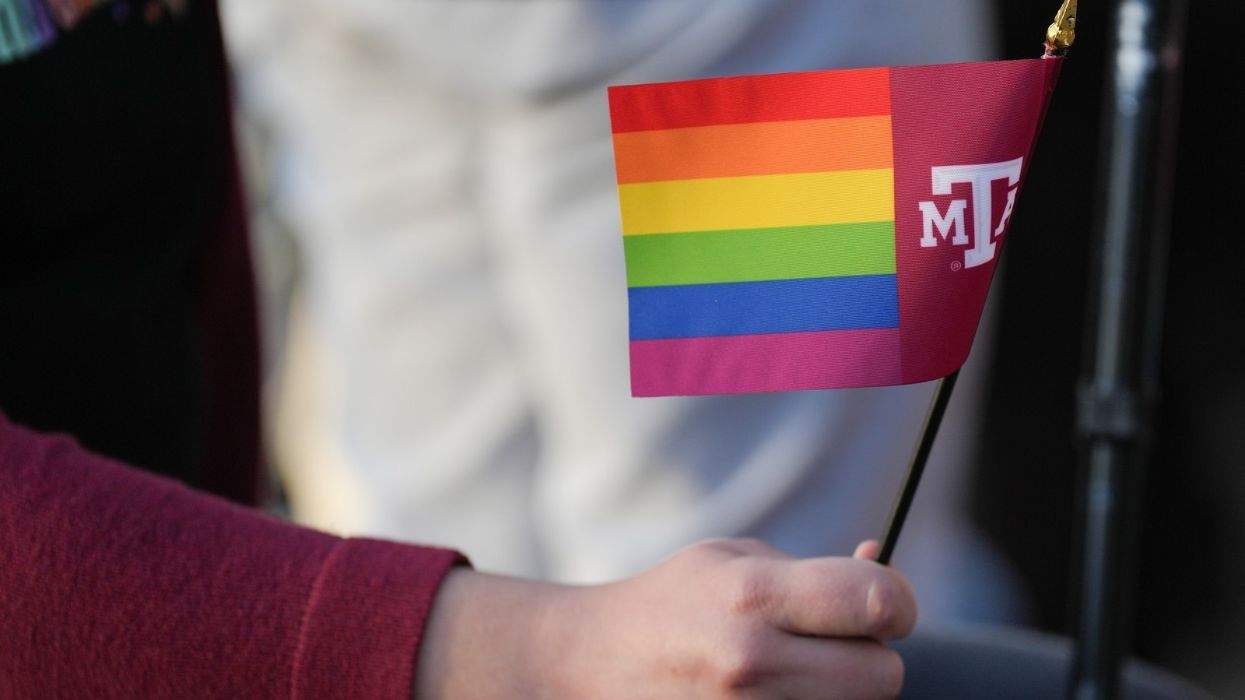
As the U.S. Supreme Court hears Chiles v. Salazar on Tuesday, a case that could determine whether states can continue banning so-called conversion therapy for minors, PFLAG National is releasing a short documentary that reframes the debate in human terms.
Keep up with the latest in LGBTQ+ news and politics. Sign up for The Advocate's email newsletter.
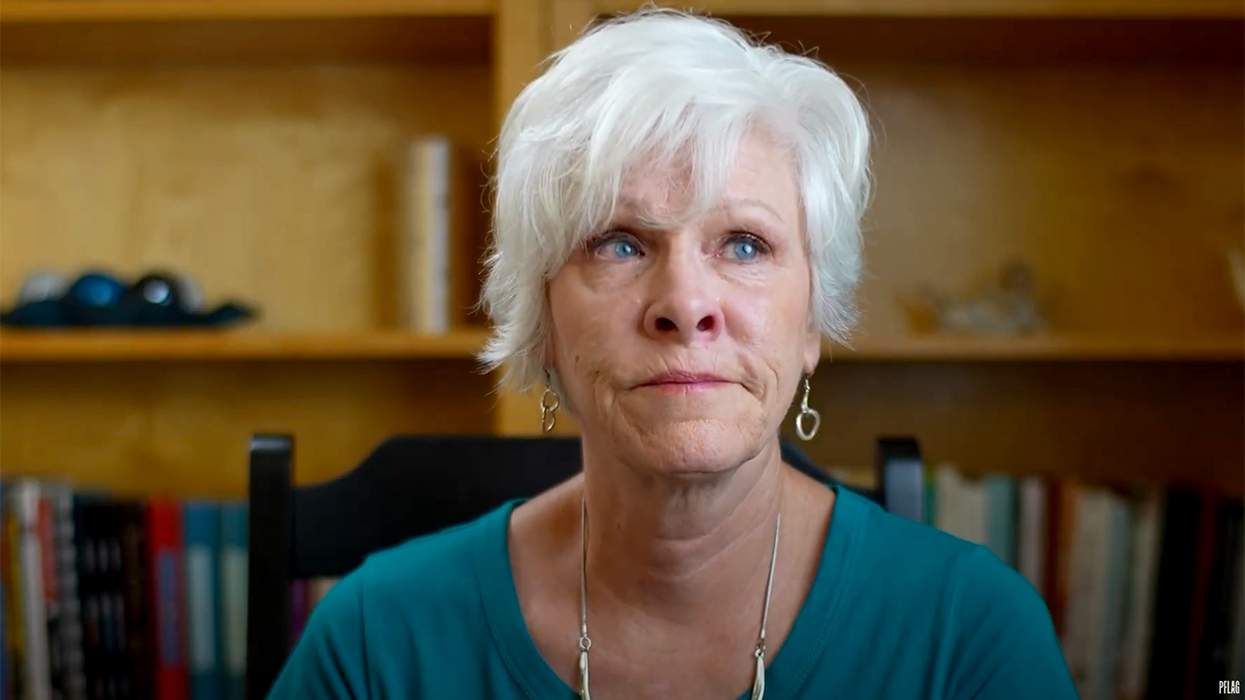
The 12-minute film, Sue’s Story, premieres Tuesday as part of PFLAG’s I Changed My Mind series and follows a conservative evangelical mother who once believed she could “fix” her child’s gender identity through faith and therapy. The episode, produced in partnership with filmmaker Brooke Sebold, instead chronicles a different kind of conversion: a parent’s moral awakening through love, information, and loss.
Related: Almost 200 members of Congress call on the Supreme Court to uphold bans on conversion therapy
“I protested Pride when my child was 10 years old,” Sue says in the film. A self-described “lifelong Republican,” she recounts homeschooling her three children for two decades to “protect them from indoctrination.” Her youngest, Stix, came out as gay at 10 and later as transgender. The turning point came when Sue’s middle daughter told her she would either have to change or lose her child. “We were hopeful that the conversion therapy she did would change her,” Sue says. “Instead, it left her with anxiety and depression.”
All major medical associations have discredited conversion therapy as dangerous because it is not possible to change somebody's sexual orientation or gender identity. Still, although states have moved to ban use of the practice on minors, the Trevor Project reports that young people are still being subjected to the dangerous efforts.
A shift in conscience
Sebold said Sue’s vulnerability and willingness to revisit her past captured the essence of I Changed My Mind, a five-part documentary series exploring how people evolve in polarized times. “It’s not normalized in our culture to admit you once believed something harmful,” Sebold told The Advocate. “Sue had to realize that her daughter wasn’t going to change — that it was on her. And that meant letting go of her community, her identity, even her church.”
Related: How the Supreme Court’s conversion therapy case could reshape LGBTQ+ protections across America
Sebold said the series was inspired by the idea of intellectual humility, the ability to change one’s mind when presented with new information. “We live in a moment where disagreement has turned into disgust,” they said. “Sue’s story shows what it looks like to bridge that divide. Most people change because someone they love challenges them, not because of a debate or an argument.”
PFLAG’s model for transformation
For Liz Owen, PFLAG National’s communications director, Sue’s journey represents the organization’s mission in miniature. Since 1973, PFLAG has helped families reconcile their faith, their fear, and their love for their LGBTQ+ children.
“When parents come to PFLAG, they’re not changing their value of loving their child; they’re learning new information about how to express that love,” Owen told The Advocate. “They thought they were doing the right thing by sending their kid to therapy. Then they realize they were getting bad information. What changes is how they show up for their child.”
Related: South Carolina city caves to Republican attorney general's demands to lift ban on conversion therapy
Owen said PFLAG’s approach, meeting families where they are, mirrors Sebold’s storytelling philosophy. “You can walk into a PFLAG meeting believing what Sue once believed, and you’ll be welcomed, not shamed,” she said. “That’s where change begins.”
The organization is experiencing record growth, Owen said, with more than 40 new chapters forming this year — many in small or conservative communities where such spaces were once unimaginable. “People are coming not only for support but to learn how to go from quietly loving their child to loudly advocating for them,” Owen said.
A different kind of conversion
Sebold said the series isn’t designed to persuade but to invite reflection. “I’m not trying to change anyone’s mind,” they said. “I’m trying to listen. My goal is to create something strong enough that people can feel it in their bodies, and whatever they do with that feeling is up to them.”
As Sue’s Story premieres and the justices consider whether conversion therapy bans will stand, two definitions of “conversion” will share the national stage. One seeks to erase queer lives in the name of faith; the other restores faith by embracing queer people as family.
Related: The fight to eradicate dangerous ‘conversion therapy’ isn’t over, alarming new report warns
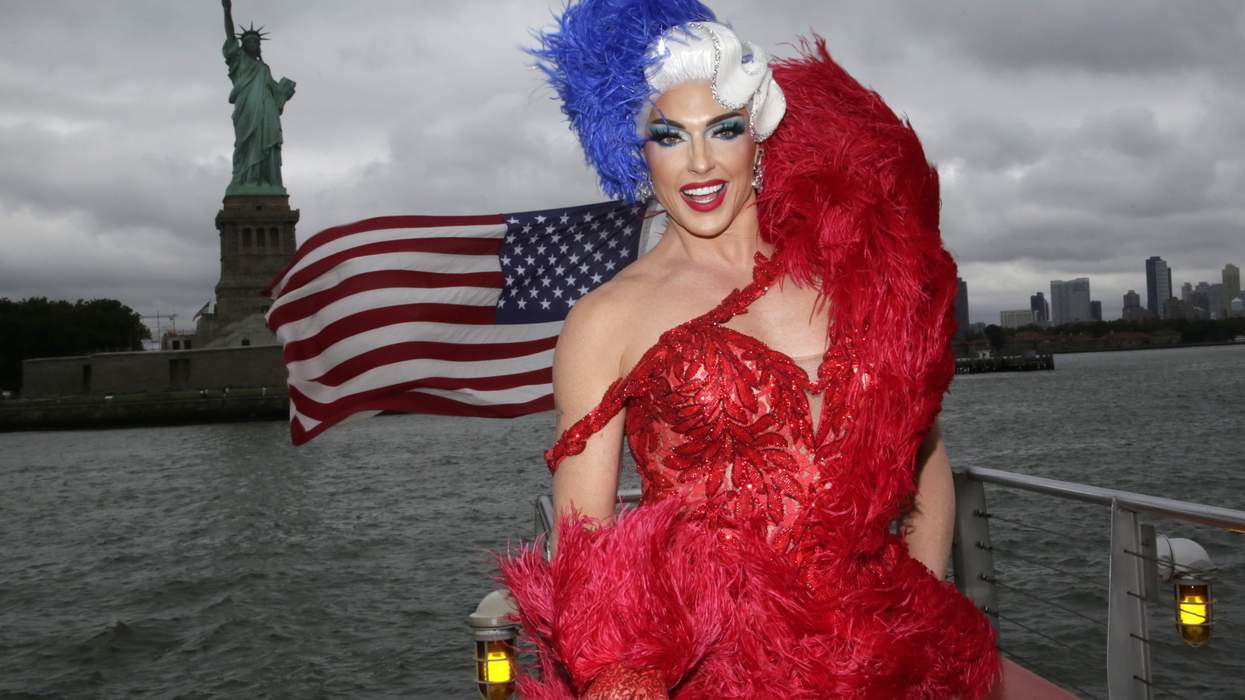
In Sue’s Story, that feeling is visible. Sue and her husband now attend Stix’s drag performances, cheering from the front row. Stix performs under the name Sticks and Stones, reclaiming the words that once wounded her. “She makes her own costumes,” Sue says in the episode. “She’s brilliant at what she does. I really enjoy going to drag performances. They’re just a lot of fun.”
The woman who once protested Pride now carries a sign that reads “Trans Lives Matter.” After one show, she recalls sweeping up glitter and telling her daughter, “You bring color into my life.”
Owen said stories like Sue’s are crucial in a moment when misinformation about LGBTQ+ people has hardened into policy. “These are the same fights we’ve been waging for decades,” she said. “What’s changed is how fast misinformation spreads. But our strength is the same — parents and LGBTQ+ people standing together, using the right messenger for the right listener, finding even the smallest crack of light and helping it grow.”
Watch Sue's Story below.
- YouTube youtu.be