'%3E%3Cpath d='M16.3574 35.6519H12.9537L15.0491 18.8873L16.3574 35.6519ZM30.4229 54.0093L22.309 0.994385H7.91795L0 54.0093H10.6634L11.5802 46.3855H17.4014L17.9914 54.0093H30.4229Z' fill='%23971B20'/%3E%3Cpath d='M48.2073 41.8813C48.2073 43.4049 47.4892 44.0011 46.1144 44.0011H43.7595V11.0687H46.1144C47.4892 11.0687 48.2073 11.6636 48.2073 13.1885V41.8813ZM59.5273 43.6695V11.3326C59.5273 3.71323 53.5729 0.994385 47.8157 0.994385H31.7213V54.0093H47.8157C53.5729 54.0093 59.5273 51.29 59.5273 43.6695Z' fill='%23971B20'/%3E%3Cpath d='M90.183 0.994385H78.6039L75.0711 30.6157L71.9955 0.994385H59.4346L69.2474 54.0093H80.373L90.183 0.994385Z' fill='%23971B20'/%3E%3Cpath d='M107.063 42.3448C107.063 43.7359 105.951 44.5974 104.643 44.5974C103.269 44.5974 102.157 43.7359 102.157 42.3448V12.658C102.157 11.2676 103.269 10.4058 104.643 10.4058C105.951 10.4058 107.063 11.2676 107.063 12.658V42.3448ZM119.233 43.2723V11.7312C119.233 6.36384 112.952 -3.8147e-06 104.643 -3.8147e-06C96.2667 -3.8147e-06 89.9867 6.36384 89.9867 11.7312V43.2723C89.9867 48.6393 96.2667 55 104.643 55C112.952 55 119.233 48.6393 119.233 43.2723Z' fill='%23971B20'/%3E%3Cpath d='M150.976 43.9349V33.7309H139.069V42.3448C139.069 43.7359 137.957 44.5974 136.582 44.5974C135.076 44.5974 133.964 43.7359 133.964 42.3448V12.658C133.964 11.2676 135.076 10.4058 136.582 10.4058C137.957 10.4058 139.069 11.2676 139.069 12.658V21.2723H150.976V11.0687C150.976 5.70107 145.283 -3.8147e-06 136.582 -3.8147e-06C127.75 -3.8147e-06 121.796 5.70107 121.796 11.0687V43.9349C121.796 49.3022 127.75 55 136.582 55C145.283 55 150.976 49.3022 150.976 43.9349Z' fill='%23971B20'/%3E%3Cpath d='M167.478 35.6519H164.076L166.17 18.8873L167.478 35.6519ZM181.544 54.0093L173.432 0.994385H159.037L151.123 54.0093H161.785L162.704 46.3855H168.523L169.114 54.0093H181.544Z' fill='%23971B20'/%3E%3Cpath d='M205.412 10.4058V0.994385H177.081V10.4058H185.392V54.0093H197.428V10.4058H205.412Z' fill='%23971B20'/%3E%3Cpath d='M230.002 54.0093V43.9349H218.914V31.8746H226.635V21.8028H218.914V10.4058H230.002V0.994385H206.875V54.0093H230.002Z' fill='%23971B20'/%3E%3C/g%3E%3Cdefs%3E%3CclipPath id='clip0_260_7080'%3E%3Crect width='230' height='55' fill='white'/%3E%3C/clipPath%3E%3C/defs%3E%3C/svg%3E)

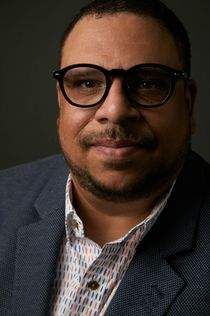
When Rodney Wilson first proposed what is now known as LGBTQ+ History Month in 1994, he envisioned an annual space for education, remembrance, and dignity. He wanted a month to ensure that queer lives and contributions would never again be erased from the nation’s story. Three decades later, as the month begins under renewed assaults by Republicans on LGBTQ+ rights, Wilson says the stakes of remembering have never been higher.
Keep up with the latest in LGBTQ+ news and politics. Sign up for The Advocate's email newsletter.
“I am utterly surprised to find ourselves where we are,” Wilson told The Advocate in an interview. “I thought we had purged Trumpism in 2021. But the culture allowed him to maintain his central position, and here we are again, with LGBTQ people, especially trans people, the primary target.
“A modern Lavender Scare”
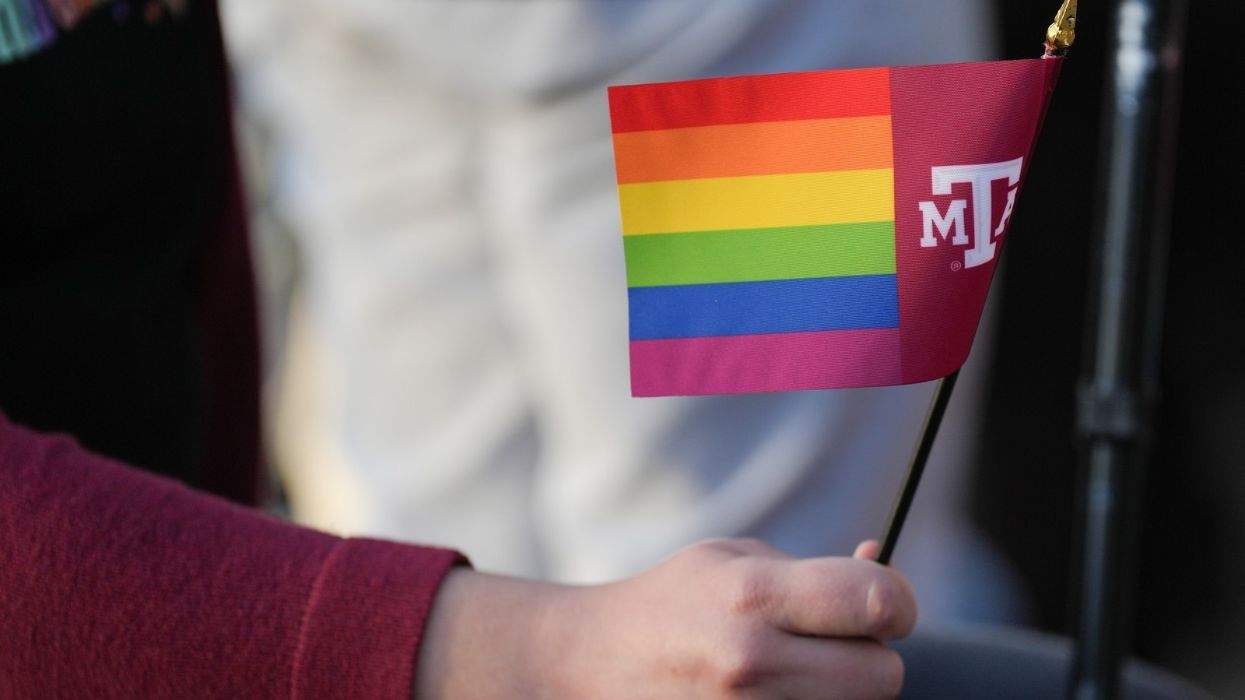
Wilson’s remarks came days after FBI Director Kash Patel fired a probationary agent for displaying a small Pride flag at his desk during an earlier assignment in Los Angeles. The dismissal letter referred to the symbol as “inappropriate political signage.” Patel, since taking office, has dismantled diversity initiatives and barred Pride displays across FBI offices.
“To see a person terminated for a Pride flag — that is erasure by intimidation,” Wilson said. “It sends a message: you may not openly exist.”
Related: Here's how LGBTQ+ History Month began
For him, the episode echoed the mid-20th-century Lavender Scare,”when thousands of federal workers were purged over perceived homosexuality. “McCarthyism, Lavender Scare, repeat. Red Scare, Lavender Scare, repeat. We haven’t learned our history, and that’s why History Months matter,” he said.
The Trump administration has issued policies barring agencies from recognizing identity-based months, such as Pride Month, Black History Month, and LGBTQ+ History Month, as part of its war on diversity, equity, and inclusion measures.
The roots of backlash
Wilson, the first out gay public school teacher in Missouri, has long cited Carter G. Woodson, who launched Black History Week in 1926, as his model. A photograph of Woodson sat on his desk when he drafted the proposal for LGBTQ+ History Month. But where Woodson faced a school board confiscating textbooks, Wilson sees a 21st-century replay in bans on DEI programs, curriculum erasures, and the hollowing out of institutions like the Smithsonian.
“The United States has never been comfortable with the history of people who are not white men,” Wilson said. “So what’s happening now is an erasure of groups so that we don’t have to deal with the charges against the white power structure.”
Trump has ordered a review of content in Smithsonian museums to ensure that exhibits align with his vision of the United States.
Related: LGBTQ+ History Month’s Founder Urges Unity Over Division
In Wilson’s view, Trumpism is not an aberration but the culmination of resentments unleashed after Barack Obama’s historic presidency. “Many white people, myself included, had never had a Black teacher, never had a Black employer, and suddenly we had a Black president, an extraordinary one,” he said. “A lot of white men couldn’t bear it, so they turned to the dumbest white man they could find.”
The backlash, Wilson argued, has only intensified. “Everything they don’t like, don’t want, don’t understand, or don’t approve of is now targeted. And that’s why we saw 500 anti-LBGTQ bills proposed last year, 30 of them in Missouri alone,” he said.
According to the American Civil Liberties Union, Republicans have introduced 616 anti-LGBTQ+ bills in legislatures in 2025.
Authoritarian saints and historical amnesia
The history teacher also warned of what he called “madness” in the Trumpist re-mythologizing of public figures. He pointed to the almost instant canonization of conservative activist Charlie Kirk following his assassination, a transformation Wilson said revealed both erasure and authoritarian theater.
Comedian Jimmy Kimmel was taken off the air by ABC after the chairman of the Federal Communications Commission threatened the network over a joke Kimmel made about people on the right going to extreme lengths to cast blame for the shooting on the left. The Wall Street Journal falsely reported that the suspected Kirk shooter had etched pro-trans messages into his bullets. That was not true.
“It was the canonization of a new saint within hours,” Wilson said. “Now this is Trumpist white conservative Christianity, but they created a new saint almost immediately.”
For Wilson, the orchestrated public mourning carried disturbing echoes of authoritarian regimes. “They did insist that we become like North Korea,” he said. “Remember when Kim Jong Un’s father died, all those videos of people crying and crying and crying. They really wanted us to do that.”
Related: Op-ed: The Story Behind the First LGBT History Month
Wilson said that Kirk’s killing was “egregious and hard, horrible and terrible.” But he pushed back against the attempt to erase Kirk’s long record of divisive rhetoric. “You don’t just suddenly sanctify a person in their death,” he said. “You might try to find some good points about them, of course, but you can’t just suddenly deny all of the bad stuff, and there was a lot of it with that young man.”
What saddened him most, Wilson added, was Kirk’s youth. “He was 31. I wanted him to live for a thousand reasons,” he said. “One was to give him opportunity, hopefully, to grow, evolve, and change. And now he is stuck at age 31, forever. And the Trumpist side is erasing every shortcoming and wrongdoing, and only highlighting that which makes their canonization seem appropriate.”
He contrasted that with the recent death of Jane Goodall, the respected primatologist who died this week, lamenting the country’s selective memory: “I’d like to see streets named after her. Maybe the Jane Goodall Science Center. I wouldn’t mind a national holiday in her honor. But instead, we sanctify bullies.”
A bicentennial soured
For Wilson, history is personal. He recalls 1976, America’s Bicentennial, as one of the happiest years of his life at age 11. He said he collected everything there was to get for that celebration. Wilson eagerly anticipated the nation’s 250th anniversary in 2026, but his enthusiasm has now passed.
Trump has announced that, among other things, he will host an Ultimate Fighting Championship fight on the South Lawn of the White House. “It’s going to be a sanitized, whitewashed, great-white-man theory of history event,” he said. “I won’t participate in Trumpist propaganda. I’ll read the Declaration of Independence on July 4 as I always do, but I won’t celebrate their version.”
Resilience and the next generation
Despite his alarm, Wilson insists on resilience. “We LGBTQ people are persistent. We are strong,” he said. “We have to stay open, out, honest. We have to keep classrooms safe for all students, from Turning Point USA members to GSA members.”
But he worries deeply for young people. “Those forming their identities now have only ever known Trumpism. They may grow up thinking this is normal America. That’s dangerous,” he said. The lesson young white men absorb, he fears, is that cruelty brings power. “They’re looking at an old white man at the pinnacle of world power, even though he is a foul and disgusting human being. So they’re certainly not learning goodness, are they?”
As the nation marks another LGBTQ+ History Month, Wilson’s message is simple yet urgent: Memory is both a weapon and a shield. “History is our defense,” he said. “It’s our record. And it’s our warning. The guillotine eventually comes around to everyone.”