'%3E%3Cpath d='M16.3574 35.6519H12.9537L15.0491 18.8873L16.3574 35.6519ZM30.4229 54.0093L22.309 0.994385H7.91795L0 54.0093H10.6634L11.5802 46.3855H17.4014L17.9914 54.0093H30.4229Z' fill='%23971B20'/%3E%3Cpath d='M48.2073 41.8813C48.2073 43.4049 47.4892 44.0011 46.1144 44.0011H43.7595V11.0687H46.1144C47.4892 11.0687 48.2073 11.6636 48.2073 13.1885V41.8813ZM59.5273 43.6695V11.3326C59.5273 3.71323 53.5729 0.994385 47.8157 0.994385H31.7213V54.0093H47.8157C53.5729 54.0093 59.5273 51.29 59.5273 43.6695Z' fill='%23971B20'/%3E%3Cpath d='M90.183 0.994385H78.6039L75.0711 30.6157L71.9955 0.994385H59.4346L69.2474 54.0093H80.373L90.183 0.994385Z' fill='%23971B20'/%3E%3Cpath d='M107.063 42.3448C107.063 43.7359 105.951 44.5974 104.643 44.5974C103.269 44.5974 102.157 43.7359 102.157 42.3448V12.658C102.157 11.2676 103.269 10.4058 104.643 10.4058C105.951 10.4058 107.063 11.2676 107.063 12.658V42.3448ZM119.233 43.2723V11.7312C119.233 6.36384 112.952 -3.8147e-06 104.643 -3.8147e-06C96.2667 -3.8147e-06 89.9867 6.36384 89.9867 11.7312V43.2723C89.9867 48.6393 96.2667 55 104.643 55C112.952 55 119.233 48.6393 119.233 43.2723Z' fill='%23971B20'/%3E%3Cpath d='M150.976 43.9349V33.7309H139.069V42.3448C139.069 43.7359 137.957 44.5974 136.582 44.5974C135.076 44.5974 133.964 43.7359 133.964 42.3448V12.658C133.964 11.2676 135.076 10.4058 136.582 10.4058C137.957 10.4058 139.069 11.2676 139.069 12.658V21.2723H150.976V11.0687C150.976 5.70107 145.283 -3.8147e-06 136.582 -3.8147e-06C127.75 -3.8147e-06 121.796 5.70107 121.796 11.0687V43.9349C121.796 49.3022 127.75 55 136.582 55C145.283 55 150.976 49.3022 150.976 43.9349Z' fill='%23971B20'/%3E%3Cpath d='M167.478 35.6519H164.076L166.17 18.8873L167.478 35.6519ZM181.544 54.0093L173.432 0.994385H159.037L151.123 54.0093H161.785L162.704 46.3855H168.523L169.114 54.0093H181.544Z' fill='%23971B20'/%3E%3Cpath d='M205.412 10.4058V0.994385H177.081V10.4058H185.392V54.0093H197.428V10.4058H205.412Z' fill='%23971B20'/%3E%3Cpath d='M230.002 54.0093V43.9349H218.914V31.8746H226.635V21.8028H218.914V10.4058H230.002V0.994385H206.875V54.0093H230.002Z' fill='%23971B20'/%3E%3C/g%3E%3Cdefs%3E%3CclipPath id='clip0_260_7080'%3E%3Crect width='230' height='55' fill='white'/%3E%3C/clipPath%3E%3C/defs%3E%3C/svg%3E)


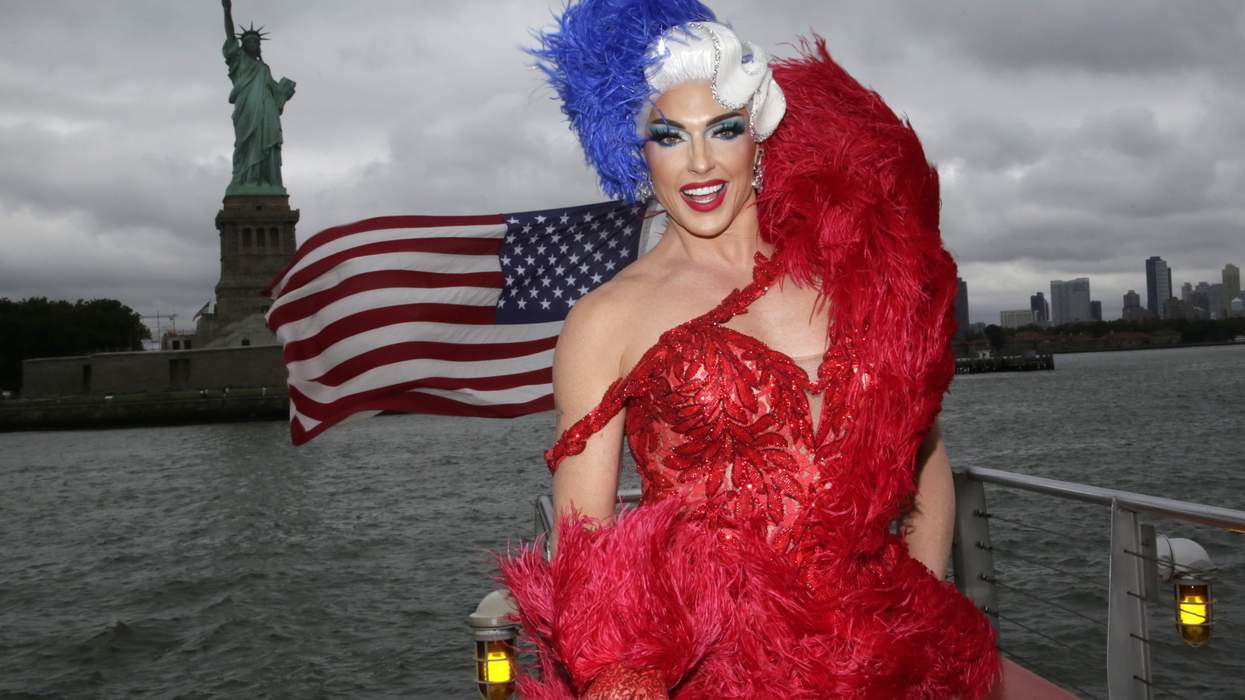
Peppermint, the trailblazing performer and transgender advocate, will serve as a grand marshal for the 2026 New York City Pride March, organizers announced Wednesday. The role puts the RuPaul’s Drag Race alum at the forefront of one of the world's largest LGBTQ+ demonstrations amid escalating political attacks.
Her selection comes as Pride events across the country happen amid mounting legislative restrictions and cultural backlash targeting LGBTQ+ communities, particularly trans Americans. So far, in 2026, Republicans have introduced at least 517 anti-LGBTQ+ bills, according to the American Civil Liberties Union.
"I hope that my involvement in Pride will uplift anyone," Peppermint told The Advocate in an exclusive interview, recalling her first experience attending New York City’s Pride celebration years ago. "I just remember feeling that this is our day, this is our time, this is our community."
As a grand marshal, Peppermint will help lead the NYC Pride March on June 28, an event that draws millions each year and has long served as both celebration and protest. According to organizers, this year’s theme, "For All of Us," is a call not only for LGBTQ+ unity but also for broader public support, centering the voices of those most marginalized, particularly Black trans women, who have been at the forefront of the movement since the Stonewall Uprising.
Related: BenDeLaCreme, Alaska, and Peppermint want you to drag your ass to the polls (exclusive)
Related: 11 historic photos of New York's LGBTQ+ history from the book Queer Happened Here
Related: Kids can be subjected to harmful 'conversion therapy,’ U.S. Supreme Court rules
Across the United States, lawmakers have advanced restrictions on gender-affirming care, transgender participation in sports, and legal recognition of gender identity. Peppermint described the current climate as an "all-out assault" on trans people, pointing to a wave of policies she said aim to marginalize and restrict the basic contours of daily life. The Supreme Court is awaiting decisions this term on cases that could shape transgender rights for a generation, including Little v. Hecox and West Virginia v. B.P.J., which challenge state bans on transgender student athletes competing in sports consistent with their gender identity, with decisions expected by late June.
The Court last term ruled 6-3 in Skrmetti v. U.S. that Tennessee’s ban on gender-affirming care for minors does not illegally discriminate on the basis of sex. On Trans Day of Visibility this year, the court ruled in Chiles v. Salazar that Colorado’s law banning so-called “conversion therapy” was unconstitutional, not because the practice is dangerous, but because the law was not written to be “viewpoint neutral.”
Resistance, Peppermint said, is especially urgent now. She said the legislative assault on trans people by Republican lawmakers and the Trump administration is creating a dangerous situation.
“The conditions that lead to something as horrific as people being killed or mass murdered — those conditions don’t just drop out of nowhere,” she said. “You have to disenfranchise those people. You have to demonize those people. You have to dehumanize those people.”
She pointed to warnings that the current wave of policies sets the conditions for genocide.
The Lemkin Institute for Genocide Prevention, a nonprofit focused on genocide prevention, has issued three successive "Red Flag Alerts" warning about anti-trans policies in the United States, noting that 2025 was the sixth consecutive record-breaking year for the number of anti-trans bills considered across the country, with a 45 percent increase in bills between 2024 and 2025. The institute's executive director and founder, Dr. Elisa von Joeden-Forgey, has described the U.S. as being in the "early-to-mid stages of a genocidal process" against trans, nonbinary, and intersex people.
Peppermint rose to international prominence as the first out trans contestant on RuPaul's Drag Race, where she finished runner-up in Season 9. She went on to make Broadway history as the first out trans woman to originate a principal role in a musical, starring as Pythio in Head Over Heels. She also serves on GLAAD’s Board of Directors and was the first-ever ACLU Artist Ambassador for Trans Justice.
Related: White House denigrates non-cisgender people on Trans Day of Visibility
Related: Javier Muñoz and Peppermint warn Congress 'we will be back to HIV wards' if funding is cut
But she described Pride less as a symbolic honor and more as a call to action, particularly for allies.
"This is a space for you to exercise your political queerness," she said, urging supporters to show up, engage, and push back against systems that continue to marginalize LGBTQ+ people.
Peppermint also drew a direct line between today's political climate and the origins of Pride in protest, noting that early LGBTQ+ uprisings were sparked by government and law enforcement targeting the most marginalized in the community.
"That's what we're seeing happen today with the trans community," she said, "pushing us into the margins."
The tensions are playing out not only in policy but in culture. Peppermint pointed to the rise of drag bans in recent years as an early warning sign of broader attacks on gender expression, a shift she said has since escalated into more explicit, more targeted anti-trans measures.
"Attacking drag was the shortcut to getting to trans issues," she said. "And now they’ve gotten so bold that it's directly anti-trans."
She also raised alarms about the erosion of financial support for LGBTQ+ cultural institutions, from reduced corporate sponsorships following the backlash campaigns of 2023 to declining public funding for Pride events and queer performers.
"We are in a really precarious situation," she said, noting that many Pride organizations now have fewer resources to compensate queer artists and sustain programming.
Even so, Peppermint said Pride remains a space for both resistance and joy, a dual legacy she hopes to carry as she helps lead this year's march.
"We all need some joy and celebration," she said, "but it's also an opportunity to really challenge the systems that still hold us back."