'%3E%3Cpath d='M16.3574 35.6519H12.9537L15.0491 18.8873L16.3574 35.6519ZM30.4229 54.0093L22.309 0.994385H7.91795L0 54.0093H10.6634L11.5802 46.3855H17.4014L17.9914 54.0093H30.4229Z' fill='%23971B20'/%3E%3Cpath d='M48.2073 41.8813C48.2073 43.4049 47.4892 44.0011 46.1144 44.0011H43.7595V11.0687H46.1144C47.4892 11.0687 48.2073 11.6636 48.2073 13.1885V41.8813ZM59.5273 43.6695V11.3326C59.5273 3.71323 53.5729 0.994385 47.8157 0.994385H31.7213V54.0093H47.8157C53.5729 54.0093 59.5273 51.29 59.5273 43.6695Z' fill='%23971B20'/%3E%3Cpath d='M90.183 0.994385H78.6039L75.0711 30.6157L71.9955 0.994385H59.4346L69.2474 54.0093H80.373L90.183 0.994385Z' fill='%23971B20'/%3E%3Cpath d='M107.063 42.3448C107.063 43.7359 105.951 44.5974 104.643 44.5974C103.269 44.5974 102.157 43.7359 102.157 42.3448V12.658C102.157 11.2676 103.269 10.4058 104.643 10.4058C105.951 10.4058 107.063 11.2676 107.063 12.658V42.3448ZM119.233 43.2723V11.7312C119.233 6.36384 112.952 -3.8147e-06 104.643 -3.8147e-06C96.2667 -3.8147e-06 89.9867 6.36384 89.9867 11.7312V43.2723C89.9867 48.6393 96.2667 55 104.643 55C112.952 55 119.233 48.6393 119.233 43.2723Z' fill='%23971B20'/%3E%3Cpath d='M150.976 43.9349V33.7309H139.069V42.3448C139.069 43.7359 137.957 44.5974 136.582 44.5974C135.076 44.5974 133.964 43.7359 133.964 42.3448V12.658C133.964 11.2676 135.076 10.4058 136.582 10.4058C137.957 10.4058 139.069 11.2676 139.069 12.658V21.2723H150.976V11.0687C150.976 5.70107 145.283 -3.8147e-06 136.582 -3.8147e-06C127.75 -3.8147e-06 121.796 5.70107 121.796 11.0687V43.9349C121.796 49.3022 127.75 55 136.582 55C145.283 55 150.976 49.3022 150.976 43.9349Z' fill='%23971B20'/%3E%3Cpath d='M167.478 35.6519H164.076L166.17 18.8873L167.478 35.6519ZM181.544 54.0093L173.432 0.994385H159.037L151.123 54.0093H161.785L162.704 46.3855H168.523L169.114 54.0093H181.544Z' fill='%23971B20'/%3E%3Cpath d='M205.412 10.4058V0.994385H177.081V10.4058H185.392V54.0093H197.428V10.4058H205.412Z' fill='%23971B20'/%3E%3Cpath d='M230.002 54.0093V43.9349H218.914V31.8746H226.635V21.8028H218.914V10.4058H230.002V0.994385H206.875V54.0093H230.002Z' fill='%23971B20'/%3E%3C/g%3E%3Cdefs%3E%3CclipPath id='clip0_260_7080'%3E%3Crect width='230' height='55' fill='white'/%3E%3C/clipPath%3E%3C/defs%3E%3C/svg%3E)
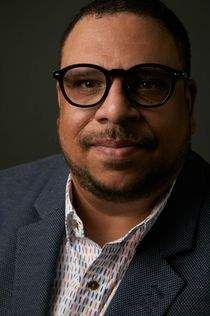
Former Minneapolis City Council president Andrea Jenkins was moving slowly through the Washington Hilton in Washington, D.C., navigating toward a bank of elevators on her mobility scooter, when she reached for a small whistle hanging around her neck and lifted it for The Advocate to see.
“This,” she said, “is what people are carrying now.”
The conversation took place on Friday, as the National LGBTQ Task Force’s annual Creating Change Conference, the nation’s largest gathering of LGBTQ+ activists, organizers, and policymakers, unfolded around her. For decades, the conference has served as a space for strategy, solidarity, and movement-building. This year, it also became a place where warnings surfaced quietly, between sessions, far from home.
Related: Federal agents kill another person in Minneapolis
Related: Who was Renee Nicole Good? Remembering the Minneapolis poet and mother killed by ICE
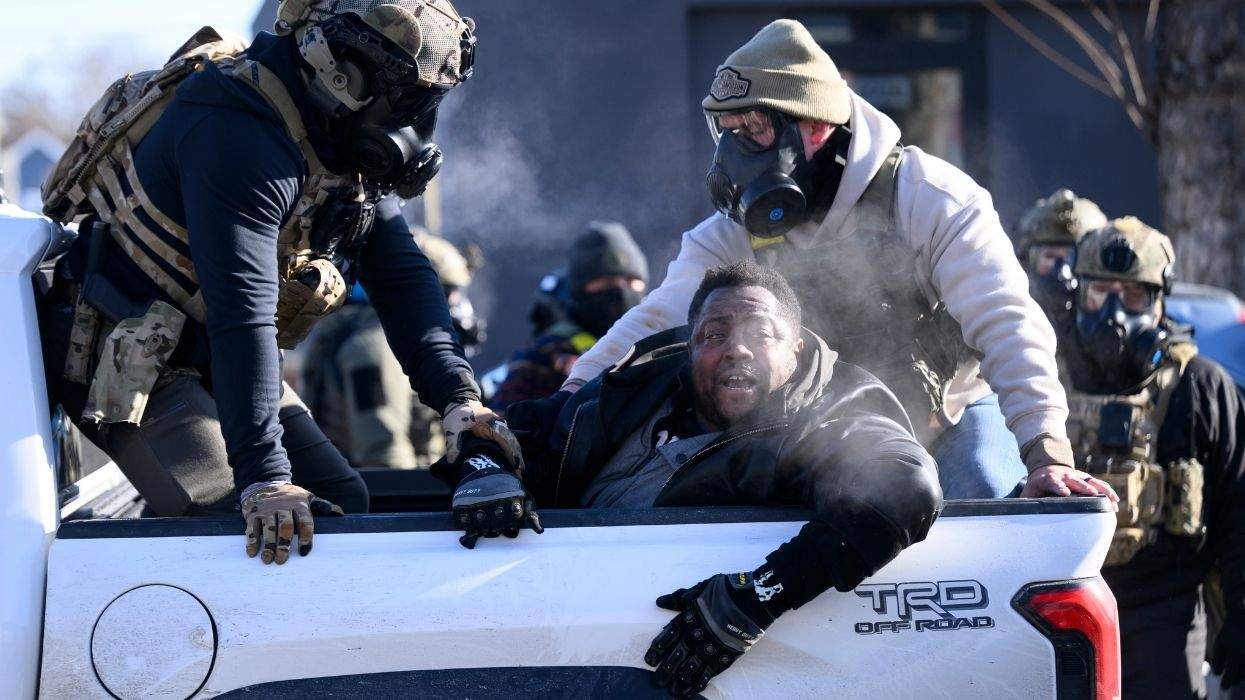
One day later, on Saturday, Minneapolis would reel again, this time from the killing of Alex Jeffrey Pretti, a south Minneapolis resident, U.S. citizen, and Veterans Affairs intensive care unit nurse who was shot by federal agents during an enforcement operation. According to videos from the scene, Pretti was filming agents and tried to help a woman who had been pushed to the ground by a federal officer, and slipped on a patch of ice before he was executed on the street. Pretti, who, according to the Minneapolis Police chief, had a concealed carry permit and had a holstered gun which he never brandished, was shot multiple times after a masked agent took his firearm from him. Pretti’s death came just over two weeks after the ICE killing of Renée Nicole Good, a queer mother of three, intensifying protests and national scrutiny of federal enforcement practices in Minnesota.
Jenkins recently retired from the Minneapolis City Council. Elected in 2017, she became the first out transgender Black woman elected to public office in the United States and later served as president of the Minneapolis City Council.
She said fear had already become a defining feature of daily life in her community even before Saturday’s killing.
“I think it is completely un-American,” she said of the federal presence in Minneapolis. “I think it’s shameful what is going on in my community. It is a literal occupation.”
Related: Minnesotans mourn Alex Pretti, man killed by Border Patrol agents
Related: ICE officer who shot and killed Renee Nicole Good in Minneapolis has been identified
She rejected claims that federal actions are narrowly focused on immigration enforcement. “A lot of people think it’s only Latino people who are being targeted, but that is not true,” Jenkins said. “It is Black people, queer people, trans identified people who are being harassed, beaten up, physically assaulted.”
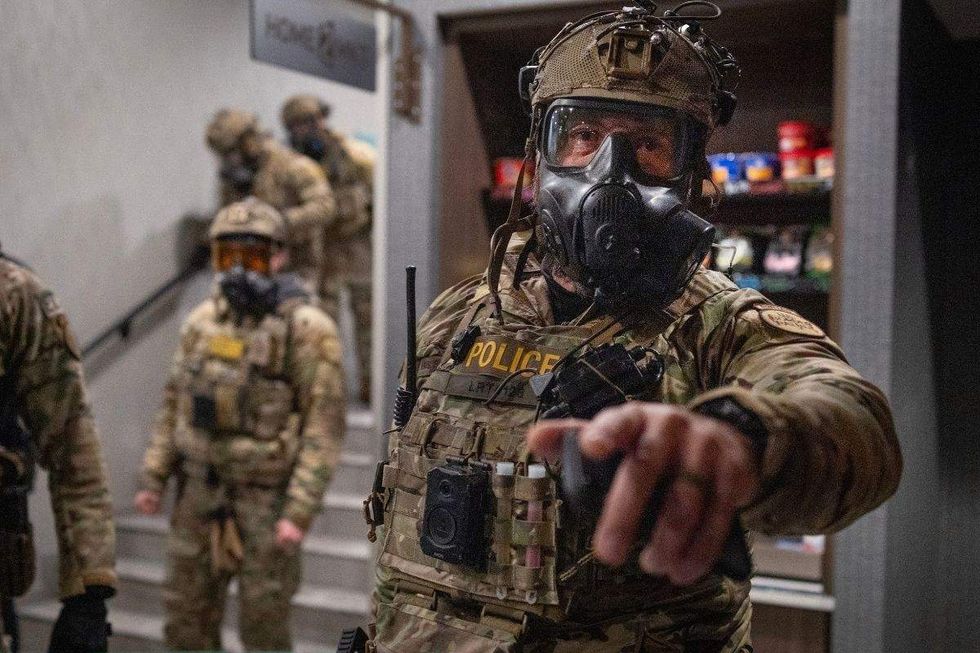 Federal agents enter the lobby after breaking up a protest outside a hotel on January 25, 2026, in Minneapolis, Minnesota.Scott Olson/Getty Images
Jenkins said comparisons to foreign authoritarian regimes risk obscuring a more painful American history.
“I think it’s less like the Gestapo [German secret police] and more like the slave patrol,” she said, invoking the armed groups that hunted enslaved people in the U.S. during the 18th and 19th centuries. “When we make the comparison to the Gestapo, it’s almost like giving people a way out. When people say, ‘Oh, this is not us’ — no, this is us. This is the blueprint. America was the blueprint for Nazism.”
The consequences, she said, are visible across Minneapolis. Businesses have closed as customers stay home. Service workers are afraid to report to their jobs. “Food shelves have delivered more food to people’s houses in the last two months than they did during the global pandemic,” Jenkins said. “Families are literally afraid to leave their homes.”
That fear has reshaped her own routines. Jenkins said she now carefully plans trips and alerts others to her movements. As a person living with a disability, she said harassment can be especially dangerous during Minnesota’s brutal winter weather.
The whistle she wore, she explained, is part of an informal early warning system. Residents carry them to warn one another when federal agents are nearby. Some follow enforcement vehicles to document encounters.
Related: Queer lawmakers call for ICE to be reined in after killing of Alex Pretti in Minneapolis
Related: Justice Department will investigate Renee Good's wife but not the man who killed her
“Everybody in my community is walking around with a whistle,” Jenkins said. “People are alerting each other.” Protest, she added, may be one of the few remaining tools available. “Getting out and protesting is going to be one of the only ways that we can show our resistance.”
Reaction to Pretti’s killing continued to build nationally. Common Defense, a grassroots organization of veterans and military families, called for an immediate suspension of Immigration and Customs Enforcement operations nationwide, including in Minnesota.
“This is not normal,” said Jacob Thomas, an Air Force veteran, Minneapolis resident, and the group’s communications director. Thomas said thousands of residents joined a peaceful general strike following the shooting and warned that federal agencies were operating without accountability. “It is beyond clear that ICE and DHS are out of control,” he said, calling the deployments “an occupation of our beloved communities.”
Related: Trump tries to smear Renee Good and her wife for ICE killing
Related: 911 calls reveal chaos after ICE agent shot Renee Good up to 4 times
Related: More than $1.5 million raised for Renee Good’s widow & kids after ICE killing
The group said Pretti “should still be alive” and urged Americans to stand against what it described as authoritarian overreach by federal law enforcement.
Those calls echoed statements from elected officials and faith leaders following Saturday’s killing. Colorado Gov. Jared Polis, who is gay, called the shooting “tragic and unacceptable” and urged a full and impartial investigation, warning that Americans are experiencing “violence and intimidation by our own government.” The Interfaith Alliance, a national multifaith advocacy organization, said its president, Rev. Paul Brandeis Raushenbush, had recently returned from Minneapolis, where he marched and rallied with local faith leaders calling for ICE to leave the state.
Jenkins’s warning carries particular weight. She guided the city through national reckonings over policing, race, and public safety after the murder of George Floyd.
As she reached the elevators and the conference pressed on behind her, Jenkins offered a final assessment of the moment facing her city.
“We are all unfortunately experiencing it again,” she said.